
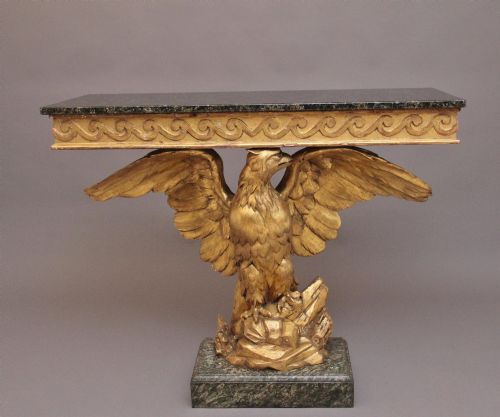
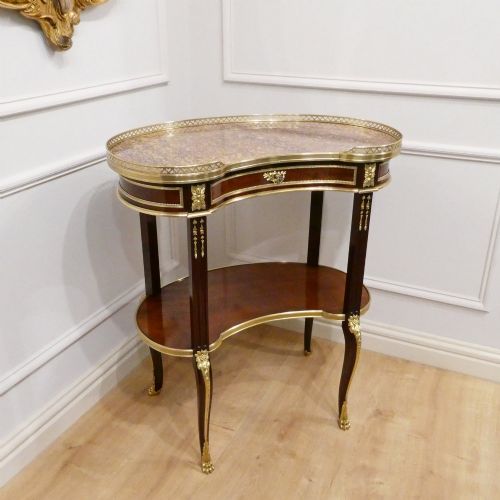
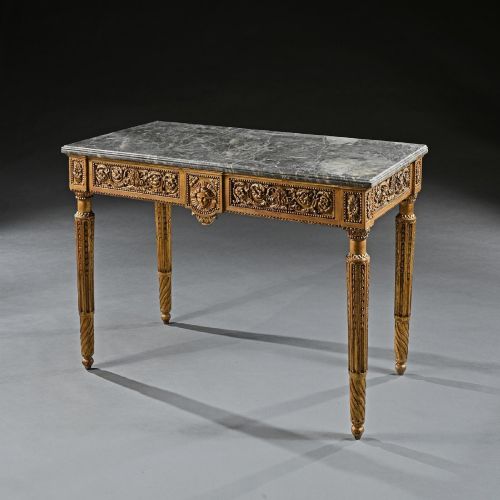
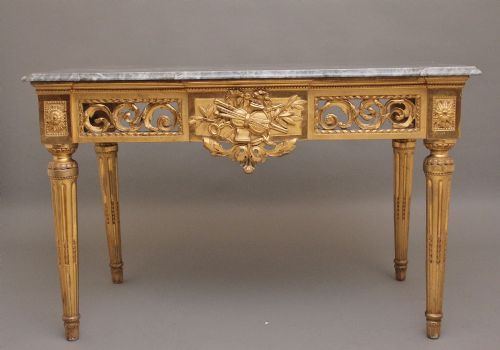
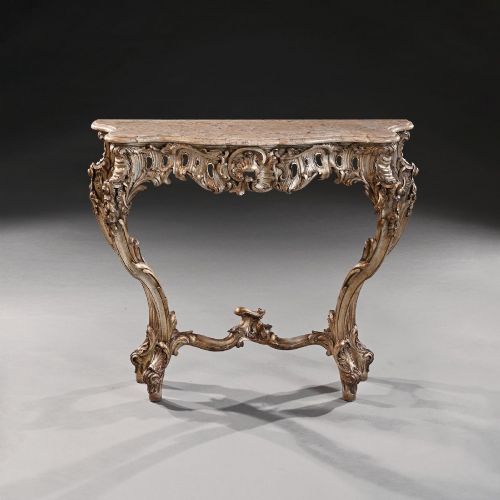
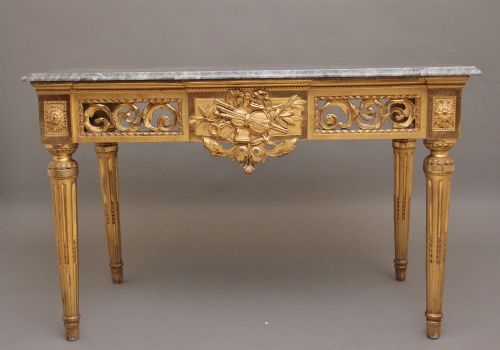
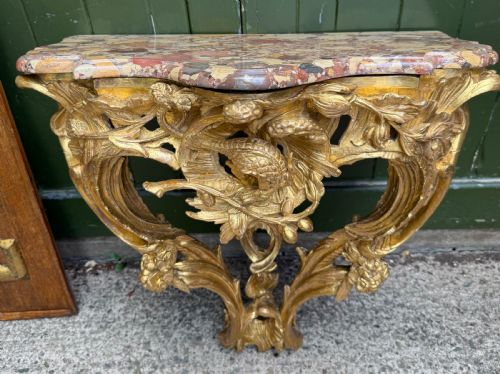
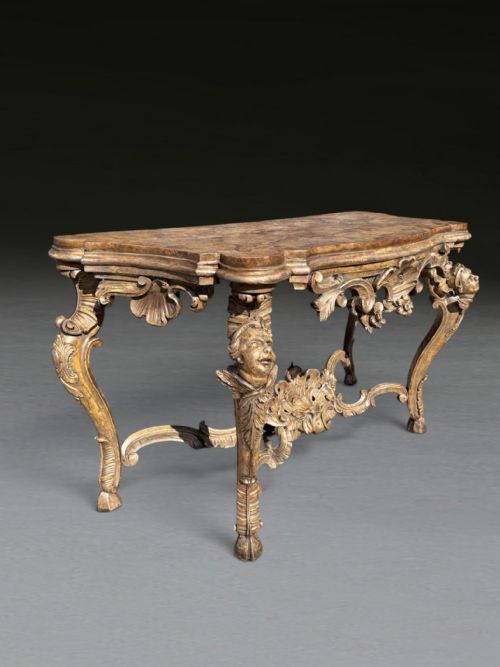
Marble Top Gilt Console
A marble top gilt console combines stone and gilded timber to anchor a grand interior wall with architectural weight and reflective surface.
Marble Top Gilt Console
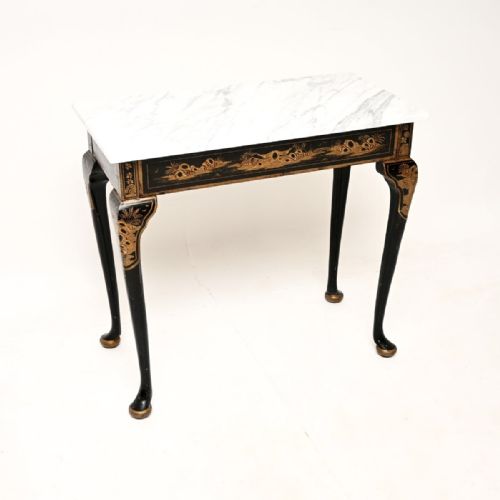
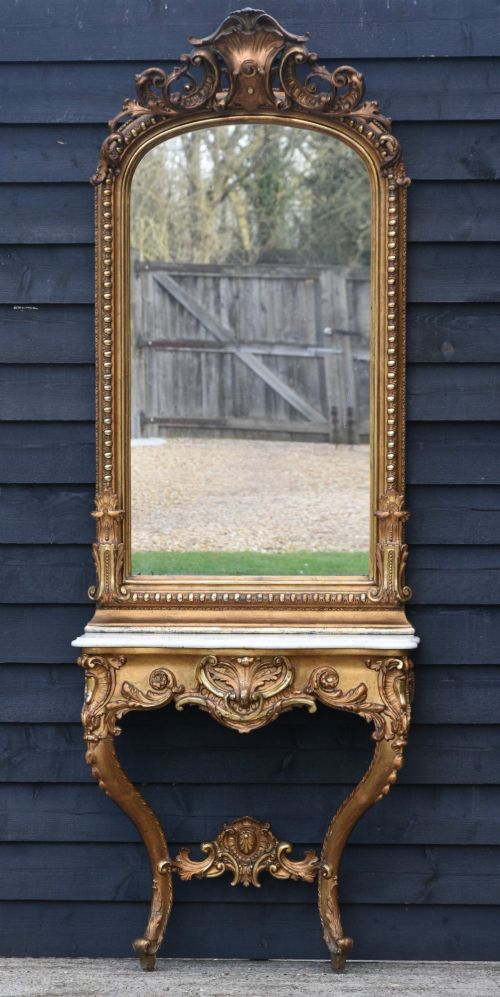
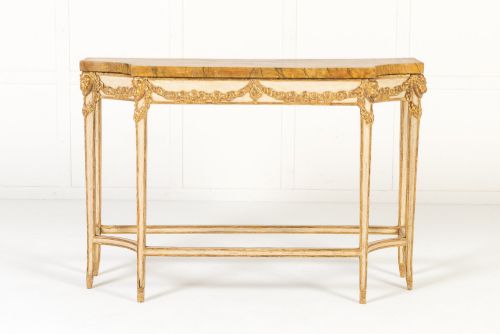
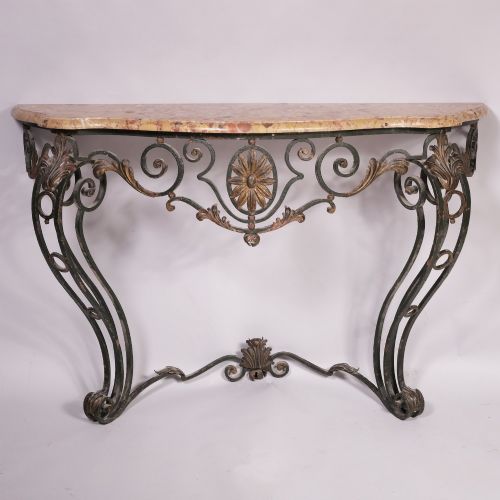
A marble top gilt console is primarily encountered as an eighteenth or nineteenth-century wall table, often accompanied by a matching pier mirror. These pieces emerge predominantly from French and Italian workshops, reflecting classical, rococo or empire aesthetics.
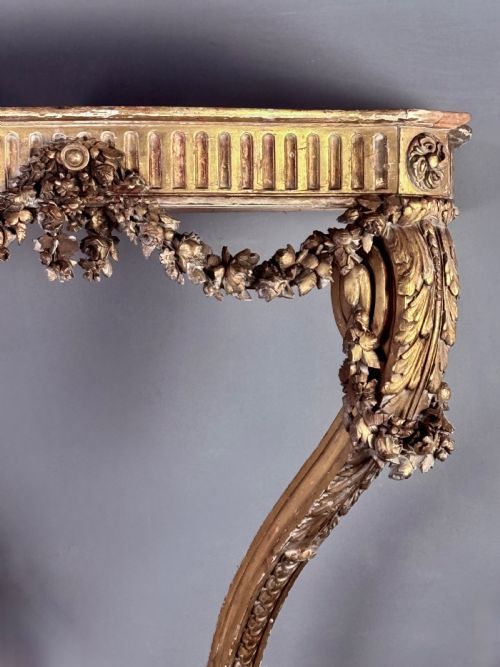
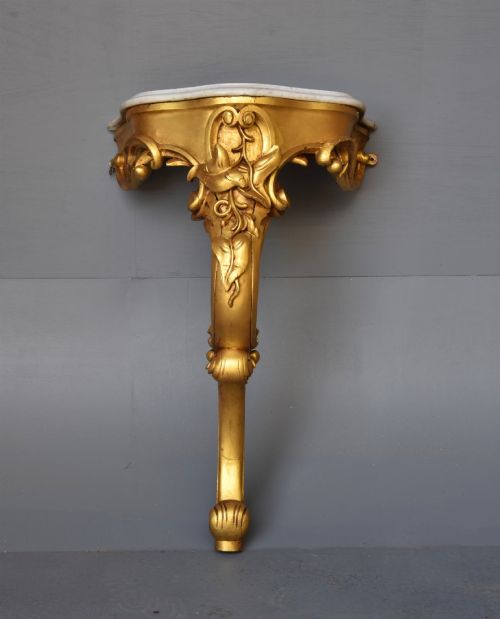
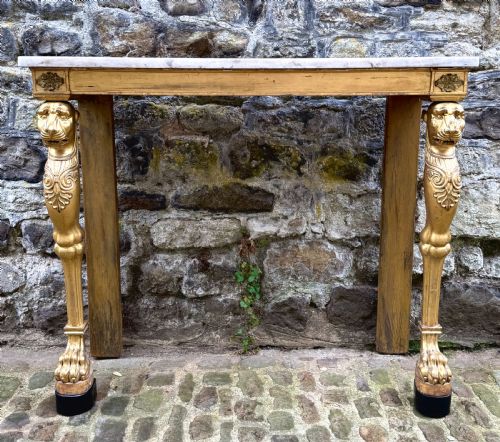
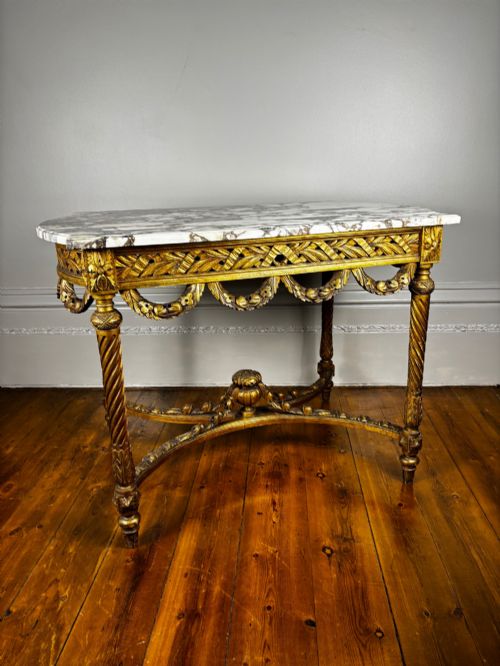
The form typically takes a rectangular or serpentine footprint designed to stand flush against a wall, frequently utilising a combination of carved timber, gesso and applied gold leaf. Surviving examples range from restrained neoclassical side pieces to heavily ornamented baroque revival tables featuring lion paw supports.
Buyers also encounter related formats including centre tables and side cabinets sharing the same vocabulary of figured stone and gilded frames. Italian and French regional variations dominate the selection, spanning the eighteenth century through to early twentieth-century revival pieces.
Materials and Construction
The structural framework relies on hardwoods such as mahogany, walnut or pine, which were shaped and joined to bear the substantial weight of a stone slab. Carvers then applied layers of gesso to create smooth grounds for intricate relief ornamentation before gilding.
Surfaces were finished with thin sheets of gold leaf or silver gilt applied over bolus, whilst others received painted and parcel-gilt treatments. Tops were fashioned from heavy slabs of quarried marble, including varieties such as breccia, rouge, sienna and breche d'alep, shaped to follow the serpentine or rectilinear contours of the base.
Materials recorded across the inventory include giltwood, gesso, mahogany, walnut and various quarried marble slabs.
Judging Quality
Quality rests significantly on the depth and crispness of the wood carving, where hand-tooled execution outshines moulded composition ornament. The integration between the stone top and the timber frame reveals the maker's precision, with superior examples showing tight, flush joints and stone selected for rich veining.
The application of gold leaf and the preservation of original gesso layers dictate the visual impact of the piece. Tables retaining their original matching pier mirrors or bearing verifiable maker stamps represent the upper tier of surviving examples.
Felix-Alfred Ternisien·Maison Millet·Krieger Paris
The Marble Top Gilt Console Glossary
- Giltwood
- Timber coated with thin sheets of gold leaf applied over a prepared gesso ground. This technique provides a luminous metallic surface that catches interior light.
- Breccia
- A composite marble made of angular rock fragments embedded in a fine-grained matrix. It offers varied, dramatic colour patterns across the tabletop.
- Gesso
- A plaster mixture applied to wood frames to create a smooth surface for gilding or carving. It allows artisans to render sharp, intricate relief details.
- Pier Mirror
- A tall wall mirror designed to hang in the wall space between windows, often paired directly above a console table. This combination maximises reflected light in formal rooms.
- Serpentine
- A furniture outline characterised by a wavy or curving edge that bends outward and inward. It demands advanced skill from both the woodworker and the stone mason.
Marble Top Gilt Console: Frequently Asked Questions
Where should I place a console table?
These tables are traditionally designed to stand against a flat wall, frequently positioned in a hallway, reception room or below a matching pier mirror. Because many historical examples were built as wall-mounted units or feature finished fronts with plain rears, they require structural wall support rather than floating freely in a room.
The shallow depth of the console allows it to occupy narrow circulation spaces without blocking pathways. Pairing the table with a mirror creates a balanced vertical composition suited for entryways or principal living spaces.
How do I clean a marble top?
Stone surfaces require gentle maintenance using soft cloths and pH-neutral cleaners formulated specifically for natural stone. Abrasive powders or acidic liquids such as vinegar and citrus will etch the polished finish and damage the underlying mineral structure.
Immediate attention to spills prevents staining on porous varieties like white and breccia marbles. Periodic sealing helps protect the stone from absorbing moisture and everyday marks.
Are these tables freestanding?
Many period consoles require attachment to the wall for complete stability due to the heavy weight of the marble slab resting on a slender carved frame. Some variations include integrated rear legs, while wall-mounted formats rely entirely on brackets or console legs anchored into masonry.
Examining the underside and rear framing reveals whether a piece is self-supporting or requires structural fixing. Professional installation ensures the heavy stone top remains secure.
How can I tell eighteenth-century from later revival pieces?
Differentiating period pieces involves examining the tool marks on the timber framework, the wear patterns on the gilding, and the geological characteristics of the marble. Eighteenth-century construction often displays hand-sawn timber elements and traditional joinery methods distinct from later nineteenth-century manufacturing.
Revival pieces from the Victorian and Edwardian eras frequently utilise machine-prepared components or different gesso formulations. Comparing the patination of the gold leaf and the backing materials helps confirm the age of the console.