
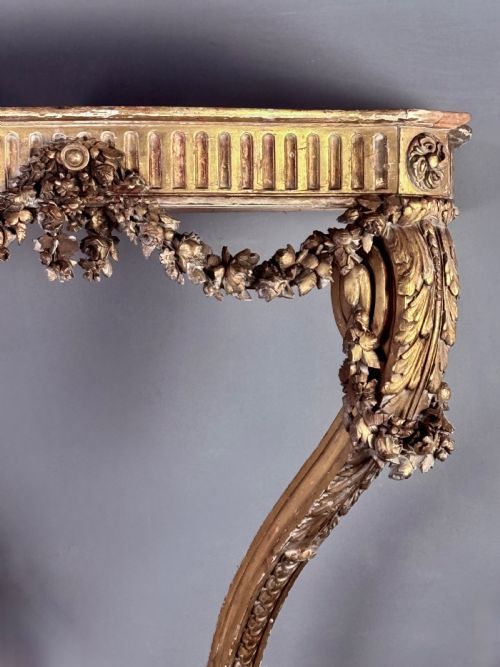
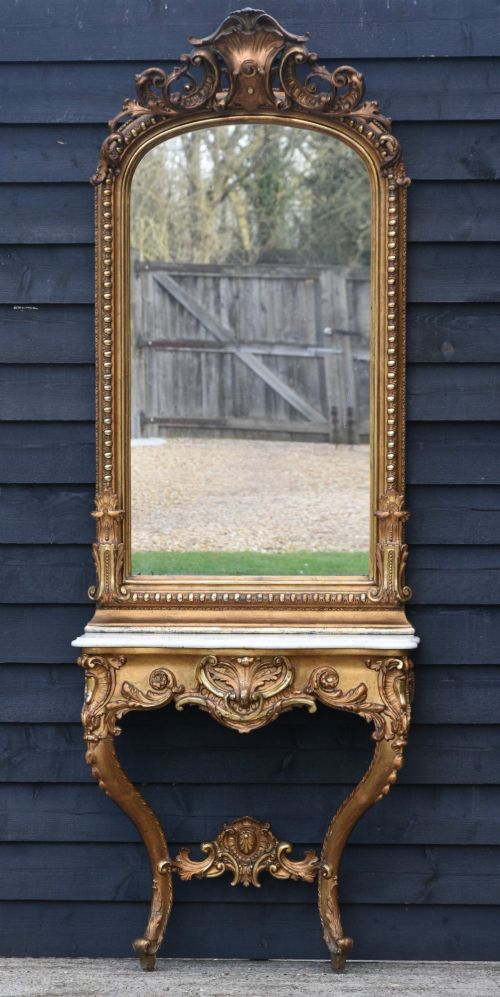
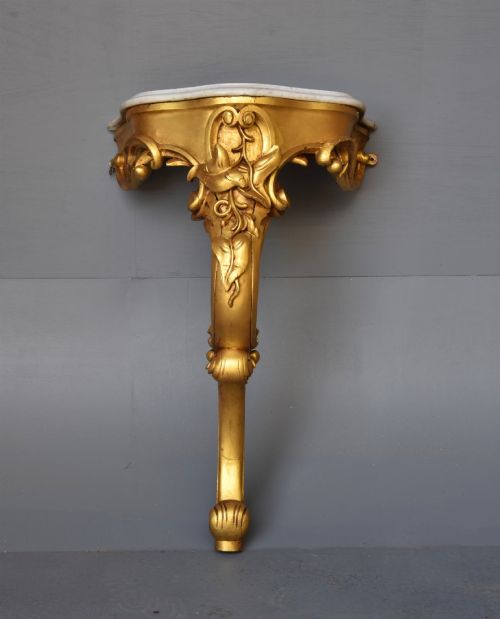

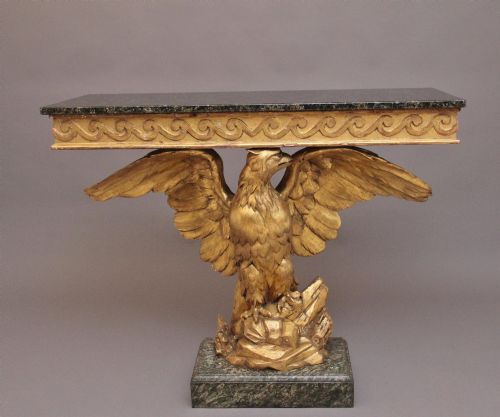
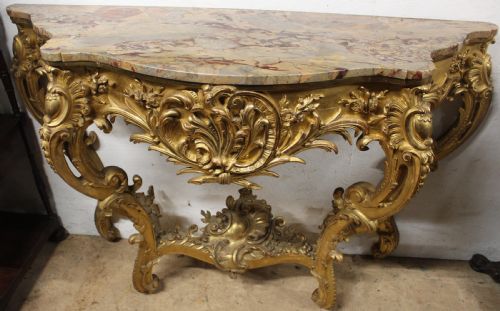
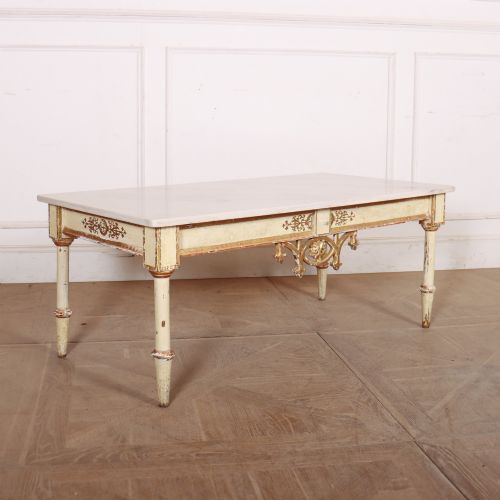
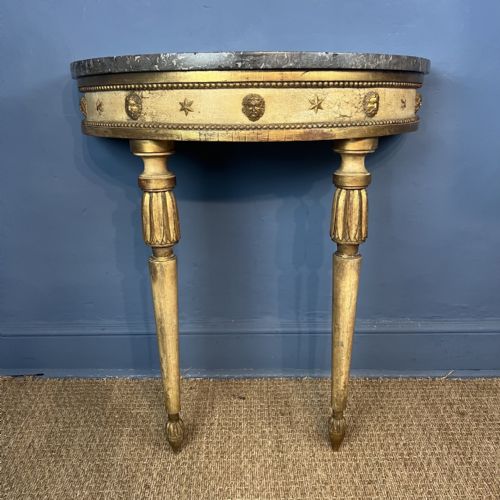
Gilt Wood Marble Table
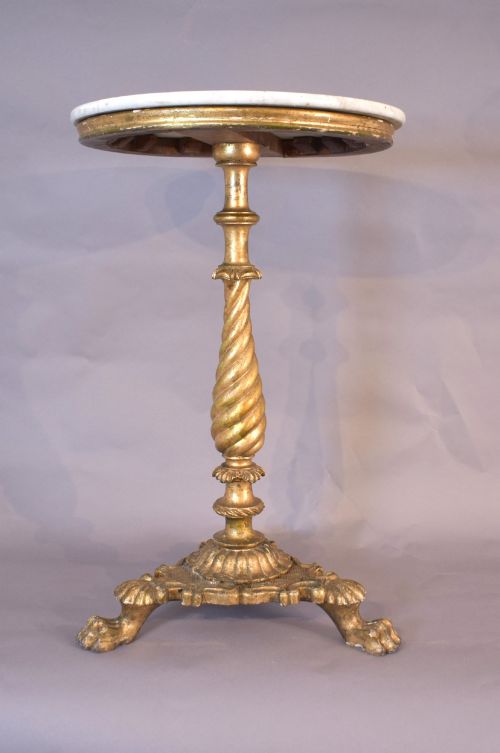
A gilt wood marble table brings architectural presence into a room, combining the reflective warmth of gold leaf with the cool surface of natural stone.
Gilt Wood Marble Table
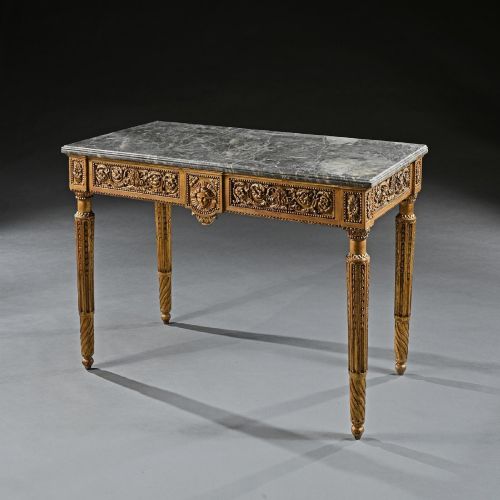
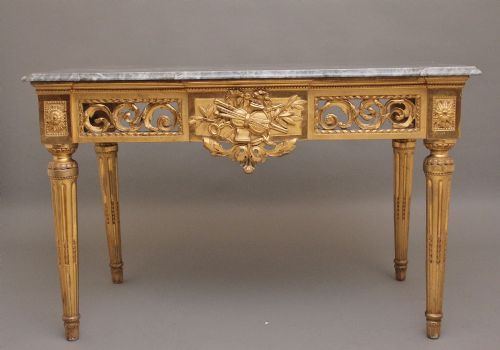
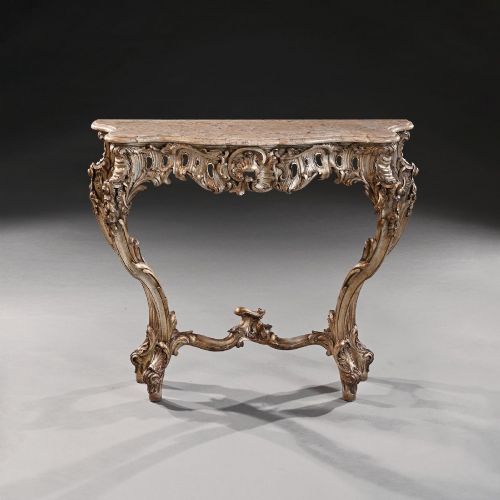
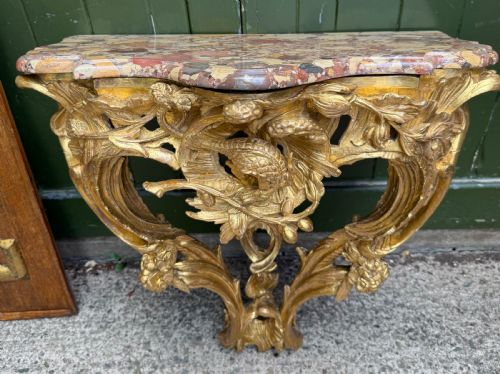
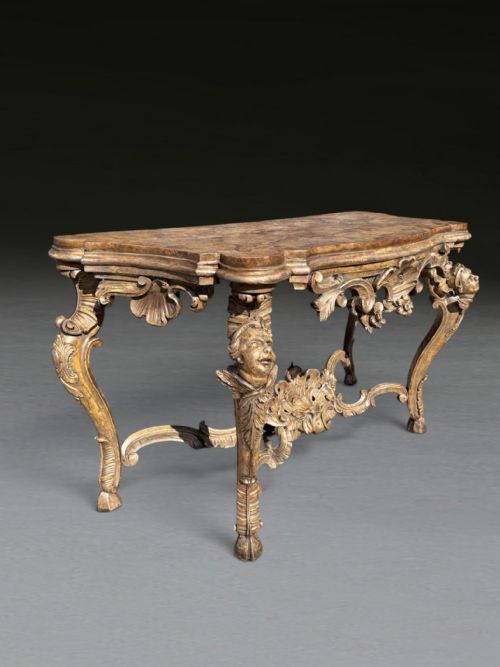
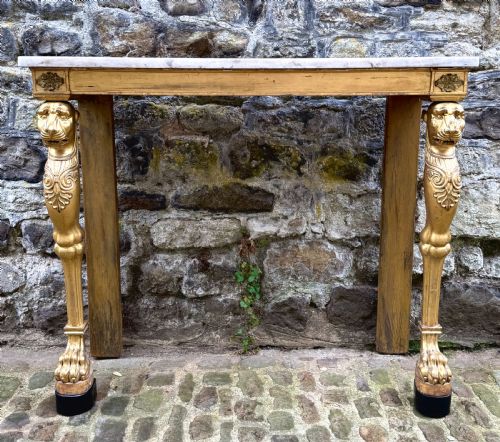
A gilt wood marble table search reveals a diverse group of decorative furnishings, predominantly taking the form of console tables designed to sit against a wall.
The pieces appearing on this page span from the eighteenth century through to the early twentieth century, with nineteenth-century examples and revival pieces occurring frequently.
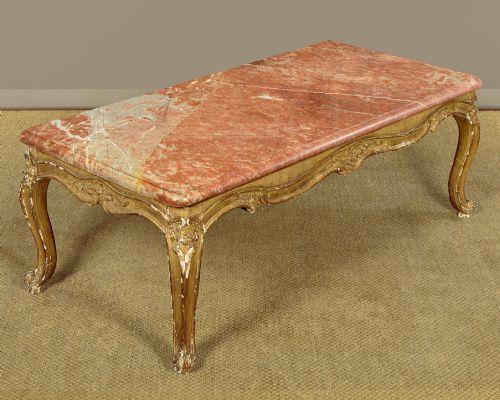
Alongside wall-mounted and floor-standing consoles, the selection includes occasional tables, coffee tables, and lamp tables featuring inset stone slabs.
Materials and construction
Makers built the structural frames from timber such as oak, pine, or mahogany, applying layers of gesso to carve intricate ornamentation before gilding the surface with gold leaf.
Many items incorporate silver gilt, painted finishes, or parcel gilt highlights over cream and neutral grounds to achieve varied decorative effects.
Heavy marble tops, including Carrara and figured varieties like breche d'alep, rest directly upon the carved wooden bases, secured by their own weight or rebated frames.
Listings incorporate Italian Rococo, French Neoclassical, and Baroque Revival styles spanning multiple centuries.
Judging quality and craftsmanship
Quality rests heavily upon the crispness of the wood carving beneath the gilt layer, where hand-tooled depth outperforms shallow machine shaping.
The application of the gold leaf and the preservation of the underlying gesso reveal the original workshop standard, distinguishing high-status commissions from simpler decorative items.
Felix-Alfred Ternisien
The Gilt Wood Marble Table Glossary
- Giltwood
- Timber coated with gold leaf over a prepared gesso ground. This technique creates a luminous surface that catches candlelight or natural daylight.
- Console table
- A table designed to stand against a wall, frequently supported by ornamental legs or brackets rather than four freestanding posts.
- Breccia marble
- A composite stone featuring angular rock fragments embedded in a contrasting matrix. It provides significant pattern and colour variation to table tops.
- Gesso
- A plaster mixture applied to wood frames to create a smooth, buildable surface for carving and gilding. Artisans applied it in multiple layers.
- Serpentine
- A gently undulating curved outline found along the front edge of tables. This shape requires skilled carpentry and stone-cutting to follow the contours.
Gilt Wood Marble Table: Frequently Asked Questions
Where should I place a console table?
Console tables function best placed flat against a wall in a hallway, drawing room, or beneath a matching pier mirror. Their shallow depth allows them to occupy circulation spaces without blocking movement.
Because many period console tables were designed for wall attachment, checking the stability and support structure of the base ensures the piece stands securely in its chosen room.
How do I care for the marble top?
Natural stone surfaces require gentle cleaning with warm water and a soft cloth to preserve the polish. Acidic liquids like citrus juice or wine can etch the marble if left unattended.
Using coasters and avoiding harsh chemical cleaners protects the historical finish of the stone slab over decades of domestic use.
What is the difference between Rococo and Neoclassical styles?
Rococo designs embrace asymmetrical scrolls, naturalistic shell motifs, and flowing organic curves. They appeared across eighteenth-century Europe and later revival periods.
Neoclassical pieces shift towards geometric symmetry, straight fluted legs, and architectural restraint inspired by classical antiquity.
Can these tables support heavy objects?
The thick marble slabs possess substantial weight that keeps the stone stable upon the wooden base. However, wall-mounted console brackets rely on proper fixings into the structural wall behind them.
Placing everyday lamps and decorative items presents no difficulty, though large stone pieces should not bear excessive downward pressure without proper wall support.