



Marble Top Dressing Mirror
A marble top dressing mirror brings substantial stone surfaces and reflective glass together in bedroom furniture designed for daily grooming.
Marble Top Dressing Mirror
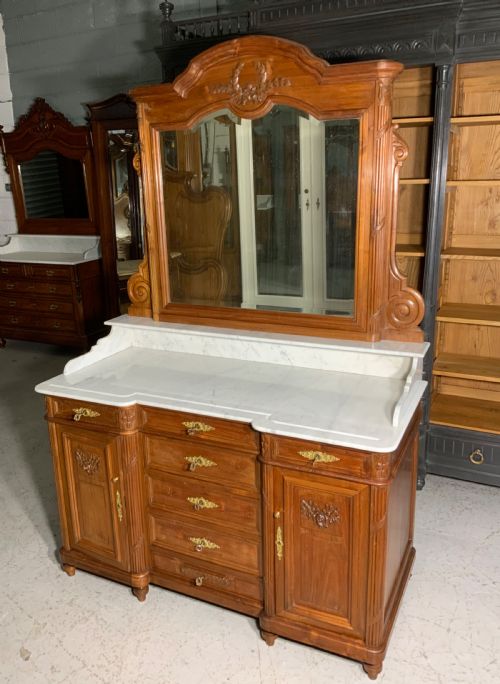
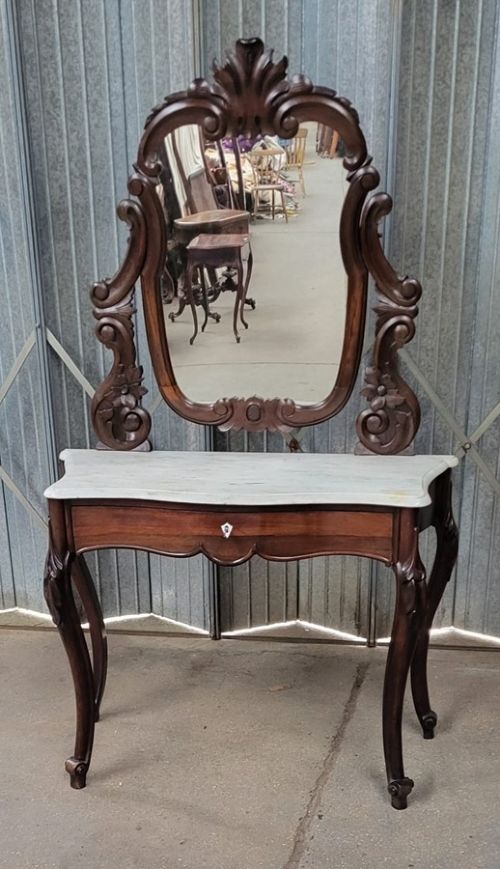
A marble top dressing mirror combines a solid stone surface with a tilting or fixed glass plate, appearing frequently within bedroom suites, washstands and standalone dressing tables. These pieces draw heavily on French Rococo Revival, French Empire, Arts and Crafts and Victorian styles, spanning the eighteenth, nineteenth and early twentieth centuries.
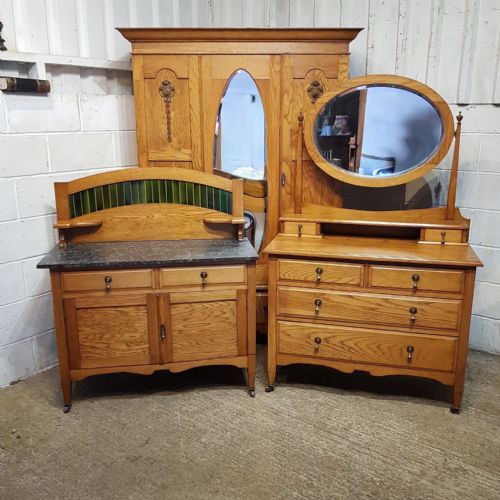
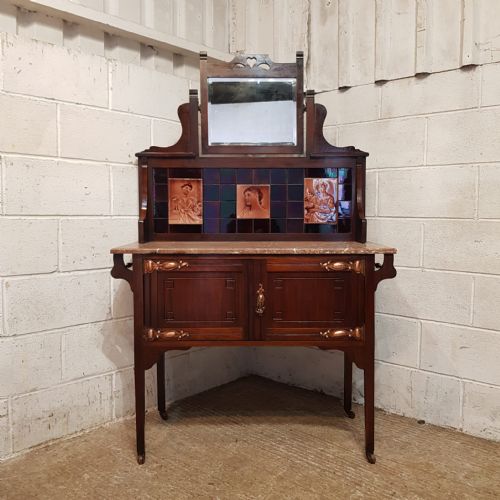
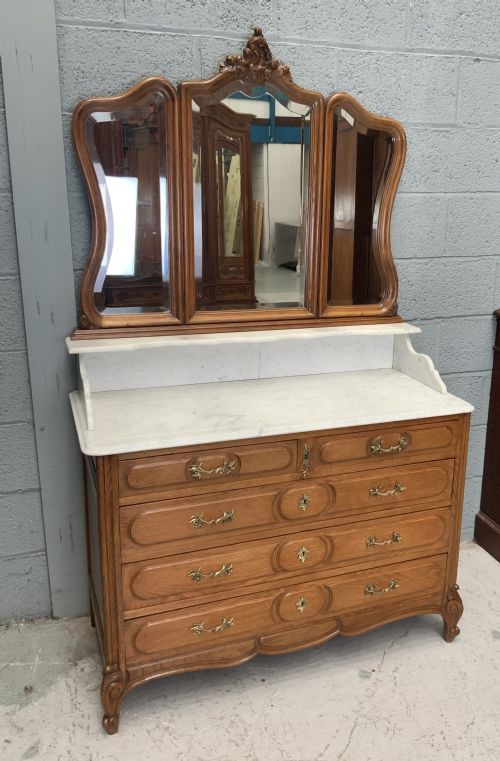
Buyers encounter variations ranging from compact mahogany toilet mirrors to large walnut and oak washstands with integrated marble slabs and ceramic components. The core function remains personal grooming, though many examples double as washstands or decorative chest surfaces designed to hold water basins and toiletries safely.
Origin and period dictate the exact proportion, with French workshop pieces offering curved walnut and ormolu mounts alongside British Victorian and Edwardian iterations in mahogany and oak.
Materials and construction
Cabinetmakers built these pieces using dense hardwoods like mahogany, walnut, oak and rosewood, often pairing them with cool marble slabs to resist moisture from washing water and cosmetics. Brass and ormolu mounts added structural reinforcement and decorative flourish, while ceramic tiles and inserts appeared on washstands for easy cleaning.
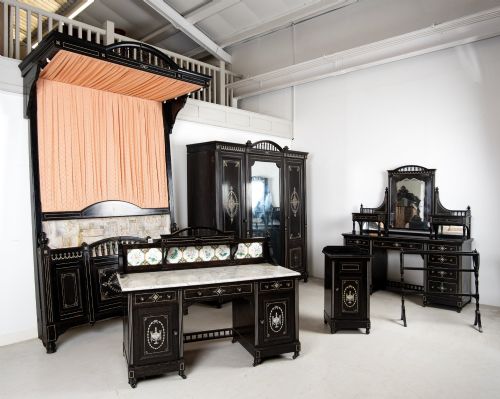
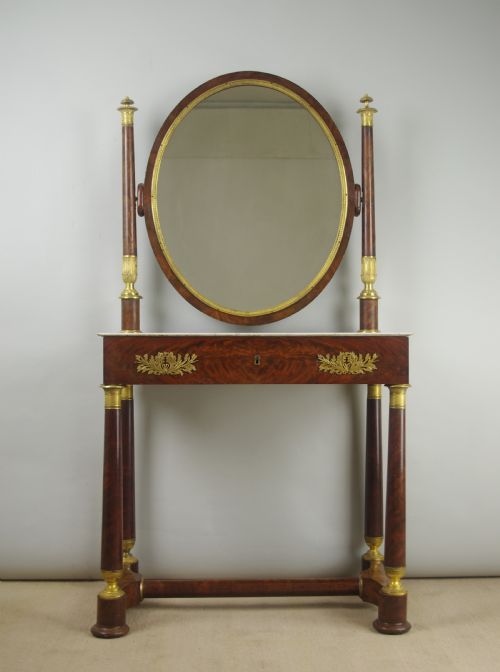
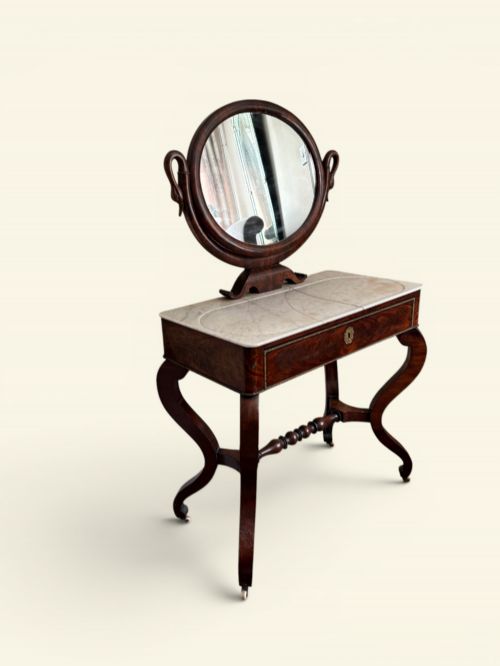
Glass swing mirror plates sat within pivoting wooden frames supported by upright arms, allowing the user to adjust the angle of reflection. Inlaid veneers, ebonised details and carved woodwork defined the decorative vocabulary across French and British workshops.
The listings combine nineteenth and early twentieth-century periods, utilising mahogany, oak, walnut, marble, brass, and ceramic tiles across dressing tables and washstands.
Distinctions in quality
Quality rests on the selection of materials, from the thickness and figuring of the marble slab to the depth of the mahogany or walnut timber grains. Superior pieces demonstrate precise joinery, original brass or ormolu mounts that fit the timber contours exactly, and mercury or silvered glass plates with minimal oxidation.
The integration of the mirror frame to the dressing table base reveals the maker's hand, where well-balanced proportions and crisp woodcarving separate standard utility furniture from high-end regional or Parisian salon pieces.
The Marble Top Dressing Mirror Glossary
- Ormolu
- Gilded bronze mounts applied to furniture. This decorative technique was favoured in French Empire and Rococo Revival pieces to highlight structural corners and drawer fronts.
- Washstand
- A piece of bedroom furniture designed for personal washing. These frequently incorporate marble tops and ceramic tiles to protect the wooden structure from water splashes.
- Faux bamboo
- Wood turned and painted to resemble natural bamboo stalks. This technique appeared on nineteenth-century dressing tables and bedroom suites influenced by the Aesthetic Movement.
- Swing mirror
- A glass mirror plate mounted on pivots between two upright posts. This allows the user to tilt the reflection up or down.
Marble Top Dressing Mirror: Frequently Asked Questions
How do I date a marble top dressing mirror?
Dating relies on combining the timber species, hardware types and stylistic clues found in the carving. Pieces from the eighteenth century show different joinery and proportions compared to Victorian or Edwardian iterations.
Examining the backboards, drawer construction and the formulation of the glass plate helps narrow the decade of production. French pieces often carry distinct regional carving traits that separate them from British workshop equivalents.
Were these mirrors originally attached to the tables?
Many dressing mirrors were built as permanent fixtures bolted or tenoned directly into the rear of the dressing table or washstand. Others sat unattached on top, held in place by their own weight and supporting frame.
Buyers should check the mounting points on older pieces to determine if the mirror plate is original to the base or a later marriage of two separate items.
How do I clean the marble top?
Marble is a porous stone that reacts poorly to acidic cleaners like vinegar or lemon juice. Warm water and a mild, neutral soap applied with a soft cloth remain the safest method for routine cleaning.
Stubborn stains require specialist poultices rather than harsh scouring pads, which can dull the polished surface and scratch the stone.
Can I replace a damaged mirror glass?
Original mirror glass often shows foxing, dark spots and silvering degradation that collectors prize as a sign of age. Replacing the glass is possible, but doing so removes part of the piece's historical authenticity.
If the glass is cracked or completely shattered, a glazier can cut a replacement plate to fit the existing wooden rebates while retaining the original pivoting frame.