



Marble Top Chevet
A marble top chevet is a compact French bedside cabinet designed to hold a lamp and a water jug while bringing stone and timber to the room.
Marble Top Chevet
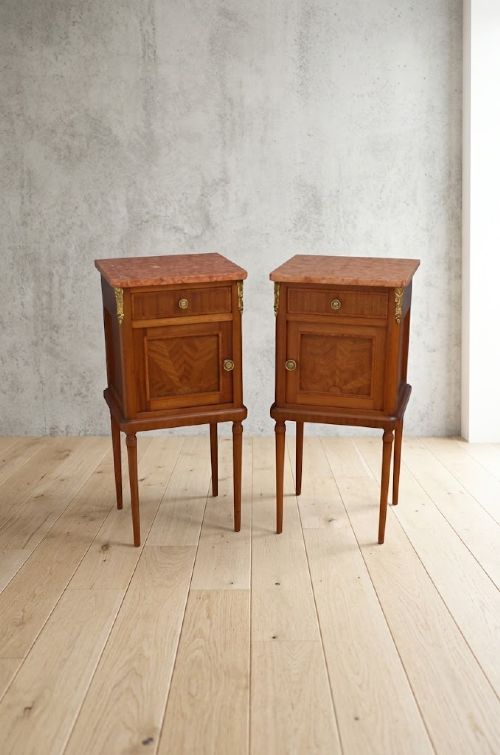
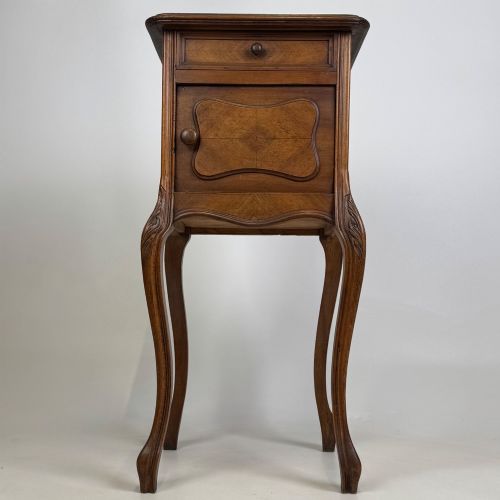
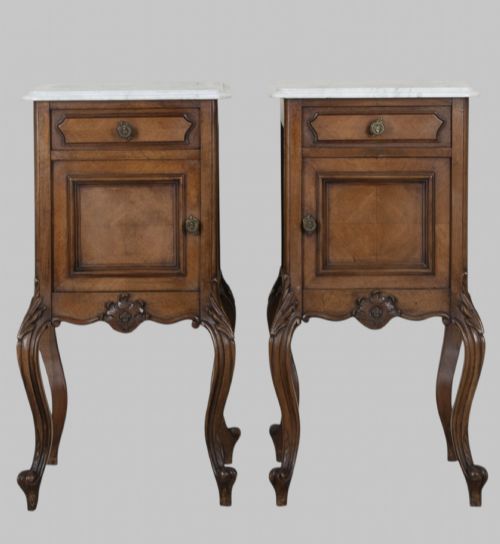
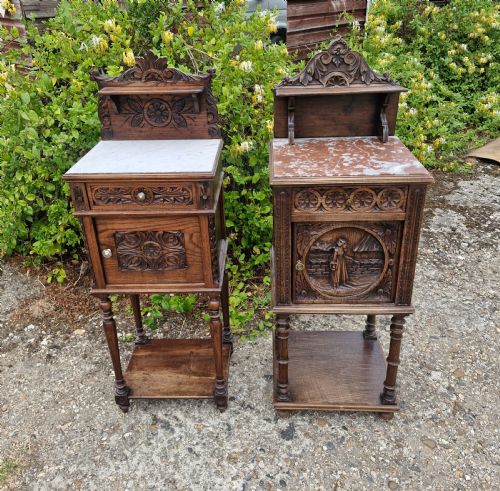
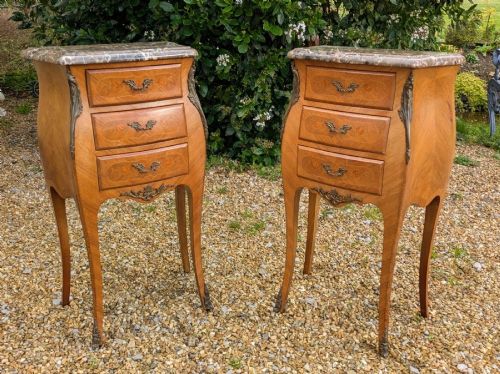
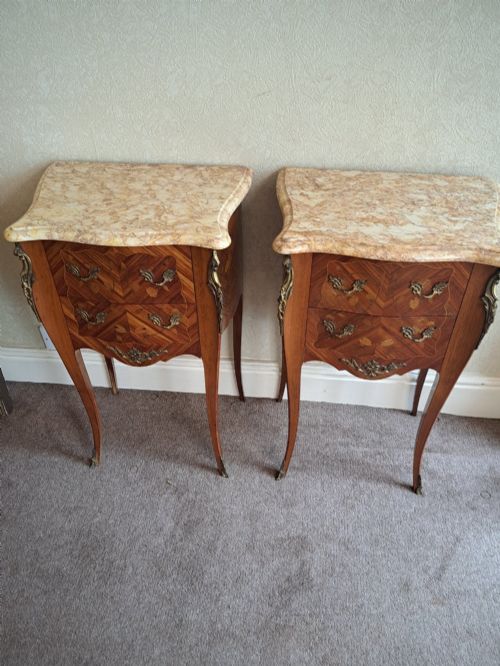
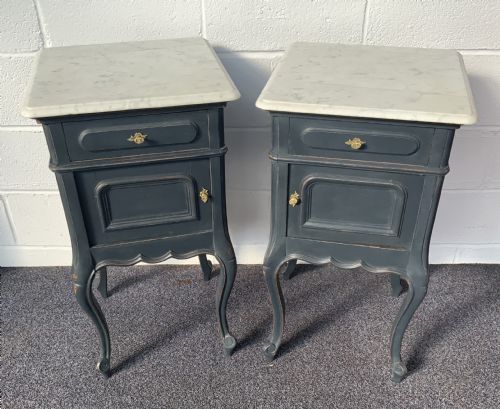
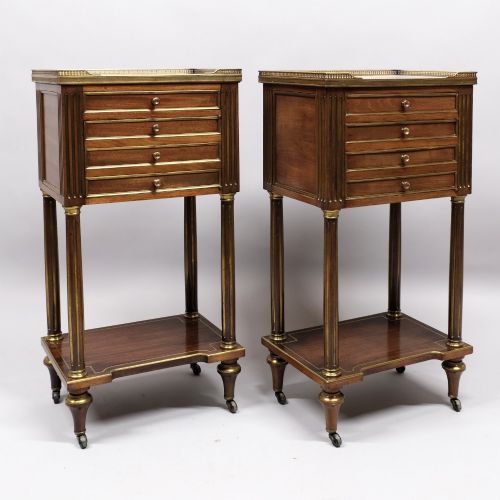
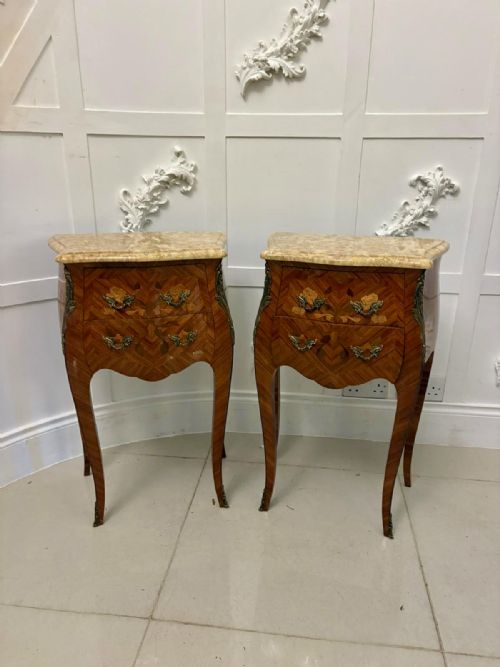
A marble top chevet functions primarily as a bedside cabinet, nightstand or small side table originating from French workshops across the nineteenth and early twentieth centuries. These pieces appear frequently in pairs, standing beside a bed with enclosed cupboards, open compartments or small drawers.
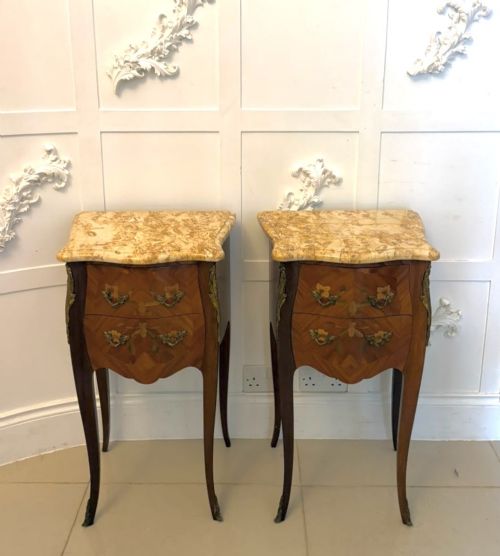
Makers constructed these cabinets using regional timbers such as walnut, mahogany, oak and kingwood, frequently topped with fitted slabs of marble including Belgian Sainte-Anne stone. Styles range from restrained Louis XVI to serpentine Louis XV and robust French Provincial forms.
How they were made
Cabinetmakers joined dense hardwoods like walnut and mahogany using traditional joinery, occasionally shaping carcases into bombe curves or applying delicate marquetry and parquetry veneers. Ormolu mounts, brass handles and gallery rails provide decorative punctuation to the timber frames.
Heavy stone tops were individually cut and polished to fit the contours of each cabinet, resting upon the wooden structure without permanent fixings. Paint finishes and carved details reflect specific period revivals, from late Victorian interpretations to Edwardian adaptations.
Some nineteenth-century French cabinetmakers thoughtfully left an interior gap behind the marble top to let bedside water jugs breathe.
What varies in quality
The sophistication of the timber work and the figuring of the wood grain separate standard production from superior pieces, particularly where marquetry or parquetry patterns are aligned with precision across drawer fronts and doors. The weight, thickness and geological patterning of the marble top also indicate the original cost and ambition of the piece.
The integration of cast ormolu mounts and the crispness of hand-carved wooden details distinguish finer workshops from simpler regional outputs. Structural integrity in the joints and the smooth operation of small drawers determine how well a cabinet survives daily use.
The Marble Top Chevet Glossary
- Chevet
- A French bedside table or small cabinet designed for the bedroom. These pieces often incorporate a cupboard door and a marble surface.
- Marquetry
- The art of applying decorative pieces of veneer to a structure to form intricate patterns and pictures. Craftsmen utilise various coloured woods to achieve tonal depth.
- Parquetry
- A geometric mosaic of wood pieces used for decorative floors and cabinet surfaces. This technique creates regular patterns such as cubes or chevrons.
- Ormolu
- Gilded bronze used for decorative mounts and furniture hardware. The technique involves applying a gold amalgam to bronze.
- Bombe
- A swelling, outward-curving contour found on the sides and fronts of cabinet furniture. This undulating form is characteristic of Louis XV design.
Marble Top Chevet: Frequently Asked Questions
Where do these marble top chevet cabinets fit best?
These compact cabinets suit modern bedrooms as functional bedside tables where stone surfaces resist water rings from glasses and lamps.
They also serve effectively in hallways or sitting rooms as small side tables or lamp stands.
How do I clean the marble top?
Use warm water and a soft cloth with mild soap, avoiding acidic cleaning products that can etch the polished stone surface.
Dry the marble thoroughly after washing to maintain its natural sheen.
Are these pieces usually sold as pairs?
Many listings comprise matched pairs intended to sit symmetrically on either side of a bed.
Single cabinets also appear regularly for buyers seeking an accent piece in a smaller space.
How do I identify the period?
Stylistic clues such as Louis XV curves, Empire motifs or Edwardian proportions help narrow down the decade of manufacture.
Construction methods and timber choices further clarify whether a piece dates to the nineteenth or early twentieth century.