


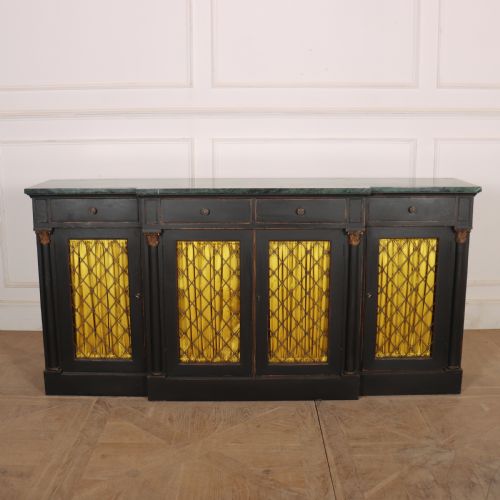
Marble Top Buffet Server
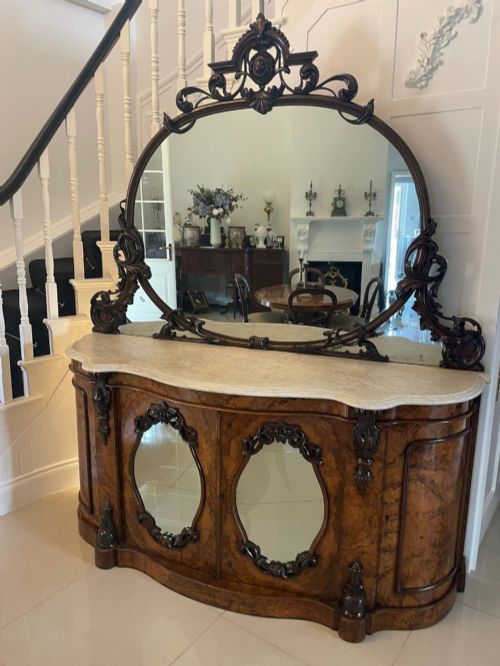
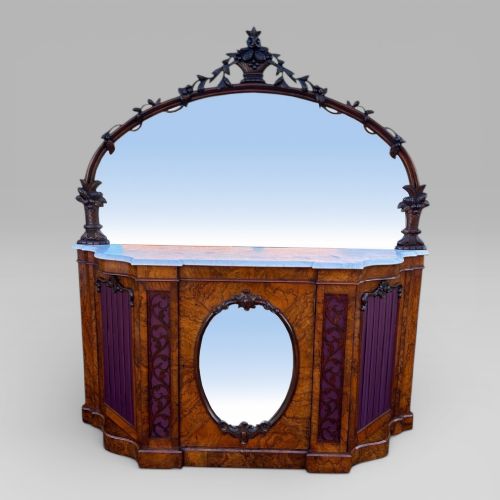
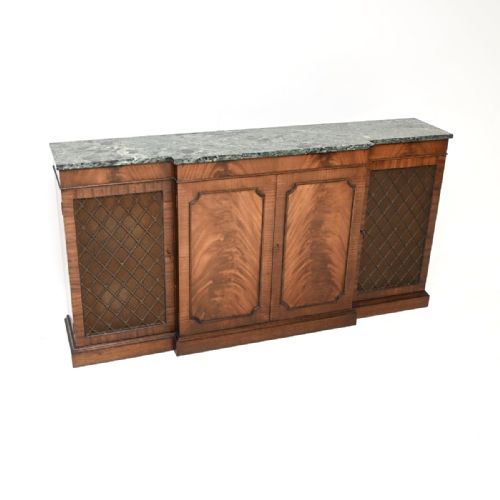
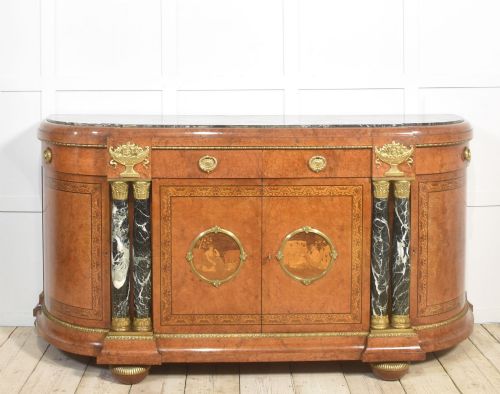
A marble top buffet server brings stone-surfaced utility to dining and living spaces, combining heavy serving slabs with timber cabinetry.
Marble Top Buffet Server
When you search for a marble top buffet server, you encounter heavy timber storage furniture designed for serving food and displaying tableware. These pieces combine substantial wooden cabinetry with fitted stone surfaces.
The versions most common on this page lean heavily towards French and Victorian origins. Sideboards, credenzas, and buffets frequently appear alongside smaller side cabinets and serving tables.
Timelines span from the eighteenth century through the nineteenth century and into the twentieth century. French regional styles and revival designs dominate the selection alongside English sideboard forms.
How They Were Made
Carpenters and cabinet makers utilised solid woods like mahogany, walnut, burr walnut, and oak to construct the main bodies. Decorative elements relied on veneers of birds eye maple and elaborate carved detailing.
Functional surfaces incorporated fitted marble slabs designed to resist moisture and heat during food service. Metalwork details included brass mounts and ormolu hardware alongside glass doors and fitted keys.
Listings feature walnut, mahogany, burr walnut, birds eye maple, and oak paired with marble, brass, and ormolu.
What Varies in Quality
The distinction between standard utility items and finer examples rests in the selection of cabinet timbers and the handling of decorative mounts. Finely figured burr walnut and birds eye maple sit above plain painted pine or standard oak.
The integration of the stone top and the precision of ormolu mounts signal superior workshop execution. Carved mirror backs and intricate door fronts separate ambitious cabinet work from simple utilitarian storage.
Krieger of Paris
The Marble Top Buffet Server Glossary
- Ormolu
- Gilded bronze ornamentation applied to furniture mounts. This technique was widely utilised on French cabinets.
- Chiffonier
- A low sideboard or cabinet with drawers and shelves. These pieces date primarily to the nineteenth century.
- Burr walnut
- Timber taken from the warted growths on walnut trees, showing swirling grain patterns. Cabinet makers prized this wood for decorative veneers.
Marble Top Buffet Server: Frequently Asked Questions
What is a marble top buffet server used for?
These pieces function as serving stations and storage units in dining rooms. The stone surface provides a durable area for placing dishes during meals.
Cabinet compartments below house glassware, cutlery, and table linens. The top surface also serves as a display space for decorative objects.
How do I care for the marble top?
Marble requires gentle cleaning with warm water and mild soap to protect the polished surface. Avoid acidic cleaners that etch the stone.
Promptly wipe up spills to prevent staining. Using mats under hot dishes and glasses preserves the finish.
Are these pieces French or English?
The selection includes both French and English origins, with French provincial and revival styles appearing frequently. French pieces often feature ormolu mounts and birds eye maple.
English examples tend to use mahogany or oak with simpler lines. Both traditions utilise fitted marble slabs for the main serving surface.
How do I date a marble top buffet server?
Dating relies on timber choices, construction techniques, and stylistic revival markers. Pieces from the eighteenth century show different joinery methods compared to Victorian or nineteen thirties items.
Ormolu mounts and carved mirror backs point towards specific nineteenth century periods. Regional styles like French Louis Philippe provide further chronological context.