

Marble Occasional Table
A marble occasional table brings a polished stone surface and enduring elegance to any room.
Marble Occasional Table
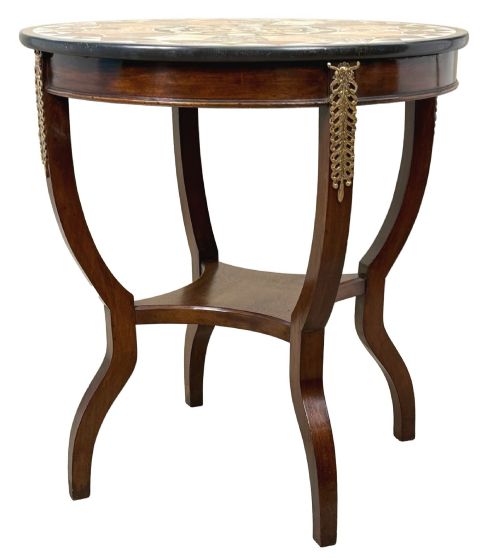
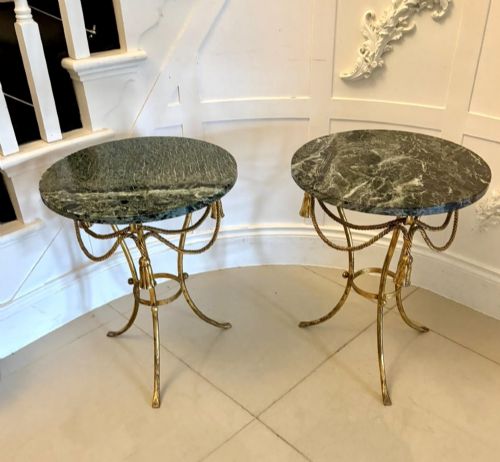
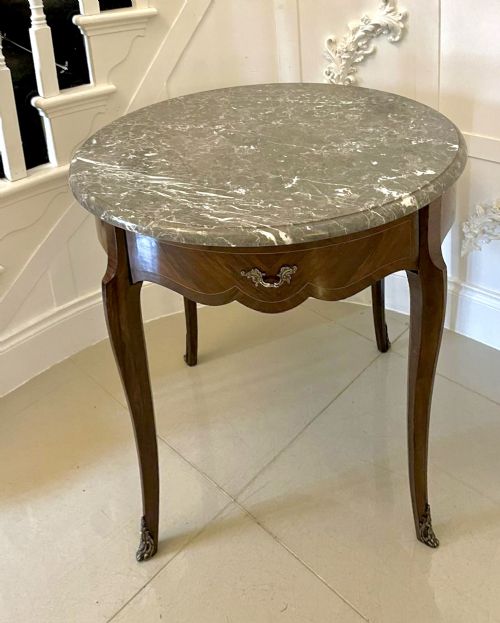
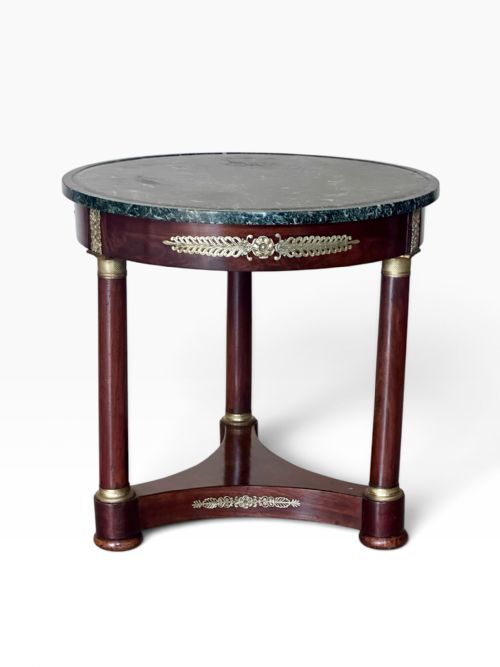
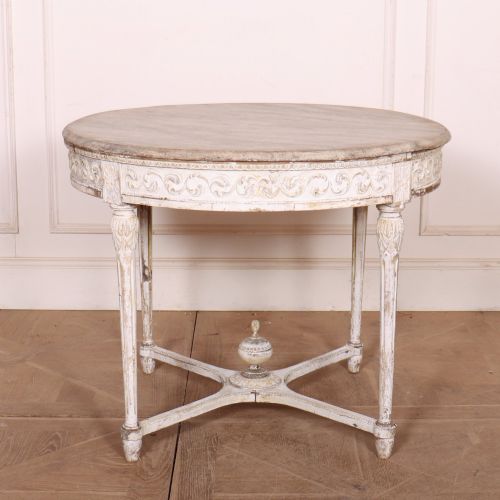
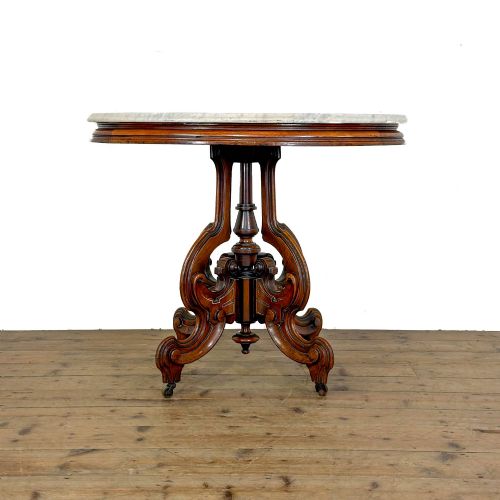
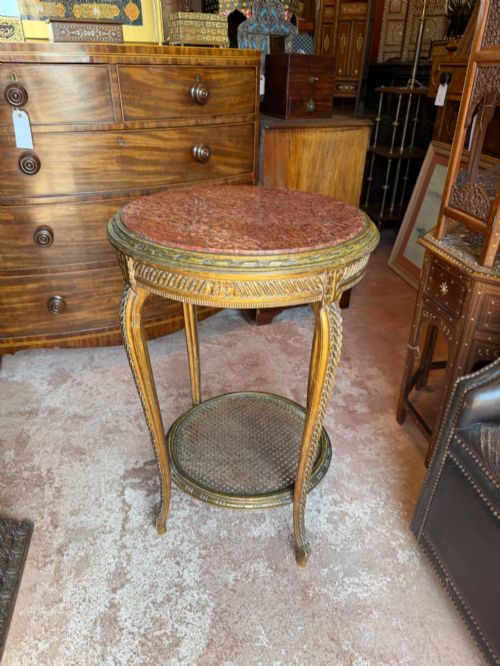
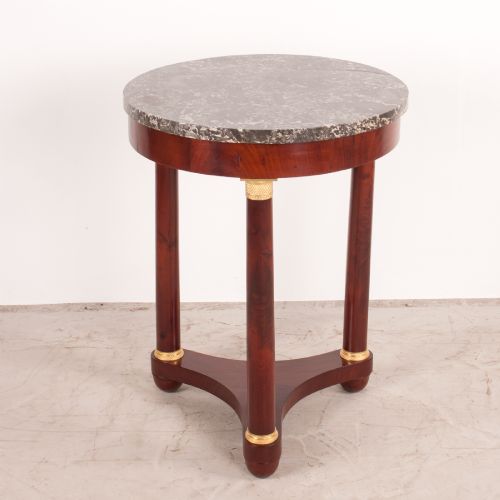
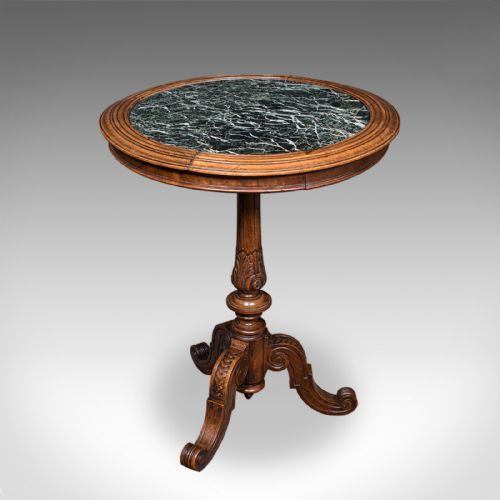
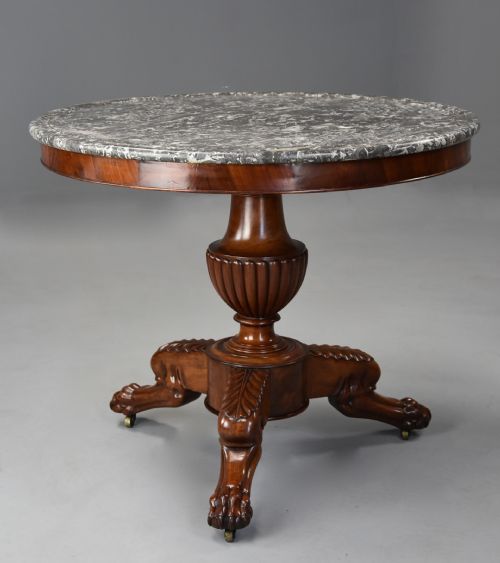
A marble occasional table encompasses a diverse group of compact furniture designed for resting lamps, drinks, or decorative objects. You will frequently encounter French gueridons and side tables dating from the nineteenth century, often featuring circular stone tops supported by timber or metal bases.
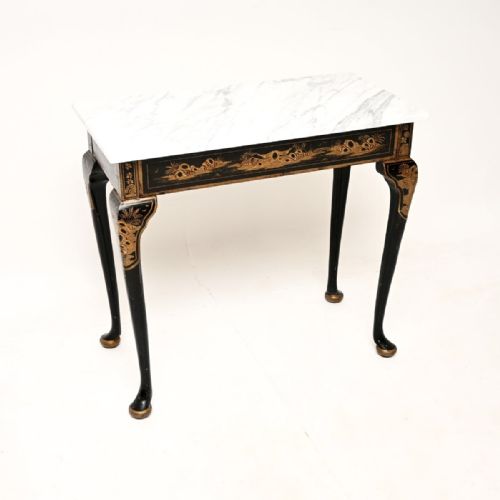
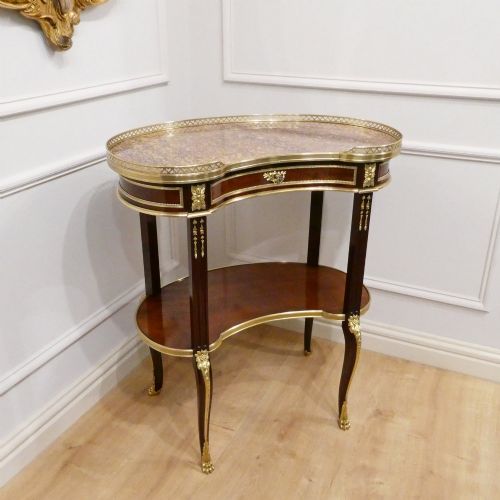
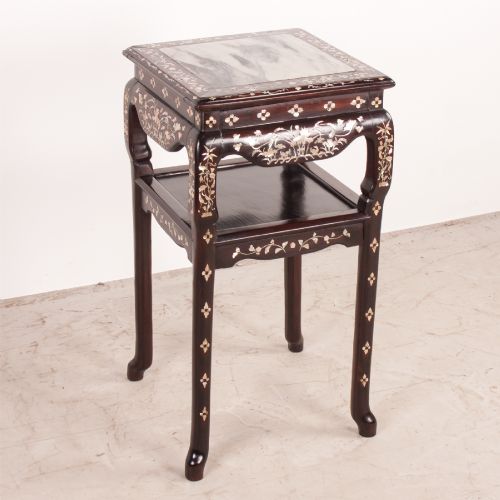
The selection ranges from Victorian mahogany and walnut pieces to elaborately mounted French Empire and Louis style designs. Alongside European work, examples include Chinese tables set with marble or mother of pearl inlay.
These tables served varied functions in historic interiors, operating as wine tables, games tables, or plant stands. The surviving pieces highlight a preference for solid stone surfaces paired with finely turned or carved frames.
Materials and Construction
Makers paired heavy polished marble slabs with robust structural timbers including mahogany, walnut, kingwood, and rosewood. White, grey, and green marble tops frequently rest upon frames strengthened by brass, giltwood, or ormolu mounts.
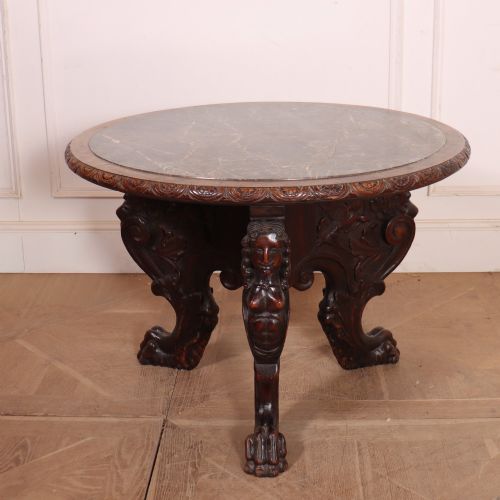
Cabinetmakers utilised sophisticated techniques like parquetry, marquetry, and lacquer work to enrich the wooden bases. Cast brass details, such as rams heads or foliate mounts, secured the structural integrity while enhancing the decorative scheme.
Assessing the Craftsmanship
Quality reveals itself in the selection and preparation of the materials. Superior tables display finely figured wood veneers, precisely cast ormolu mounts, and heavy, well-polished marble tops with natural veining.
The weight of the stone demands rigorous joinery in the underframe to prevent sagging or instability over time. Hand-carved wooden elements, crisp brass casting, and specimen marble inlays distinguish finer examples from standard production pieces.
James Shoolbred·Maison Millet·L.Martin of Paris
The Marble Occasional Table Glossary
- Gueridon
- A small French table, typically round and supported by a central pillar or tripod base. This form frequently incorporates a marble top and featured prominently in nineteenth-century salons.
- Ormolu
- Gilded bronze mounts applied to furniture for decorative enrichment. This technique was widely utilised during the French Empire and Louis periods to highlight structural joints and legs.
- Specimen Marble
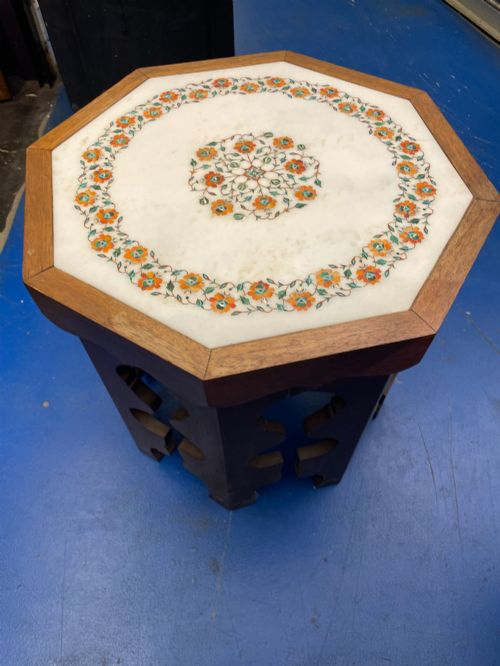
- A surface composed of various coloured marbles arranged in geometric or pictorial patterns. These complex tops demonstrate high stone-cutting skill.
- Bouillotte Table
- A small French card or occasional table with a raised gallery around the marble top. It gained popularity during the eighteenth and nineteenth centuries for intimate games.
- Pietra Dura
- An artistic technique using cut and fitted polished coloured stones to create images. This method appears on luxury table tops alongside wood parquetry.
Marble Occasional Table: Frequently Asked Questions
What is a gueridon table?
A gueridon is a traditional French occasional table supported by a central column or multiple legs. They were designed for versatile use around the home, often holding lamps or small decorative items.
The form dates back centuries and remains a staple category for those seeking circular marble-topped furniture with European styling.
How do I care for a marble top?
Marble requires gentle cleaning with mild soap and water to preserve the polished finish. Avoid acidic substances that can etch the stone surface over time.
Regular dusting and immediate attention to spills will keep the stone looking pristine without the need for harsh chemical treatments.
Are these tables sturdy enough for daily use?
Most antique occasional tables were built using dense hardwoods and heavy stone tops to ensure stability. While solid, their delicate brass mounts or carved wooden legs mean they suit lighter duties rather than heavy wear.
Placing them away from high-traffic walkways protects both the frame and the protruding corners of the marble slab.