



Carved Alabaster Table
A carved alabaster table brings a translucent, luminous mineral into a room, offering tactile warmth and classical form.
Carved Alabaster Table
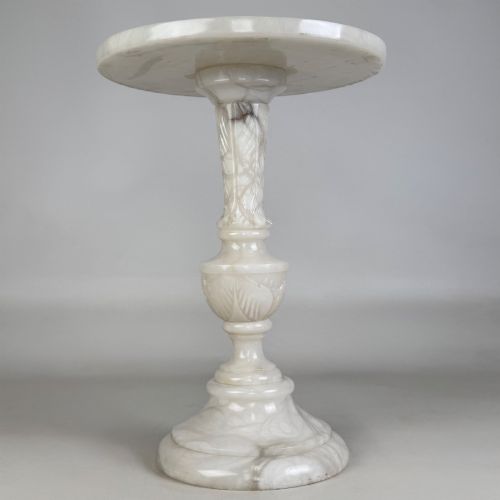
A carved alabaster table represents the heavier architectural furnishings and smaller plant or bust stands found in these listings. These items deploy soft stone tops supported by carved pillars and columns rooted in nineteenth century and Edwardian design.
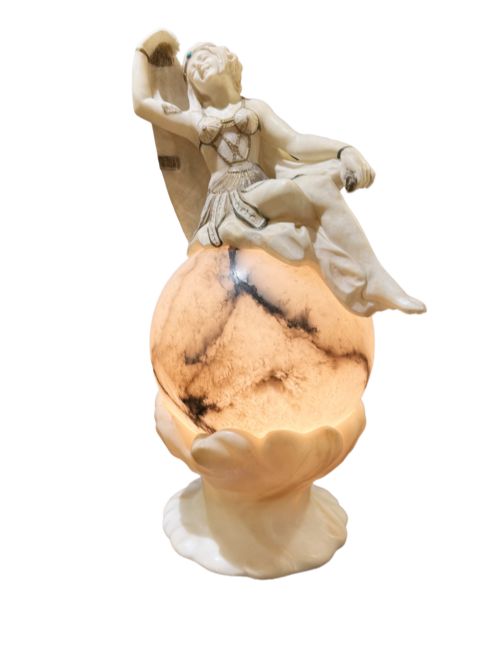
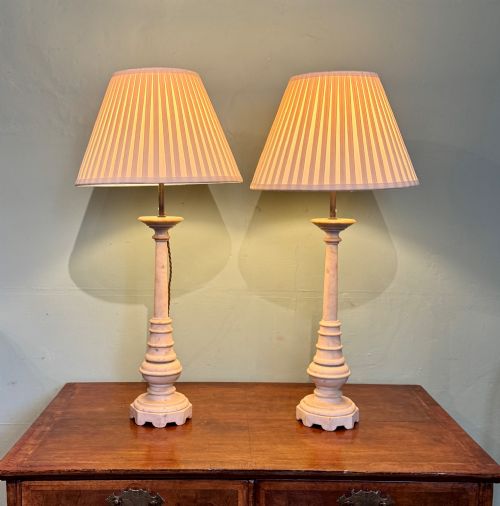
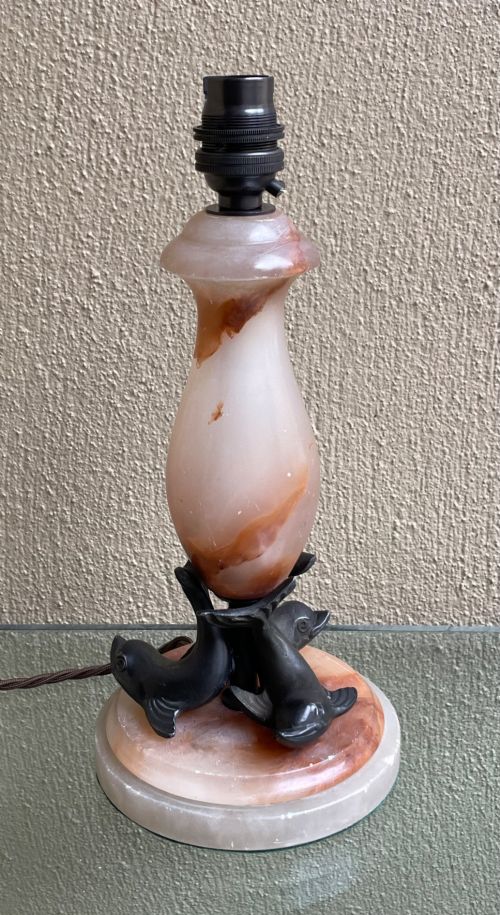
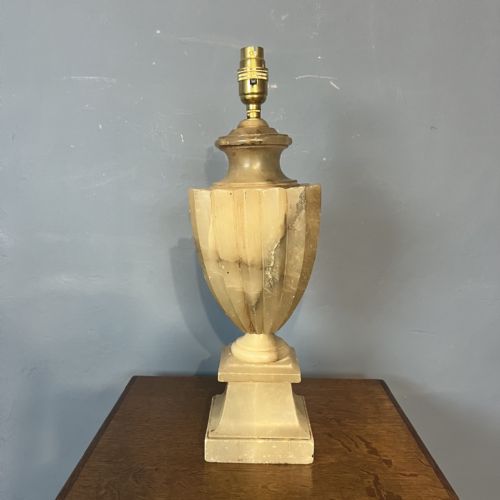
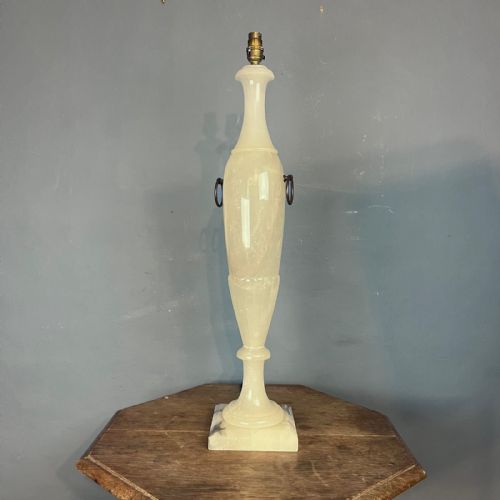
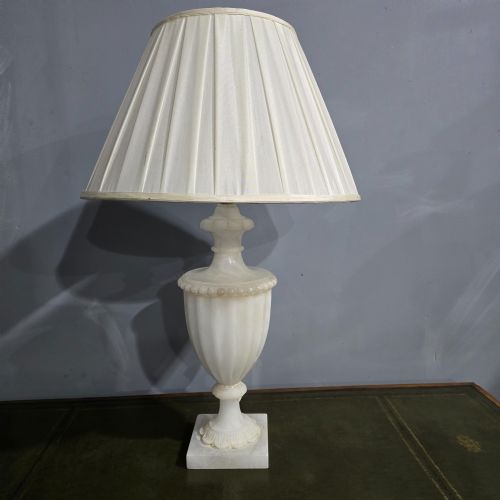
Table lamps dominate the wider selection of objects associated with this category, utilising the translucent qualities of the mineral. Pieces range from late Victorian country house lighting to Art Deco figural designs and campana urn bases.
Italian workshops account for a significant portion of the sculptural works and side tables documented here. Neoclassical and Classical Revival influences shape the profile of these decorative items.
How they were made
Alabaster and marble provide the primary mineral substance for these items, shaped through hand carving and turning on a lathe. Artisans exploit the natural translucency of the stone to catch the light, particularly in lamp bases and sculptural groups.
Brass, metal and wood components frequently integrate with the stone structure to form mounts, pillar shafts and internal frames. Glass elements occasionally appear alongside the alabaster, while fabric shades complete the lighting configurations.
Listings span periods from 1870 to 1930, encompassing Victorian, Edwardian and Art Deco aesthetics across various decorative forms.
What varies in quality
The depth and crispness of the carving define the distinction between standard production and masterwork execution. Fine sculptural pieces display meticulous hand-chiselled detail in figures and drapery, whereas lesser examples rely on simpler turned geometries.
The stone itself exhibits natural variation in purity, veining and translucency. Uniform colouration without intrusive mineral faults commands greater visual presence when illuminated.
The Carved Alabaster Table Glossary
- Alabaster
- A fine-grained, translucent form of gypsum or calcite used for carving ornamental objects and lamps. Its softness allows for intricate detail work.
- Campana Urn
- A bell-shaped vessel with a flaring rim and foot, frequently utilised as a base form for lighting. This classical silhouette derives from ancient Roman bronze and marble vases.
- Neoclassical
- A style spanning the eighteenth and nineteenth centuries that draws inspiration from the classical art and culture of ancient Greece and Rome. It emphasises proportion, symmetry and restrained ornamentation.
- Mantel Clock
- A household clock designed to sit on a fireplace mantel, often housed in a decorative stone or marble case. These housings frequently incorporate French mechanical movements under glass domes.
Carved Alabaster Table: Frequently Asked Questions
How do I clean an alabaster lamp?
Alabaster is a soft and water-soluble mineral that requires gentle dry dusting with a soft cloth. Moisture damages the surface polish and can dissolve the stone over time.
Avoid chemical cleaners and oils entirely. Professional conservation methods should be sought for deep staining or restoration.
Are these items purely decorative?
Many objects in this category serve functional roles as table lamps, side surfaces or plant stands. Lighting fixtures combine ambient illumination with sculptural presence.
Larger sculptural groups and mantel clocks function as focal points in period interiors. Side tables and plant pedestals provide stable display surfaces for busts and ceramics.
How do I identify Italian alabaster?
Italian pieces often bear distinct signatures or stylistic markers originating from workshops in regions such as Volterra and Florence. The stone quality tends to exhibit high translucency and fine grain structure.
Design motifs typically adhere to classical revival or Art Deco idioms. Many sculptural works from the early twentieth century reflect this provenance.
What is the difference between alabaster and marble?
Alabaster is significantly softer than marble and possesses a natural translucency that allows light to pass partially through the stone. Marble is a harder metamorphic rock with denser crystallization and less light penetration.
Both materials share similar carbonate compositions in certain geological formations. Artisans often paired them in nineteenth century decorative arts.