
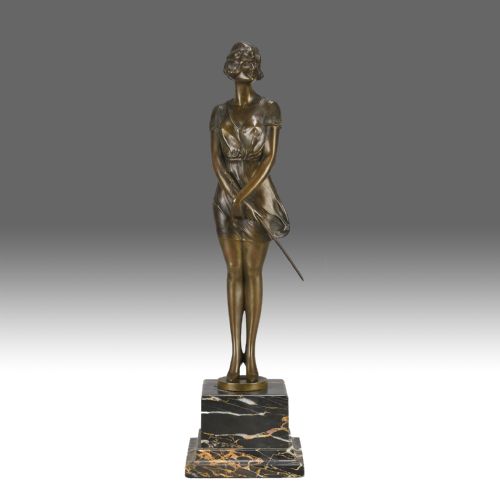
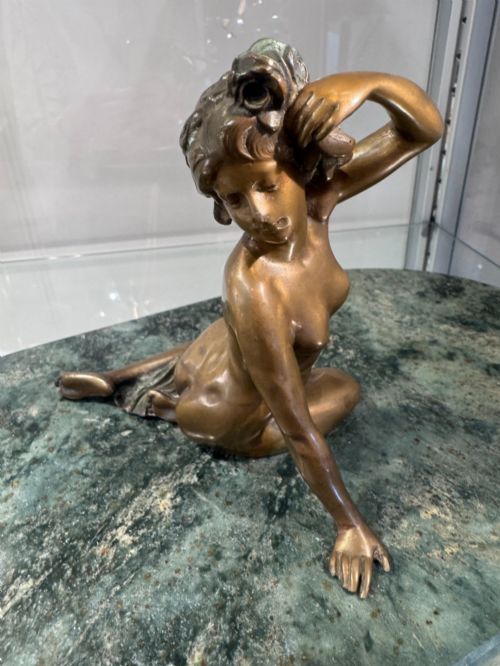
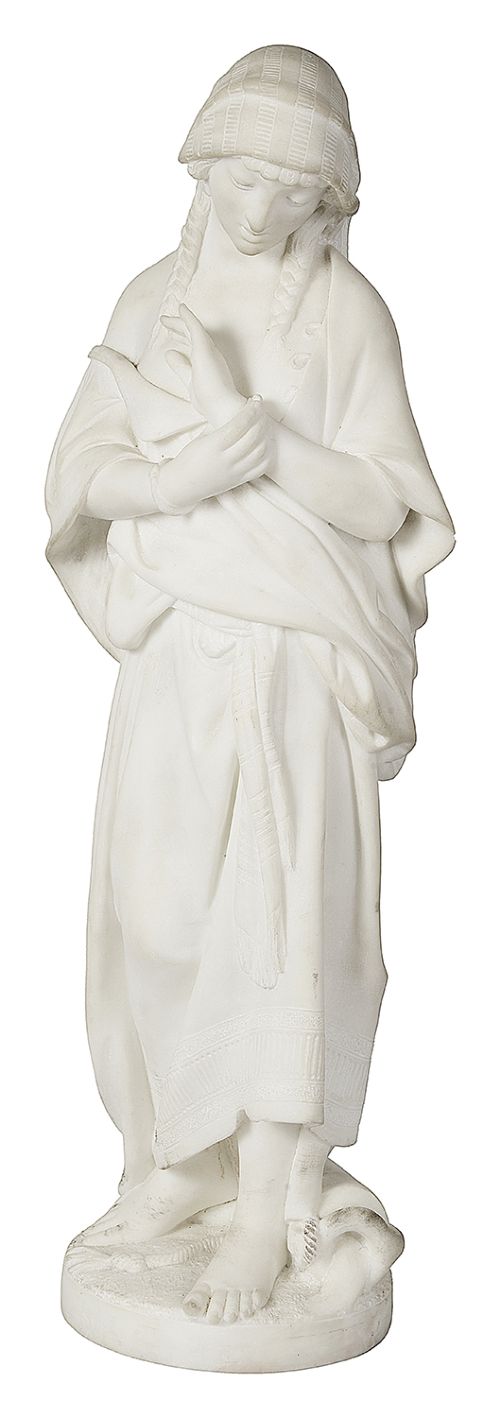
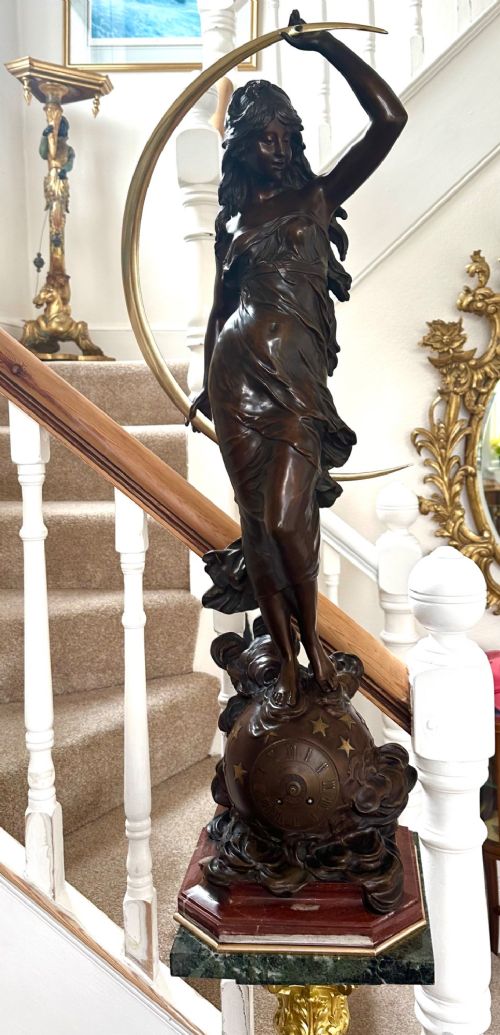
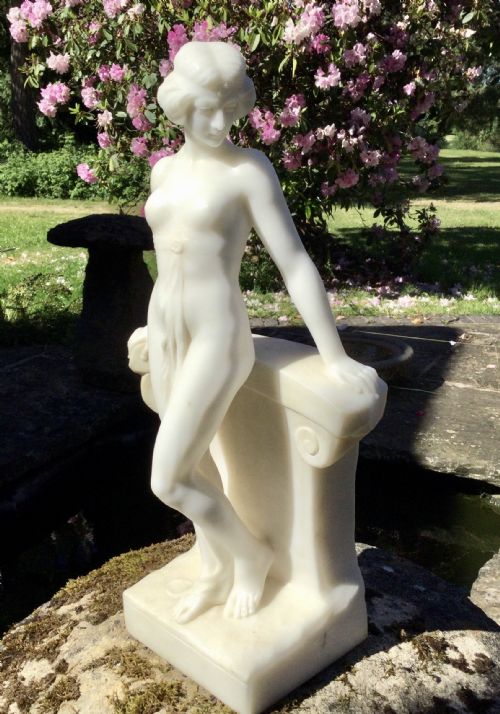
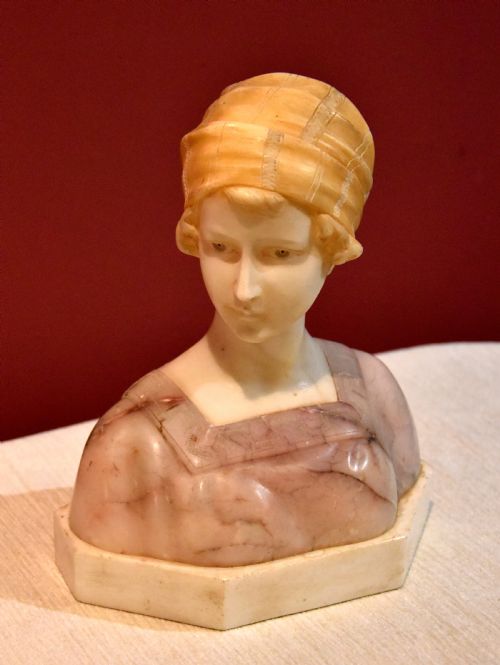
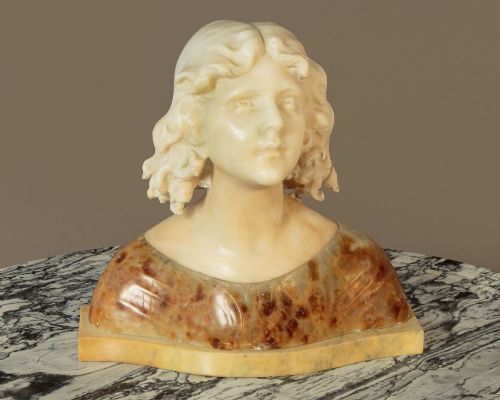


Marble Maiden Sculpture
These marble maiden sculpture pieces capture classical and modern figures in carved stone, offering timeless charm for display in any room.
Marble Maiden Sculpture
When searching for a marble maiden sculpture, buyers encounter carved stone and mixed-media depictions of female figures spanning the nineteenth and early twentieth centuries. These pieces range from modest alabaster portrait busts to large Carrara marble statues and intricate Art Deco chryselephantine works.
The selection frequently includes Italian school carvings, French classical revival models, and Victorian interpretations of classical maidens. Alongside solid stone works, many designs pair bronze or spelter figures with contrasting marble bases.
Grand Tour pieces, centrepiece bowls, and Parian porcelain figurines also appear within this category, reflecting diverse artistic movements from Neoclassical to Art Nouveau.
How They Were Made
Artisans carved these pieces from natural materials such as Carrara marble, alabaster, and multi-toned stone, frequently mounting them upon contrasting green marble bases. Foundry work brought together bronze, gilt bronze, and spelter elements, while Parian porcelain provided an alternative ceramic medium for detailed female figures.
Sculptors combined hand-carving techniques for the stone elements with metal casting for bronze and spelter components. Mixed-media pieces such as chryselephantine sculptures joined carved ivory or stone with cast metal to create textured contrast.
Listings feature works spanning the Victorian era through the Art Deco period, utilising marble, alabaster, bronze, and Parian porcelain.
What Varies in Quality
The integration of mixed materials distinguishes finer studio output from routine production. Well-executed patination on bronze figures and secure mounting on coloured marble plinths elevate the presence of the sculpture.
Bruno Zach·Barranti·Auguste Moreau·Zoldan Kovats·Auguste Henri Carli·Ferdinand Preiss·Eduardo Giolli·C Neuhaus·Charlotte Monginot·Gugielmo Pugi
The Marble Maiden Sculpture Glossary
- Carrara marble
- A type of white or blue-grey marble quarried in the city of Carrara in Tuscany, widely favored by European sculptors for its fine grain.
- Alabaster
- A fine-grained, translucent stone that is softer than marble, often utilised for nineteenth-century portrait busts and figurative carvings.
- Chryselephantine
- A term describing statues made from a combination of bronze and ivory or stone, popular during the Art Deco period.
- Spelter
- A zinc alloy cast and patinated to imitate bronze, frequently employed in nineteenth and early twentieth-century decorative figures.
- Grand Tour
- A cultural journey undertaken by wealthy Europeans that inspired the acquisition of classical and Italian sculpted souvenirs.
Marble Maiden Sculpture: Frequently Asked Questions
What materials are these sculptures made from?
These figures are principally carved from marble, alabaster, and stone, often set on contrasting marble bases. Many examples incorporate cast bronze, gilt bronze, spelter, or Parian porcelain.
Makers selected these media to highlight the form of the subject, combining stone and metal for decorative effect.
How do I identify an Art Deco marble maiden?
Art Deco pieces generally date from the 1920s and 1930s, featuring stylised lines and modern dress alongside traditional subjects. They frequently utilise chryselephantine techniques or pair bronze figures with geometric marble plinths.
Earlier nineteenth-century works tend towards Neoclassical or romantic styling rather than the sharp geometry of the Deco era.
Were these pieces created in Italy or France?
Both origins are common, with Italian workshops producing notable carved marble and alabaster pieces from Florence and Carrara. French studios contributed significant bronze, spelter, and mixed-media figures during the nineteenth and early twentieth centuries.
Grand Tour items also reflect British and European travellers acquiring Italian souvenirs.
How should I display a marble or alabaster bust?
Position these heavier stone sculptures on stable furniture or dedicated pedestals that can support their weight safely. Keep them away from direct sunlight and sudden temperature changes to protect the finish of the stone.
Dust them gently with a dry, soft cloth without applying harsh cleaning agents.