




Marble Inlay Side Table
A marble inlay side table brings a cool stone surface and precise stonework into a room, offering both a useful landing space and a decorative focal point.
Marble Inlay Side Table
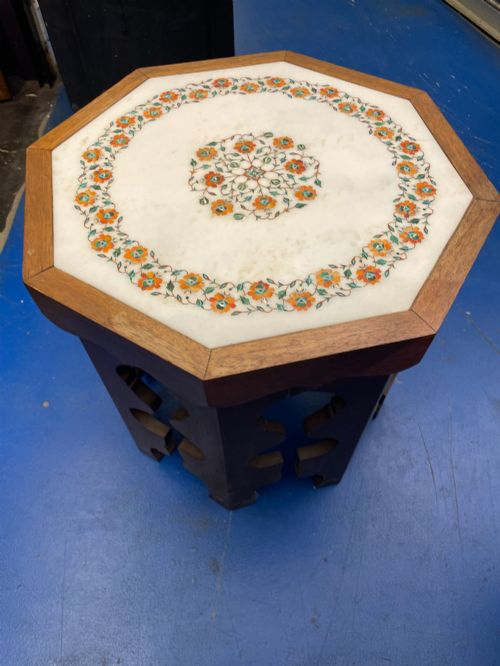
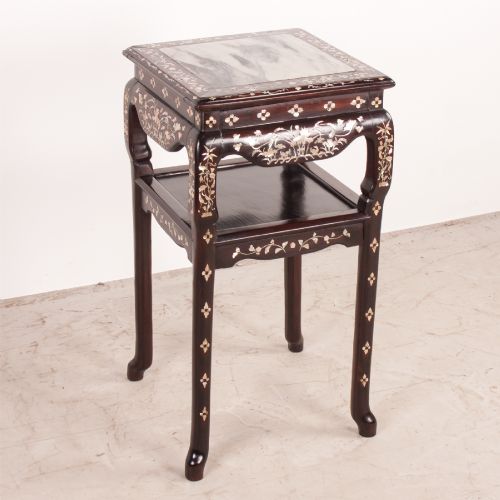
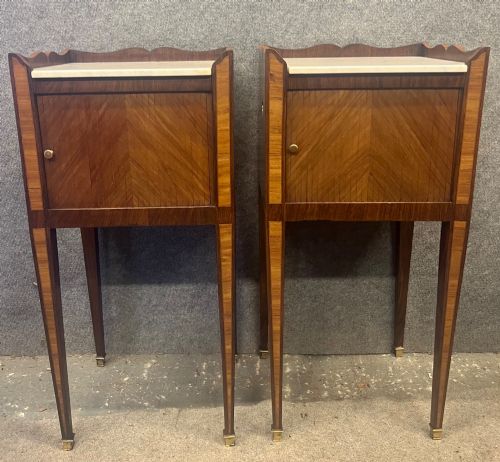
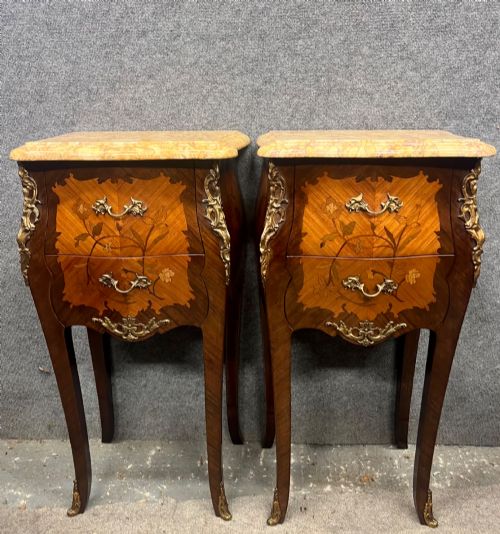
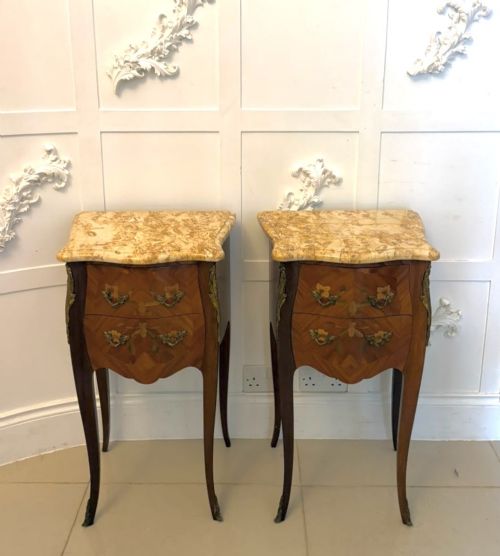
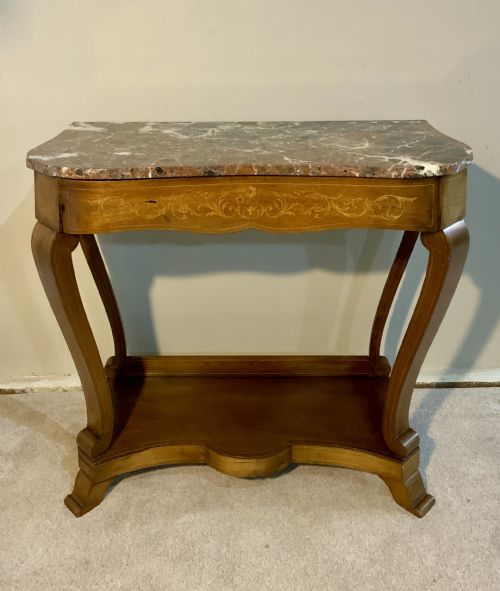
When you search for a marble inlay side table, you encounter a selection of occasional furniture spanning the nineteenth and early twentieth centuries, including pieces from Victorian, Regency, and Edwardian periods.
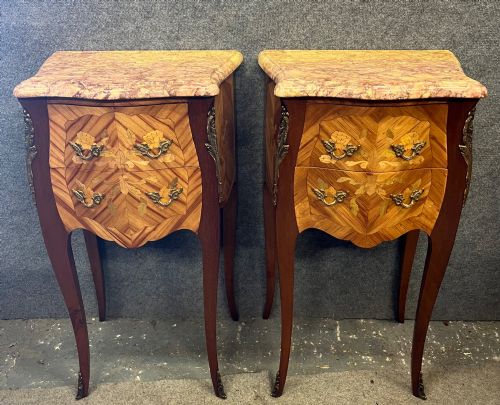
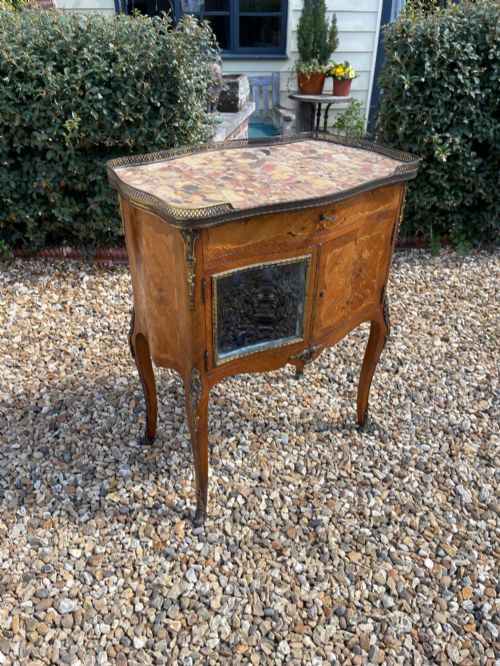
The most common form on this page is the bedside cabinet or lamp table, frequently paired, featuring inset stone tops supported by timbers such as mahogany, walnut, kingwood, and rosewood.
Makers utilised various regional styles, ranging from French Louis XV designs and Anglo-Indian production to Chinese export pieces and Italian hand-painted console tables, adapting the stone top format to diverse domestic uses.
Materials and Construction
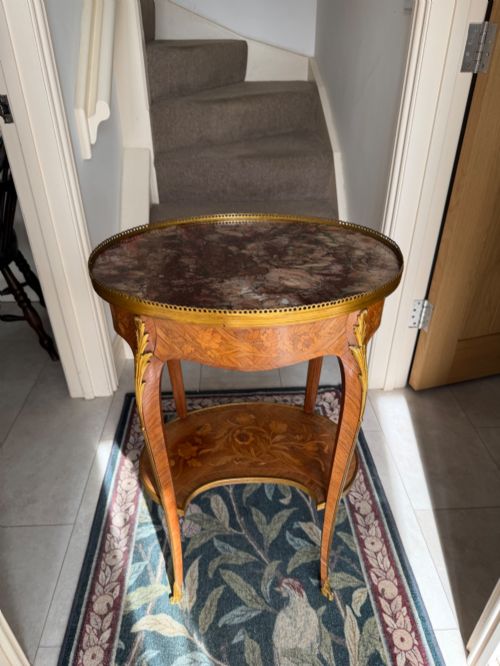
The construction relies on combining dense natural stones with durable cabinet timbers, mounting solid or veneered marble surfaces onto frames of mahogany, rosewood, walnut, or satinwood.
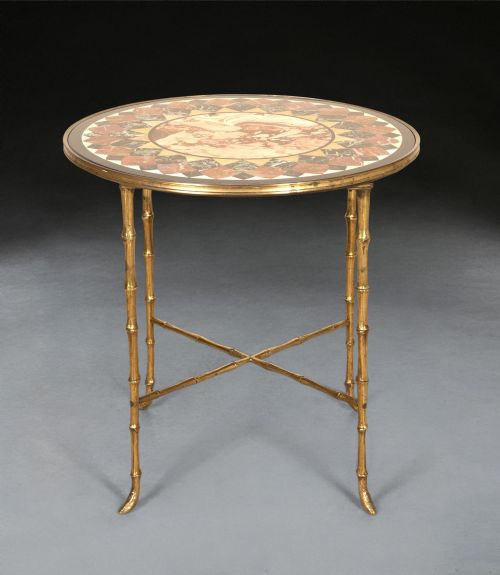
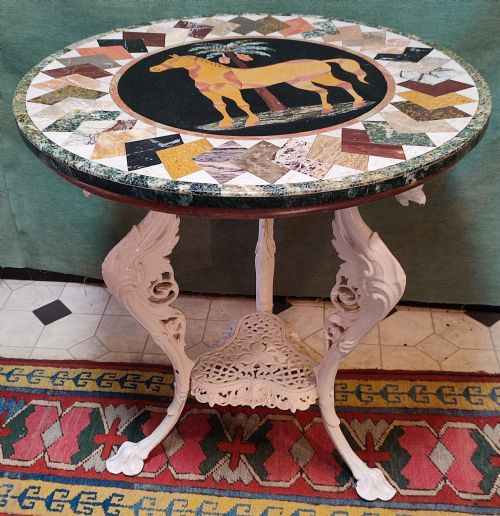
Inlaid elements incorporate specialised stonework techniques alongside marquetry and parquetry wood veneers, often accented with brass details, ormolu mounts, or cast iron supports.
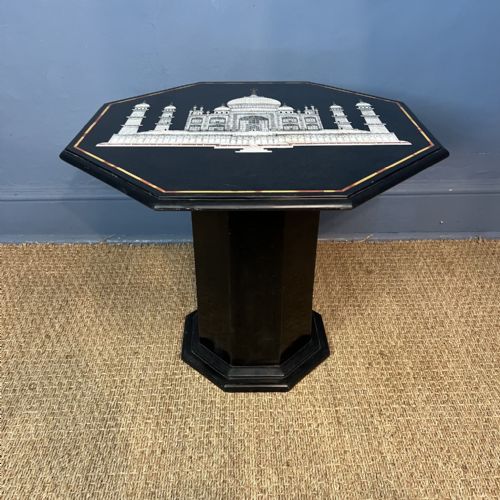
Stone tops frequently display specimen marble arrangements or detailed pictorial inlays, secured to sturdy wooden or metal bases designed to bear the heavy weight of the stone.
Several tables feature miniature stone chess boards, ready for an impromptu match right on the tabletop.
Distinctions in Quality
Quality rests in the precision of the stone cutter's fit and the complexity of the inlaid motifs, where tight joints and varied mineral selections elevate the piece far above simple plain slabs.
The refinement of the supporting cabinetry distinguishes better examples, visible in choice timber veneers like kingwood and satinwood, delicate marquetry patterns, and the integration of quality mounts in brass or ormolu.
The Marble Inlay Side Table Glossary
- Specimen marble
- A decorative top assembled from many small pieces of different coloured marbles arranged in geometric or pictorial patterns. This technique showcases the lapidary's skill in matching diverse mineral specimens.
- Marquetry
- Decorative veneer work applied to furniture surfaces to create pictorial designs or patterns using thin slices of wood. Craftsmen carefully cut and fit contrasting timbers together before gluing them to the carcase.
- Ormolu
- Gilded bronze mounts applied to furniture edges and legs, particularly popular in French cabinet making. The finish provides a bright metallic contrast against dark woods and polished stone.
- Demi-lune
- A half-moon shape characteristic of console and side tables designed to sit flat against a wall. This profile saves floor space while providing an adequate surface for lamps or ornaments.
Marble Inlay Side Table: Frequently Asked Questions
How do I clean a marble top?
Wipe the surface gently with a soft, damp cloth using mild, pH-neutral soap, avoiding acidic cleaners that etch stone.
Dry the marble thoroughly afterwards to prevent water spots and maintain the polished finish.
Are these tables heavy?
Most pieces carry significant weight because dense natural stone forms the top surface, often supported by sturdy wood frames.
Take care when moving them, and lift from the base rather than the top to protect the joints.
Can I use it as a bedside table?
Many examples on this page were originally built as bedside cabinets or lamp tables, making them well-suited for holding lamps and bedside books.
The stone surface also offers practical resistance against spilled water from glasses.
How do I tell Regency from Victorian pieces?
Regency pieces often display classical proportions with rosewood and brass details, reflecting early nineteenth-century neoclassical tastes.
Victorian examples frequently introduce heavier mahogany structures, elaborate marquetry, and broader variations in specimen marble work.