

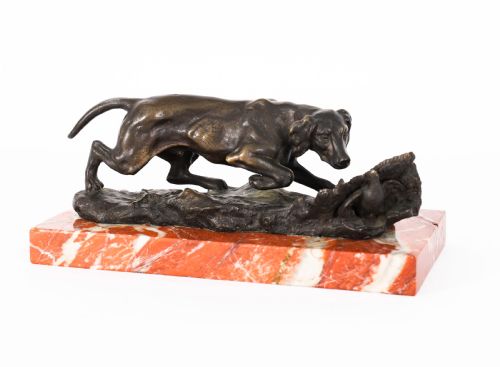


Marble Dog Figurine
These marble dog figurine pieces capture canine form in solid stone and metal, offering enduring charm for any mantelpiece or desk.
Marble Dog Figurine
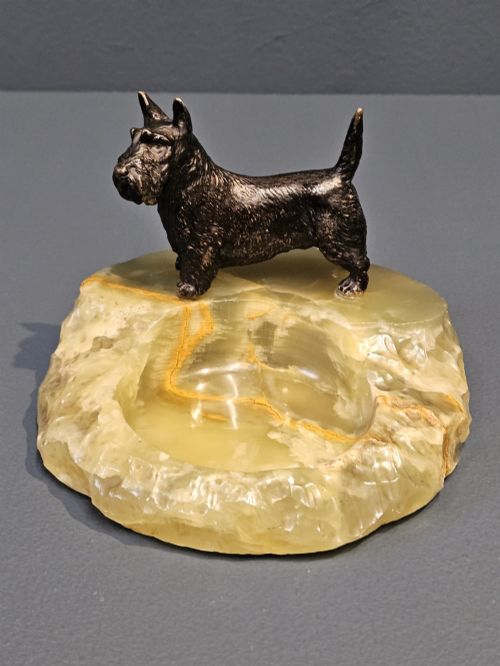
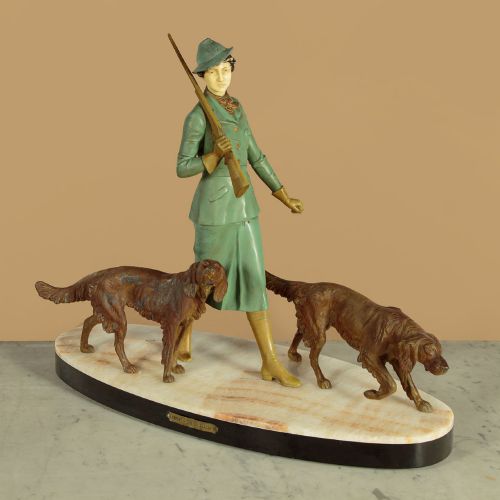
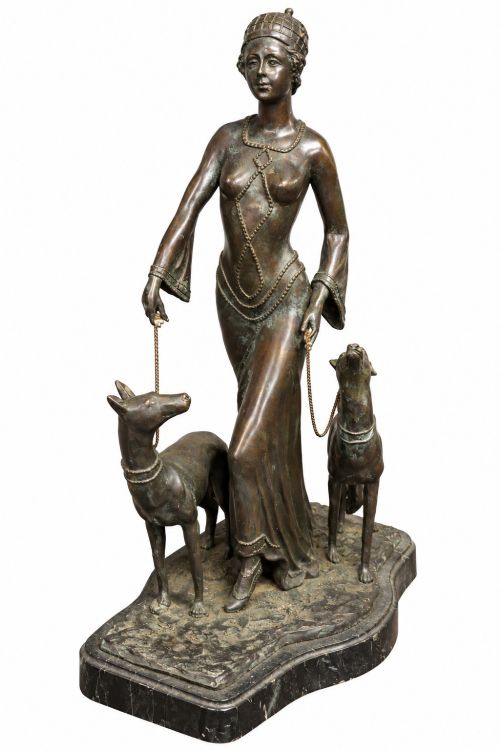
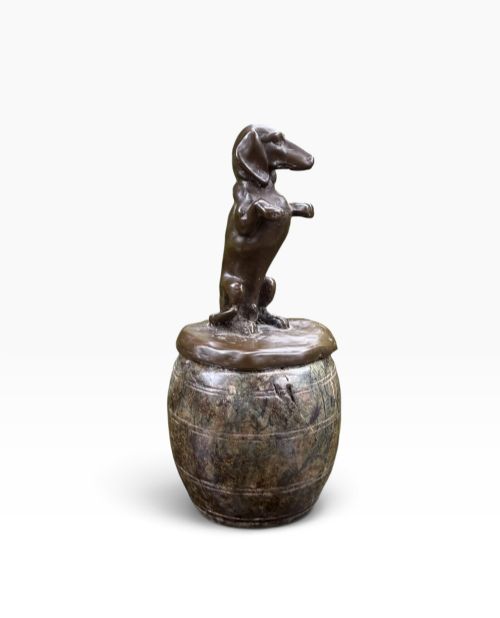
A marble dog figurine typically combines a carved stone base or plinth with metal or stone sculptural work, drawing on nineteenth-century French animalier traditions and later Art Deco aesthetics. These pieces range from substantial desk accessories and night lights to figurative groups depicting gundogs, greyhounds, and working breeds.
The most frequent examples seen on this page date from the nineteenth century through the 1920s and 1930s, often pairing patinated bronze or spelter figures with contrasting marble. Collectors encounter subjects ranging from individual hounds to children with pets, reflecting both Grand Tour souvenirs and modernist decorative arts.
Materials and construction
Figures are cast using traditional metalworking methods such as bronze and spelter, frequently enhanced with cold painted details or patinated finishes. These metal sculptures are then mounted onto weighted slabs of marble or onyx, which serve as integral plinths for desk tidies, night lights, and standalone desk accessories.
Stonework involves shaping and polishing natural materials including marble and alabaster to create smooth bases that contrast with the textured surface of the metal animals. Glass also appears in specific lighting pieces, combining with bronze and stone to diffuse light.
Marble Dog Figurine Retail Price Guide 2026
Typical asking prices for marble dog figurine among the pieces listed under this phrase on Sellingantiques today, from the lower quarter to the upper quarter. They describe what is for sale here now, not the wider market.
Greyhounds remain eternally poised to leap off their marble plinths, refusing to chase the bronze pheasants forever frozen nearby.
Factors of distinction
Quality rests in the precision of the metal casting and the sensitivity of the animal's musculature and expression, distinguishing skilled foundry work from routine commercial output. The best pieces show crisp chiselling on the bronze and harmonious integration between the dog and its stone base.
The selection of the marble plinth also influences the character of the object, with varied veining and polished edges providing a stable, handsome stage for the sculpture. Maker signatures and foundry marks further elevate pieces produced by recognised sculptors of the period.
Georges Gori·Carl Kauba·Prosper Lecourtier·Alexandre Kelety·Geo Maxim·Christophe Fratin
The Marble Dog Figurine Glossary
- Animalier
- A nineteenth-century artistic movement dedicated to the realistic portrayal of animals, particularly dogs, horses, and wild beasts. Sculptors in this tradition studied anatomy closely.
- Spelter
- An alloy of zinc and lead used as a cost-effective alternative to bronze in decorative figures. It is often painted or patinated to imitate bronze.
- Patinated Bronze
- Bronze treated with chemical solutions to produce a specific surface colour and finish. This protects the metal and enhances sculptural depth.
- Grand Tour
- The traditional trip of Europe undertaken by upper-class Europeans, which generated a demand for small-scale classical marbles and bronzes. These objects served as sophisticated souvenirs.
- Desk Tidy
- A functional accessory featuring sculptural elements designed to hold pens, stamps, or small stationery items. They combine utility with decorative bronze and marble work.
Marble Dog Figurine: Frequently Asked Questions
How do I clean marble and bronze?
Dust marble gently with a dry, soft cloth and avoid abrasive cleaners that can scratch the polished surface.
Metal parts require minimal attention; a light dusting preserves the historic patina without stripping the finish.
Are these figures solid bronze?
Many sculptures are cast in bronze, though some pieces utilise spelter, which is a softer zinc alloy.
Foundry marks and weight often help distinguish between solid bronze and base metal alternatives.
What is a night light?
Night lights integrate a small electrical lamp or bulb holder alongside the bronze figure and marble base.
They were designed to provide low illumination in hallways or bedrooms during the early twentieth century.
How do I date these sculptures?
Dating relies on stylistic clues such as the geometric lines of Art Deco design or the naturalistic detail of nineteenth-century animalier bronzes.
Signatures, foundry stamps, and the type of marble used also provide clear chronological markers.