

Marble Base Desk Light
A marble base desk light brings substantial weight and period character to a workspace, combining stone plinths with metal fittings and glass shades.

Marble Base Desk Light
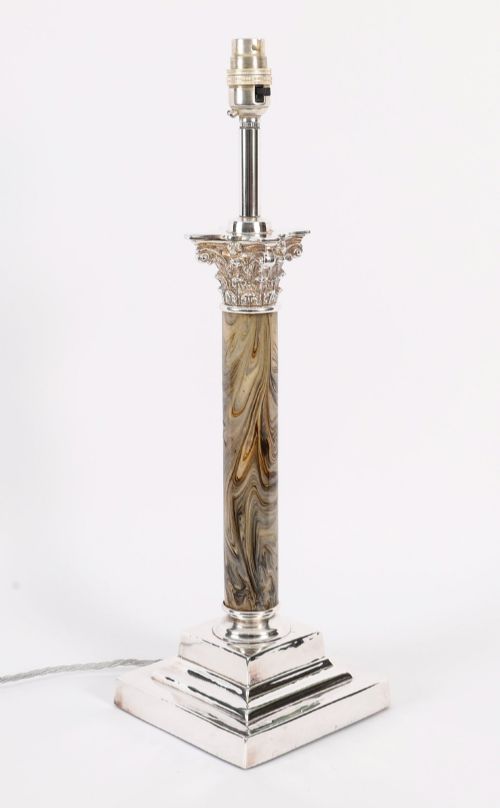
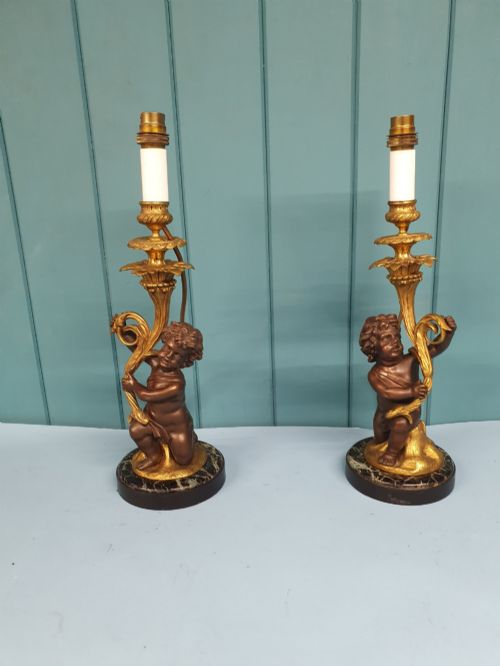
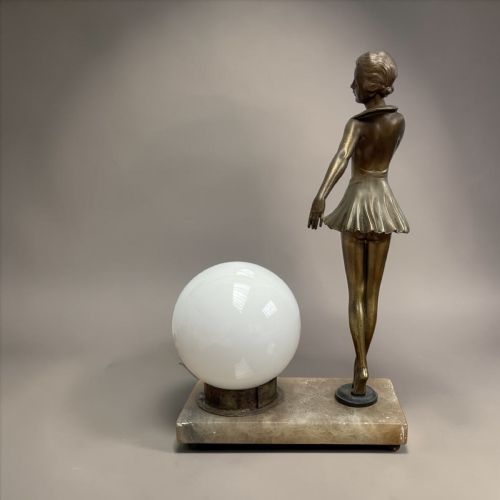
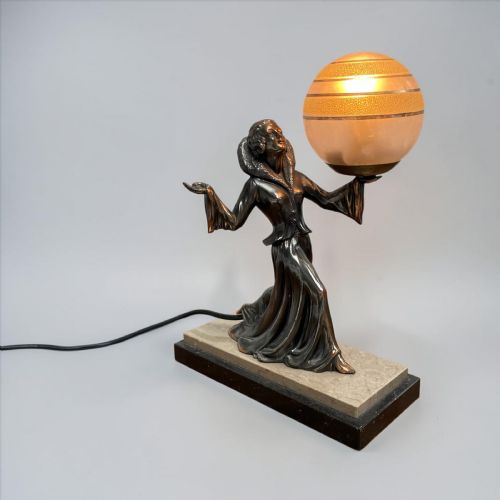
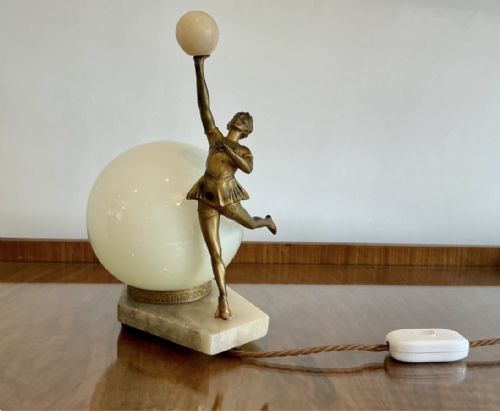
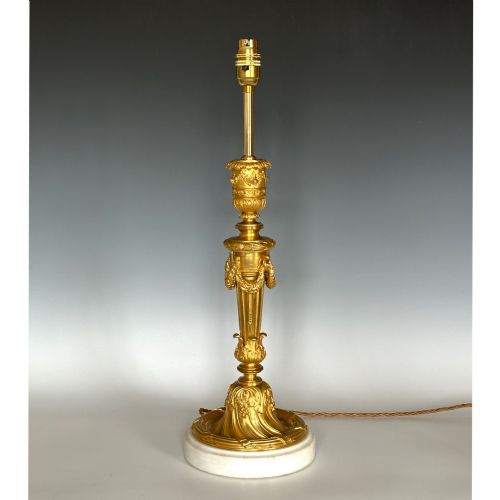
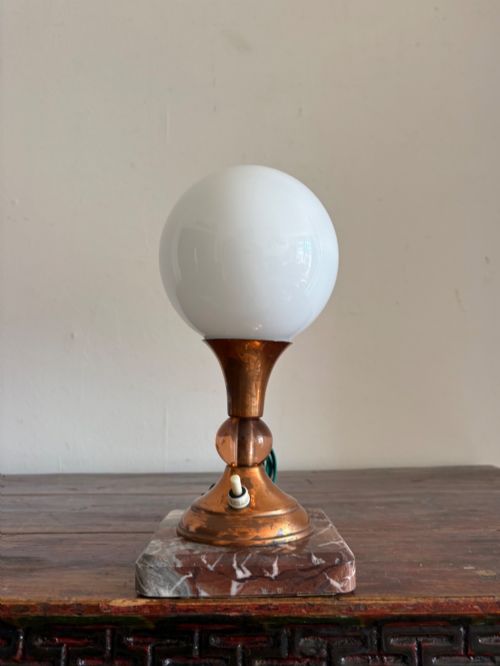
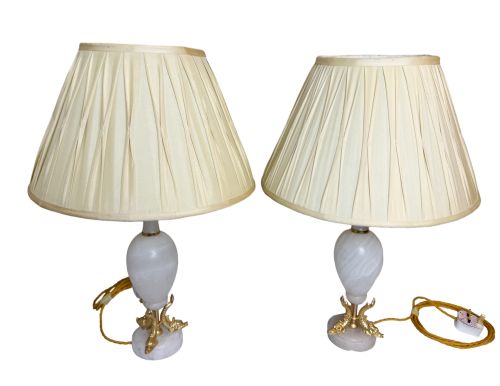
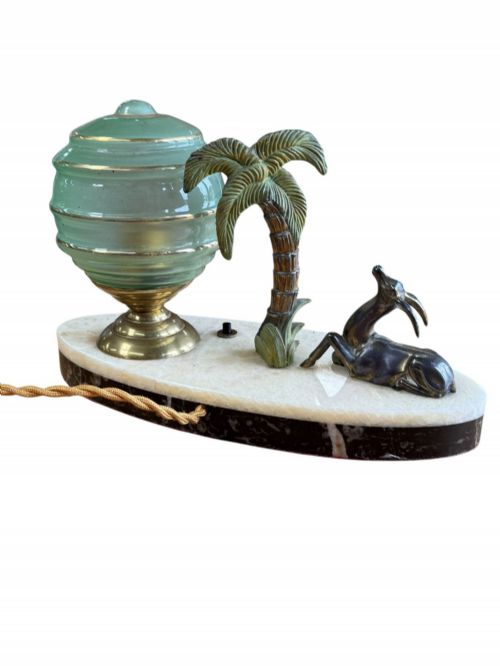
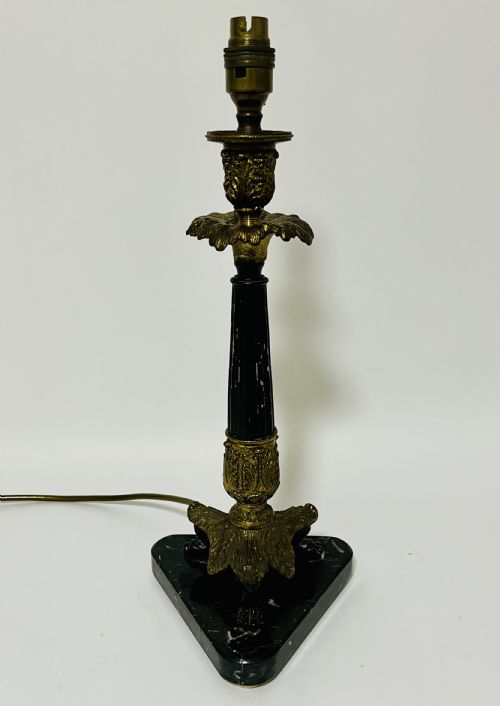
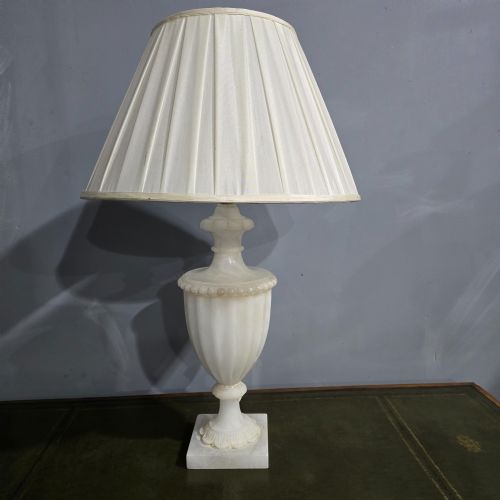
A marble base desk light encompasses table lamps and lighting bases anchored by natural stone plinths, emerging in various forms from the late nineteenth century through the Art Deco period. These pieces frequently pair stone foundations with metal figures, classical columns, or figural groups.
The selections span styles from Victorian and Edwardian revivals to French Empire and Art Deco designs. Buyers most commonly encounter twentieth-century interpretations featuring figural subjects, geometric stone bases, and contrasting metalwork.
Makers utilised heavy mineral blocks to stabilise tall illumination fittings, resulting in robust desk accessories designed for functional workspaces and formal reading rooms. The surviving examples demonstrate how stone plinths supported evolving lighting technology across successive decades.
Evaluating quality and execution
Quality separates through the purity and density of the stone base, alongside the precision of the metal casting and chasing on figures or mounts. Superior examples display crisp detail in bronze or gilt metal components fitted flush against polished marble.
The integration of materials dictates the overall standard, where well-balanced proportions between the heavy mineral plinth and the upper lighting fixture demonstrate superior design. Lesser examples rely on simpler brass mountings and standard cast spelter without hand-finished detailing.
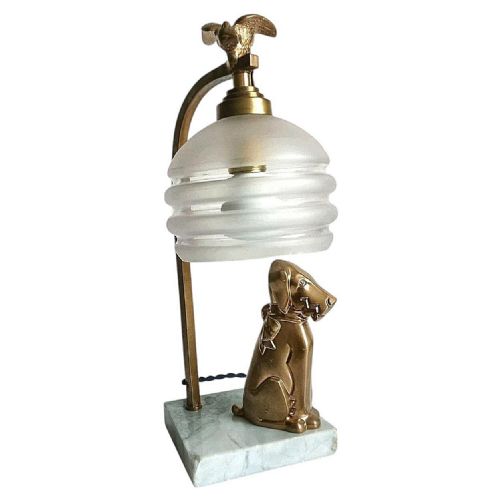
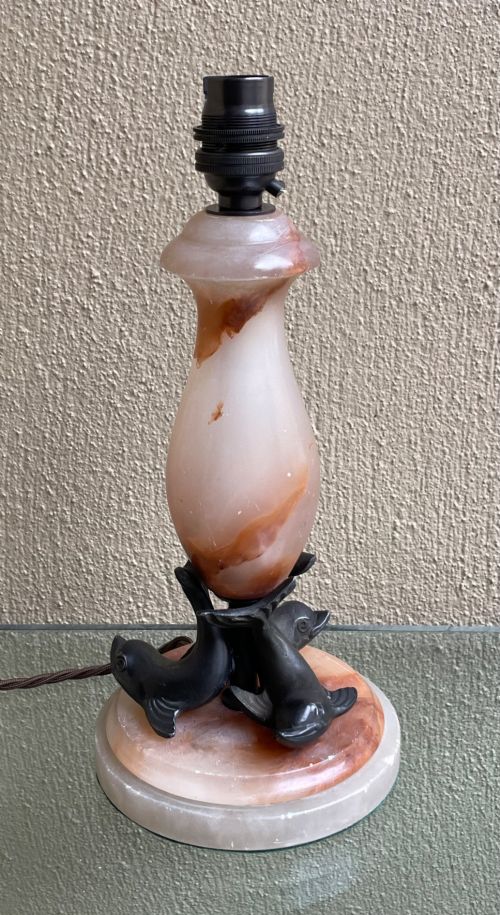
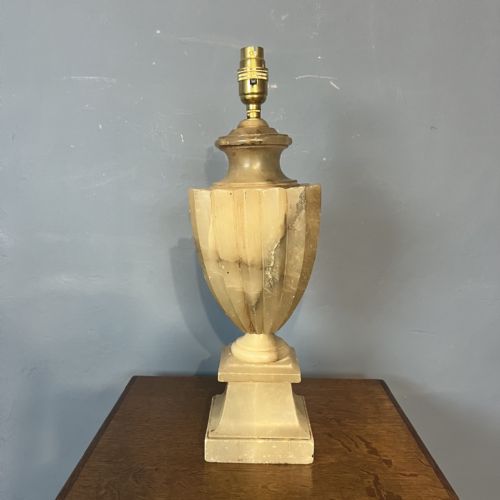
Several domestic animals watch over the desk, including cast dogs and parrots sharing space with classical urns and dolphins.
P.Sega
The Marble Base Desk Light Glossary
- Spelter
- A zinc alloy commonly used as a substitute for bronze in decorative figures and lamp bases. It takes patination and gilding effectively.
- Ormolu
- Gilt bronze produced by applying a mercury-gilding process to a bronze base object. This technique creates a rich golden finish.
- Alabaster
- A fine-grained mineral stone used for carved lamp bodies and shades. It allows light to diffuse through its translucent surface.
- Onyx
- A banded variety of chalcedony quartz utilised for decorative lamp bases. Its natural veining provides distinct visual patterns.
Marble Base Desk Light: Frequently Asked Questions
What periods do these lamps come from?
The available lighting spans the late nineteenth century, Victorian era, Edwardian period, and the 1920s and 1930s Art Deco movements.
These dates reflect the predominant manufacturing periods recorded in the current evidence.
How do I identify Art Deco lighting?
Art Deco pieces display geometric lines, stylised figural subjects such as ladies or animals, and modern material pairings.
They typically date from the 1920s and 1930s and often incorporate alabaster or contrasting marble bases.
What materials make up the bases?
Bases consist primarily of marble, onyx, and alabaster, providing a stable foundation for the lighting fixtures.
These stones are frequently mounted with brass, bronze, or gilt metal trim.
Were these originally oil lamps?
Some nineteenth-century examples began as oil lamps before undergoing conversion to electrical wiring.
Others were manufactured specifically as decorative table lights or figural statuettes adapted for illumination.