





Neoclassical Glass Desk Lamp
A neoclassical glass desk lamp brings classical form and warm illumination to a workspace, offering refined styling derived from ancient architectural traditions.

Neoclassical Glass Desk Lamp
Every neoclassical glass desk lamp combines classical architectural elements with functional illumination for workspace use. The selections here showcase table lamps spanning the nineteenth century through the early twentieth century, incorporating traditional motifs and historic styles.
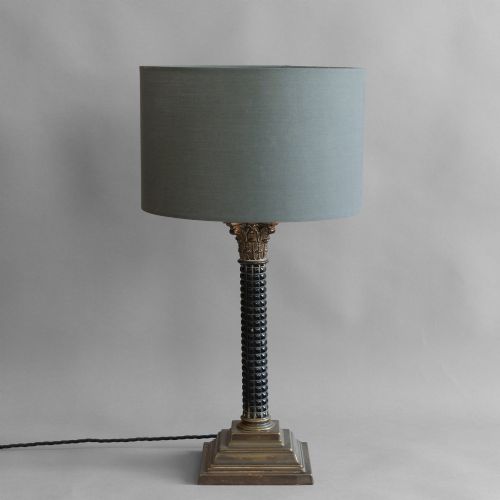
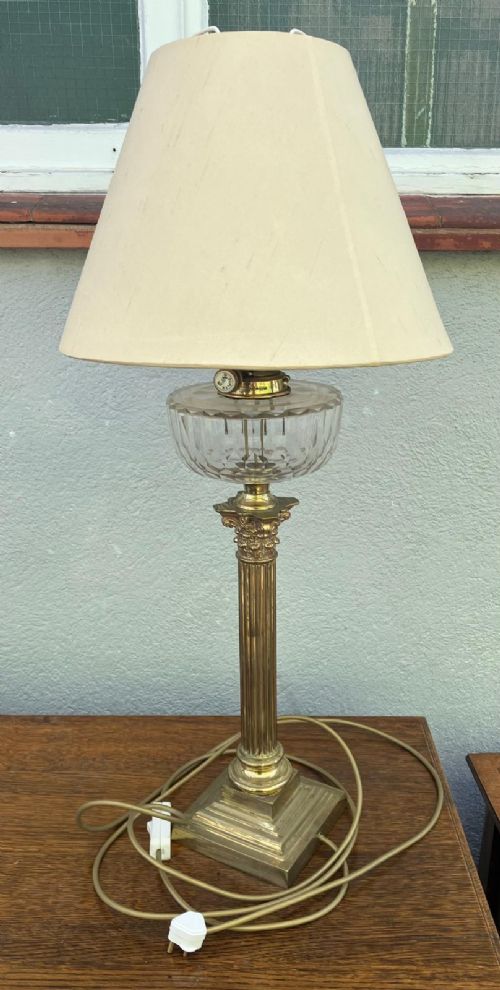
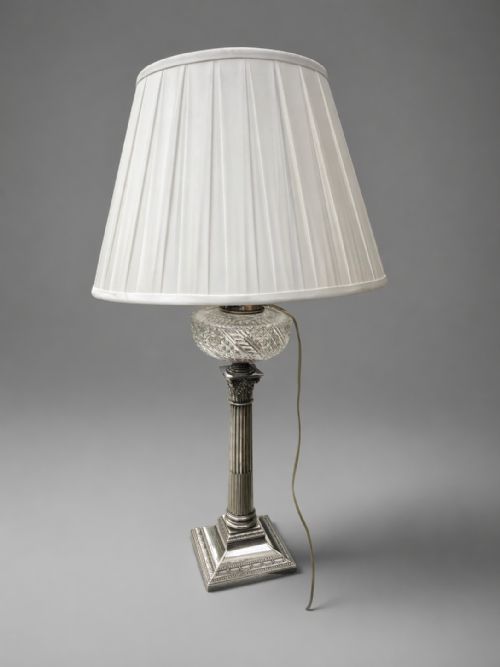
Buyers frequently encounter column designs, particularly Corinthian column table lamps fashioned from brass and glass. These pieces reflect Victorian, Regency, and Edwardian interpretations of classical design, alongside French examples featuring frosted or cut glass.
The objects take the form of table lamps, utilising glass reservoirs, shades, or figurines mounted on metal bases. Materials range from brass and silver plate to gilt bronze and crystal, creating varied profiles for a desk or table.
Materials and construction methods
Makers utilised cast brass, gilt bronze, and silver plate to form structural columns and bases, often incorporating marble or heavy metal for stability. Glass components include cut glass reservoirs, opaline or frosted glass shades, and crystal elements shaped by traditional pressing and cutting techniques.
Assembly involved securing metal shafts, such as Corinthian columns, to weighted bases and attaching glass fonts or figural components. Surface finishing included gilding, silver plating, and polishing to accentuate the classical details of the metalwork.
Neoclassical Glass Desk Lamp Retail Price Guide 2026
Typical asking prices for neoclassical glass desk lamp among the pieces listed under this phrase on Sellingantiques today, from the lower quarter to the upper quarter. They describe what is for sale here now, not the wider market.
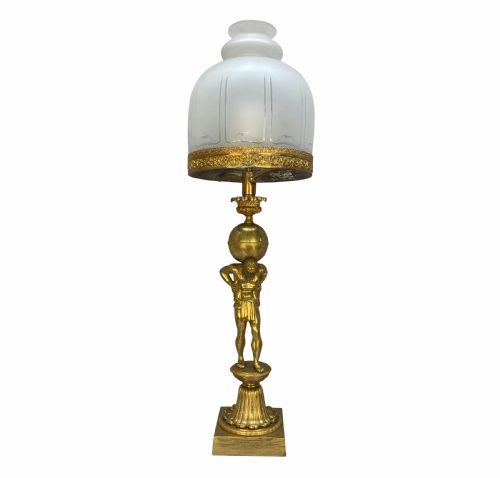
Atlas manages to hold up a lamp instead of the celestial spheres.
Distinctions in quality and execution
Quality separates pieces through the precision of the metal casting and the clarity of the glass elements. Finer examples display crisp detailing on Corinthian capitals, substantial metal weight, and deeply cut or evenly frosted glass.
The integration of materials also defines the tier of a piece, where solid brass or gilt bronze combined with heavy crystal or quality opaline glass demonstrates superior craftsmanship compared to lighter, simpler constructions.
The Neoclassical Glass Desk Lamp Glossary
- Corinthian column
- An architectural column order featuring an ornate capital decorated with acanthus leaves. This motif appears frequently on the shafts of these antique table lamps.
- Gilt bronze
- Copper alloy treated with a gold or mercury gilding layer to produce a lustrous metallic finish. It provides a durable and decorative surface on nineteenth-century bases.
- Opaline glass
- A type of semi-translucent glass often tinted in white or pastel shades. It diffuses light softly and was utilised for nineteenth-century lamp bodies and shades.
- Cut glass
- Glass decorated by grinding facets or geometric patterns into the surface using a wheel. This technique adds brilliance and texture to reservoirs and columns.
- Spelter
- A zinc alloy used as a cost-effective alternative to bronze for casting figures and decorative bases. It takes patination well to simulate heavier metals.
Neoclassical Glass Desk Lamp: Frequently Asked Questions
What periods do these lamps date from?
The pieces span the nineteenth century through the early twentieth century, encompassing periods such as Victorian, Regency, and Edwardian. Makers during these eras drew heavily on classical Greek and Roman architecture for inspiration.
Specific dates range from the eighteen-eighties to the nineteen-twenties, reflecting both nineteenth-century revival movements and early twentieth-century decorative arts.
How were these lamps originally used?
These objects served as functional interior lighting for desks, tables, and reception rooms in period homes. They provided focused illumination while acting as ornamental centrepieces.
Many incorporated oil reservoirs with burners before being adapted for electrical wiring during subsequent decades of use.
What materials are most common?
Brass and glass form the core materials across the selection, often paired with silver plate, gilt bronze, and crystal. Some examples incorporate marble bases or frosted opaline glass elements.
Fabrics occasionally appear in associated shades, while the primary structures rely on cast metals and formed glass.
How do column lamps differ from figural ones?
Column lamps mimic ancient architectural orders like the Corinthian style, focusing on fluted shafts and decorative capitals. They offer symmetrical, formal silhouettes suited to traditional desks.
Figural lamps incorporate sculptural elements, such as bronze figures or depictions of mythological subjects, adding narrative detail to the lighting fixture.
Are these pieces English or French?
The selection includes both English and French examples, reflecting distinct regional interpretations of the neoclassical style. French pieces frequently showcase works associated with Baccarat or ormolu mounts.
English designs often favour silver-plated or brass Corinthian columns aligned with Victorian and Edwardian domestic interiors.