
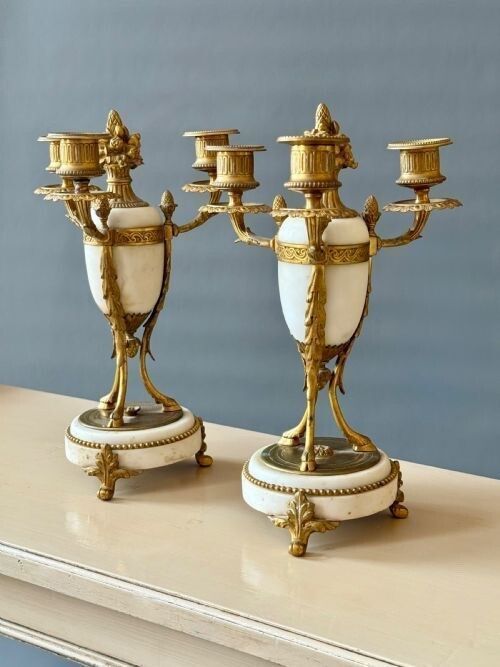


Marble Base Candelabrum
A marble base candelabrum brings substantial nineteenth-century weight and classical French elegance to a mantelpiece or side table.
Marble Base Candelabrum
When you search for a marble base candelabrum, you encounter nineteenth-century lighting equipment originating mainly from French workshops and drawing heavily on Louis XVI and Rococo revival styles. These objects combine stone plinths with branching metal candle holders designed to hold multiple tapers simultaneously.
The pieces appearing on this page are predominantly paired items featuring figural elements such as cherubs, putti, or winged figures cast in bronze. They date across the middle and late nineteenth century, including specific decades from eighteen-fifty to eighteen-ninety, and occasionally present as converted table lamps.
Makers and designers referenced in these pieces draw upon neoclassical motifs and French Second Empire aesthetics. The combination of solid stone with gilded metal creates a dramatic silhouette intended for formal interiors.
Materials and construction methods
The construction relies on contrasting media, pairing carved white or porphyry marble bases with cast bronze components. Metal elements are frequently finished with ormolu, gilt bronze, or a combination of patinated and parcel gilt surfaces.
Foundries utilised lost-wax or sand-casting techniques to shape intricate figural putti and scrolling branches. Individual components were then assembled mechanically using threaded internal rods, securing the heavy metal sconces to the stone plinths below.
The documented objects span the mid to late nineteenth century, predominantly featuring Louis XVI style Neoclassical and Rococo Revival designs.
Distinctions in quality
The selection of the marble base also determines the tier of the piece, with dense, unblemished white marble or rich porphyry indicating superior manufacture. Heavier, more stable stone plinths properly proportioned to support the weight of multi-branch metal arms separate standard production from exceptional work.
Claude Clodion·Thomas Hope
The Marble Base Candelabrum Glossary
- Ormolu
- A technique of applying finely ground high-carat gold to an object of bronze through a mercury amalgamation process. This finish provides a warm, enduring lustre characteristic of French decorative metalwork.
- Porphyry
- An igneous rock with large crystals embedded in a fine-grained groundmass, highly prized for its deep reddish-purple colour and historical association with imperial monuments.
- Putto
- A figure of a small infant, frequently depicted as a chubby male child in classical art. These figures often support the candelabra branches or sit upon the marble base.
- Patinated Bronze
- Bronze that has been treated with chemical solutions to produce a specific surface colour such as dark brown or green. This treatment protects the metal and accentuates sculptural contours.
- Louis XVI Style
- A neoclassical design movement originating in eighteenth-century France and revived during the nineteenth century. It is defined by geometric symmetry, straight lines, and classical architectural motifs.
Marble Base Candelabrum: Frequently Asked Questions
How do I clean a marble base candelabrum?
Dust the metal and stone components regularly using a soft, dry microfibre brush. Avoid commercial brass cleaners or harsh chemical solvents on gilded surfaces, as these substances strip the historic ormolu.
Wipe the marble base gently with a damp cloth and dry immediately to prevent moisture penetration. Take care not to let cleaning liquids seep into any joints between the stone and the bronze mountings.
Were these candelabra converted into lamps?
Many nineteenth-century lighting pieces receive electrical wiring to function as table lamps while retaining their original candelabra framework. This adaptation allows safe domestic illumination without altering the primary bronze and stone structure.
Inspect the fitting to see if wiring runs internally or through existing apertures. Professional conversion often preserves the antique components so that reversible restoration remains possible.
How do I identify Louis XVI style pieces?
Louis XVI style items display strict symmetry, rectilinear forms, and classical architectural details such as fluting and acanthus leaves. This aesthetic contrasts sharply with the asymmetrical curves typical of earlier Rococo designs.
Look for crisp, restrained ornamentation on the bronze mounts and bases. The influence draws directly from archaeological discoveries of the period rather than fanciful whims.
Why are cherubs common on these pieces?
Figural ornamentation featuring putti and cherubs became popular in French decorative arts during the neoclassical revivals of the nineteenth century. These sculptural elements derive from Renaissance interpretations of classical mythology and art.
Cast bronze cherubs serve both a decorative and a structural purpose by holding the scrolling candle arms. Their presence adds narrative charm and sculptural movement to the heavy stone base.