

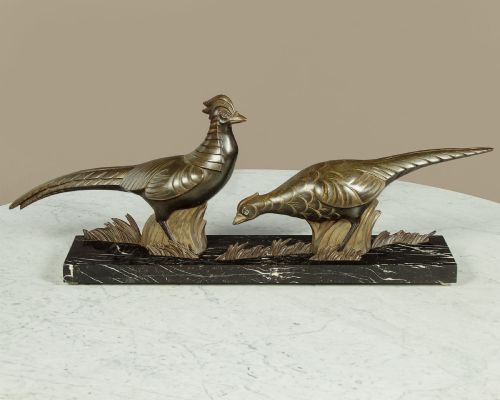
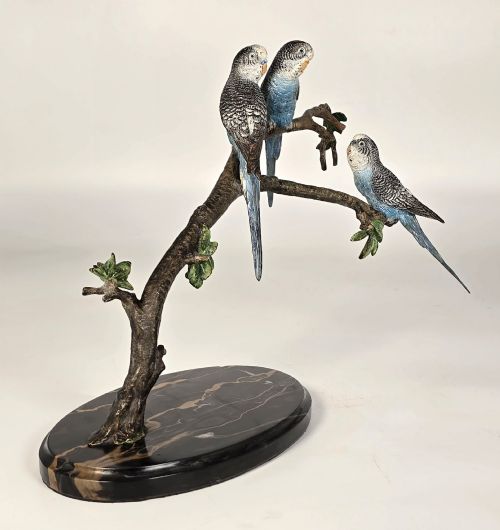
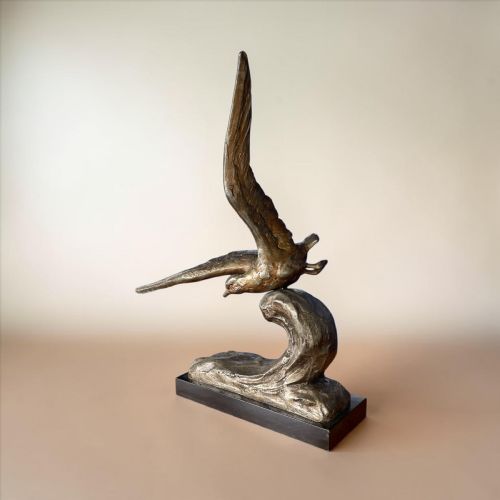
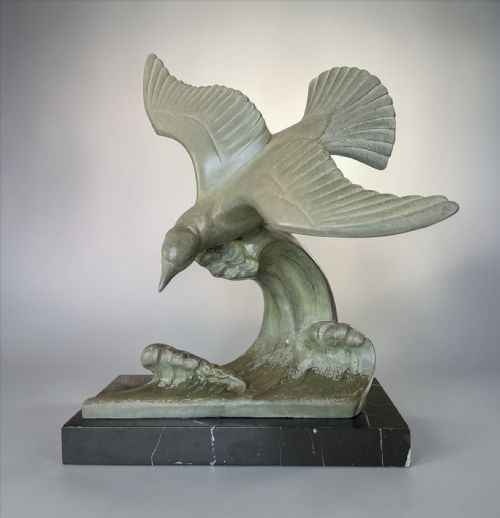




Marble Base Bird Sculptures
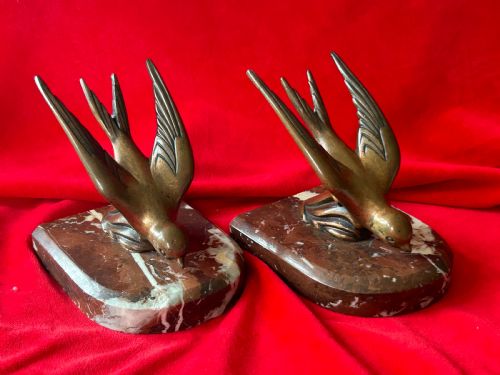
Marble base bird sculptures combine solid stone plinths with metal avian figures, offering collectors striking centrepieces rooted in the Art Deco period.
Marble Base Bird Sculptures
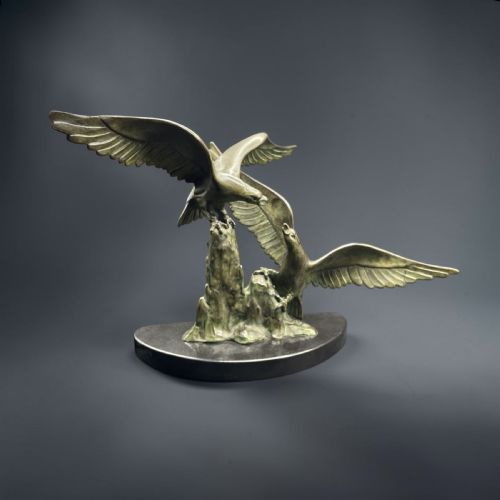
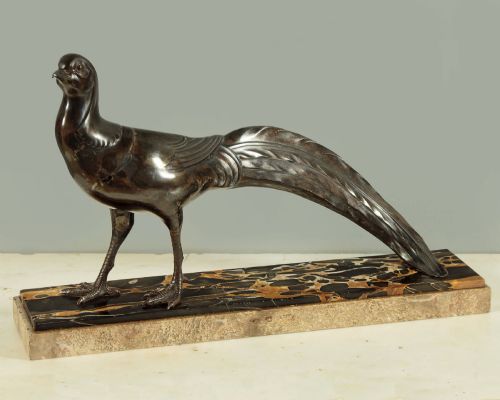
Marble base bird sculptures present avian subjects mounted securely on heavy stone plinths, combining naturalistic or stylised animal forms with robust mineral foundations. These decorative objects emerge predominantly from the early twentieth century, spanning late Victorian novelties up to the height of the Art Deco movement around nineteen thirty.
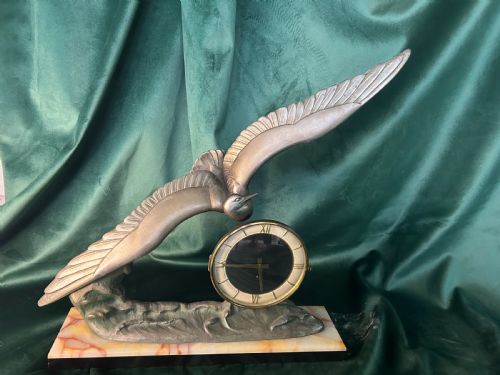
The bird subjects span domestic budgerigars, game pheasants, and coastal gulls, often fixed to contrasting black marble or granite bases. Alongside standalone sculptures, buyers encounter bookends, mantel clocks, and night lights utilising this exact combination of stone and metal.
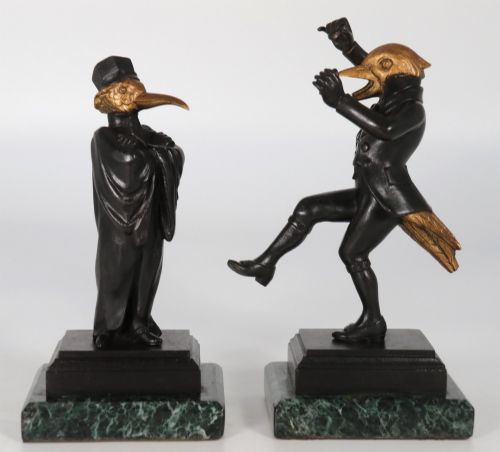
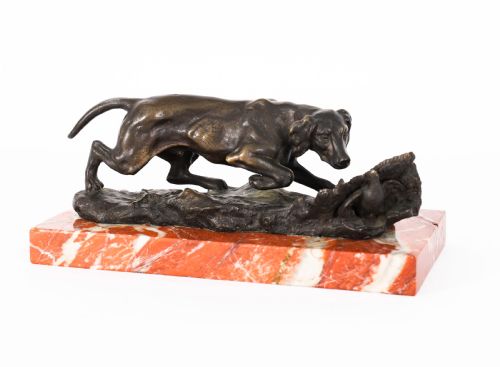
Art Deco examples dominate the selection, favouring sleek aerodynamic lines in creatures such as albatrosses and seagulls. Earlier Victorian and late nineteenth-century pieces lean towards theatrical caricature figures and detailed animalier studies mounted upon substantial stone mounts.
How marble base bird sculptures were made
Foundries cast the avian figures in bronze, brass, or patinated metal, sometimes applying cold painted colours or gilding to render plumage and details. Spelter also appears as a substitute metal base for figures requiring less expensive production methods.
Craftsmen shaped the heavy stone supports from black marble, standard marble, or granite, cutting and polishing the mineral blocks into rectangular or wave-like plinths. The metal birds were then mechanically fixed to these stone bases using threaded bolts or pins secured from underneath.
Marble Base Bird Sculptures Retail Price Guide 2026
Typical asking prices for marble base bird sculptures among the pieces listed under this phrase on Sellingantiques today, from the lower quarter to the upper quarter. They describe what is for sale here now, not the wider market.
Materials seen across these listings include bronze, brass, patinated metal, paint, black marble, gilt bronze, patinated spelter, and granite.
What varies in quality in marble base bird sculptures
The fineness of the metal casting dictates visual success, separating sharp, hand-chiseled feather work from soft, blurred outlines resulting from worn moulds. Artisanal skill shows in the natural posture of the bird and the harmony between the creature and its stone mount.
The selection and preparation of the mineral base significantly influence overall character, with dense, unblemished black marble or polished granite providing a superior foundation to stones marred by heavy veining or chips.
M. Font·Carl Kauba·Zoldan Kovats·P. Marec
The Marble Base Bird Sculptures Glossary
- Art Deco
- A design style spanning the nineteen twenties and thirties characterised by streamlined forms and geometric simplification. This aesthetic heavily influences the sleek bird figures mounted on stone plinths.
- Animalier
- A nineteenth-century French term for artists who specialised in realistic portrayals of animals. Sculptors working in this tradition captured birds and dogs with anatomical precision.
- Cold painted
- A technique where metal figures receive non-fired paint applications after casting. This method brings colour to the plumage of budgerigars and pheasants without requiring high-temperature kiln firing.
- Patinated metal
- A chemically induced surface treatment applied to bronze or brass to alter its colour and add depth. It protects the metal while highlighting the sculptural contours of the bird.
- Spelter
- A zinc alloy commonly utilised as a cheaper alternative to bronze during the nineteenth and twentieth centuries. It accepts patination and paint readily for decorative statuary.
Marble Base Bird Sculptures: Frequently Asked Questions
How do I clean the marble base safely?
Dust the stone regularly with a soft, dry cloth to prevent accumulation in natural crevices or around mounted figures. Avoid using harsh chemical cleaners or excess water, which can seep into joints or damage painted metal surfaces.
For stubborn marks, wipe gently with a slightly damp cloth using mild soap, drying the stone immediately afterwards with a clean towel.
Were these pieces designed as bookends?
Certain configurations utilise weighted stone bases specifically to support heavy volumes on a shelf. These functional sculptures balance sturdy construction with decorative bird subjects.
Other examples serve purely as mantel ornaments, night lights, or clocks rather than utilitarian desk accessories.
What is cold painting on metal?
Cold painting involves applying oil or varnish-based pigments directly onto cast metal without firing the piece in a kiln. This traditional method allows for fine multicoloured detailing on bird feathers.
Because the paint sits on the surface rather than fusing chemically, these delicate finishes require careful handling to prevent flaking.
How can I tell Art Deco pieces apart from Victorian ones?
Art Deco pieces from the nineteen twenties and thirties favour geometric abstraction, smooth curves, and stylised avian forms like soaring gulls and albatrosses. Victorian examples from the late nineteenth century lean towards theatrical caricatures and highly detailed naturalism.
The choice of plinth also helps distinguish periods, with sleek black marble blocks defining the interwar style and more ornate mountings appearing earlier.