


Maple Bedroom Drawers
Maple bedroom drawers bring bright, figured timbers into sleeping quarters, offering practical storage alongside distinctive decorative grain.
Maple Bedroom Drawers
Maple bedroom drawers encompass case furniture designed for sleeping chambers, utilising pale and figured timbers across several centuries of cabinet-making. When searching for maple bedroom drawers, a buyer encounters forms ranging from compact bedside cabinets and tallboys to substantial gentlemen's chests and combination wardrobes.
The pieces appearing on this page span the 17th century through the Edwardian era, Art Deco period, and 1930s. Plain timber gives way in various pieces to the distinct patterning of birds eye maple, often paired with contrasting woods like mahogany, satinwood, and walnut.
Chest of drawers and tallboy configurations dominate the selection, though specialist forms such as compactums and press cupboards also emerge. Buyers meet both strict period pieces and revival interpretations, reflecting changing domestic requirements for bedroom storage over generations.
How they were made
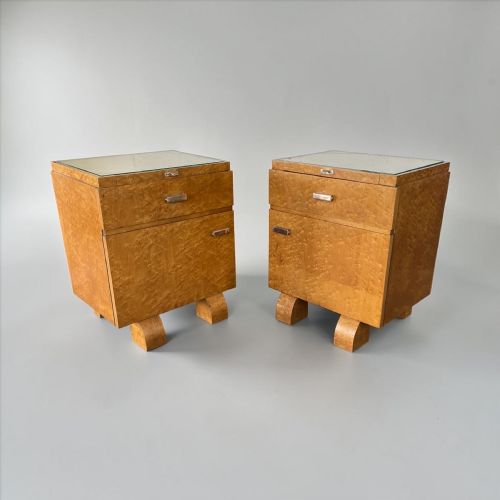
Cabinet-makers constructed these pieces using solid maple or applied fine veneers over secondary woods to display the natural figure of the timber. Birds eye maple, prized for its dotted pattern caused by dormant buds in the growing tree, was frequently selected for drawer fronts and visible panel faces.
Construction methods evolved from early joined frameworks to sophisticated veneering techniques in later Victorian and Art Deco pieces. Brass hardware, glass elements, and contrasting stringing in mahogany or satinwood often complemented the pale, blonde tones of the primary maple surface.
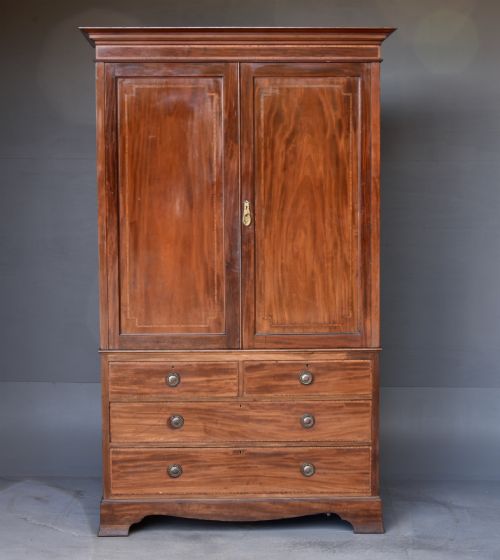
One Edwardian wardrobe carries the Maples and Co stamp, proving even grand London emporiums occasionally catered to gentlemen with too many waistcoats.
What varies in quality
Quality rests upon the selection and matching of the timber figure, particularly in birds eye maple where uniform patterning across multiple drawers elevates the piece. The skill of the cabinet-maker shows in the crispness of the dovetail joints and the smooth operation of the drawers within their carcase.
Proportion and decorative restraint distinguish finer examples from standard production, as does the integration of secondary woods like mahogany and satinwood. Maker attribution, whether through branded stamps or distinctive workshop design, further separates standard bedroom furniture from exceptional works.
Maples and Co
The Maple Bedroom Drawers Glossary
- Birds Eye Maple
- A figure in maple wood where small knots give the appearance of tiny eyes swirling through the grain.
- Tallboy
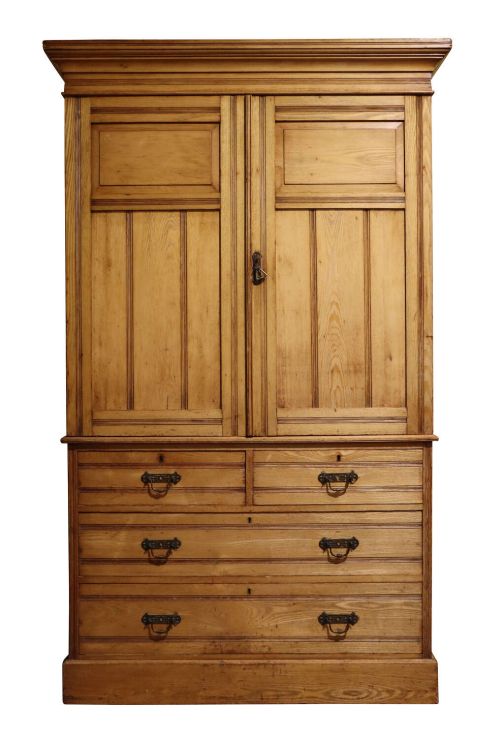
- A tall chest of drawers, often standing upon a lower chest base or incorporating a cupboard section at the top.
- Compactum
- A fitted wardrobe combining hanging space with internal drawers, shelves, and sliding trays.
- Veneer
- A thin layer of finely figured wood applied to a stable secondary timber carcase to create decorative surfaces.
- Gentlemans Chest
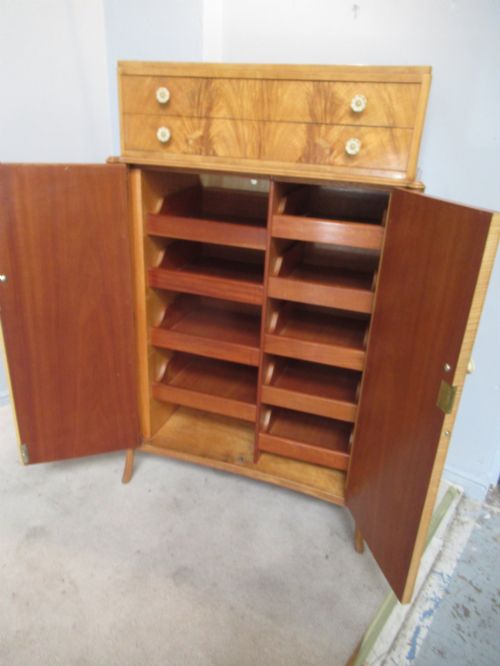
- A dual-purpose piece featuring hanging space or sliding trays enclosed by doors above several lower storage drawers.
Maple Bedroom Drawers: Frequently Asked Questions
What is birds eye maple?
Birds eye maple is a specific figuring in the timber created by growing conditions that cause the wood grain to swirl around tiny dormant buds. This produces a distinctive speckled pattern across the surface.
Cabinet-makers prized this figure for prominent display on drawer fronts and wardrobe doors, particularly during the Art Deco and Victorian periods.
How do I date a tallboy?
Dating a tallboy involves examining the construction techniques, timber combinations, and overall stylistic details of the piece. Earlier examples from the 17th and 18th centuries feature hand-cut joinery and solid timbers.
Later Victorian and 1930s pieces often employ machine-sawn elements, extensive veneering, and modernist hardware that reflect the design priorities of those decades.
Where were gentlemen's chests used?
Gentlemen's chests were designed for domestic dressing rooms and bedrooms to hold tailored garments, shirts, and accessories. Their hybrid form combined enclosed cupboard space with sliding trays and deep drawers.
This arrangement allowed owners to store folded clothing and daily wear securely within a single piece of case furniture.
Are these pieces made of solid maple?
Many items utilise a combination of solid timber for structural frames and decorative veneers applied to secondary woods for wide surfaces. This technique prevented warping while showcasing the best grain patterns.
Makers frequently paired maple with contrasting woods like mahogany or satinwood to highlight structural boundaries and drawer configurations.