

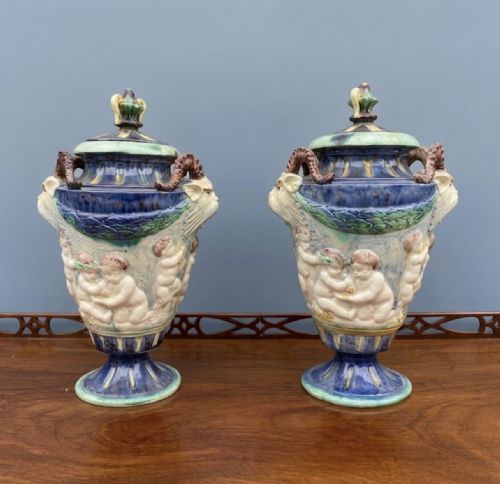


Majolica Decorative Vase
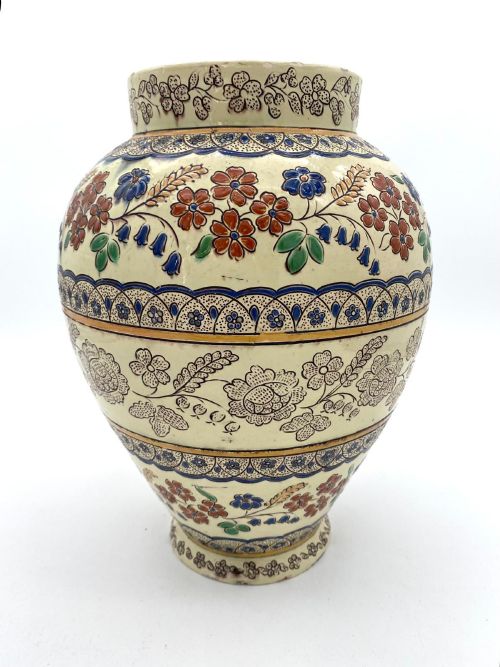
These majolica decorative vase pieces bring rich colour and modelling to a room, drawing the eye with their heavy glaze and historic forms.
Majolica Decorative Vase
A majolica decorative vase brings together robust earthenware bodies and vibrant coloured glazes, drawing on centuries of ceramic tradition. When searching for a majolica decorative vase, buyers encounter forms ranging from monumental urns and ewers to pilgrim flasks and covered jars. These objects reflect various historical revivals, including Italian Baroque, French Renaissance, and Victorian tastes.
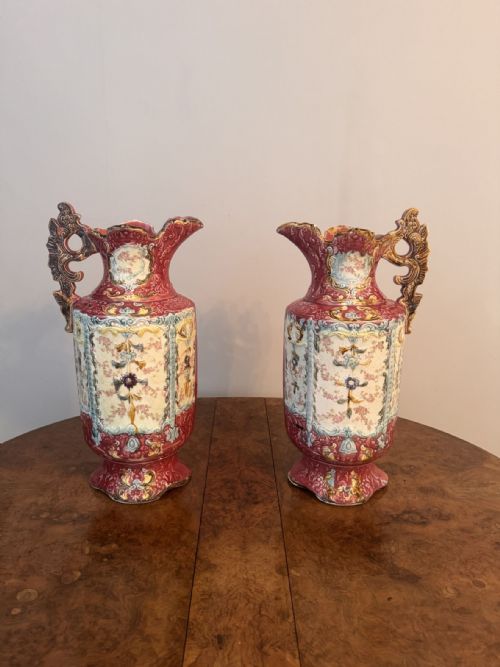
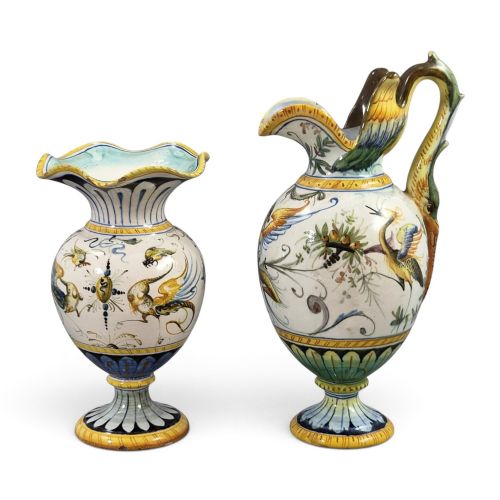
The pieces seen here span from the eighteenth century into the early twentieth century, showing both continental European workshops and British production. Ewers, jugs, and pilgrim flasks appear alongside classical urns and botanical vases, demonstrating the wide scope of forms makers chose to glaze. This diversity allows collectors to select pieces that fit specific aesthetic preferences while remaining grounded in historical ceramic types.
Materials and glazing techniques
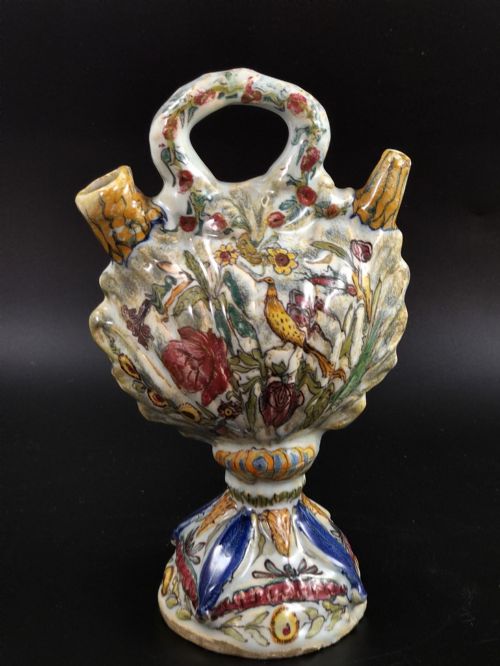
Potters built these vessels using earthenware clay bodies, shaping them into complex forms such as scallop-shell flasks and figures supporting jars. The primary technique relied on applying opaque tin glazes or rich lead glazes directly onto the ceramic body before firing. This prepared the surface to receive polychrome enamel colours that bonded during the kiln process.
Makers utilised metal oxides beneath or within the glaze to achieve deep greens, blues, ochres, and purples that characterise the style. The interaction between the absorbent earthenware and the fluid coloured glazes produced the characteristic pooling and depth visible across these surfaces.
Majolica Decorative Vase Retail Price Guide 2026
Typical asking prices for majolica decorative vase among the pieces listed under this phrase on Sellingantiques today, from the lower quarter to the upper quarter. They describe what is for sale here now, not the wider market.
Even Bacchus requires a sturdy earthenware jar when joining a Victorian collection of heavy glazed pottery.
Distinctions in craftsmanship and design
Quality in these ceramics rests upon the crispness of the modelling and the precision of the polychrome enamel painting. Pieces from prominent factories or skilled modellers display sharper relief work on figures and foliage, whereas simpler items show softer contours.
The depth and consistency of the glaze application also separate standard production from superior examples. Master potters controlled the kiln firing to ensure the colours remained vibrant and distinct without muddying the underlying earthenware details.
Cantagalli Florence·Gien French Faience·Minton Majolica·Albert Carrier
The Majolica Decorative Vase Glossary
- Majolica
- Earthenware covered with an opaque tin glaze and painted with metallic oxide colours. The technique dates back to the Italian Renaissance and saw a major revival during the nineteenth century.
- Faience
- European tin-glazed earthenware, particularly associated with French and continental workshops. It shares technical roots with majolica but often displays distinct regional painting styles.
- Ewer
- A large pitcher with a wide spout and a curved handle, originally used for pouring water but frequently made as a decorative display piece. In these ceramics, ewers often appear in matched pairs.
- Pilgrim Flask
- A flattened, circular or oval flask fitted with side lugs for suspension straps, originating from travel gear. Ceramic makers adapted the shape into highly ornamental vessels decorated with shell motifs and historical scenes.
- Polychrome
- Decorated in multiple colours. This style of painting allows ceramicists to render complex floral, figurative, and heraldic designs across the glazed surface.
Majolica Decorative Vase: Frequently Asked Questions
What is majolica?
Majolica is a type of pottery made from an earthenware body covered in a tin or lead glaze, then painted with metallic oxide colours. The method produces bright, durable surfaces that hold detailed imagery.
Potters across Europe adopted the technique during different periods, creating everything from functional jugs to large decorative urns and sculptural figures.
How do I date a piece?
Dating relies on examining the style of the modelling, the type of earthenware body, and any factory marks stamped or painted underneath. Nineteenth-century revival pieces often mimic earlier Renaissance or Baroque forms while using Victorian manufacturing methods.
Comparing the glaze palette and handling of the clay helps distinguish eighteenth-century items from later nineteenth-century interpretations.
Where were these made?
Production centres spread across Europe, with notable workshops operating in Italy, France, and Britain. Factories such as Minton in England and Cantagalli in Florence produced distinctive glazed wares.
Regional styles often reflect local artistic revivals, drawing on Italian Baroque, French Renaissance, and Swiss folk traditions.
How should I display them?
These ceramic vessels require stable placement on firm surfaces away from heavy traffic areas where they might get knocked. Their bright glazes and sculptural forms make them suitable as focal points on sideboards, mantelpieces, or dedicated display cabinets.
Keeping them out of direct, harsh sunlight helps protect the stability of the enamel colours over time.