



Majolica Art Pottery
Majolica art pottery brings rich colour and lead-glazed earthenware to domestic interiors through vessels and stands made across the nineteenth and early twentieth centuries.
Majolica Art Pottery
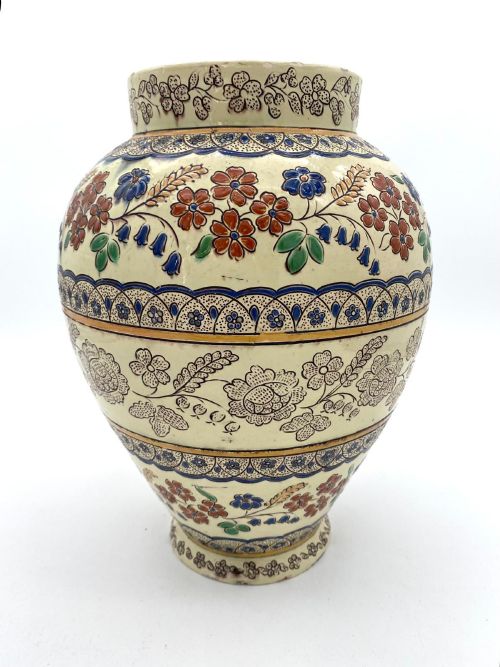
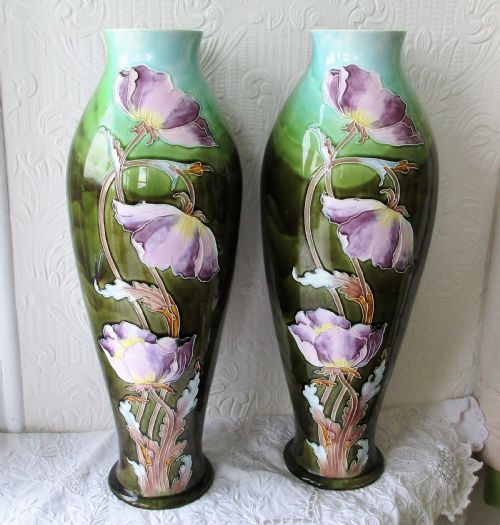
When you search for majolica art pottery, you encounter a distinct group of glazed ceramic items spanning from the late nineteenth century into the early twentieth century. These pieces predominantly take the form of vases, jardinieres, and umbrella stands decorated in styles ranging from Victorian to Art Nouveau and the Aesthetic Movement. Most examples you meet on this page originate from British, French, Austrian, and Italian makers who utilised moulding and glazing techniques to achieve vibrant decorative surfaces.
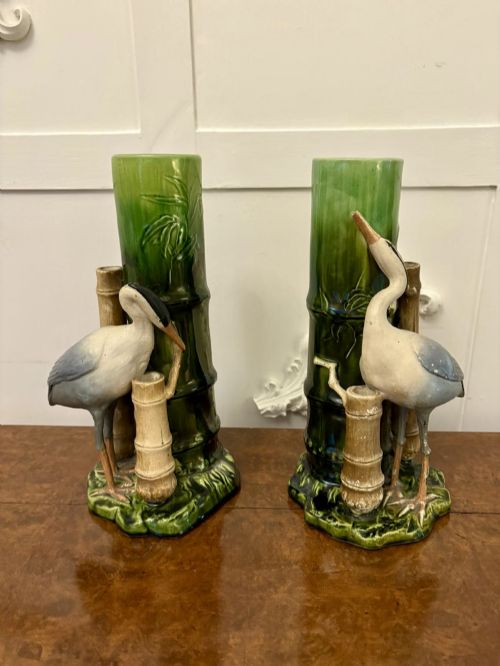
The selection here encompasses substantial floor-standing jardiniere and stand combinations alongside decorative plates, plaques, and table centrepieces. You find both English regional potteries and continental European workshops represented across periods like the 1890s and 1900s. These items served primarily as ornamental display pieces within period homes, incorporating motifs such as birds, sunflowers, and mythological griffins into their robust ceramic bodies.
How they were made
Makers formed these items using earthenware, ceramic, and faience bodies shaped through moulding or throwing. The distinctive appearance relies upon opaque or translucent lead glazes applied directly to the clay or over an enamel ground, producing the characteristic lustrous finish seen on pieces from French and English workshops.
Potteries employed specialised kiln firing techniques to fuse the coloured glaze pigments, allowing metallic oxides to create deep greens, blues, and ochres. Workshops such as Clement Massier further developed lustre glaze methods to impart an iridescent sheen across the earthenware surface.
Majolica Art Pottery Retail Price Guide 2026
Typical asking prices for majolica art pottery among the pieces listed under this phrase on Sellingantiques today, from the lower quarter to the upper quarter. They describe what is for sale here now, not the wider market.
A grinning ceramic griffin once held up nineteenth-century ferns, proving that Victorian botanists took their plant stands with a side of mythology.
What varies in quality
The standard of modeling and clarity of the glaze application determine the distinction between ordinary production and superior work. Finely articulated relief work on naturalistic motifs like birds and floral elements indicates greater skill by the modeller.
The richness and depth of the coloured glazes, particularly where lustre effects or complex multi-tone palettes are utilised, separate standard utility wares from the ambitious exhibition pieces produced by prominent European and British potteries.
Bretby·Clement Massier·Julius Dressler·Woodlesford·C. Ravier·Eichwald
The Majolica Art Pottery Glossary
- Majolica
- A type of pottery covered with an opaque tin or lead glaze painted with coloured metal oxides. It provides the glossy, colourful surface characteristic of nineteenth-century decorative wares.
- Faience
- A term applied to tin-glazed earthenware and pottery produced in France and other European regions. It often describes decorative plates, bowls, and vases with painted or glazed ornamentation.
- Jardiniere
- A large ornamental pot or stand designed to hold growing plants or flowers. These vessels frequently feature matching pedestals and prominent relief moulding.
- Lustre glaze
- A metallic glaze technique that produces an iridescent or pearlescent sheen on the ceramic surface. It requires precise reduction firing in the kiln to achieve the desired light-reflecting effect.
Majolica Art Pottery: Frequently Asked Questions
What is majolica art pottery?
It is glazed earthenware pottery produced largely during the nineteenth and early twentieth centuries, featuring colourful lead or tin glazes. These items encompass decorative vases, jardinieres, and umbrella stands.
The aesthetic draws upon Victorian, Arts and Crafts, and Art Nouveau design movements, incorporating naturalistic motifs and sculptural relief into everyday household objects.
How do I date these pieces?
Dating relies on stylistic markers such as Victorian floral motifs, Aesthetic Movement lines, or sweeping Art Nouveau curves. Examining the specific glaze type and manufacturing marks helps narrow the decade.
Most items on this page originate from the period between 1880 and 1920, reflecting the peak era of European and British art pottery production.
Where were these ceramics made?
Production took place across Britain, France, Austria, and Italy, with regional potteries developing distinct local styles and glaze formulas. English makers worked alongside continental European workshops.
French faience and Austrian glazed earthenware represent prominent regional traditions found within this category of decorative ceramics.
How were jardinieres used?
Jardinieres and plant stands served as prominent indoor display pieces for large potted palms and flowering plants in Victorian and Edwardian drawing rooms. They brought botanical elements into domestic interiors.
Larger examples often paired a decorated pot with a matching floor pedestal to elevate the plant and showcase the sculptural pottery.