

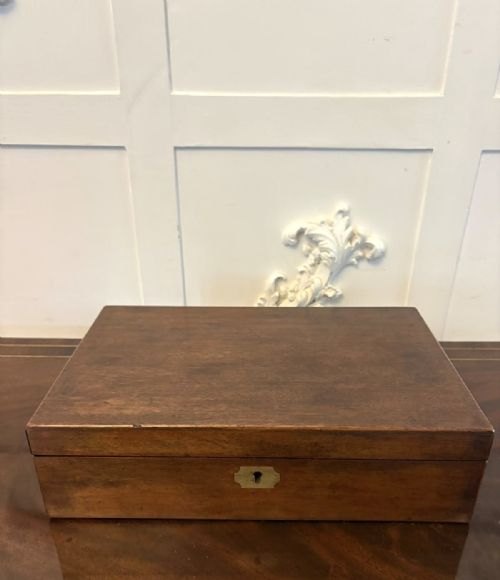


Mahogany Writing Slope Box
These mahogany writing slope boxes are timber travel desks built to hold paper, ink and letters securely on the move.
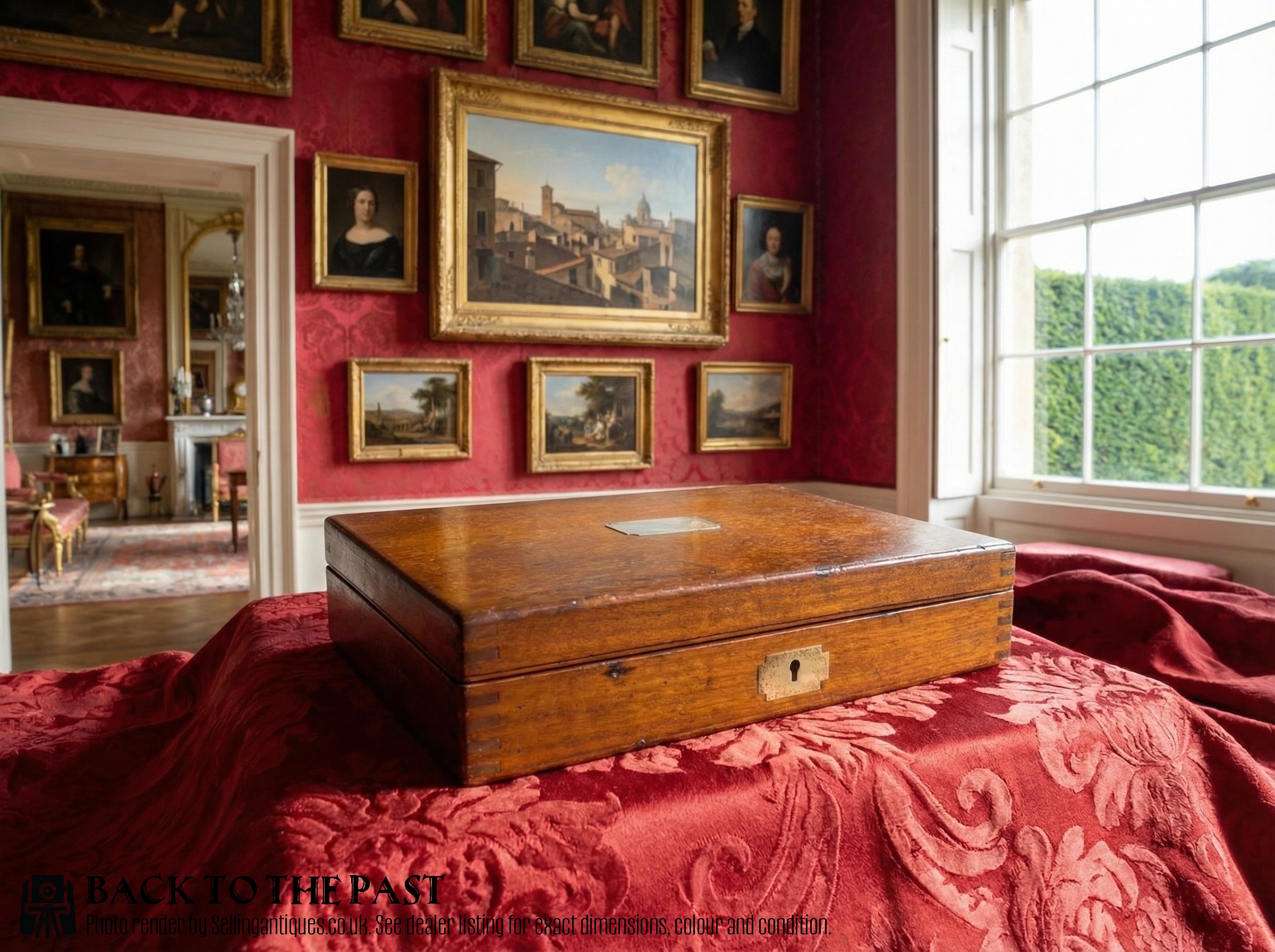
Mahogany Writing Slope Box
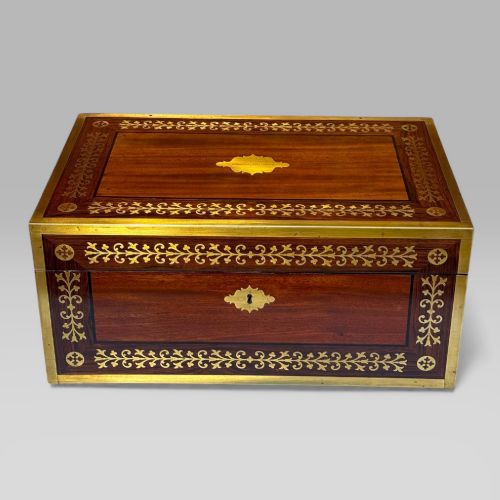
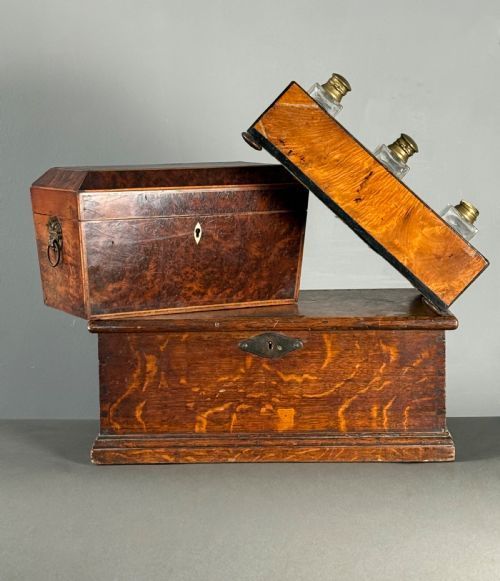
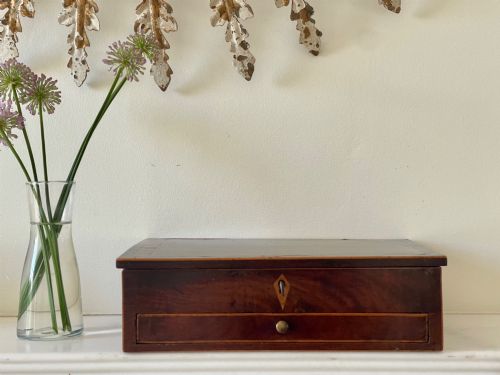
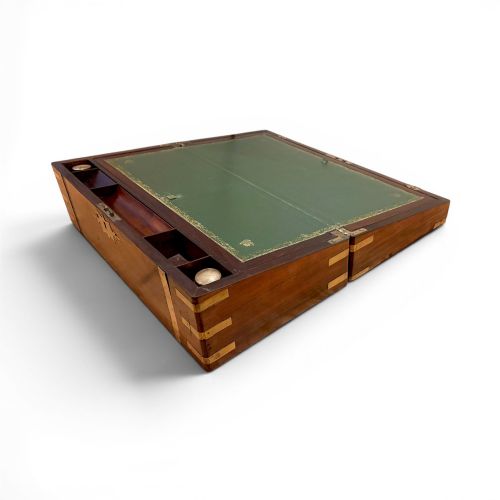
A mahogany writing slope box is a portable desk designed to fold open at an angle, providing a firm writing surface wherever one travelled. You will frequently encounter examples from the Georgian, Regency and Victorian periods, often constructed with folding lids that conceal fitted interiors for inkwells and nibs.
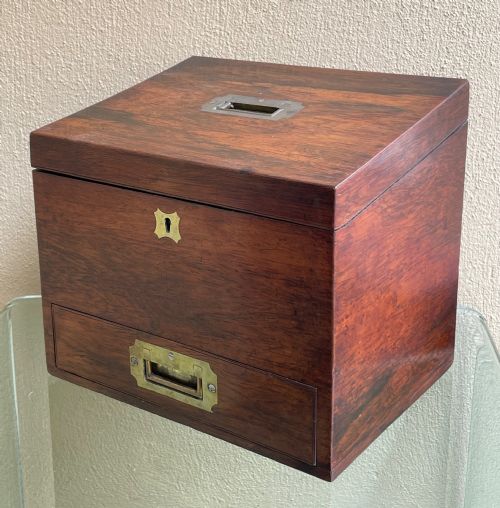
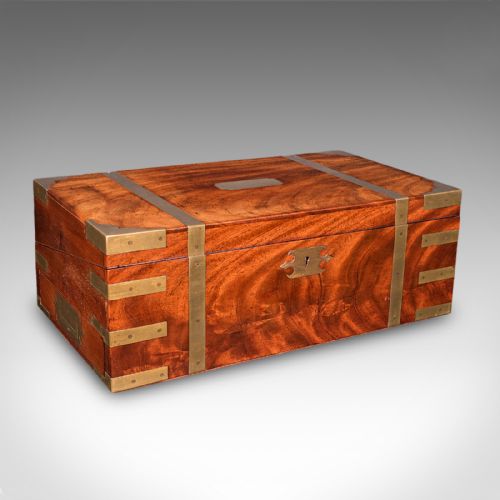
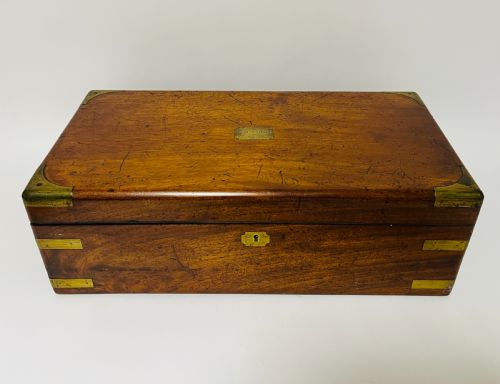
Many survivors carry the heavy brass banding and corner mounts of campaign furniture, intended for officers on military service or long voyages. Alongside standard writing slopes, the form shades into stationery cabinets, correspondence boxes and folding desks with secret compartments.
How they were made
Cabinet makers built these boxes primarily in solid mahogany, frequently selecting figured timbers such as flame mahogany or incorporating rosewood and walnut veneers. Structural strength relied on tightly fitted box joints and sturdy interior partitions designed to withstand the rigours of travel.
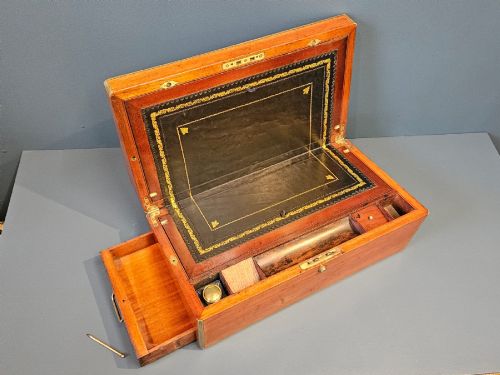
Mounts of cast brass reinforced the corners and edges, while inset campaign handles allowed the boxes to be lifted without projecting hardware. Interiors were lined with leather writing surfaces, often gold-tooled, and fitted with tiny wooden secret drawers accessed through hidden catches.
Some military boxes included built-in candle sconces for writing dispatches long after dark.
What varies in quality
The distinction between standard utility boxes and superior pieces lies in the choice of timber and the precision of the brass inlay. Selection of deeply figured flame mahogany or cabinet work featuring detailed rosewood banding signals a higher workshop standard.
Interior complexity also marks out better examples, particularly those retaining original fitted compartments, secret sovereign sections, working keys and intact leather skivers. The weight and casting quality of the brass mounts further separate ordinary boxes from finely finished specimens.
Mappin and Webb
The Mahogany Writing Slope Box Glossary
- Campaign furniture
- Portable furniture built in sections or fitted with brass mounts and flush handles for military transport. Such pieces were designed to fold or pack down securely for officers on the move.
- Writing slope
- A box with a hinged, slanted lid that folds down to form a writing desk. Inside, it provides storage compartments for paper, pens and inkwells.
- Flame mahogany
- A veneer cut from the fork of the mahogany tree where the branch meets the trunk. It displays a distinctive, highly figured flame-like grain pattern.
- Secret compartment
- A hidden drawer or concealed space built into the interior of a box behind false panels or removable partitions. These were used to store valuables or private correspondence.
- Stationery cabinet
- A standing desk organiser with pigeonholes and doors for holding paper and envelopes upright. They emerged later in the nineteenth century for use in permanent studies.
Mahogany Writing Slope Box: Frequently Asked Questions
How do I find the secret drawers?
Secret drawers are often concealed behind false partitions, removable pen trays or sliding panels inside the fitted interior. Finding them usually requires removing the internal stationery fittings and gently pressing hidden wooden springs or latches.
Many nineteenth-century boxes employ simple gravity catches or interlocking panels that release only when the main box is opened in a specific sequence.
Were these boxes used for travel?
These boxes served as portable writing desks for officers, diplomats and travellers who needed to write letters away from home. Their robust construction and brass edge binding protected the writing materials during long journeys by sea and carriage.
When closed, the heavy brass locks and bound corners ensured that inkwells and loose paper remained secure until the desk was opened again at the next stop.
How do I tell a Georgian box from a Victorian one?
Georgian and Regency writing slopes often display restrained brass stringing and simpler box geometry, relying on the natural figure of the mahogany. Victorian examples tend towards heavier brass corner brackets, strapwork banding and more complex internal stationery fittings.
Earlier eighteenth-century pieces may also feature shell inlay and lighter framing, whereas mid-nineteenth-century boxes frequently incorporate robust campaign handles and patent locking mechanisms.
Can I still use a writing slope for daily correspondence?
These boxes function well for storing modern stationery, fountain pens and notepaper in a study or living room. The folding writing bed provides a stable, inclined surface if one wishes to write letters by hand using traditional pens.
Care should be taken with original leather skivers and antique brass hinges to ensure daily use does not place undue strain on historic materials.