
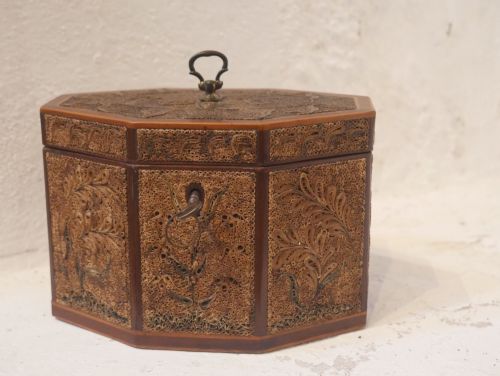


Brown Mahogany Decorative Box
A brown mahogany decorative box offers both containment and rich timber grain, coming to us from Georgian tea caddies to Edwardian coal boxes.
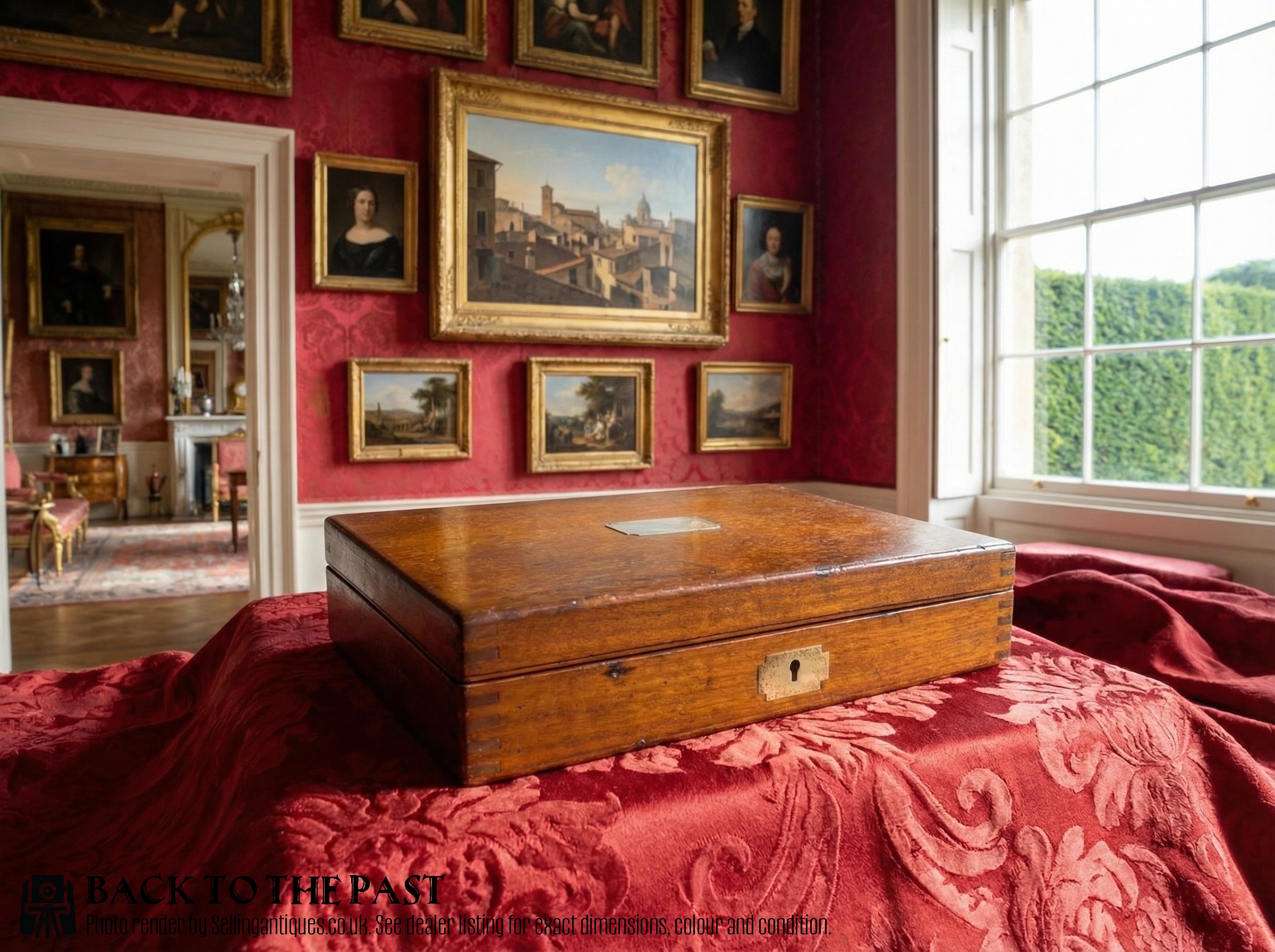
Brown Mahogany Decorative Box
A brown mahogany decorative box brings substantial timber and period craftsmanship into a room, serving practical storage needs through centuries of domestic life. When you search for a brown mahogany decorative box, you encounter pieces intended to hold tea, silver, jewellery, or technical instruments.
The selections span distinct historical eras, ranging from restrained 18th-century tea caddies to Edwardian coal boxes and inlaid silver chests on stands. Each object reflects the prevailing domestic habits of its period, prioritising secure containment and visible polished timber.
You are most likely to meet tea caddies and storage chests on this page, often augmented by smaller decorative boxes and fireside accessories. These items demonstrate how utilitarian wooden vessels received decorative treatment through veneers and brass hardware.
How they were made
Makers utilised solid mahogany and applied veneers such as amboyna and satinwood to create rich exterior surfaces on these boxes. Wood inlay added geometric or contrasting borders to the primary brown timber.
Metal fittings in brass and silver provided structural reinforcement and functional handles, hinges, or locks. Paper filigree occasionally lined or decorated internal compartments, adding intricate detail to the construction.
An 18th-century tea caddy preserves the faint, lingering aroma of dried leaves within its paper-lined interior compartments.
What varies in quality
Quality rests in the precision of the joinery and the selection of figured mahogany veneers, where superior examples exhibit deep grain patterns and balanced proportions. The integration of contrasting wood inlay and amboyna veneer elevates the visual sophistication of a piece.
Hardware execution further distinguishes the range, as heavy cast brass mounts and intact locking mechanisms indicate superior original commission. Finer boxes maintain original internal fittings, such as compartmentalised tea caddy canisters or fitted trays for technical drawing instruments.
The Brown Mahogany Decorative Box Glossary
- Tea caddy
- A small box designed to store loose tea leaves securely, often featuring internal compartments and a lock. These containers kept expensive tea fresh and protected in the home.
- Veneer
- A thin slice of decorative wood applied over a secondary timber base to create a figured surface. This technique allowed cabinetmakers to display striking grain patterns economically.
- Inlay
- The technique of embedding contrasting woods or materials into a recessed surface to form decorative patterns. It frequently outlines the edges of lids and drawer fronts.
- Amboyna
- A highly prized, dense wood known for its mottled and swirly grain pattern. It appears as a contrasting veneer on finer antique boxes.
- Paper filigree
- Rolled, shaped, and glued paper strips forming delicate decorative designs, sometimes found inside period boxes. This meticulous craft creates ornate scrollwork without heavy metal.
Brown Mahogany Decorative Box: Frequently Asked Questions
What did they hold?
These boxes stored valuable commodities like tea, silver, jewellery, and precision drawing instruments. Each container was tailored internally to secure its specific contents safely.
Tea caddies often featured lidded compartments to separate leaf varieties, while drawing sets utilised fitted wooden blocks to hold compasses and pens.
How do I date a box?
Dating relies on observing construction methods, timber choices, and stylistic markers associated with periods like Georgian, Victorian, or Edwardian. Regional hardware styles and lining materials also offer clues to the decade of manufacture.
Cabinetmaking techniques evolved from simple solid construction towards complex veneering and inlay as machinery improved through the nineteenth century.
Are they all tea caddies?
While tea caddies represent a prominent category, the selection includes jewellery boxes, silver chests, coal boxes, and technical drawing sets. Each form served a distinct domestic function within the period household.
Storage chests and coal boxes accommodated larger household goods, contrasting with the intimate scale of portable jewellery and tea containers.
Where should I place one?
These boxes suit display on sideboards, tables, or desks where their polished mahogany surfaces and inlaid details remain visible. They function effectively as accent pieces while continuing to store small modern items.
Keeping them away from direct sunlight and extreme temperature fluctuations protects the antique wood and delicate internal veneers.