


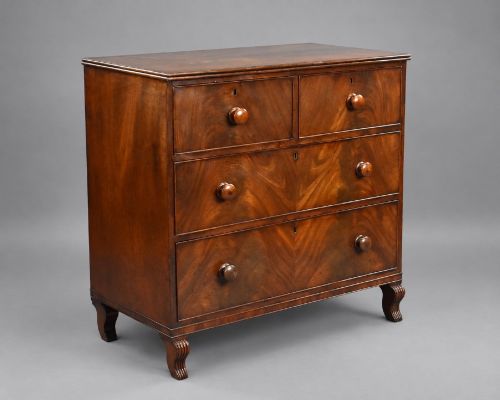
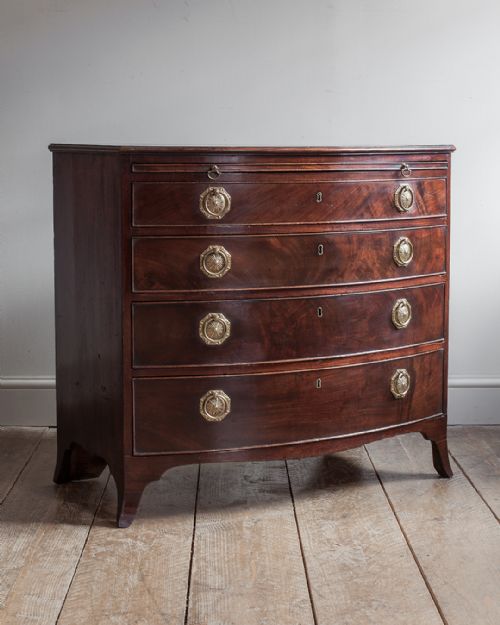
Mahogany Wooden Dresser
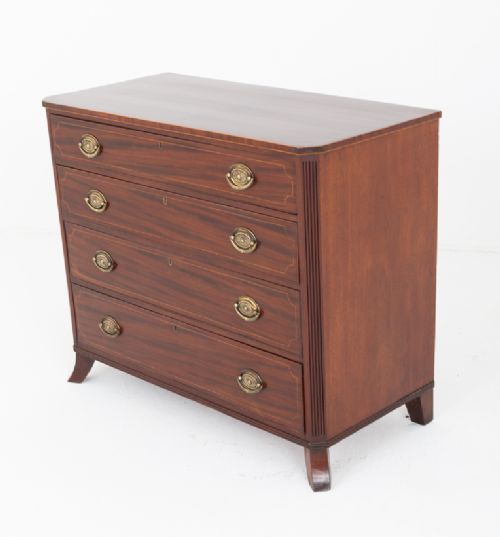
A mahogany wooden dresser brings substantial timber presence and disciplined storage to a room, spanning periods from the Georgian era through to Edwardian times.
Mahogany Wooden Dresser
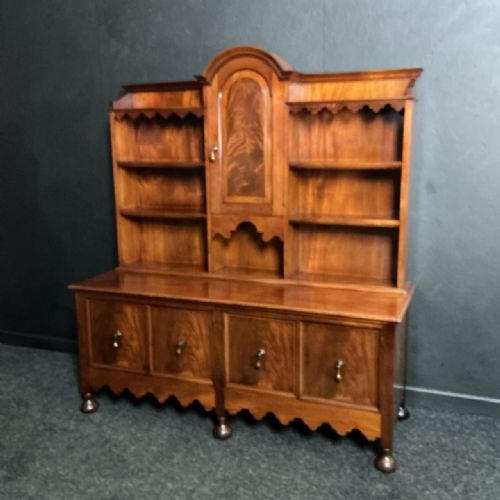
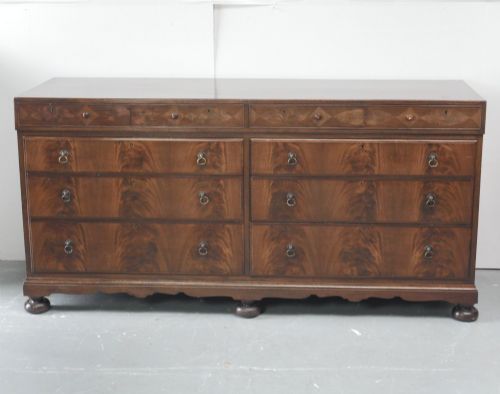
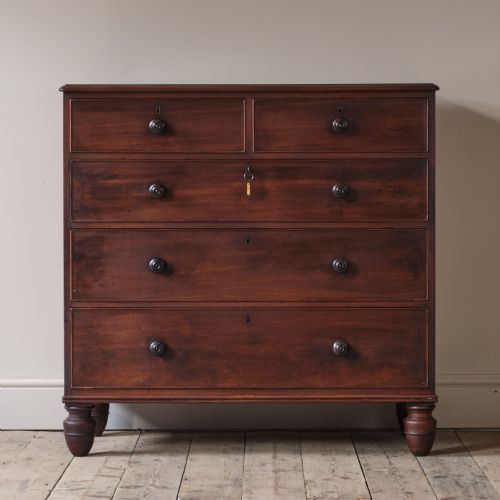
When searching for a mahogany wooden dresser, buyers encounter chests of drawers, sideboards, and occasional sideboard-dresser combinations spanning the 18th century, Georgian, Regency, Victorian, and Edwardian periods.
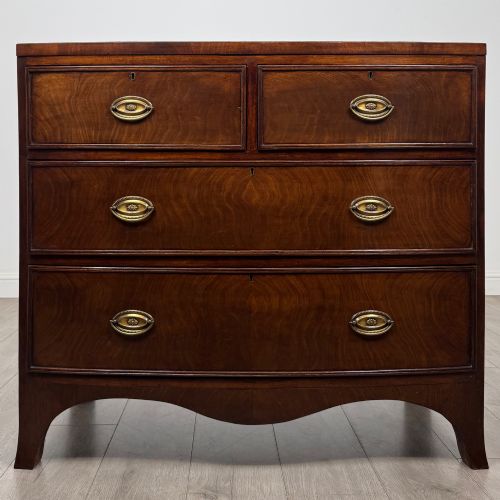
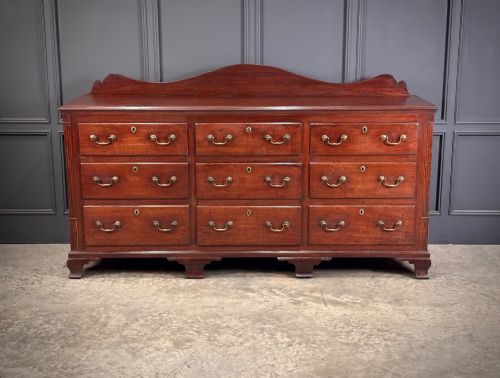
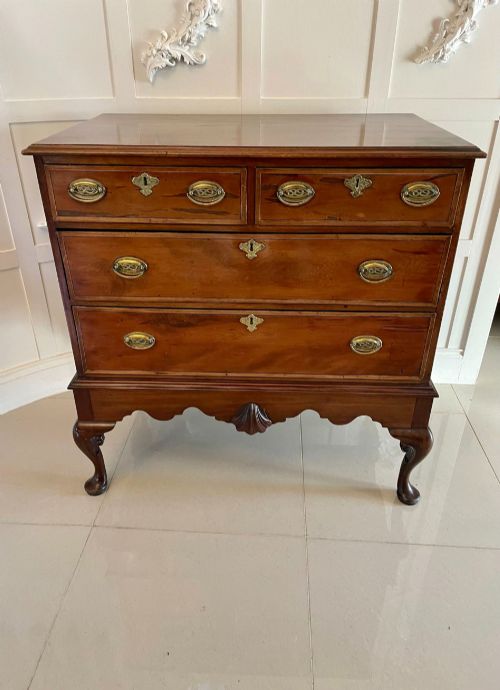
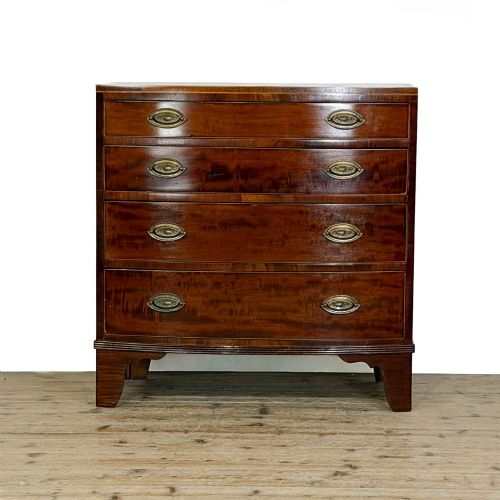
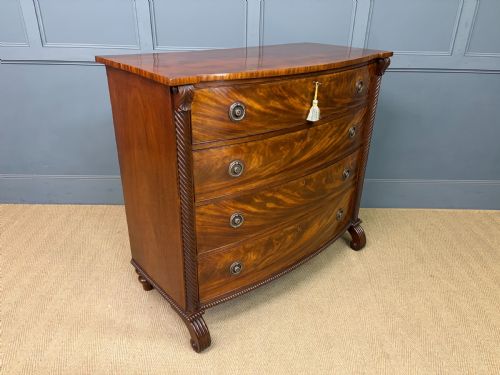
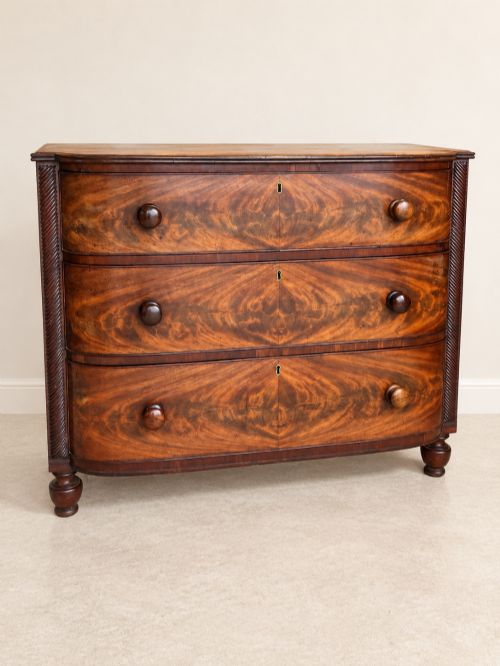
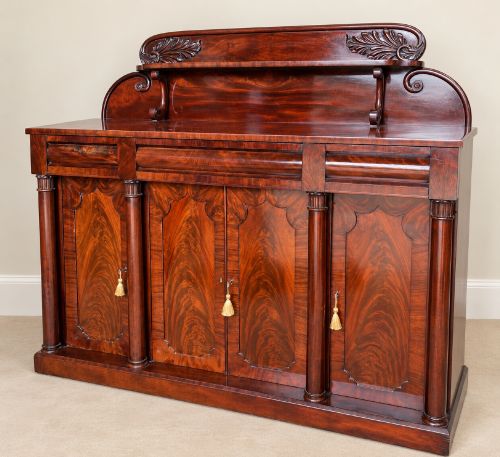
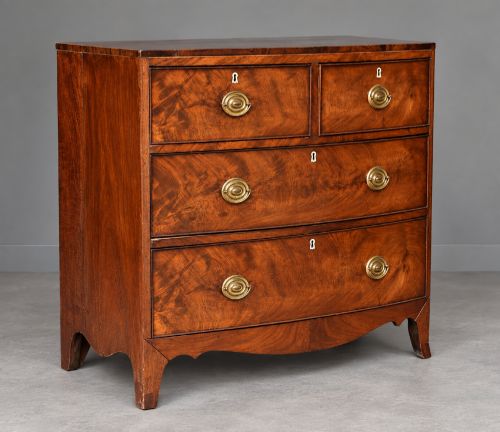
The pieces appearing most frequently take the form of bow-front and straight-front chests of drawers, alongside substantial sideboards fitted with multiple drawers and cupboards.
Origins stretch across English workshops and Scottish makers, incorporating vernacular pieces alongside formal revival items from the 19th century and later.
Materials and construction methods
Construction relies primarily on solid mahogany and flame mahogany veneer applied over secondary timbers such as oak and pine, providing structural stability to large carcases.
Hardware details incorporate cast brass handles and escutcheons, while finer examples deploy satinwood crossbanding to frame the drawer fronts and top surfaces.
Internal drawer boxes utilise pegged dovetail joints, and specialised forms integrate pull-out brushing slides or concealed upper compartments.
Listings feature items spanning the 18th century, Georgian, Regency, Victorian, and Edwardian periods, constructed in mahogany, flame mahogany veneer, oak, pine, and brass.
Distinctions in construction and finish
Quality reveals itself in the selection of timber, where matched flame mahogany veneer and consistent grain patterns elevate a piece above standard stock.
The precision of drawer construction, including tight dovetailing and smooth operation within the runners, marks the distinction between workshop standards.
Original brass hardware, intact cockbeading around drawer edges, and balanced proportions across serpentine or bow-front profiles determine collector value.
Whytock and Reid·T and G Seddon·J Moorcroft
The Mahogany Wooden Dresser Glossary
- Bow front
- A convex, curved front to a chest of drawers or sideboard that became popular during the late Georgian and Regency periods.
- Crossbanding
- A narrow strip of veneer applied perpendicularly to the surrounding grain along the edges of a top or drawer front for decorative contrast.
- Brushing slide
- A pull-out shelf integrated into the upper section of a chest of drawers, originally utilised for grooming or folding clothes.
- Serpentine front
- A shaped furniture front featuring a convex central section flanked by concave curves, demanding high skill from the cabinetmaker.
- Cockbeading
- A small, rounded projecting moulding applied around the edges of drawer openings to conceal joints and protect the timber.
Mahogany Wooden Dresser: Frequently Asked Questions
How do I date a mahogany chest?
Dating relies on examining construction methods like dovetails, drawer linings, and handle styles. Earlier 18th-century pieces often display hand-cut joints and oak linings, whereas later Victorian examples shift towards machine assistance and pine secondary woods.
Cabinet shapes also shift across decades, moving from straight Georgian proportions to prominent Regency bow fronts and heavier Victorian silhouettes.
What is a brushing slide?
A brushing slide is a pull-out wooden shelf integrated directly above the top drawers of a chest. In period use, it served as a surface for grooming or sorting garments without opening the main drawers.
They appear frequently on better quality Georgian pieces and remain a practical feature for modern placement.
How do I clean mahogany wood?
Maintenance requires avoiding harsh modern polishes in favour of traditional beeswax applied sparingly with a soft cloth. Regular dusting preserves the aged patina and prevents the surface from drying out.
Keep pieces away from direct heat sources and strong sunlight to protect the fragile veneer layers.
Are these pieces made of solid wood?
Most examples combine solid mahogany frames with figured mahogany veneers applied to secondary timbers such as oak, pine, or deal. Veneer application allowed cabinetmakers to display striking grain patterns without compromising the structural integrity of the carcase.
Secondary woods inside drawer boxes and backboards help confirm the period of manufacture.