



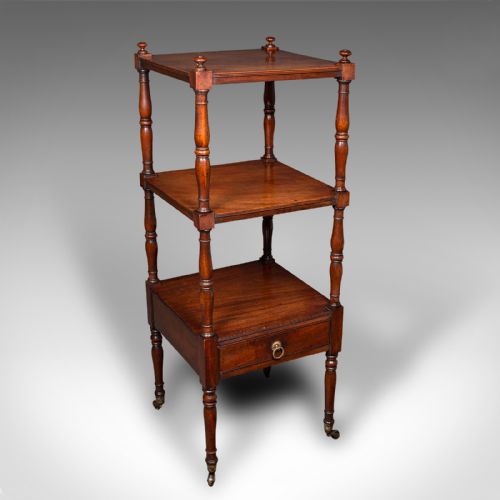


Mahogany Whatnot with Drawer
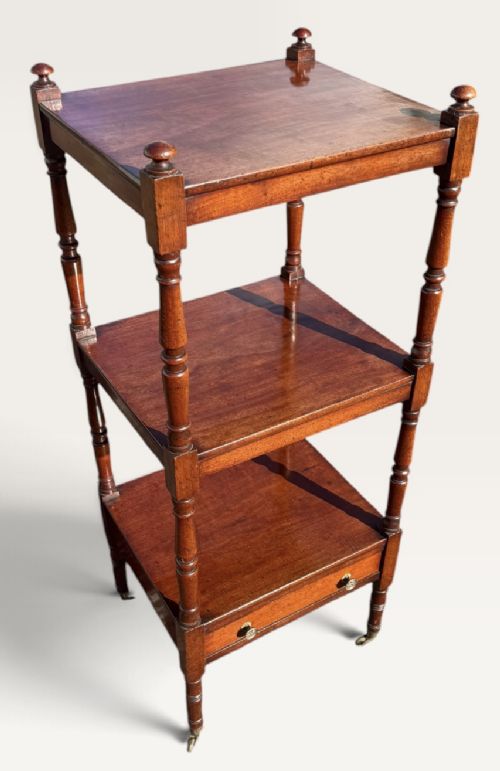
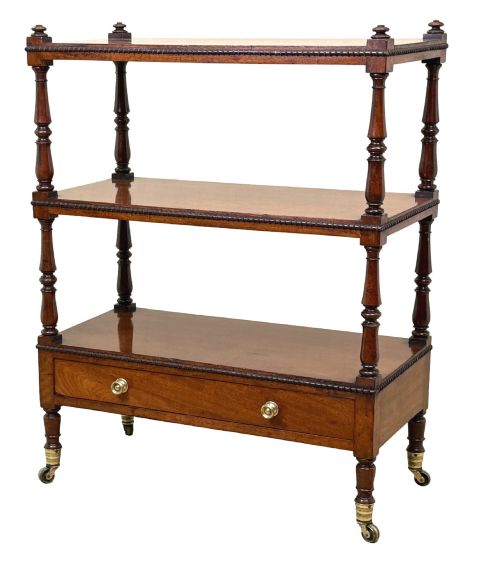
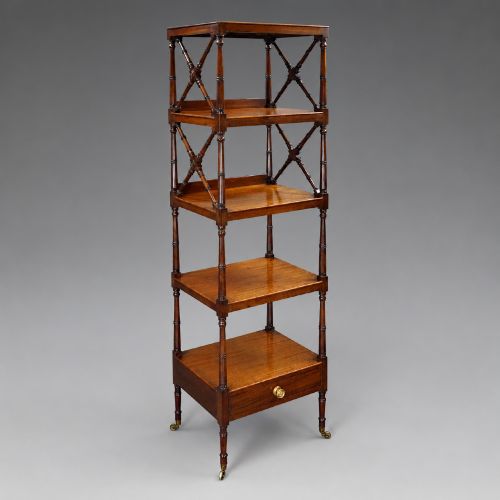
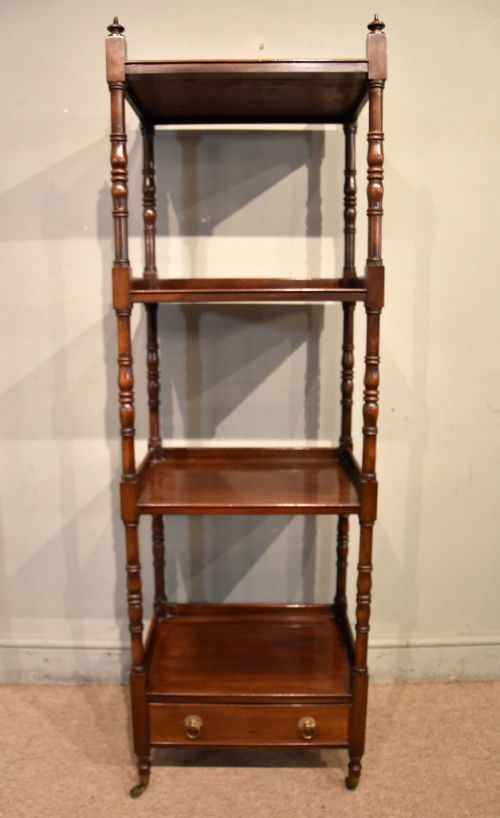
A mahogany whatnot with drawer is a tiered display stand that brings open shelving and enclosed storage together.
Mahogany Whatnot with Drawer
A mahogany whatnot with drawer is an open tiered display piece designed to hold books, ceramics and decorative objects while keeping smaller items stored away safely. These versatile stands appear across multiple periods, including George III, Regency, William IV and Victorian eras.
Most examples found on this page offer three, four or five tiers supported by uprights, often featuring a single drawer or multiple drawers set into the base or lower section. They function as practical side pieces, display stands and etageres within sitting rooms and parlours.
The form spans the late Georgian period through to the late nineteenth century, showing how cabinet makers adapted the open shelf design to suit changing domestic requirements. Buyers frequently encounter variations that include mirrors, side drawers, cupboard bases or cellarettes alongside the standard tier arrangement.
Materials and construction
Cabinet makers constructed these pieces primarily from solid and veneered mahogany, occasionally selecting golden mahogany or pairing the timber with rosewood accents. The rich grain of the wood provides the defining visual characteristic across George III, Regency and Victorian examples.
Brass castors, handles and decorative mounts frequently appear on these stands, allowing the multi-tiered structures to move smoothly across carpets and floors. Turned feet and upright supports form the structural backbone, carrying the weight of multiple open shelves and drawer enclosures.
Mahogany Whatnot with Drawer Retail Price Guide 2026
Typical asking prices for mahogany whatnot with drawer among the pieces listed under this phrase on Sellingantiques today, from the lower quarter to the upper quarter. They describe what is for sale here now, not the wider market.
Some tall variations managed to squeeze both a cupboard base and a wine cellarette into a single piece.
What separates the best from the rest
The hierarchy of quality rests on the proportion of the tiers, the choice of timber and the integration of the drawer housing. Finer pieces demonstrate careful grain matching across the drawer fronts and well-turned upright supports that maintain stability without feeling heavy.
Subtle details such as brass castors, clever drawer configurations like side drawers or cellarettes, and refined edge mouldings distinguish exceptional workshops from standard production. The overall crispness of the turning and the depth of the mahogany finish dictate where a piece sits within the range.
The Mahogany Whatnot with Drawer Glossary
- Whatnot
- An open shelving unit with multiple tiers designed for displaying ornaments, books or small decorative objects. It developed during the eighteenth century as domestic spaces required more specialised display furniture.
- Etagere
- A French term for a tiered piece of furniture used for display, often synonymous with the English whatnot. These stands feature stacked platforms supported by columns or slender uprights.
- Cellarette
- A fitted compartment or drawer designed to hold bottles securely, occasionally incorporated into the lower section of these stands. This addition turned a standard display piece into a functional entertaining accessory.
- George III
- The period of British design spanning the second half of the eighteenth century and the early nineteenth century. Furniture from this era displays refined proportions and high-grade mahogany timbers.
- Regency
- The stylistic period covering the early nineteenth century, known for classical restraint and elegant structural lines. Pieces from this era often utilise bold mahogany grains and neat brass detailing.
Mahogany Whatnot with Drawer: Frequently Asked Questions
What is a mahogany whatnot with drawer used for?
These stands provide open tiers for displaying books, ceramics and ornaments in living spaces. The integrated drawer adds practical enclosed storage for smaller everyday items.
Historically, they sat beside seating or against walls as versatile multipurpose furniture. Today they serve the same display and storage functions in modern interiors.
How many tiers do these stands usually have?
Most examples feature between three and five open shelves stacked vertically. Taller versions sometimes include cupboard bases or multiple drawers.
The number of tiers generally dictates the overall height and visual weight of the piece within a room.
How do I tell a Georgian whatnot from a Victorian one?
Georgian and George III pieces generally display lighter framing, refined proportions and understated bracket feet or simpler turnings. They rely on the natural figure of the mahogany for visual interest.
Victorian examples often feature heavier timbers, richer golden mahogany tones, and sometimes added decorative elements like mirrors or more robust turned uprights.
Can I use a whatnot as a bedside table?
The open shelf arrangement and integrated base drawer make certain smaller three-tier variants suitable for bedside use. The lower drawer holds nighttime essentials while the upper shelves accommodate lamps and books.
Buyers frequently repurpose these antique stands for bedrooms where surface space is limited.