


Mahogany Whatnot Shelves
Mahogany whatnot shelves bring tiered display and storage into a room, offering practical levels for books, china and ornaments.
Mahogany Whatnot Shelves
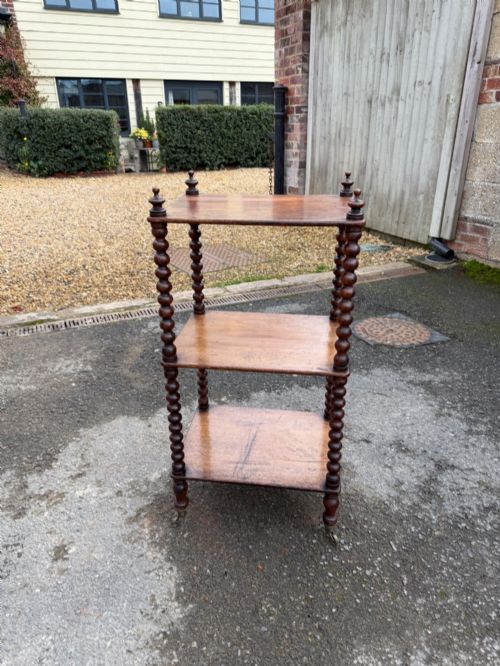
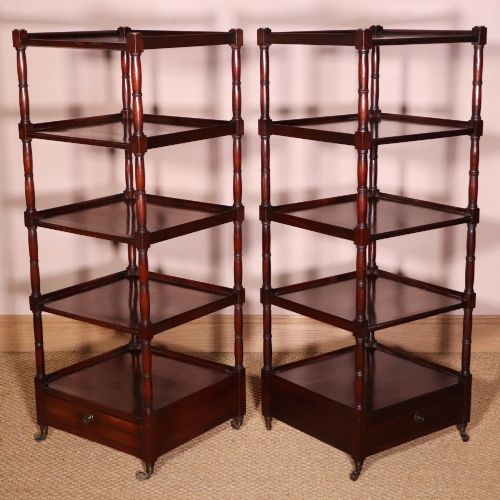
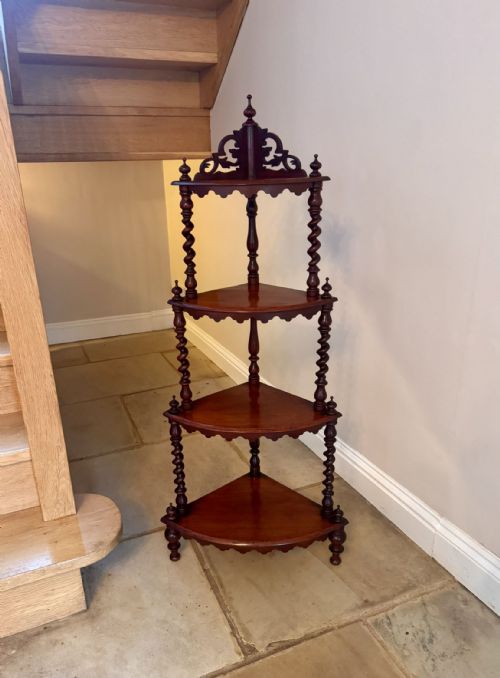
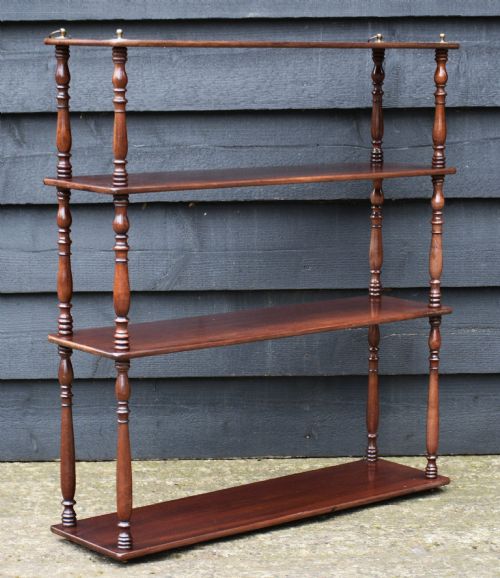
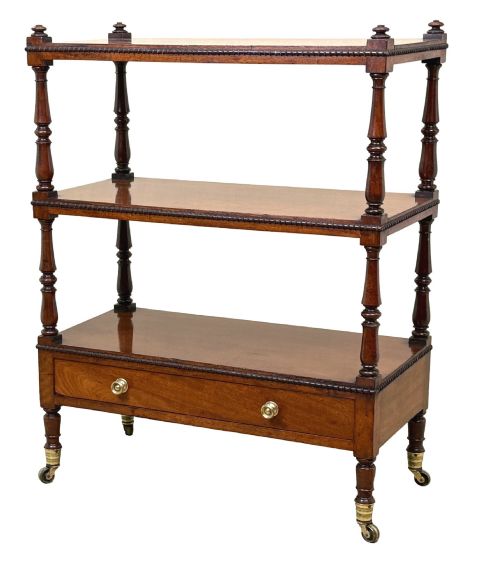
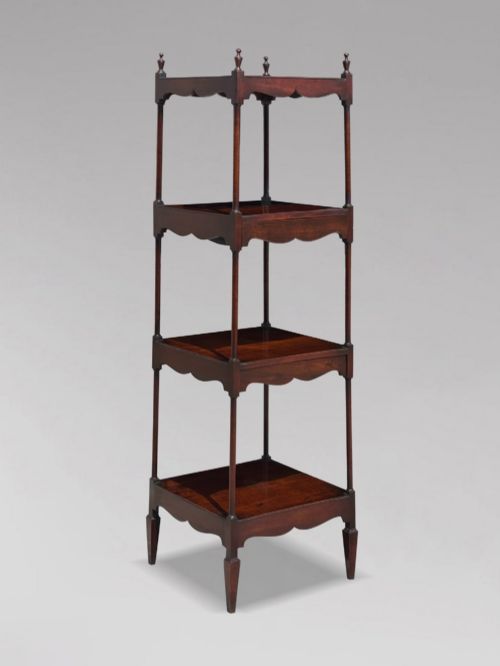
Mahogany whatnot shelves provide tiered open storage and display across multiple levels, designed to stand freely or fit into corners. When you examine mahogany whatnot shelves on this page, you find examples spanning the Georgian, Regency, William IV and Victorian periods.
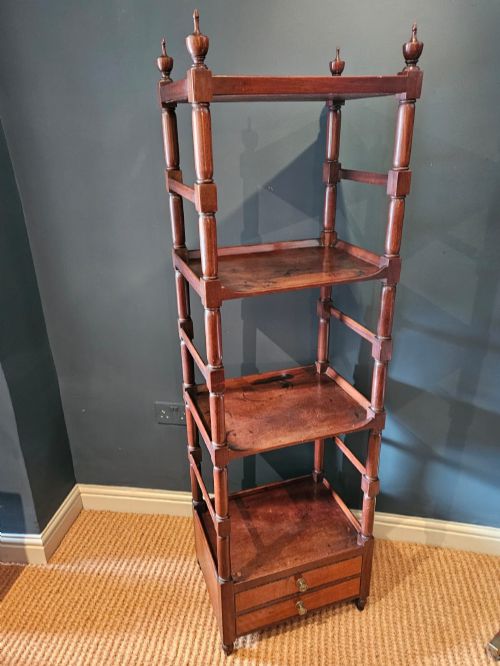
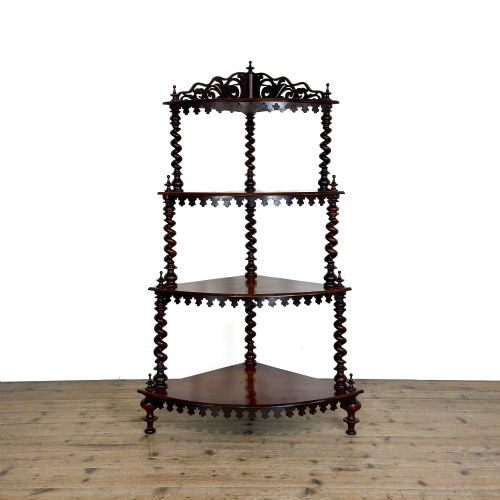
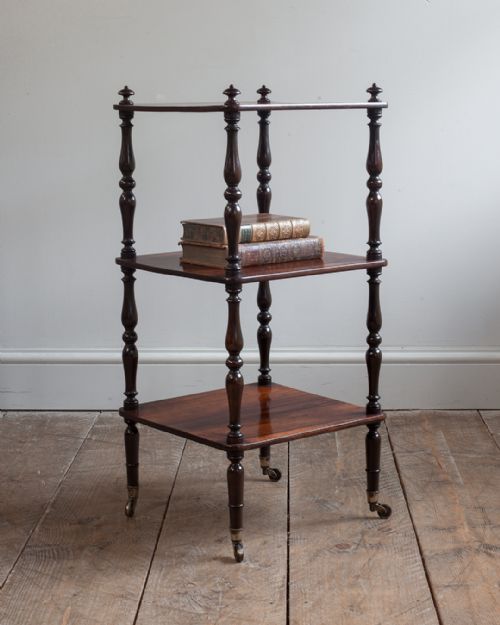
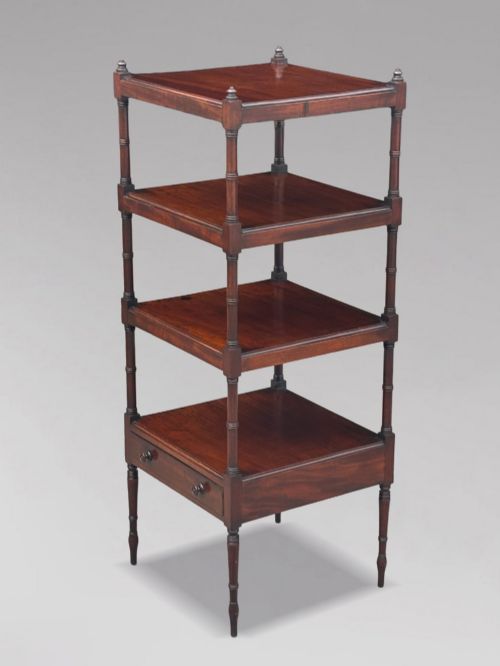
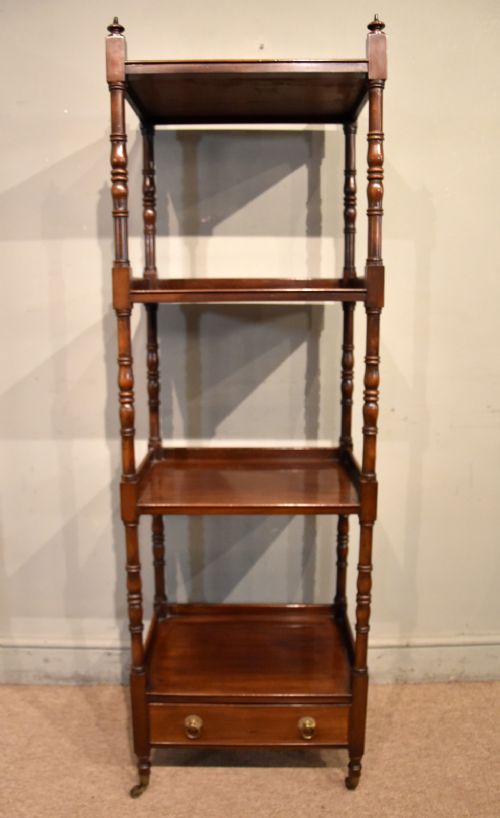
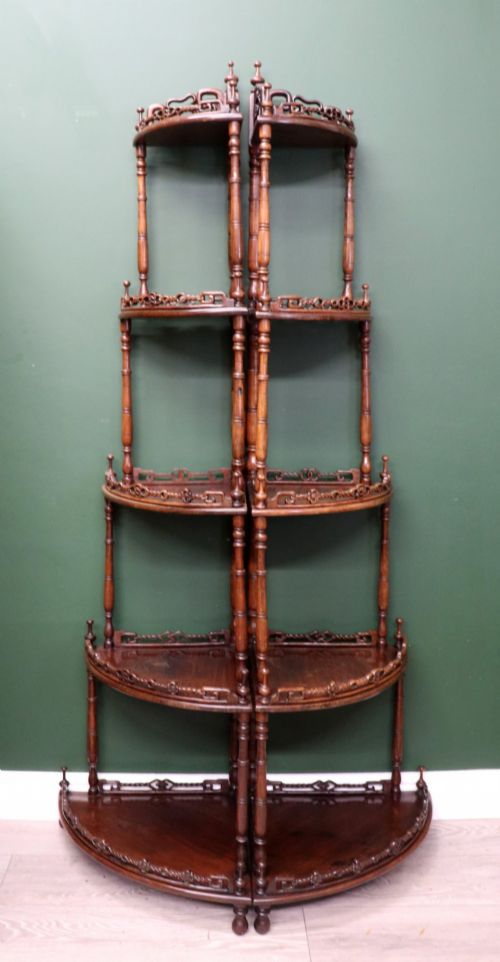
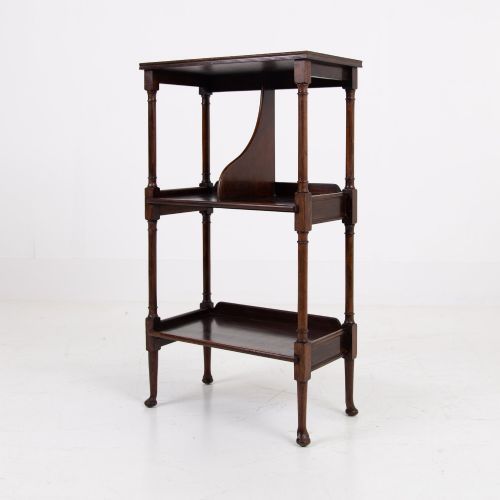
The standard form comprises three or four graduated wooden tiers supported by upright posts or turned columns, occasionally incorporating a drawer or cupboard base at the lowest level. Pieces range from tall multi-tiered stands to small corner units and wall-hanging shelves.
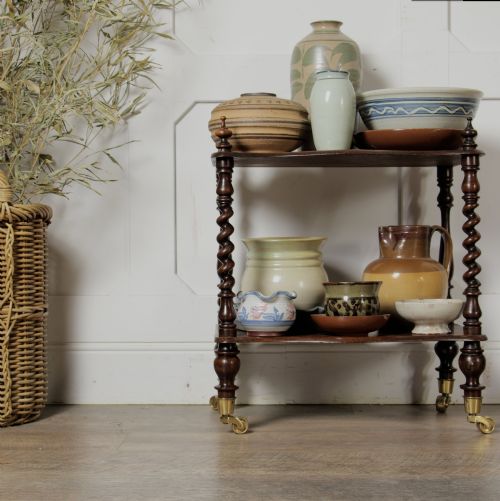
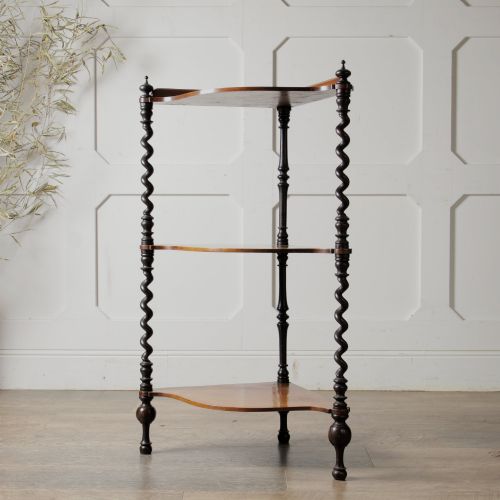
Origins stretch from the late eighteenth century through the nineteenth century, taking in both formal Regency pieces and later Victorian interpretations such as barley twist stands and music stands.
How they were made
Cabinetmakers utilised solid mahogany and mahogany veneers for the framework and shelves, applying brass castors to the feet of many freestanding examples for mobility. Secondary woods appear on interior drawer linings and backing boards.
Turned uprights and column supports define the vertical structure, often joined to the shelves through traditional housing or dowel joints. Certain pieces integrate additional materials like glass panels, marble tops, rosewood accents or cane panels to vary the texture of the tiers.
Mahogany Whatnot Shelves Retail Price Guide 2026
Typical asking prices for mahogany whatnot shelves among the pieces listed under this phrase on Sellingantiques today, from the lower quarter to the upper quarter. They describe what is for sale here now, not the wider market.
Listings feature mahogany alongside rosewood, satinwood, brass, glass, cane and marble across Georgian, Regency, William IV and Victorian periods.
What varies in quality
Quality rests on the selection of the timber grain, the crispness of the turning on the upright columns and the structural stability of the tiered joints. Finer examples display carefully matched flame mahogany veneers and thoughtful proportions that maintain balance across multiple levels.
Makers integrated functional refinements such as drawers with hand-cut dovetails, brass gallery rails, or fitted cellarette compartments within the base. Simpler utility versions relied on plain sawn boards and straightforward turned posts without additional decorative enrichment.
Gillows
The Mahogany Whatnot Shelves Glossary
- Whatnot
- A piece of furniture consisting of a set of open shelves for displaying small objects, books or ornaments.
- Etagere
- A piece of furniture with a set of open shelves for displaying ornaments, closely related in form to the whatnot.
- Barley twist
- A style of turning resembling a spiralling rope, frequently used for the upright support columns on Victorian stands.
- Cellarette
- A lockable compartment or drawer incorporated into the lower section of a cabinet or whatnot for storing bottles.
- Tier
- One of several levels or shelves arranged one above another in a freestanding structure.
Mahogany Whatnot Shelves: Frequently Asked Questions
What is a whatnot shelf used for?
These pieces served primarily as multi-level display units for holding books, ceramics, silver and decorative ornaments in principal rooms. Their open tiered design allowed items to be viewed easily from multiple angles.
Over time, specific variations were adapted for specialised functions, including sheet music stands, bedside end tables and corner units designed to utilise awkward angles in a parlour.
How do I tell a Regency whatnot from a Victorian one?
Regency examples typically exhibit restrained neoclassical proportions, crisp reeded or sabre supports, and fine mahogany grain selections from the early nineteenth century. They favor architectural balance and delicate brass detailing.
Victorian pieces often introduce heavier turning such as barley twist columns, more robust framing, and occasional additions like mirror backs, small drawers or applied carving dating from the mid to late nineteenth century.
Where should I place a whatnot in my home?
Freestanding three or four-tier versions suit living rooms and studies where open display space is required for books and collections. Taller units function well against blank walls as vertical display focal points.
Corner models fit neatly into unused angles of a dining room or hall, while wall-hanging variations mount securely above sideboards or seating areas to hold smaller decorative items without occupying floor space.
Are corner whatnot shelves stable?
Corner whatnot shelves derive their primary stability from fitting snugly into the right-angle intersection of two walls, which naturally braces the framework against movement. Their graduated shelves, diminishing in depth from bottom to top, help maintain a low centre of gravity.
Heavier freestanding corner units distribute weight across three or four wall-facing legs, though taller examples benefit from being positioned on level flooring away from heavy household traffic.