
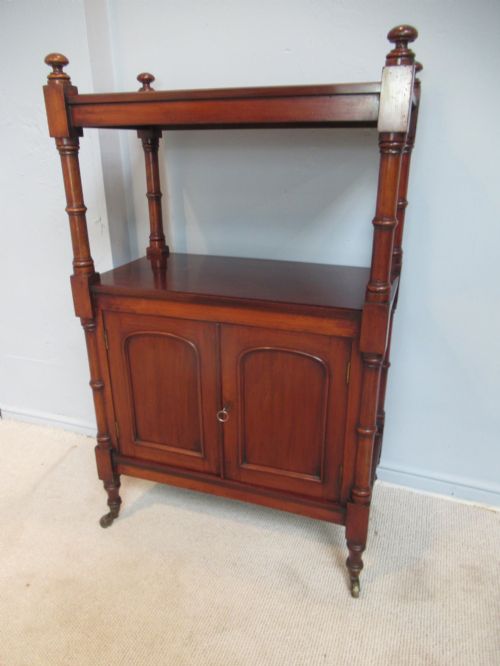


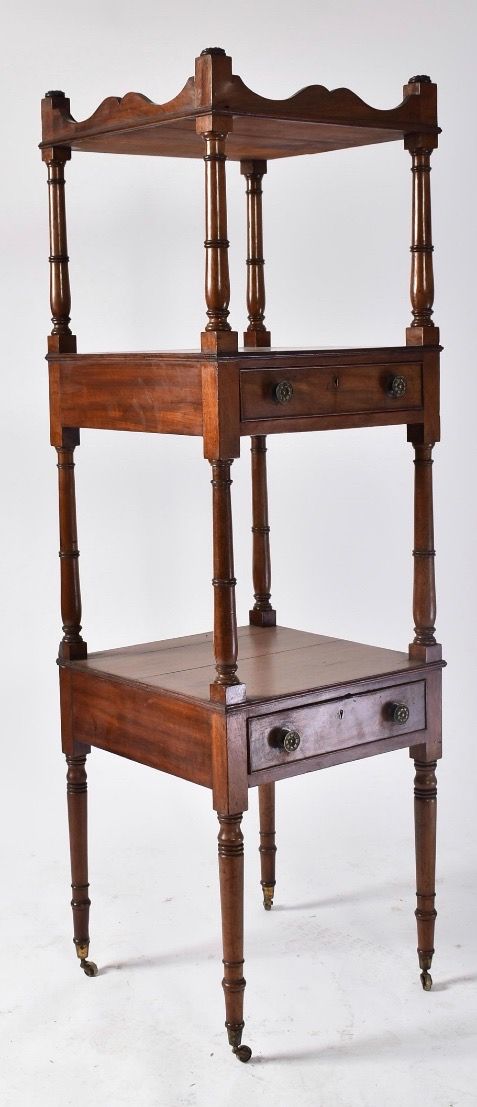
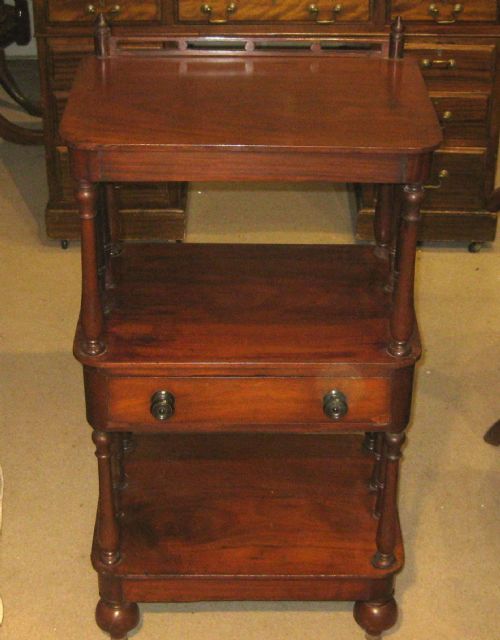

Mahogany What Not
A mahogany what not is a tiered open shelf unit for display and storage, prized for bringing vertical elegance to a room.
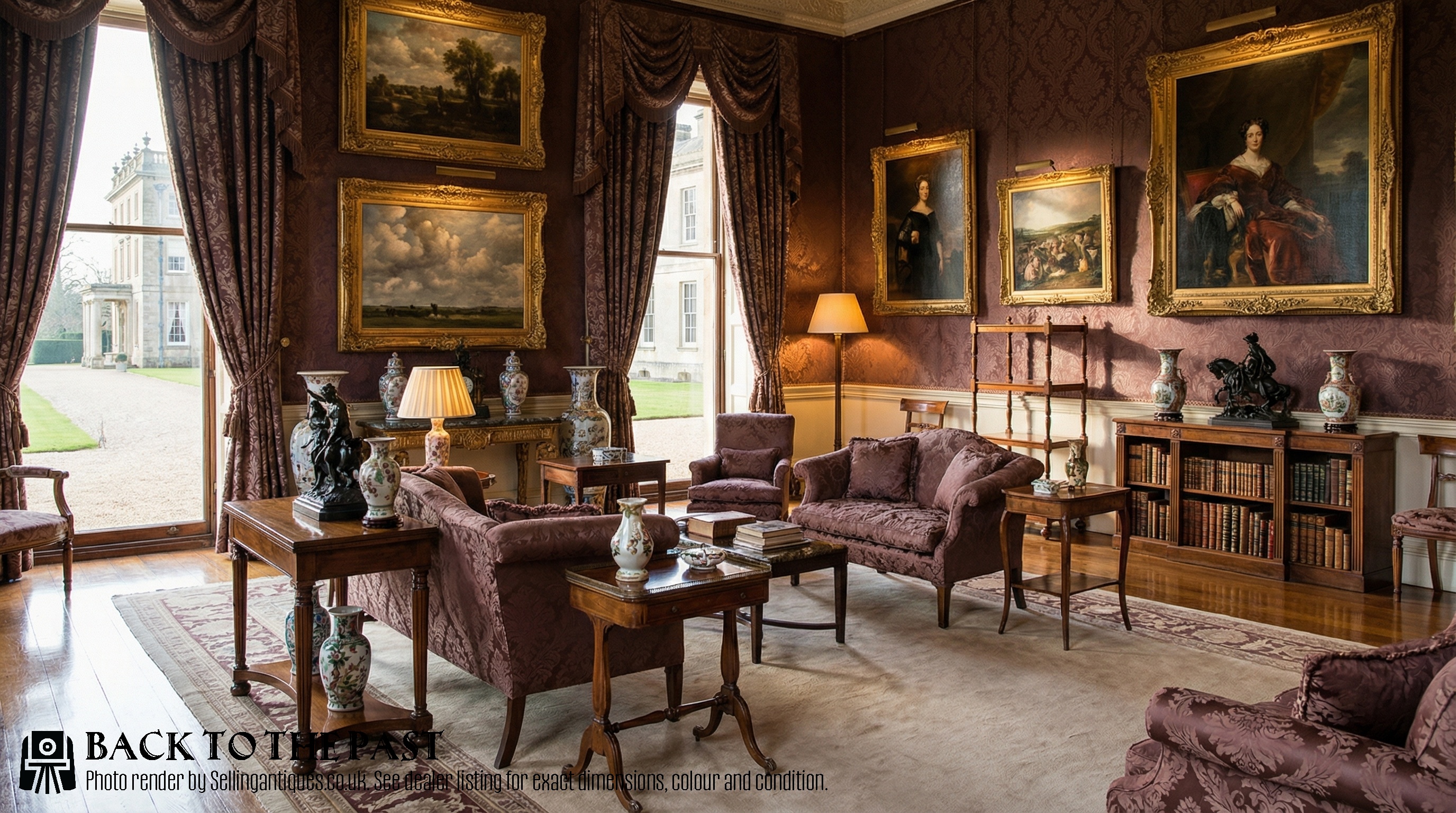
Mahogany What Not
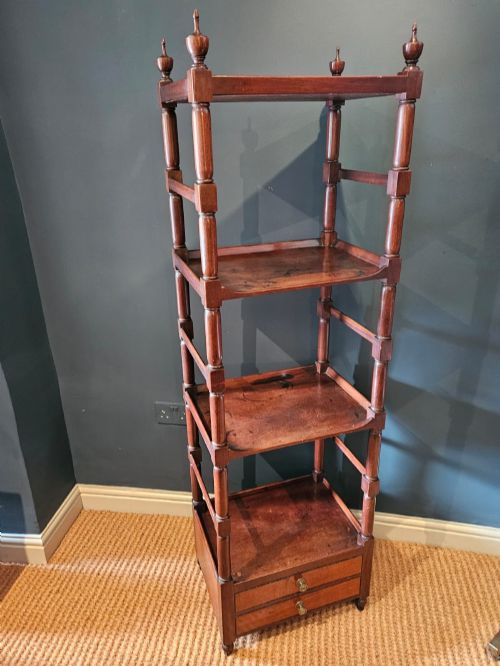
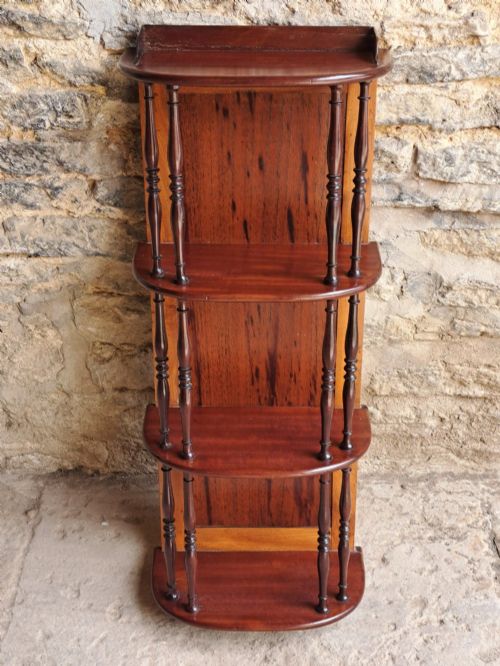
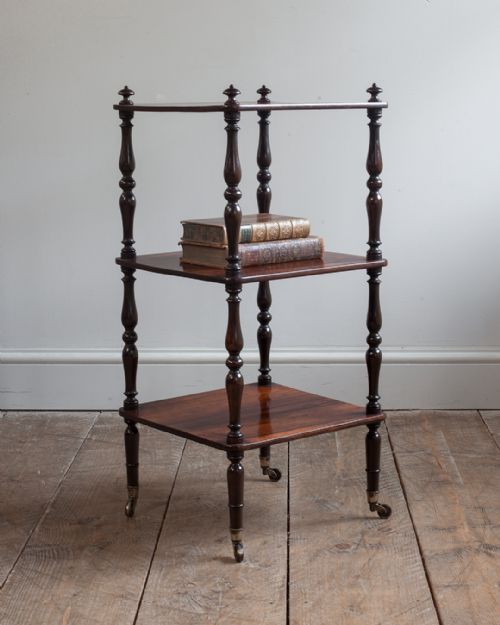
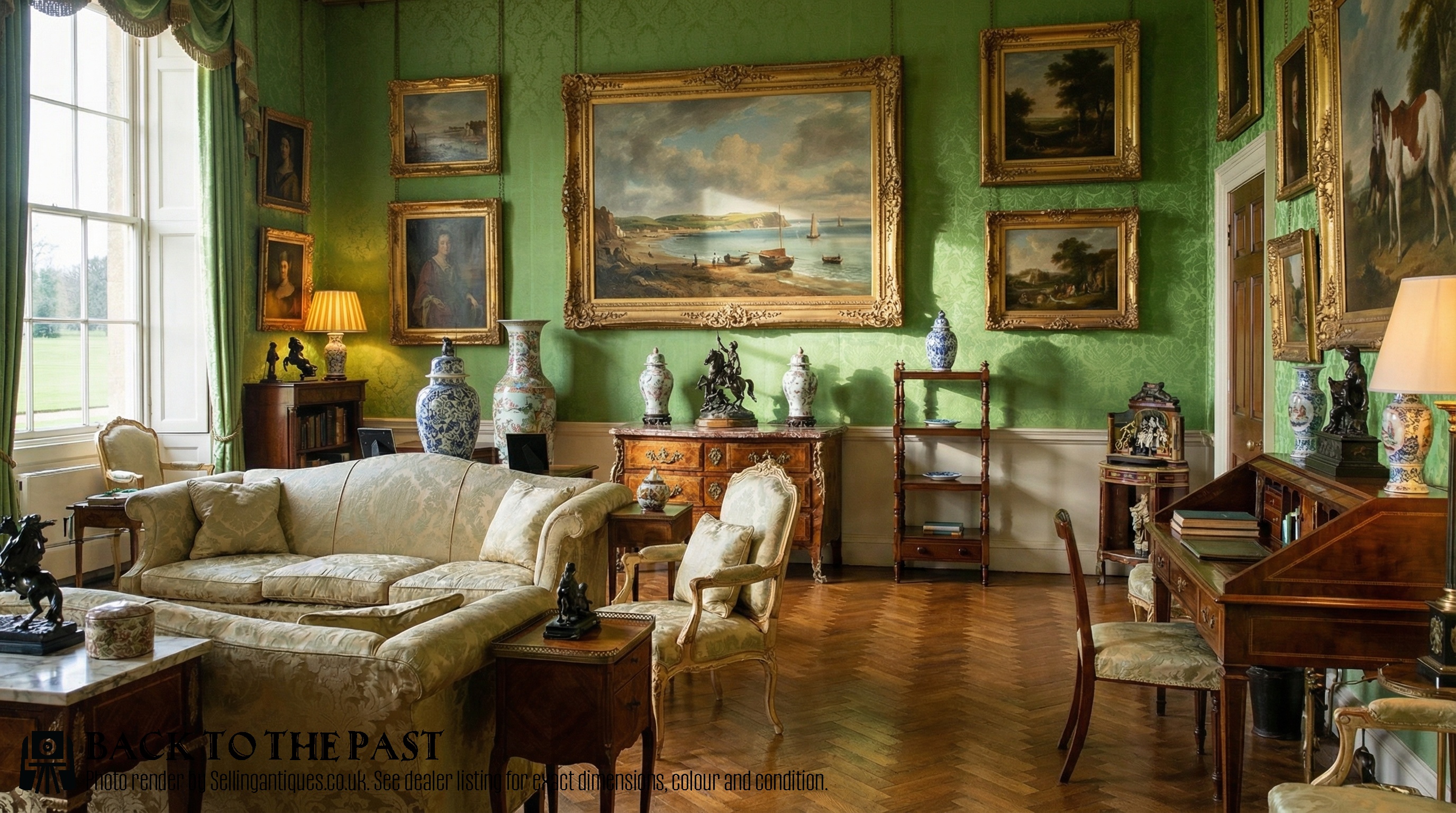
A mahogany what not takes the form of tiered open shelving, rising in three or four stages supported by turned or carved uprights. Pieces from this selection span the Georgian, Regency, William IV, and Victorian periods, alongside later Edwardian examples.
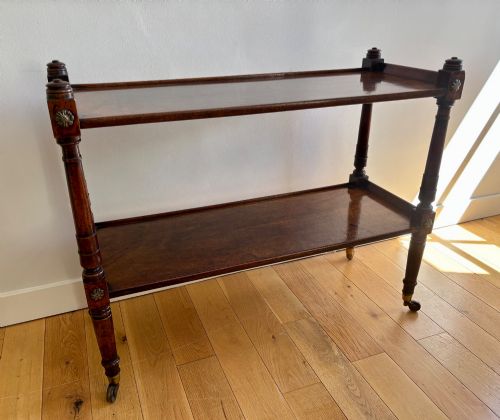
Most items you meet here are freestanding multi-tiered units, though the evidence also records wall shelves, dumb waiters, etageres, and pieces fitted with a single lower drawer or a lower canterbury section.
Originating as versatile display furniture for porcelain, books, and curiosities, these items suit modern drawing rooms and hallways just as they suited nineteenth-century interiors.
Materials and Technique
Makers built these pieces primarily from solid mahogany and mahogany veneers, occasionally incorporating ebonised finishes, rosewood, walnut, or cane inserts. Brass castors frequently finish the feet on larger floor-standing pieces.
Construction relied on precise cabinet-making techniques, using turned upright pillars to support successive graduated tiers. Drawers, where present, feature traditional dovetail joints, while decorative elements employ marquetry veneers and carved detailing.
Recorded periods stretch from late Georgian and Regency eras through William IV and Victorian decades into the Edwardian age.
Judging Quality
Quality rests upon the choice of timber and the crispness of the turning on the upright supports. Heavier, denser mahogany and finely figured veneers distinguish the finer examples from simpler utilitarian pieces.
Proportion and stability define the upper tier of the range. Tighter joints, balanced tier spacing, and well-integrated lower drawers or canterbury sections separate superior pieces from standard production.
Gillows
The Mahogany What Not Glossary
- Whatnot
- A piece of furniture consisting of a set of open shelves for displaying small objects. They typically feature three or four tiers supported by slender upright pillars.
- Etagere
- A set of tiered open shelves used for display, broadly synonymous with a whatnot. French in origin, the term often applies to lighter, decorative stand units.
- Dumb waiter
- A tiered stand traditionally used for holding food or tableware without domestic service present. In this inventory, folding and static variations overlap with the whatnot form.
- Canterbury
- A low stand fitted with upright partitions for holding sheet music, folios, or books. Some Victorian and Regency examples incorporate this section beneath the lower shelf of a whatnot.
- Marquetry
- Decorative veneer work formed by fitting pieces of various coloured woods into a ground material. It appears on select nineteenth-century tier shelves to create surface patterns.
Mahogany What Not: Frequently Asked Questions
What were mahogany what nots originally used for?
They served as versatile display furniture in drawing rooms and parlours for holding books, ceramics, tea wares, and ornaments.
Their open tiers allowed decorative objects to be stored and viewed from multiple angles within the living space.
How do I distinguish a Regency piece from a Victorian one?
Regency models often display restrained classical lines, cleaner turning, and lighter proportions typical of the early nineteenth century.
Victorian versions frequently introduce heavier turnings, carved mirror backs, or darker ebonised finishes as manufacturing styles shifted later in the century.
Can I use a what not for heavy books?
While the upper tiers suit lighter decorative items and small volumes, the lower shelves handle moderate weight depending on the soundness of the upright supports.
Free-standing floor units with robust turned pillars provide greater stability for heavier items than wall-hung variants.
Where should I place a tiered shelf unit at home?
These pieces fit naturally into corners, empty wall spaces, or alongside seating where vertical storage is required without blocking light.
Their compact footprints make them practical for adding display surface area in smaller rooms or narrow hallways.