
Mahogany Wall Hanging Cabinet
Mahogany wall hanging cabinet pieces are compact storage units designed to utilise corner or flat wall space efficiently while adding traditional warmth to a room.
Mahogany Wall Hanging Cabinet
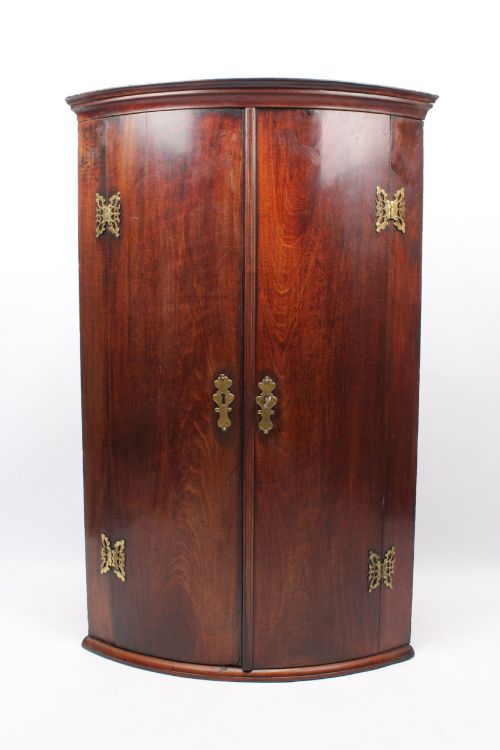
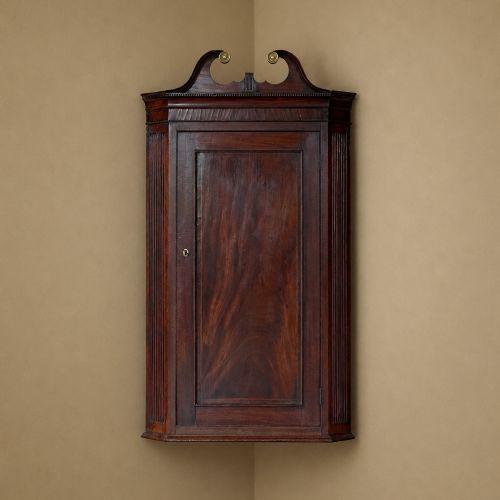
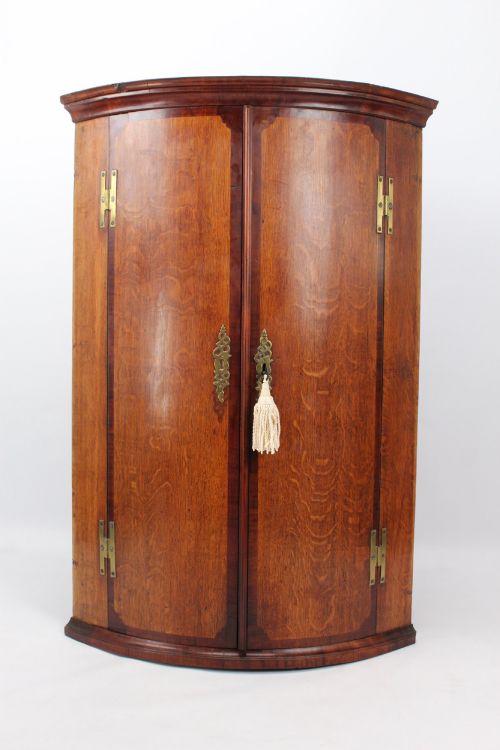
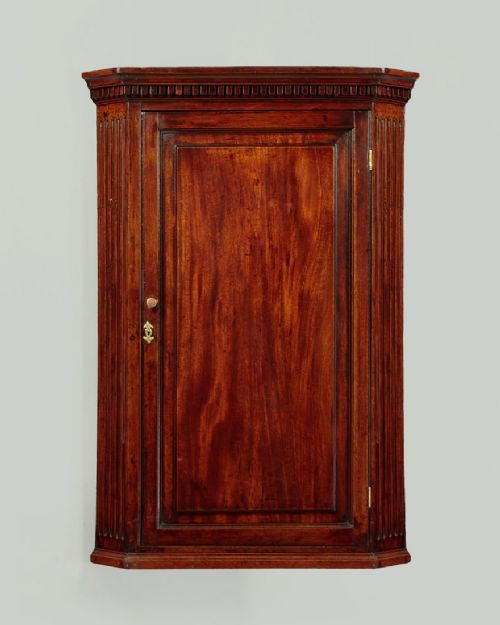
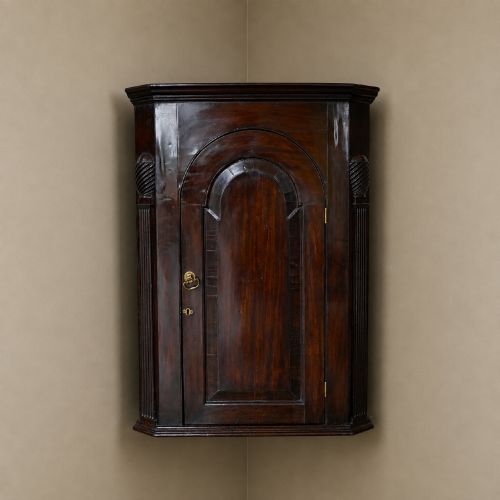
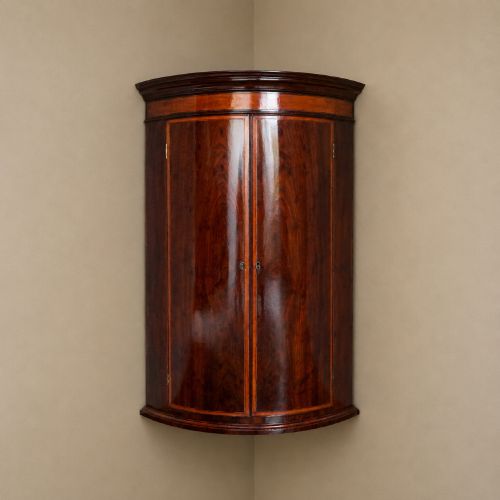
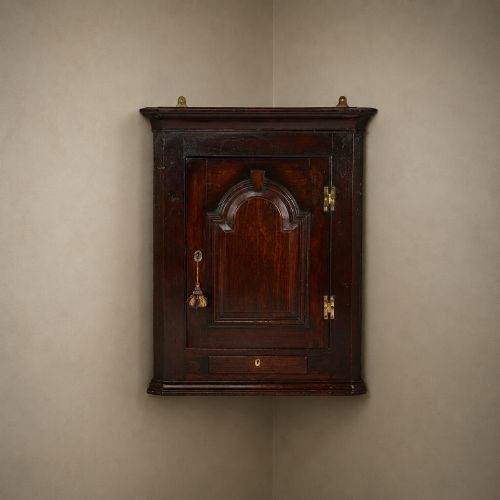
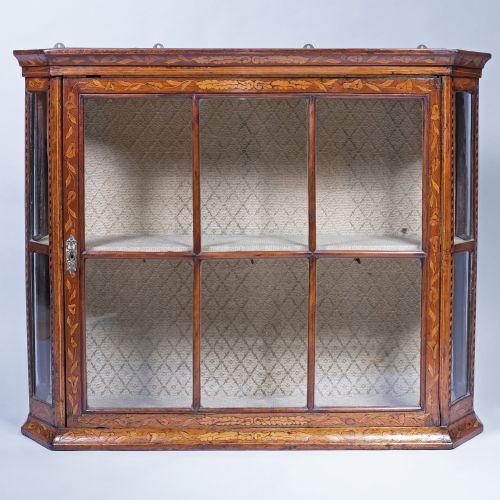
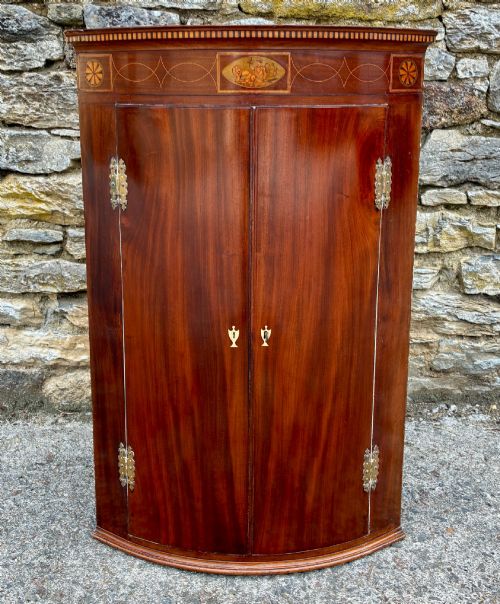
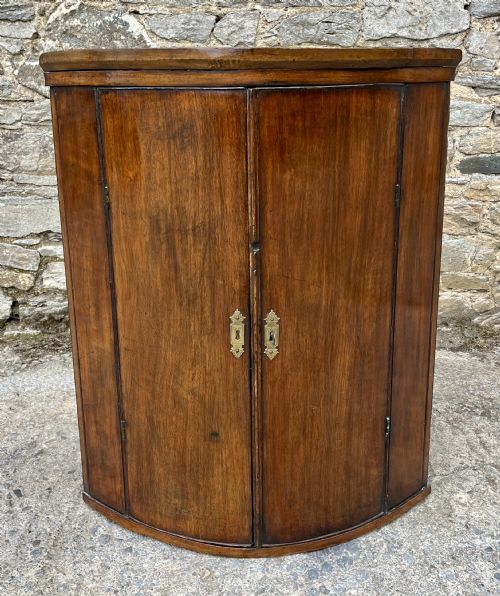
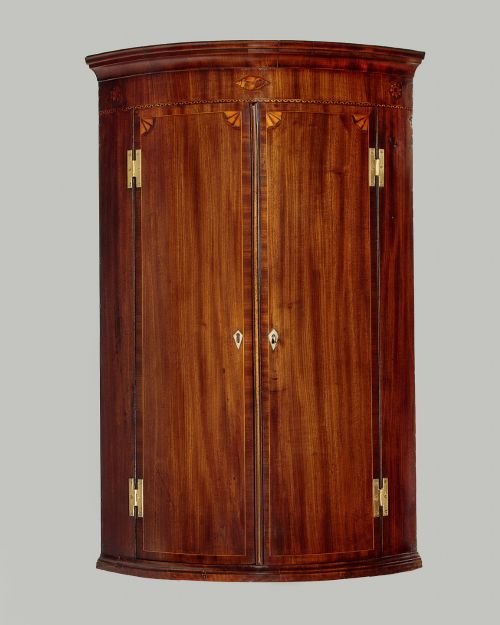
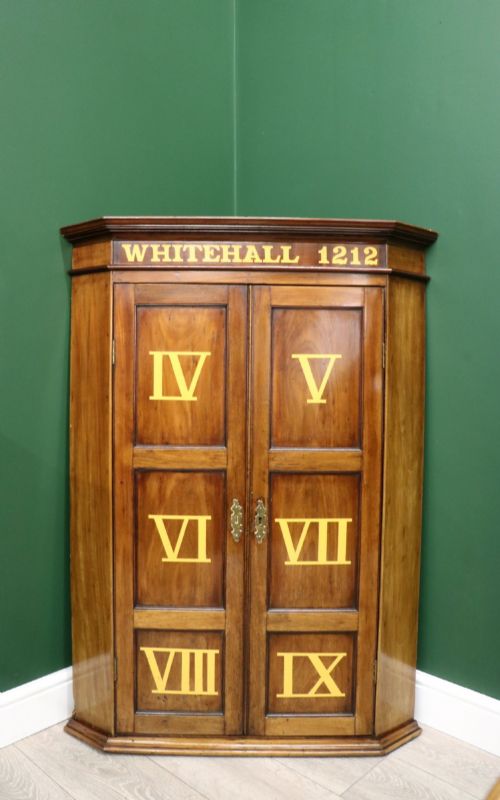
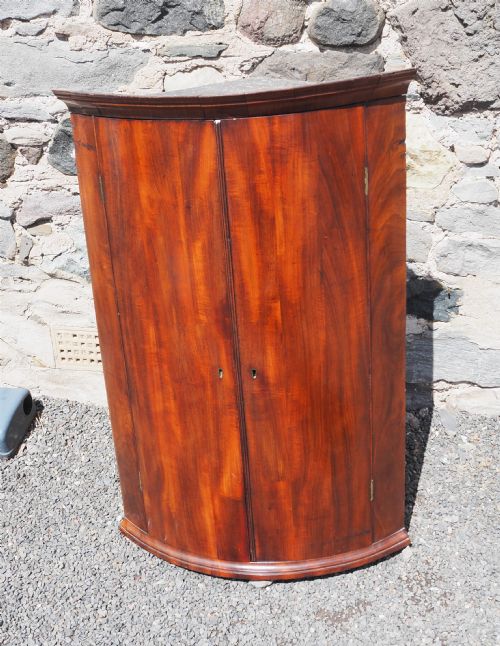
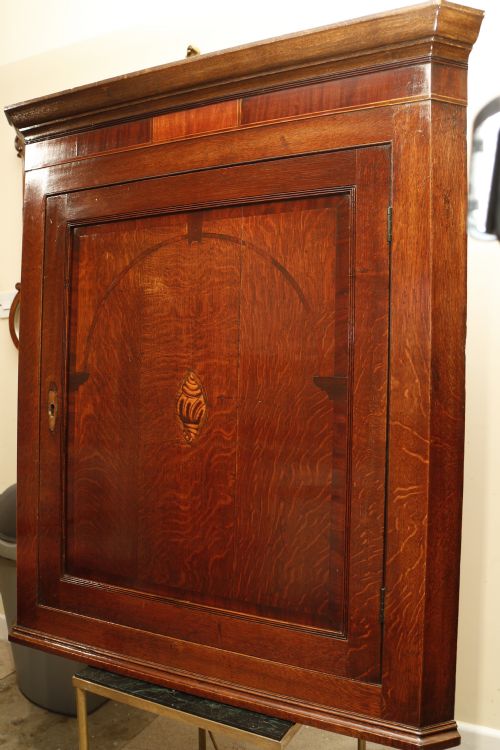
A mahogany wall hanging cabinet search reveals a predominant selection of Georgian and Edwardian examples, with corner cupboards forming the vast majority of surviving domestic furniture. These pieces range from simple eighteenth-century hanging wall cabinets with panelled doors to glazed display units and bow front designs suited to domestic storage.
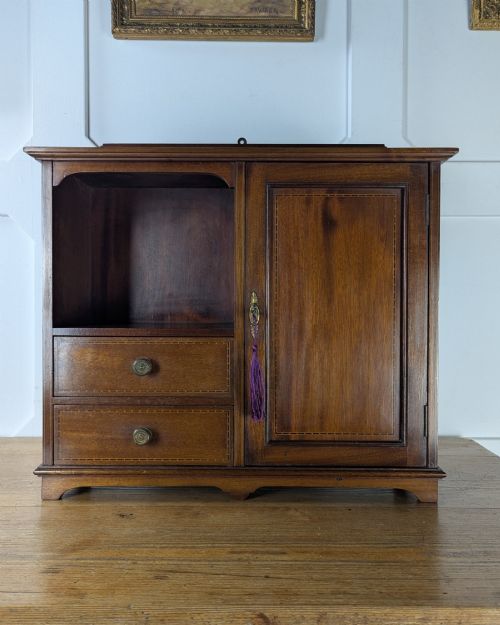
Makers produced both flat wall-mounted shelves with small cupboards and specialised units like pharmacy cabinets, smoker cupboards, and desktop organisers. The architectural emphasis on corner placement allowed households to maximise small rooms, making corner cupboards the most frequently encountered form within this category.
How they were made
Cabinet makers relied primarily on solid mahogany and oak carcases, frequently embellishing surfaces with satinwood, boxwood, and marquetry inlay or crossbanded veneers. Flame mahogany and plum pudding varieties provided highly figured grain patterns that caught the light on prominent wall panels.
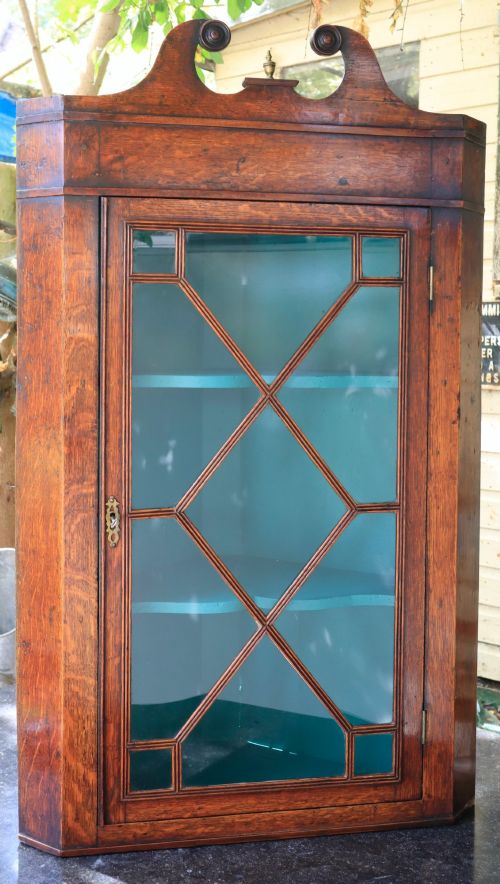
Glazing bars divided doors into geometric panes on display pieces, while brass hinges, locks, and hanging brackets provided functional security. Secondary timbers like oak appear inside drawers and on internal backboards, reflecting standard workshop practices of the eighteenth and nineteenth centuries.
Several small cabinets served specific domestic niches, including smoker cupboards, shaving mirrors, and chemist chests for household remedies.
What varies in quality
The refinement of timber selection dictates much of the visual distinction between pieces, where highly figured plum pudding or flame mahogany veneers separate standard utilitarian storage from superior architectural commissions. Finer cabinets exhibit precise crossbanding and delicate boxwood stringing rather than plain, unadorned surfaces.
Structural details such as broken arch pediments, original brasses, functioning locks with keys, and finely mitred glazing bars indicate workshop investment. The handling of interior shelving and the neatness of dovetail joints on integrated drawers further demonstrate the maker's competency.
The Mahogany Wall Hanging Cabinet Glossary
- Bow front
- A convex curved cabinet front that projects outward from the wall corners. This shape softened room angles and required advanced woodworking skill to bend timber or shape solid wood accurately.
- Crossbanding
- A narrow strip of veneer applied perpendicularly to the grain of the main surface. It created a decorative border around cabinet doors and drawer fronts.
- Pediment
- The decorative structure surmounting the top of a cabinet. Elaborate examples included broken arch designs that added architectural height.
- Astral glazed
- Door glass divided into small panes by narrow wooden bars called astragals. This technique allowed display cabinets to showcase porcelain and glassware securely.
Mahogany Wall Hanging Cabinet: Frequently Asked Questions
How do I hang an antique corner cabinet securely?
These cabinets utilise original internal fixing brackets and heavy-duty steel screws anchored directly into wall studs or masonry. Because of the weight of solid mahogany and glass, professional wall fixings matching the age and load requirements are necessary.
Positioning the unit at eye level ensures the doors swing freely without striking adjacent furniture or room mouldings. Ensuring the wall surface is plumb prevents the cabinet carcase from twisting over time.
What were mahogany wall cabinets originally used for?
Georgian households utilised hanging corner cupboards primarily for storing tableware, tea services, and bottled spirits away from damp floor levels. Later Victorian and Edwardian examples adapted the form for display, pharmacy storage, or domestic key cabinets.
Their elevated placement protected valuable contents while keeping everyday items within arm's reach in parlours, dining rooms, and hallways. The locking mechanisms kept valuable household stores secure from domestic staff.
How do I tell an 18th century cabinet from a later revival piece?
Eighteenth-century pieces display hand-cut dovetails on internal drawers, irregular hand-sawn board thicknesses, and secondary timbers like oak or deal behind the mahogany facade. Georgian hardware typically shows hand-cast brass elements rather than uniform machine-stamped replacements.
Revival pieces from the Edwardian period or mid-twentieth century often feature consistent mechanical saw marks, standardised screw threads, and cleaner internal construction. Comparing timber shrinkage patterns helps confirm the age of the primary carcase.
How should I care for mahogany wall cabinets in a modern home?
Maintain a stable room temperature away from direct sunlight and heating vents to prevent timber shrinkage and veneer splitting. Periodic dusting with a dry, soft cloth preserves the polished surface without requiring heavy chemical polishes.
Check the hanging brackets annually to ensure the weight remains securely supported against the wall. Natural beeswax applied sparingly helps nourish antique mahogany finishes over time.