



Mahogany Victorian Slipper Chair
A mahogany Victorian slipper chair offers low seating designed for comfort, bringing period character and compact elegance to a bedroom or boudoir.
Mahogany Victorian Slipper Chair
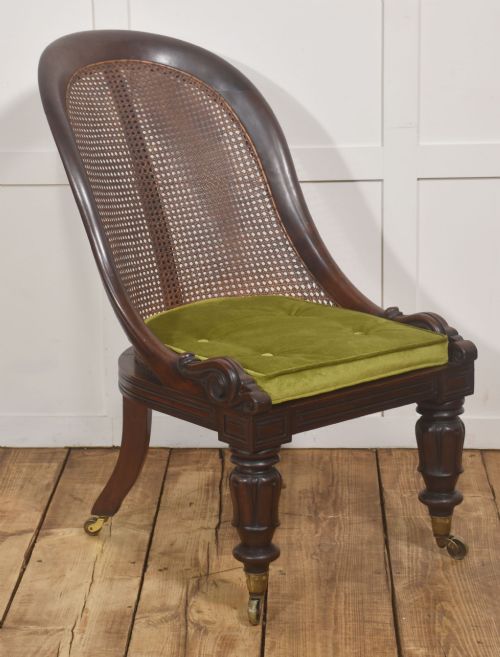
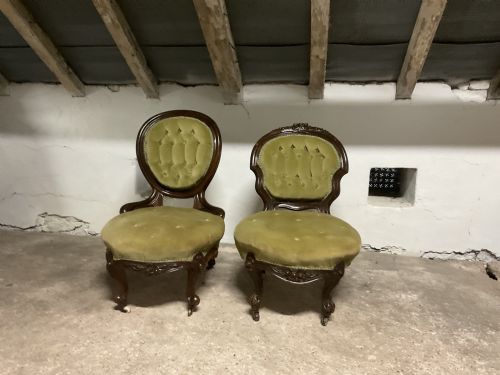
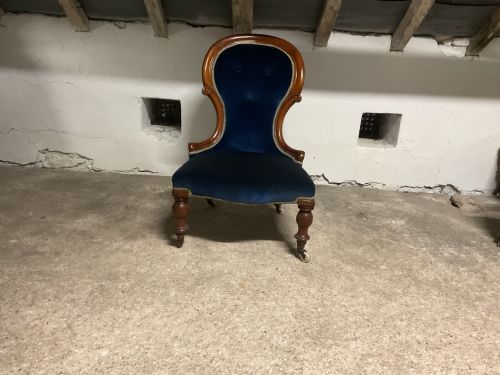
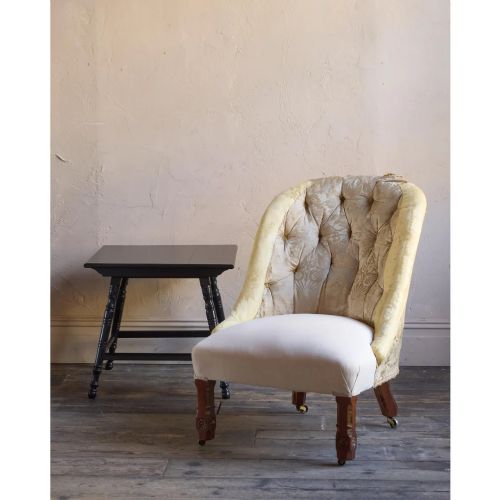
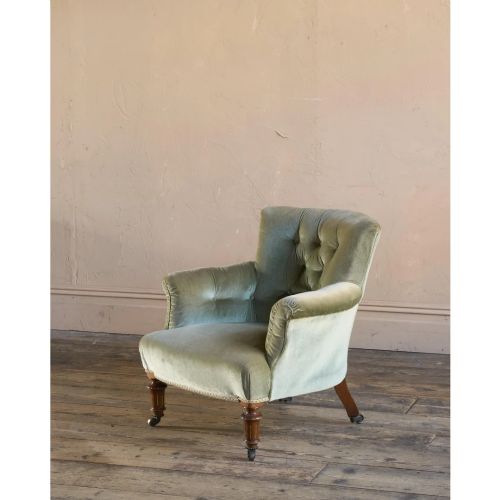
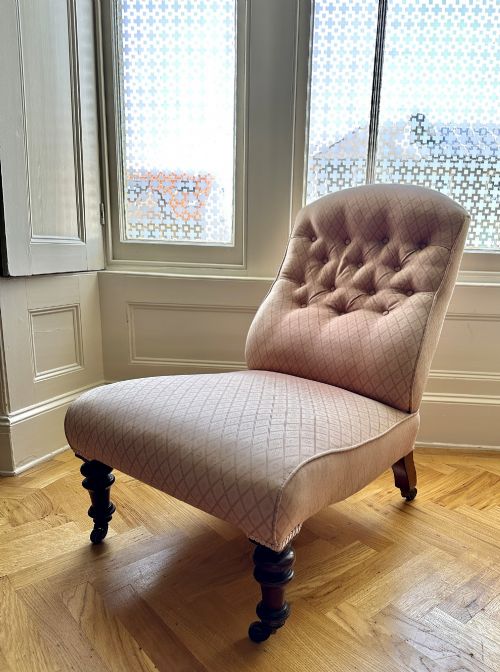
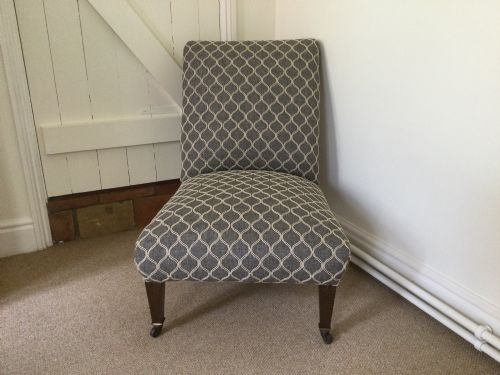
A mahogany Victorian slipper chair is a low-slung, upholstered seat designed originally for the bedroom, allowing a lady to dress in comfort. These pieces belong predominantly to the nineteenth century, spanning periods from Regency and William IV through to Late Victorian designs around eighteen eighty.
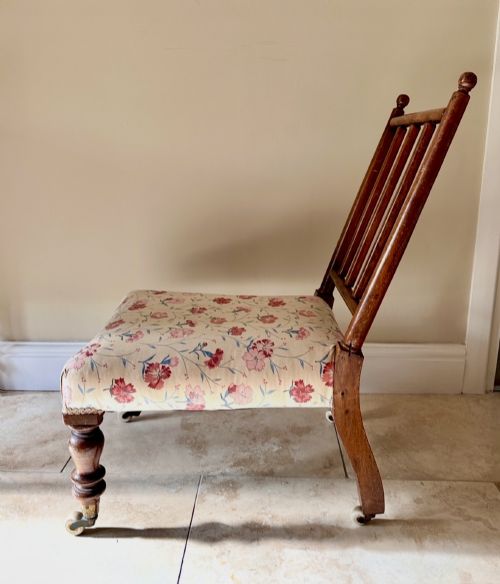
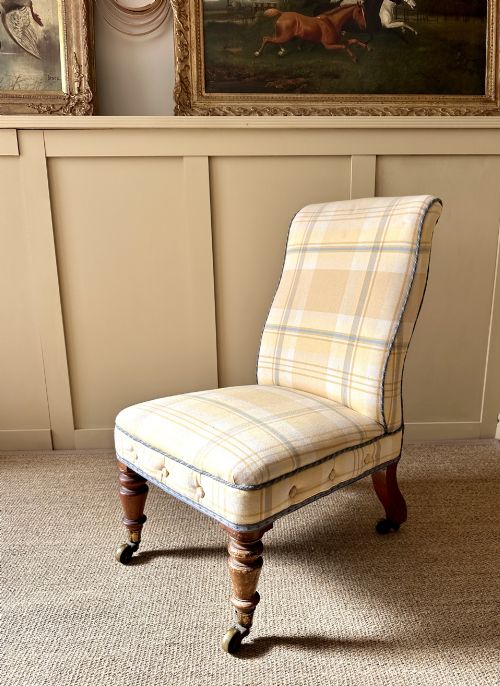
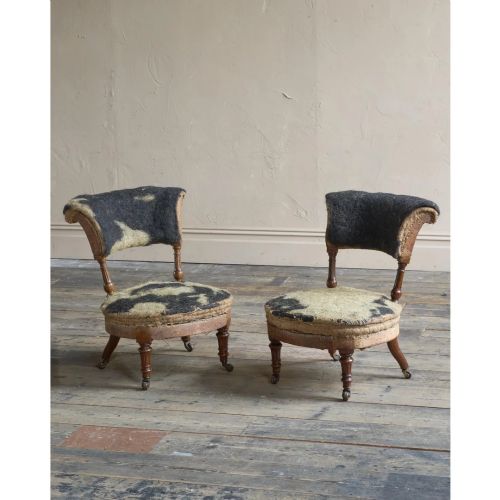
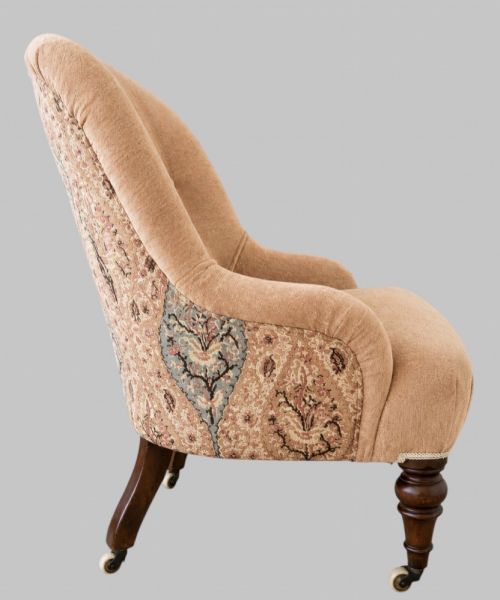
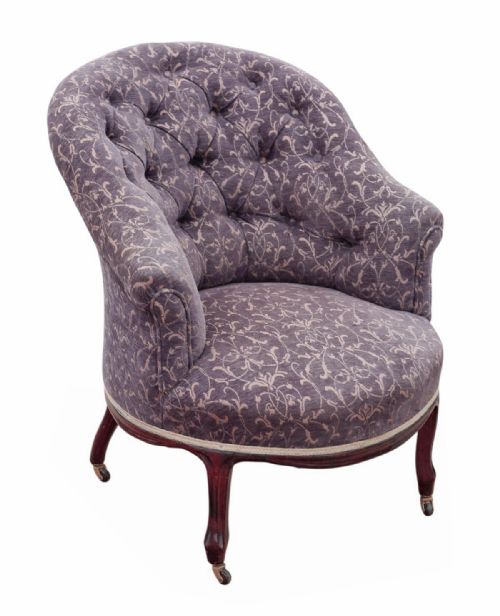
The form appears in various guises across the inventory, including nursing chairs, bedroom chairs, and tub armchairs. They share a low profile, often standing on short legs fitted with castors to ease movement across carpets.
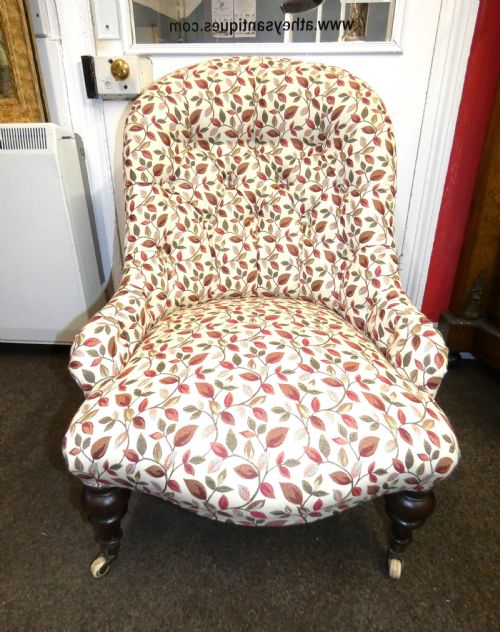
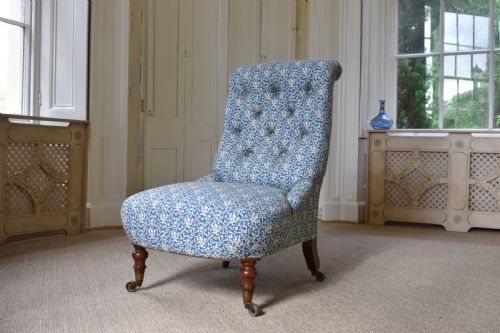
Makers and workshops of the era produced these chairs with curved backs, button upholstery, and exposed timber frames. Buyers meet examples featuring spoon backs, balloon backs, and iron frames upholstered in velvet, damask, or printed cotton.
Materials and construction
Cabinet makers utilised solid mahogany for the exposed frames, legs, and scrolled backs, providing a rich, dark timber base that accepts a smooth polish. Turned, bobbin, or carved legs frequently support the seat structure, sometimes ending in brass castors.
Upholstery techniques involved webbed seats, coil springs, and horsehair stuffing, layered beneath outer coverings of velvet, tapestry, or printed fabric. Deep buttoning secured the padding while creating the characteristic tufted appearance seen on nineteenth century examples.
Mahogany Victorian Slipper Chair Retail Price Guide 2026
Typical asking prices for mahogany victorian slipper chair among the pieces listed under this phrase on Sellingantiques today, from the lower quarter to the upper quarter. They describe what is for sale here now, not the wider market.
Assessing quality in period seating
Quality rests in the sculptural integrity of the mahogany frame and the crispness of any carved scrollwork or turned details. Sturdiness in the joinery ensures the low frame handles daily use without looseness in the joints.
The caliber of the upholstery work and the selection of covering material elevate certain pieces above standard examples. Makers known for superior output, such as Gillows or Howard and Sons, demonstrate finer joinery and more balanced proportions.
Gillows·Howard and Sons·Hindley and Sons
The Mahogany Victorian Slipper Chair Glossary
- Spoon back
- A padded chair back shaped like the bowl of a spoon to cradle the sitter's spine. This outline is common in nineteenth century bedroom seating.
- Button back
- An upholstery style where depressions are formed by pulling twine through the padding and anchoring it with covered buttons. It secures the internal stuffing while creating a decorative pattern.
- Nursing chair
- A low seat traditionally used by women when feeding infants. These pieces share the diminutive proportions of slipper chairs.
- Castor
- A small wheel attached to the base of a chair leg to allow smooth rolling. Brass fittings are typical on nineteenth century mahogany frames.
- Bobbin leg
- A support turned on a lathe to resemble a string of beads or bobbins. This decorative turning appears on specific nineteenth century frames.
Mahogany Victorian Slipper Chair: Frequently Asked Questions
What is a mahogany Victorian slipper chair?
A mahogany Victorian slipper chair is a low-seated, upholstered chair designed during the nineteenth century for use in bedrooms or dressing rooms.
Their compact height made them ideal for sitting close to the floor while putting on shoes or garments.
How do I identify a Victorian slipper chair?
Look for a low seat height combined with an exposed mahogany frame and an upholstered back, often featuring deep buttoning.
Many examples also incorporate short legs set on castors for easy mobility across bedroom carpets.
Where should I place a slipper chair?
These chairs suit bedrooms, dressing areas, or small corners where standard armchairs would overwhelm the available space.
Their low profile allows them to sit comfortably beneath windows or beside dressing tables without obstructing views.
Are these chairs comfortable for daily use?
Most period pieces offer a supportive sit thanks to traditional sprung seats and padded backs.
Reupholstered examples provide an opportunity to restore internal cushioning to suit modern comfort preferences.
How do I tell a nursing chair from a slipper chair?
Nursing chairs and slipper chairs share a similar low stature and nineteenth century origins, often making the terms interchangeable.
Both forms served domestic spaces where a lower seating position proved practical for daily tasks.