




Mahogany Vernis Martin Cabinet
A mahogany vernis martin cabinet brings painted French romance and rich timber into a room.
Mahogany Vernis Martin Cabinet
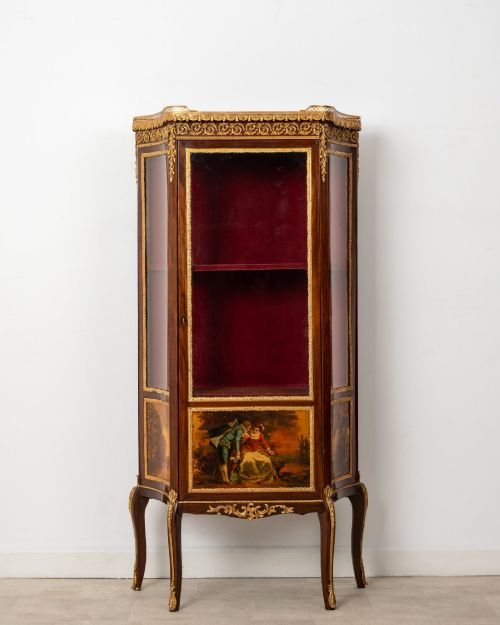
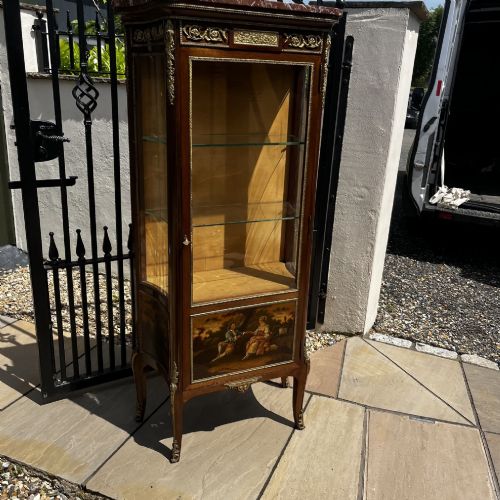
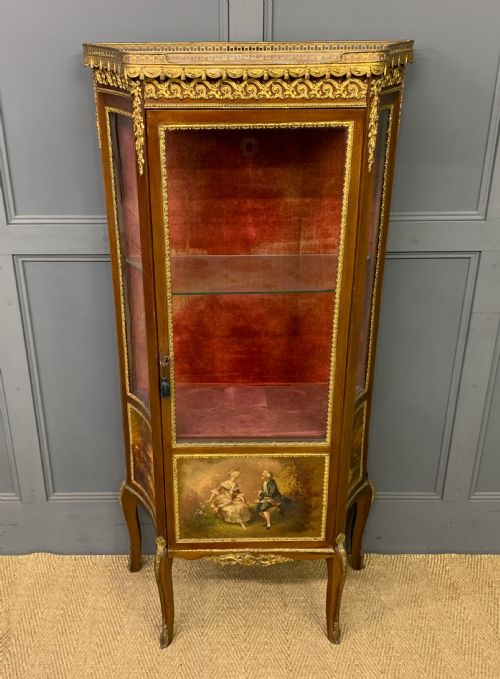
A mahogany vernis martin cabinet is a display piece or vitrine created in French revival styles, predominantly from the nineteenth century and the Edwardian era. These pieces combine glazed or open shelving with hand-painted panels depicting classical or pastoral scenes.
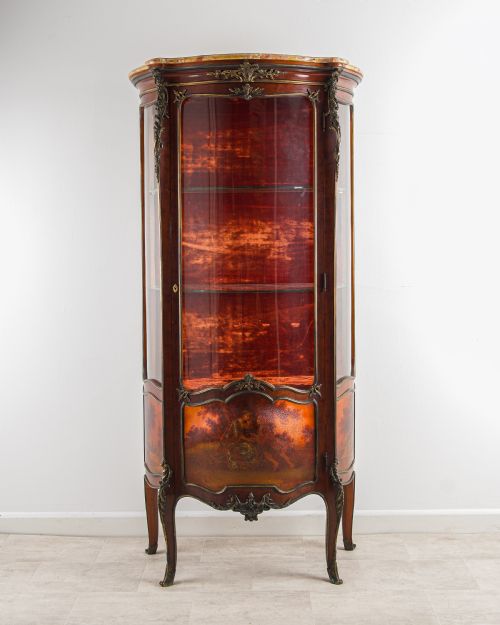
The selections on this page span the 1880s through to the 1920s, drawing heavily upon Louis XV and Louis XVI design vocabularies. Forms range from serpentine display cabinets and freestanding oval vitrines to side and music cabinets.
Makers and workshops of the period looked to historic French aesthetics, producing vitrines that function primarily as decorative stages for porcelain and collectibles. Mahogany forms the carcass of these cabinets, often enriched with marquetry or contrasting veneers.
Assessing quality in vernis martin pieces
Quality rests heavily on the execution of the painted panels and the crispness of the gilt bronze or ormolu mounts. Hand-painted figural scenes showing depth and fine brushwork separate standard production from exceptional cabinet work.
The weight and detail of the cast brass or ormolu mounts indicate the standard of the workshop. Superior pieces demonstrate seamless joinery in curved mahogany and well-fitted glass doors that operate smoothly.
Mahogany Vernis Martin Cabinet Retail Price Guide 2026
Typical asking prices for mahogany vernis martin cabinet among the pieces listed under this phrase on Sellingantiques today, from the lower quarter to the upper quarter. They describe what is for sale here now, not the wider market.
Some music cabinets secretly guarded sheet scores behind glazed doors while pastoral figures danced painted tunes forever on the wood.
François Linke·Angela Kaufman
The Mahogany Vernis Martin Cabinet Glossary
- Vernis Martin
- A simulated Japanese lacquer developed in eighteenth-century France by the Martin brothers, known for its translucent and polished finish. Later nineteenth-century revival pieces adopted this term for hand-painted decorative panels on furniture.
- Ormolu
- Gilded bronze mounts applied to furniture for decorative effect and edge protection. High-quality mounts display sharp chisel work after casting.
- Vitrine
- A glass-fronted cabinet designed for the display of porcelain, curiosities, or small collectibles. These cabinets often feature glass side panels to maximise light.
- Serpentine
- A furniture contour that curves inward centrally and outward at the ends, creating a gentle wave shape. This profile demands advanced woodworking skill.
- Kingwood
- A dense, richly figured timber native to Brazil, used extensively for contrasting veneers and banding on fine cabinets.
Mahogany Vernis Martin Cabinet: Frequently Asked Questions
What is a vernis martin cabinet?
A vernis martin cabinet is a display piece featuring hand-painted panels finished with a lustrous, transparent lacquer. They originated as French revival furniture in the nineteenth and early twentieth centuries.
These cabinets typically feature glass doors and shelves intended for showcasing porcelain, glass, or small objets d'art.
How do I date a mahogany cabinet?
Dating relies on stylistic clues, construction methods, and materials such as ormolu mounts or marble tops. Most pieces date from the late nineteenth century through to the Edwardian period.
Cabinet backs, interior linings, and lock mechanisms also provide useful chronological markers for nineteenth-century French revival furniture.
Where should I place a vitrine?
A vitrine requires a stable spot away from direct sunlight to protect both the mahogany timber and the painted lacquer panels. Placing the cabinet near a light source enhances the visibility of items displayed inside.
Ensure the floor is level so that the glass doors on serpentine or oval frames hang and close correctly.
How do I clean the painted panels?
Cleaning requires a soft, dry microfibre cloth to gently remove dust from the lacquer and the surrounding wood. Avoid using water, household sprays, or chemical solvents on the painted surfaces.
Professional restoration is recommended if the lacquer finish or gilt bronze mounts require deeper attention.