
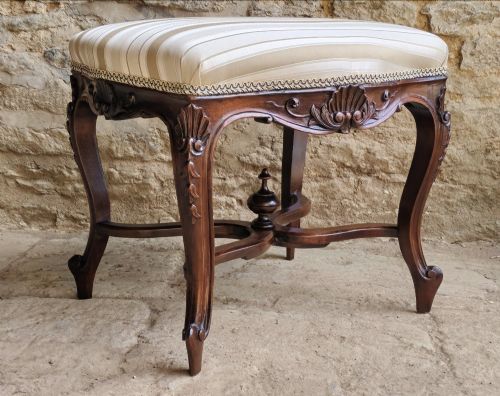
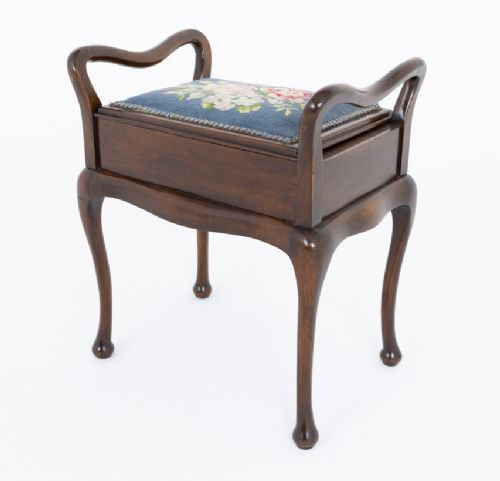

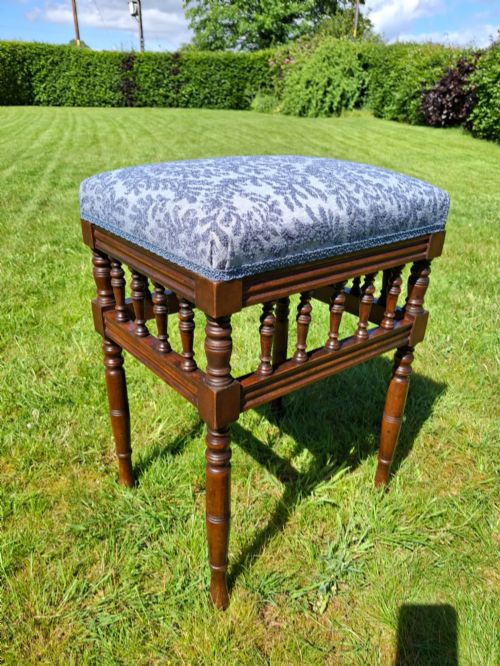
Mahogany Vanity Seat
A mahogany vanity seat brings solid timber frame construction and practical low seating to the dressing room, offering period charm and everyday utility.
Mahogany Vanity Seat
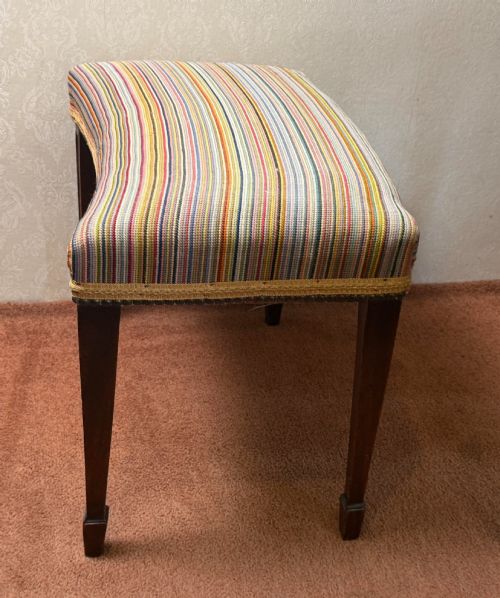
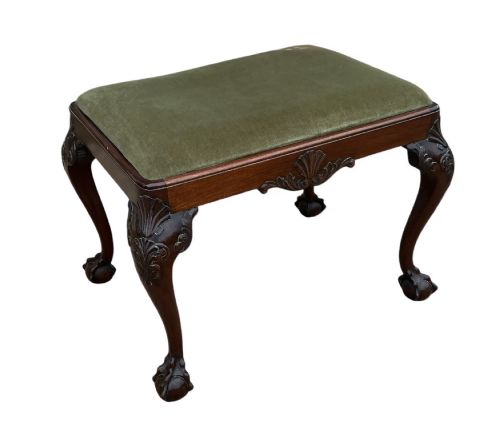
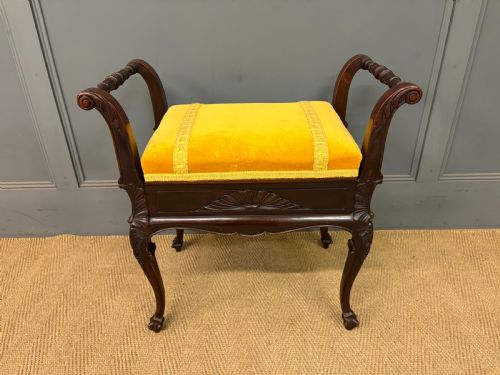
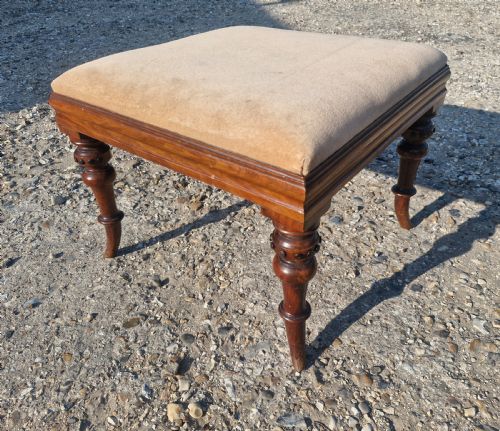
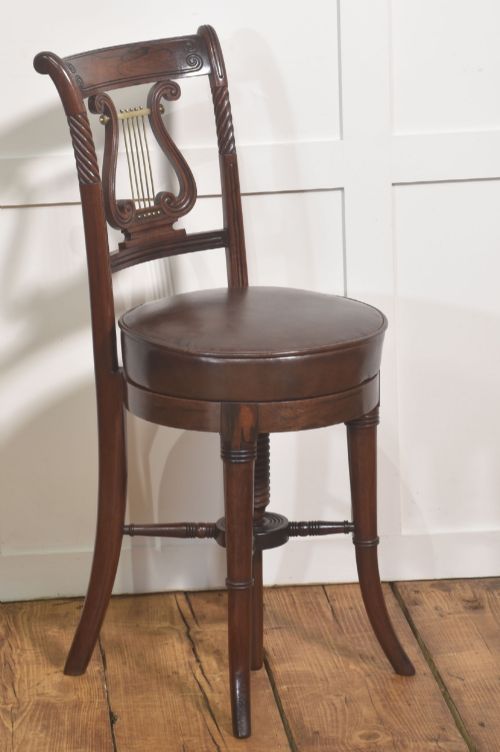
A mahogany vanity seat serves as a compact, movable stool or low chair designed primarily for use at a dressing table or piano. When searching for a mahogany vanity seat, buyers encounter a range of forms spanning from the eighteenth century through the Edwardian period, including simple square shapes, X-frame supports, and revolving designs.
The pieces listed here appear under various object types such as dressing stools, piano stools, and side chairs. Most examples date from the Victorian and Edwardian eras, though earlier Georgian and Regency models also surface alongside later twentieth-century revivals.
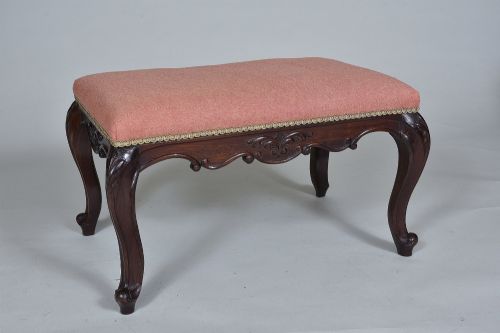
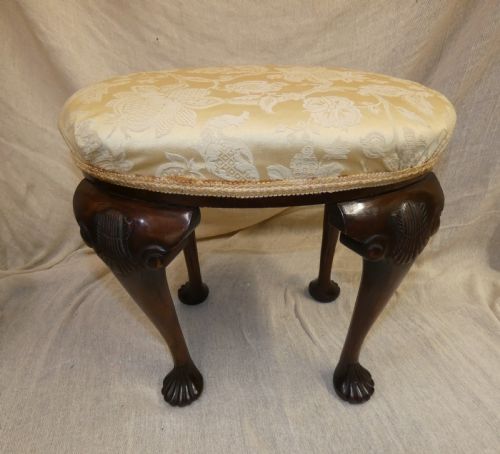
Makers and craftsmen adapted these seats to suit changing domestic habits, incorporating adjustable heights, cross stretchers, and cabriole legs. The resulting variety provides collectors with options ranging from plain rectangular frames to elaborately carved serpentine shapes.
Materials and construction methods
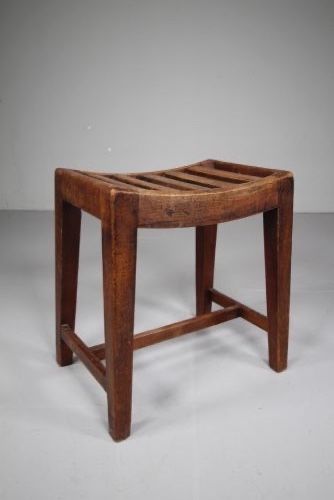
Cabinetmakers relied on dense, dark mahogany for the primary structural frames, often shaping the timber into square tapering legs, cabriole supports, or intersecting X-frames. Joinery techniques such as mortise and tenon secured the legs to the seat rails, ensuring stability for frequent movement.
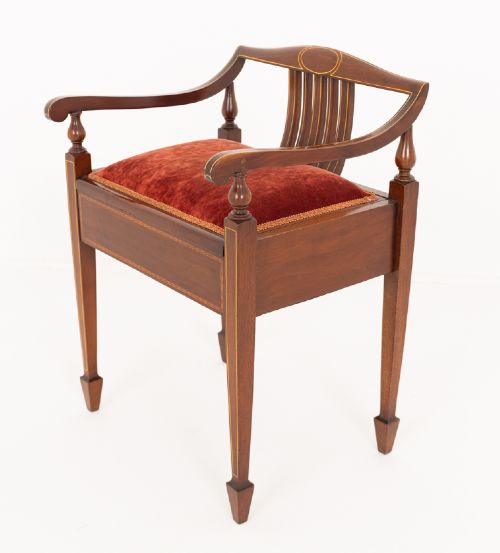
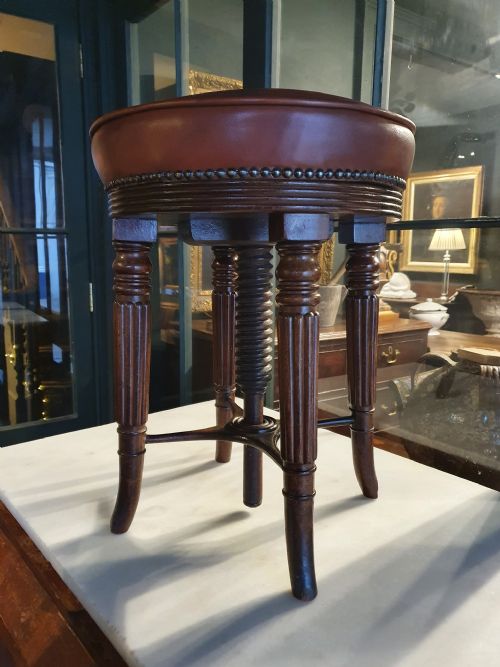
Upholstery formed an integral part of the manufacturing process, utilising traditional stuffing materials beneath outer coverings of fabric, velvet, tapestry, leather, or chenille. Brass hardware appeared on adjustable mechanisms, while inlaid details decorated later Edwardian examples.
Object forms span piano stools, dressing chairs, and footstools, incorporating styles from Georgian and Regency through to Arts & Crafts and Edwardian.
Distinctions in craftsmanship
Quality rests in the crispness of the timber carving, the integrity of the structural frame joints, and the retention of original upholstery elements like needlepoint or fabric. Pieces featuring sophisticated forms such as serpentine rails or X-frame supports demonstrate greater joinery skill than plain rectangular variants.
The presence of period mechanics, such as functional height-adjustment screws on piano stools, elevates a piece above standard fixed-height alternatives. Original surface patination on the mahogany further distinguishes superior examples from later revivals.
Jas Shoolbred·James Shoolbred
The Mahogany Vanity Seat Glossary
- X-frame
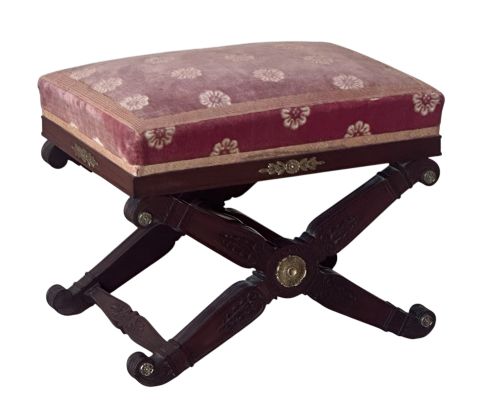
- A structural support design formed by intersecting curved or straight wooden members shaped like the letter X. This form appears frequently on nineteenth-century French Empire and Regency examples.
- Serpentine shape
- A furniture edge or rail curving outward at the centre and inward toward the corners in a smooth, undulating line. Cabinetmakers utilised this profile on mid-eighteenth-century seat frames.
- Cross stretcher
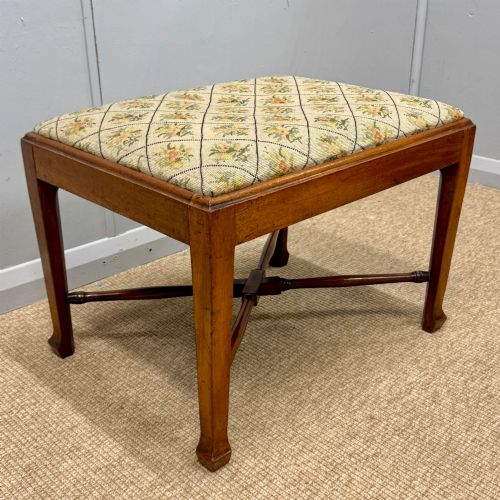
- A horizontal wooden brace connecting the legs of a stool near the base to provide additional structural rigidity. These supports often intersect in the middle in an X configuration.
- Needlepoint
- A type of counted thread embroidery stitched onto a stiff open-weave canvas. Surviving examples often retain original needlepoint seat covers from the nineteenth century.
Mahogany Vanity Seat: Frequently Asked Questions
What is a vanity seat used for?
A vanity seat provides low, portable seating specifically proportioned for placement in front of a dressing table or bedroom mirror. They allow individuals to sit comfortably while grooming or dressing.
These pieces also function as piano stools or small occasional footstools in living spaces. Their compact size makes them easy to tuck beneath furniture surfaces when not in use.
How do I date a mahogany stool?
Dating relies on examining the timber characteristics, leg styles, and construction techniques visible in the frame. Georgian pieces often display hand-cut joinery and simpler proportions, whereas Victorian examples introduce heavier framing and cabriole profiles.
Secondary indicators include the style of upholstery materials and any mechanical components for height adjustment. Edwardian revivals frequently incorporate lighter inlaid decoration characteristic of the early twentieth century.
Are these seats comfortable to use?
Most pieces feature padded upholstered tops covered in fabric, velvet, leather, or tapestry that provide adequate cushioning. The firmness depends on the original stuffing materials and whether the upholstery has been restored.
Height also dictates comfort, with some models offering adjustable screw mechanisms to suit different users and table levels. Fixed-height options remain standard across the majority of surviving antique examples.
What is an X-frame stool?
An X-frame stool utilises two crossing timber members on each side to support the seat weight. This classical architectural form gained popularity during the Regency and French Empire periods.
The intersecting design offers both structural stability and a decorative silhouette. Examples range from simple nineteenth-century utility pieces to elaborate revival models.