

Mahogany Tier Side Table
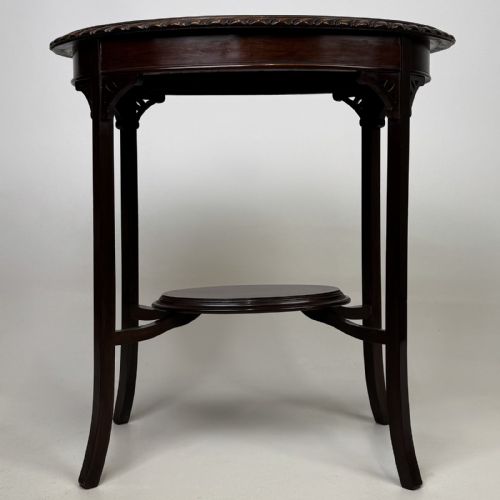
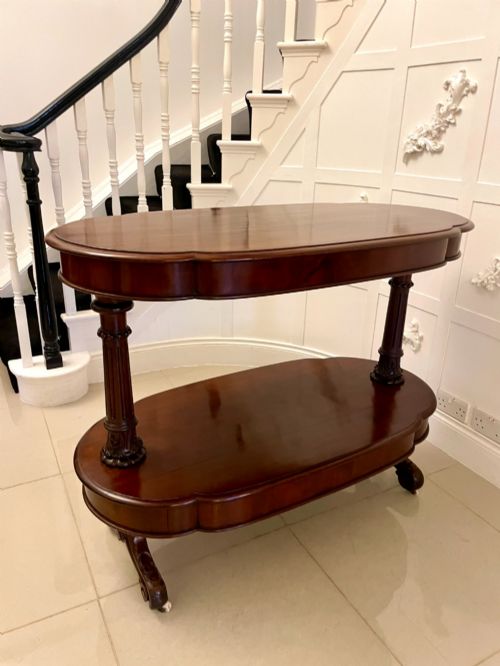
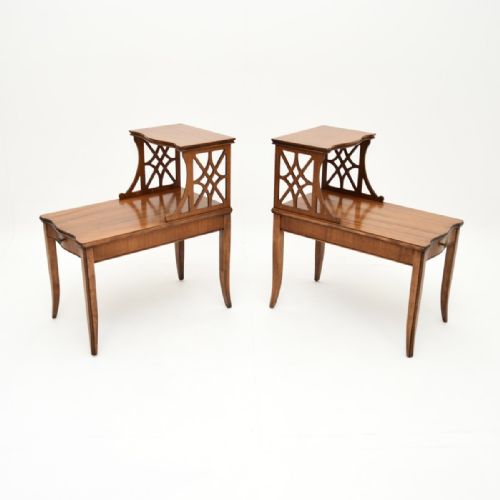
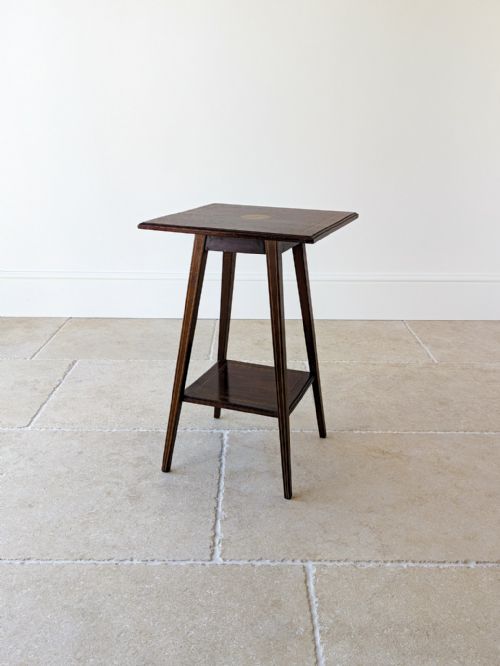
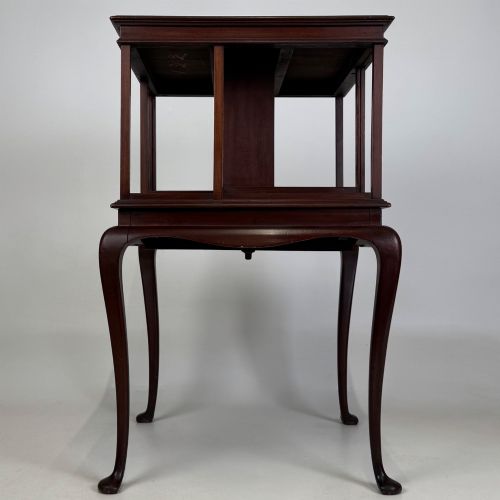
A mahogany tier side table delivers stacked surfaces and warm timber tone, suiting rooms that need practical display space without bulk.
Mahogany Tier Side Table
A mahogany tier side table provides multiple horizontal surfaces arranged vertically, offering compact storage and display space for lamps, books, and decorative objects. These pieces appear across several periods, including the Georgian, Regency, Victorian, and Edwardian eras, reflecting changing domestic habits.
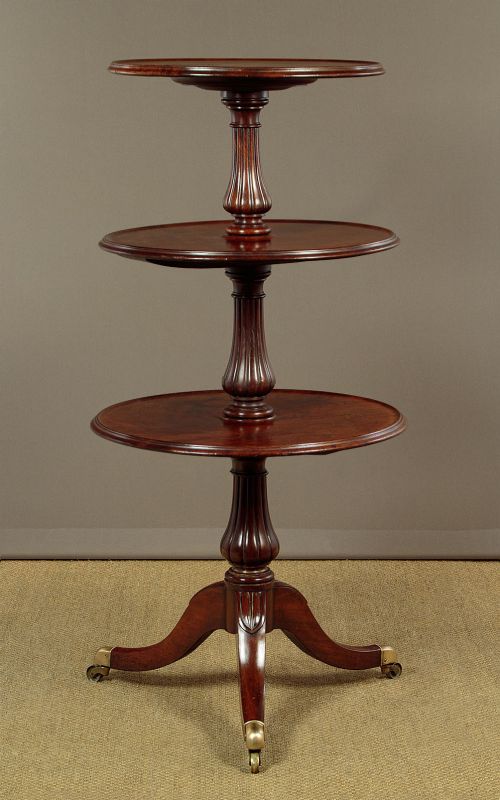
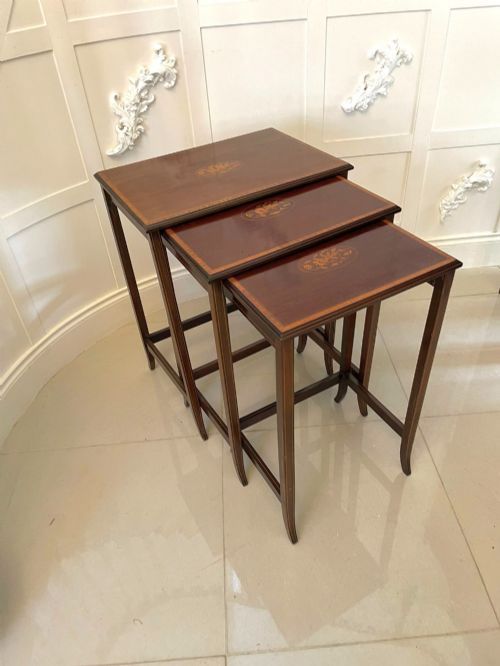
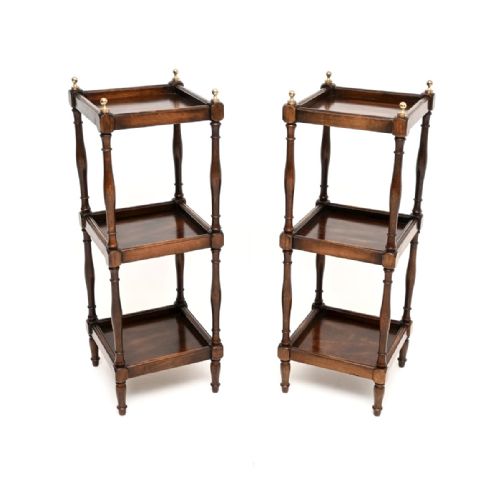
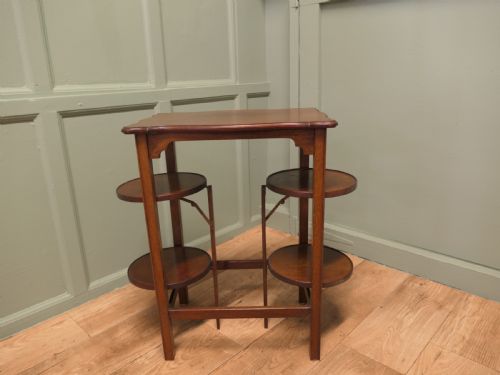
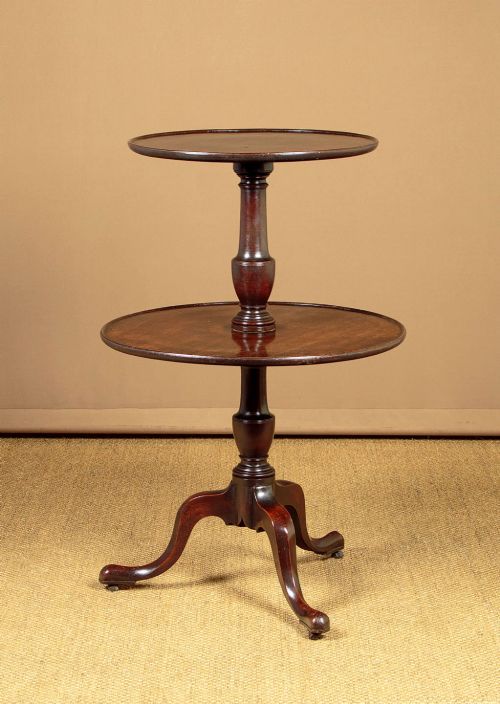
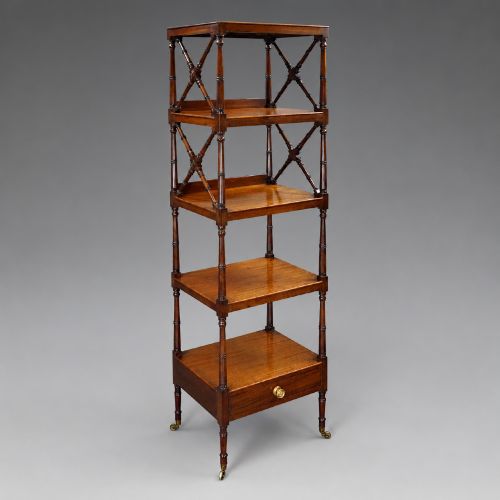
The form encompasses various multi-level formats such as dumb waiters, whatnots, etageres, and nests of tables. Buyers meet examples ranging from simple two-tier tripod stands to taller three-tier buffets and trolley designs.
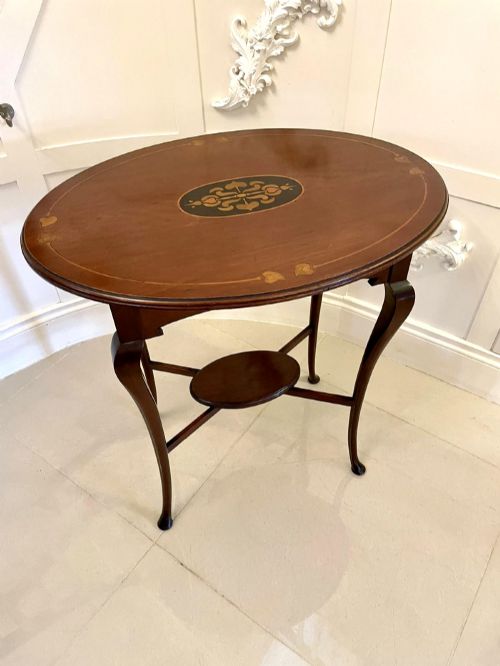
Origins stretch from the late eighteenth century through to the early decades of the twentieth century. Edwardian and Victorian iterations frequently incorporate inlaid details, whereas Georgian and Regency versions rely on proportion and timber grain.
Materials and construction
Makers utilised solid mahogany and mahogany veneers over secondary timbers, selecting boards for depth of colour and grain figure. Timber preparation involved seasoning to prevent warping across the multiple shelves and tiers.
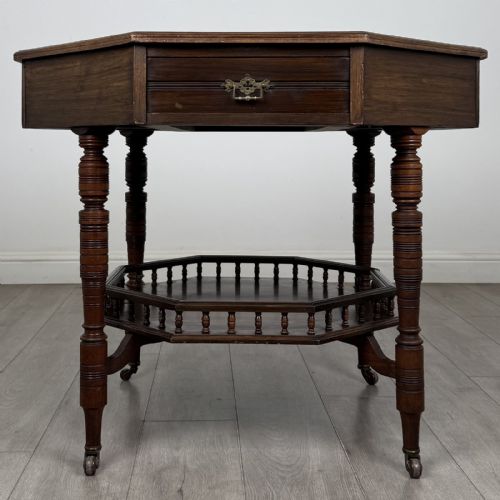
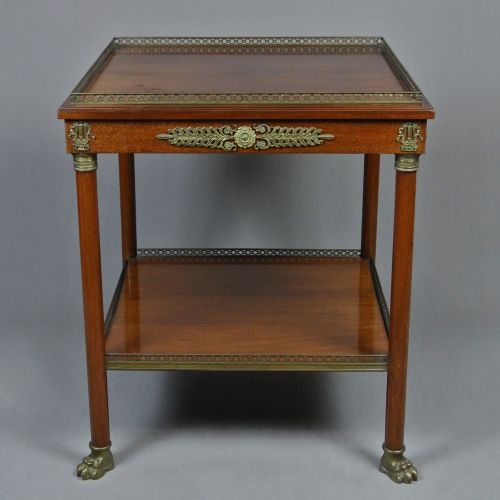
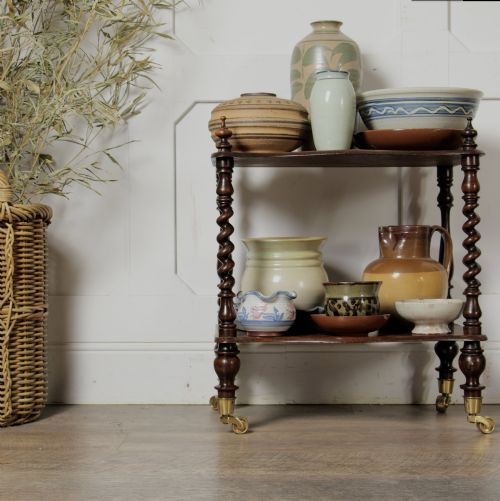
Decorative elements include brass mounts, boxwood and satinwood inlay, and marquetry. Turned supports, barley twist columns, and raised galleries connect the tiers structurally while adding visual definition.
Listings span the Georgian, Regency, Victorian, and Edwardian periods, utilising mahogany alongside brass, boxwood, and satinwood.
Judging construction and design
Superior examples demonstrate precise joinery where the vertical supports meet the tiers, ensuring stability across multiple levels without wobble. The quality of the mahogany timber itself, particularly the depth of its natural grain and colour, distinguishes finer pieces from plain ones.
Execution of decorative details such as marquetry inlay, brass gallery work, and turned uprights separates standard workshop production from accomplished cabinet-making. Proportion and balance between the tiers dictate the visual success of the piece.
Gregory and Co
The Mahogany Tier Side Table Glossary
- Dumb waiter
- A multi-tiered serving table designed to hold dishes or beverages without requiring a servant present. These pieces typically feature graduated circular tiers on a central column.
- Whatnot
- An open set of shelves used for displaying ornaments and books. Victorian and Georgian makers produced these with three or more tiers supported by turned columns.
- Etagere
- A piece of furniture consisting of a series of open shelves for displaying small objects. The term originates from France and applies to tiered side pieces.
- Satinwood inlay
- Contrasting light-toned wood inserted into the mahogany surface to form geometric or floral patterns. This technique highlights borders and centre panels.
- Tripod base
- A support structure consisting of three legs radiating from a central pillar. This configuration provides stability on uneven floors for smaller tier tables.
Mahogany Tier Side Table: Frequently Asked Questions
What rooms suit a tier side table?
These tables fit beside seating in living rooms or serve as bedside surfaces where vertical space is preferred over a wide footprint.
The stacked tiers hold reading materials and lamps while taking up minimal floor area.
How do I date a mahogany table?
Dating relies on stylistic markers, construction methods, and the type of secondary timbers used beneath the veneer.
Georgian and Regency pieces favour architectural proportion, whereas Edwardian examples often display marquetry and lighter framing.
Are multi-tier tables stable?
Properly constructed pieces distribute weight evenly across the vertical supports and central columns or corner legs.
Heavier items belong on the lowest tier to maintain balance across the structure.