
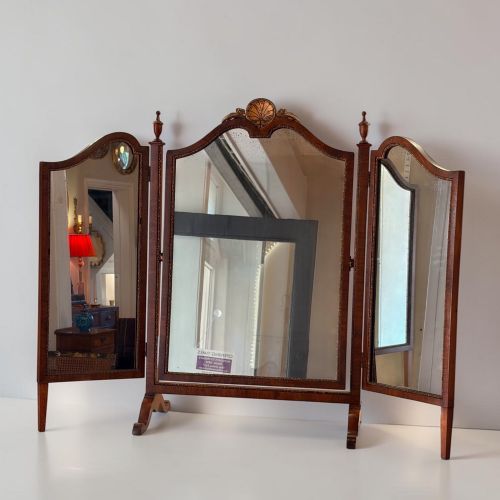
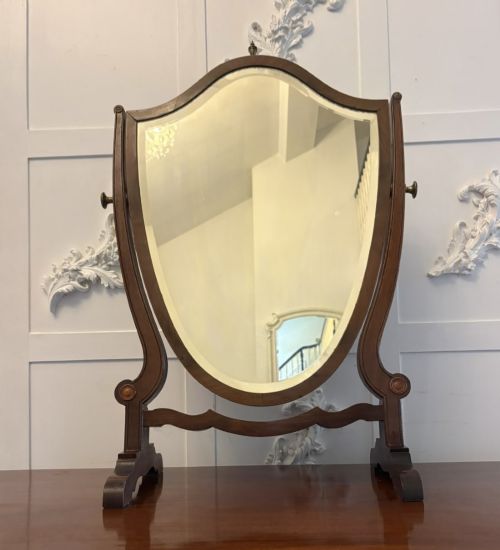
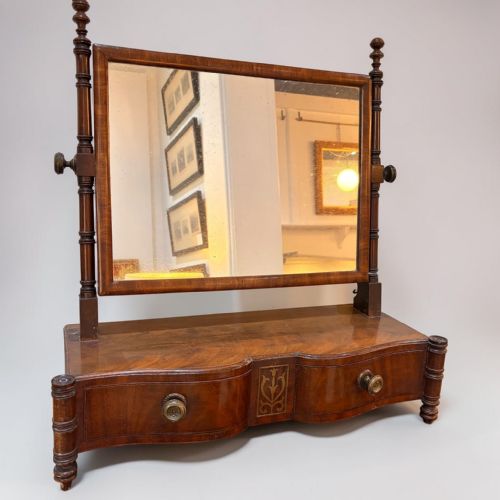
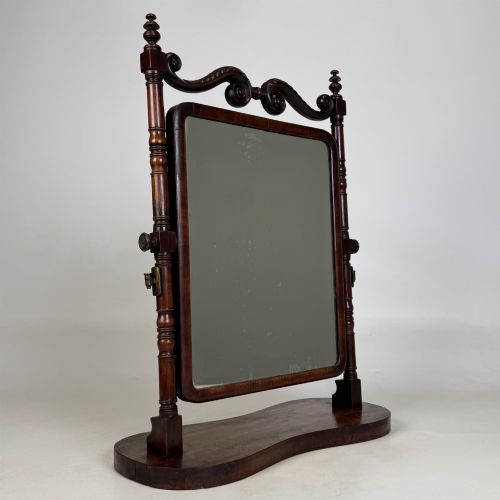
Mahogany Tabletop Dressing Mirror
Mahogany tabletop dressing mirror pieces are compact swing glasses set upon tidy drawer bases, offering daily utility and rich cabinet timbers.
Mahogany Tabletop Dressing Mirror
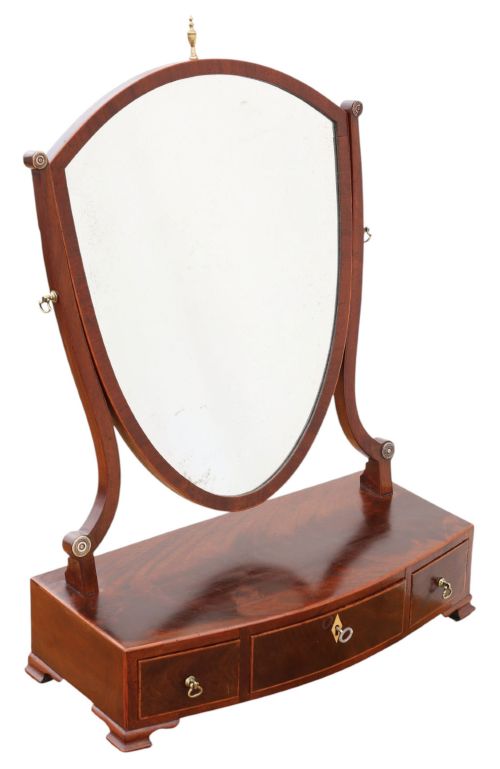
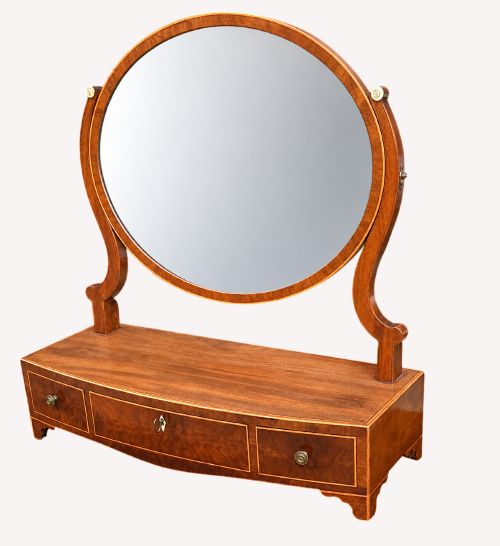
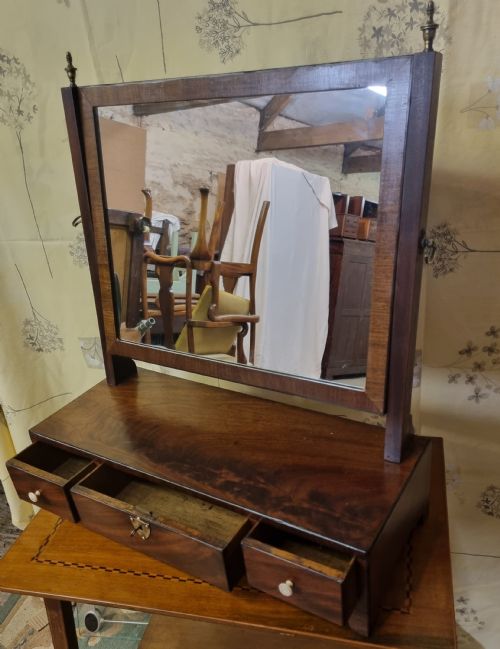
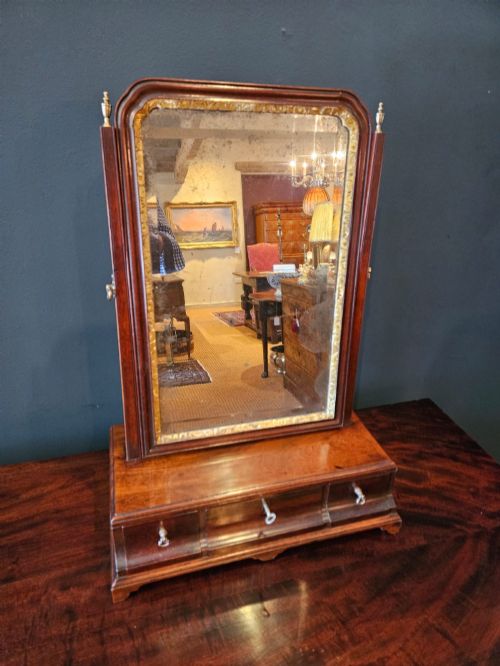
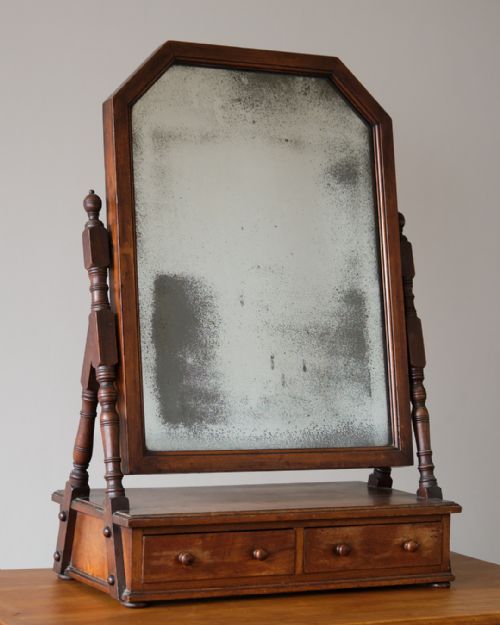
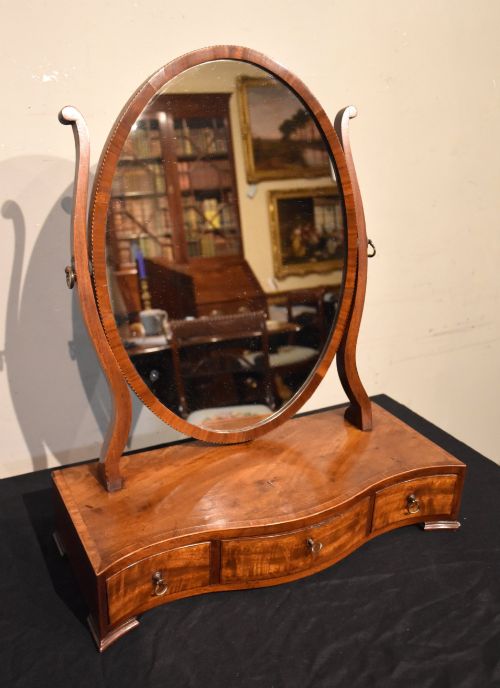
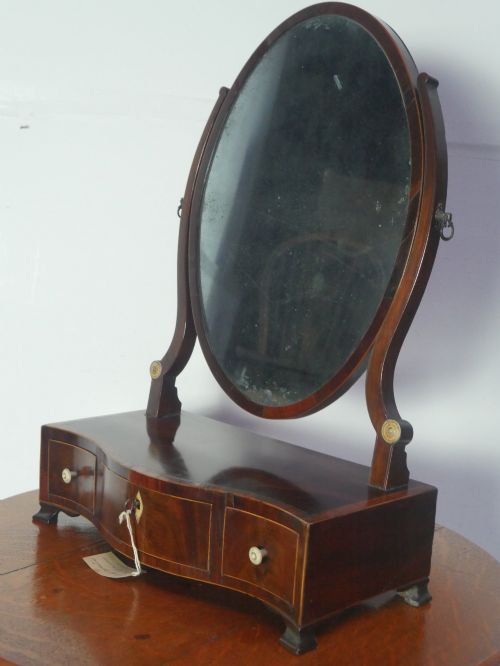
A mahogany tabletop dressing mirror sits upon a chest or table surface, providing a tilting glass plate held by vertical upright arms above a small base box. When you search for this phrase, you find compact pieces designed for personal grooming and domestic comfort.
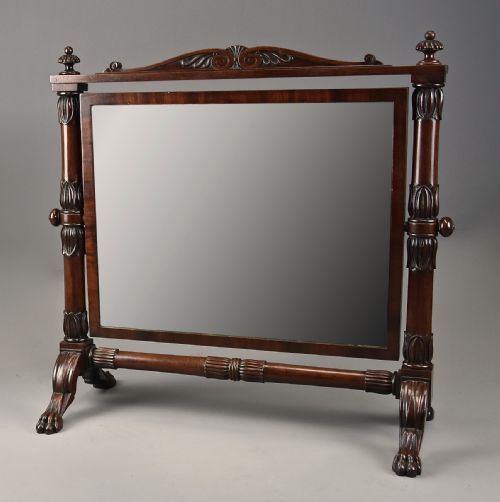
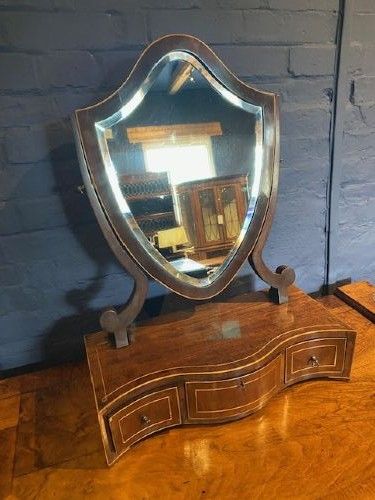
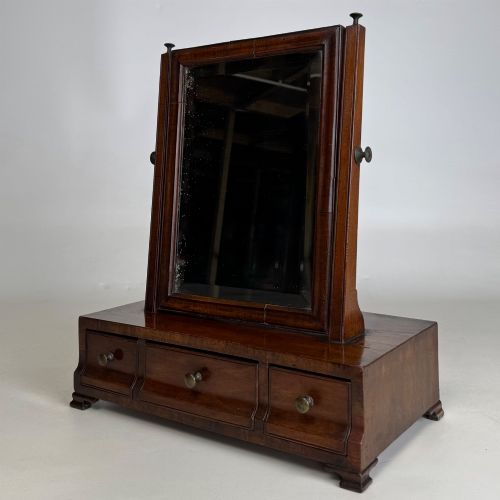
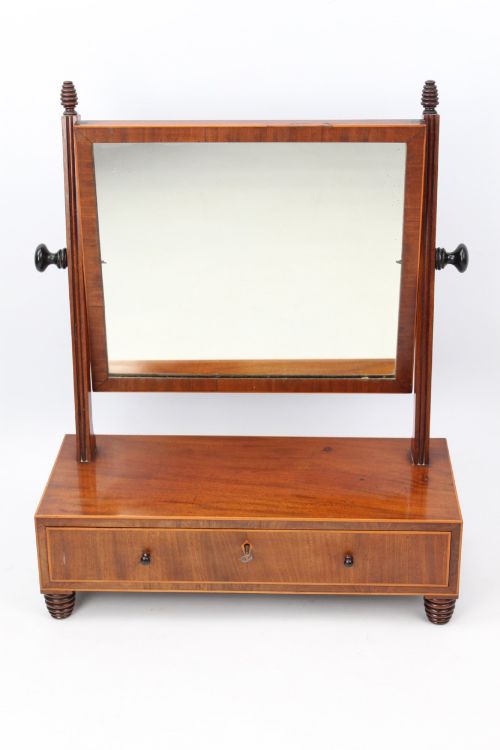
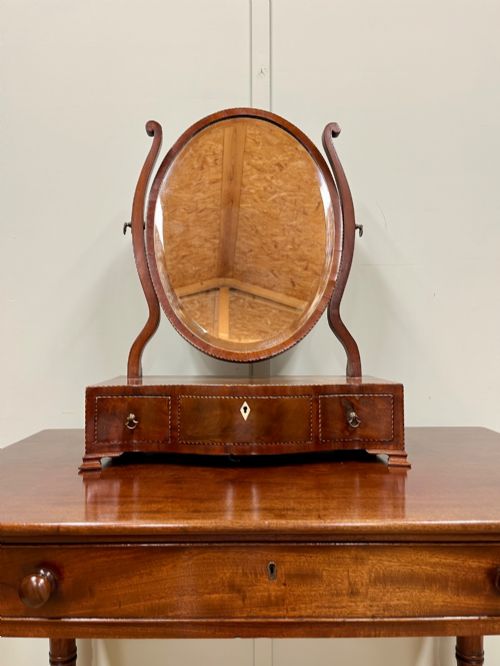
The selections span the eighteenth, nineteenth, and early twentieth centuries, encompassing Georgian, Regency, and Victorian periods. You encounter rectangular frames, shield shapes, and oval plates resting on serpentine or straight drawer bases.
Most examples function as swing mirrors on pivots, though larger cheval formats and specialised toilet mirrors also appear. Each piece combines a reflective surface with small compartments for personal effects.
Materials and construction methods
Cabinetmakers utilised dense tropical mahogany, frequently selecting figured Cuban timber, along with contrasting inlay veneers such as satinwood. Frames and bases were joined with traditional cabinetry methods to support the pivoting weight of the glass.
Original mirror glass is set into rebated frames, often accompanied by brass pivoting hardware, bone escutcheons, and small turned wooden knobs on the drawer fronts. Selected pieces incorporate parcel-gilt details or Dutch marquetry decoration.
Drawer boxes beneath the mirror plate feature hand-dovetailed joints and secondary softwoods, designed to remain stable on dressing tables and chests.
Current listings feature mahogany, glass, brass, bone, satinwood, and giltwood across Georgian, Regency, and Victorian periods.
Judging the standard of execution
Superior examples display crisp timber figure, fine crossbanding, and well-proportioned upright supports that balance the weight of the glass frame without sagging. The refinement of the drawer dovetails and the crispness of moulded edges mark the distinction between standard workshop output and exceptional cabinetwork.
The elegance of the shield or oval frame profile and the harmony between the mirror plate and the base box determine the visual balance. Original brass fittings, intact mirror plates, and subtle string inlay enhance the integrity of the piece.
P & MA Nicholson·Heal & Sons
The Mahogany Tabletop Dressing Mirror Glossary
- Swing mirror
- A mirror plate mounted on pivots between two upright posts, allowing the glass angle to be adjusted. This mechanism is central to tabletop dressing glasses.
- Toilet mirror
- An eighteenth or nineteenth-century term for a tabletop dressing mirror used for grooming. These pieces typically include small drawers for powders and pins.
- Shield mirror
- A dressing mirror featuring a plate cut into the outline of a heraldic shield. This shape became popular during the Georgian period.
- Crossbanding
- A border of veneer laid with the grain running perpendicular to the surrounding surface. It frames the drawer fronts and plate surrounds on finer pieces.
- Cheval mirror
- A full-length or large dressing mirror supported by a freestanding frame. Tabletop versions of this form appear in later nineteenth and twentieth-century examples.
Mahogany Tabletop Dressing Mirror: Frequently Asked Questions
Where were these mirrors placed?
These mirrors sat atop chest of drawers or dedicated dressing tables in bedrooms and dressing rooms. Their elevated position allowed for comfortable seated grooming.
Because they were portable, owners moved them around the house to follow natural window light before artificial illumination became common.
How do I date a Georgian mirror?
Dating relies on timber selection, frame outline, and drawer construction methods. Eighteenth-century examples often feature fine mahogany veneers, hand-cut dovetails, and bracket feet.
Later nineteenth-century pieces tend to use heavier mouldings, different secondary woods, and varied decorative carving styles associated with Victorian production.
What are the small drawers for?
The small drawers housed personal items such as rings, pins, cosmetics, and shaving gear. They kept dressing surfaces tidy while adding structural weight to anchor the mirror.
Arrangements range from single serpentine drawers to banks of three small compartments beneath the swing frame.
Are the mirror plates original?
Many surviving pieces retain their original mercury or early silvered glass, which often exhibits gentle foxing and age spots. Replacement plates are common given the fragile nature of old glass.
Examining the backing boards and silvering helps determine whether the glass dates to the construction period of the mahogany frame.