

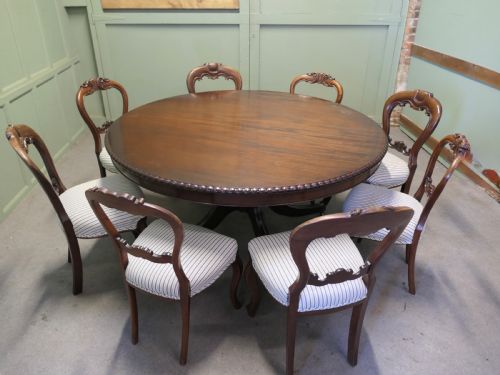


Mahogany Table and Chairs
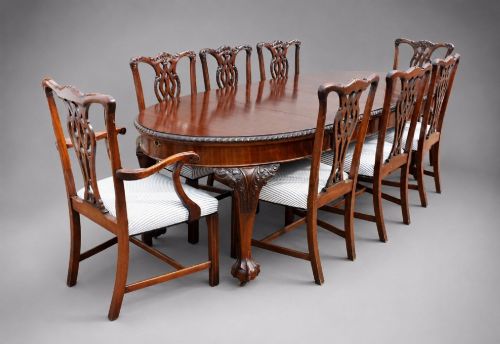
A mahogany table and chairs set anchors a room with rich timber and dependable construction spanning multiple centuries.
Mahogany Table and Chairs
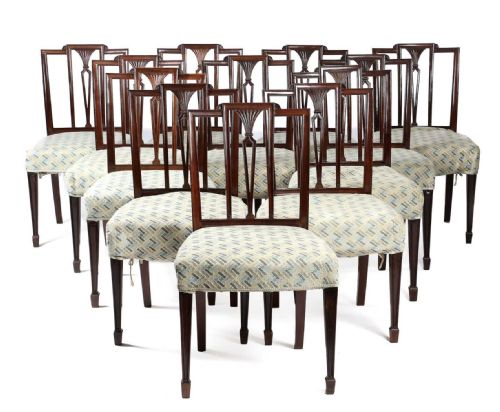
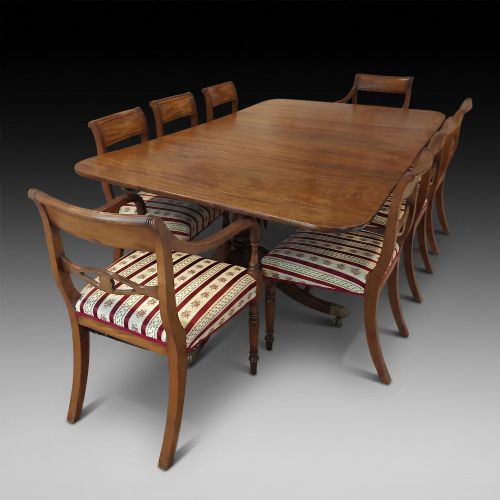
A mahogany table and chairs combination encompasses matching dining suites, extending tables paired with sets of dining chairs, and occasional bedroom or desk seating. The selections range from compact Edwardian settings to large Victorian extending tables accompanied by up to sixteen chairs.
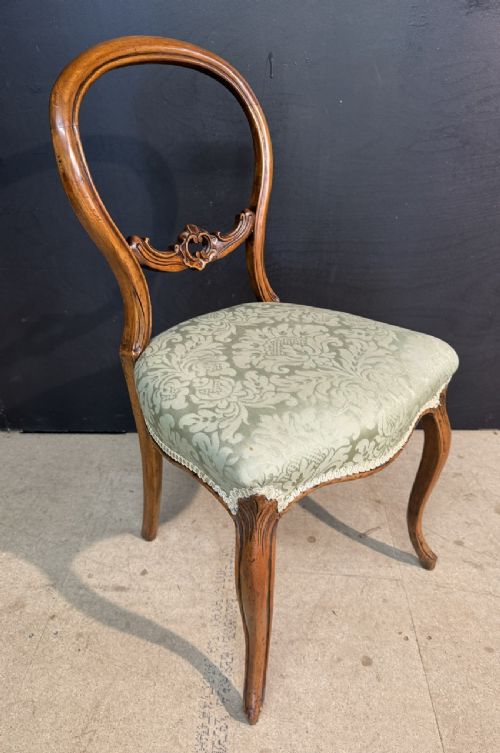
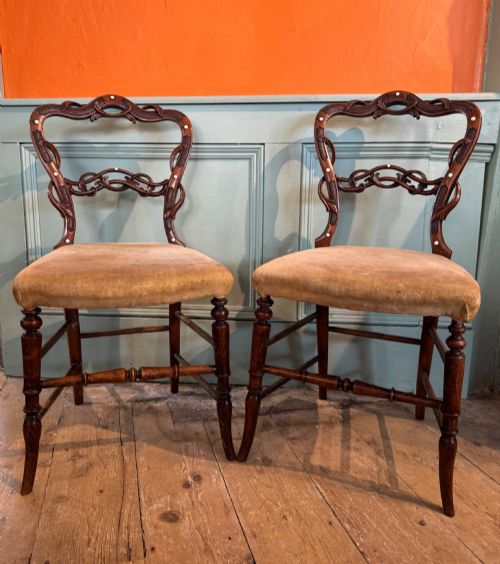
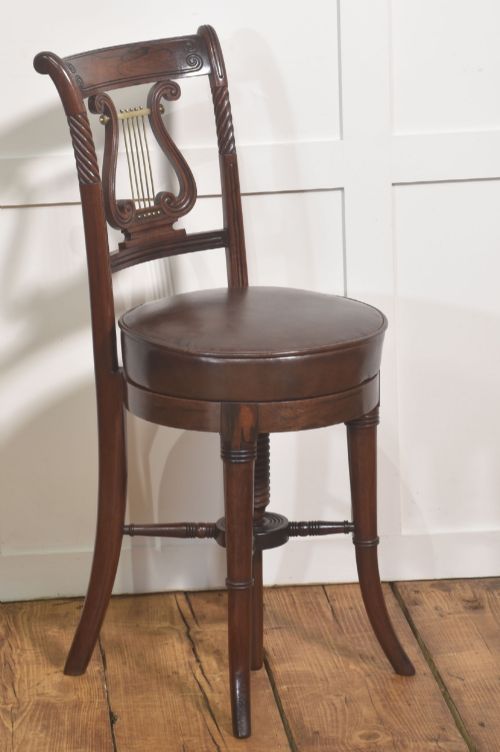
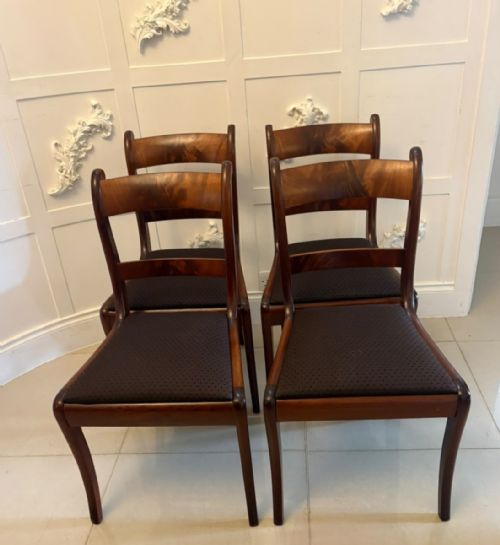
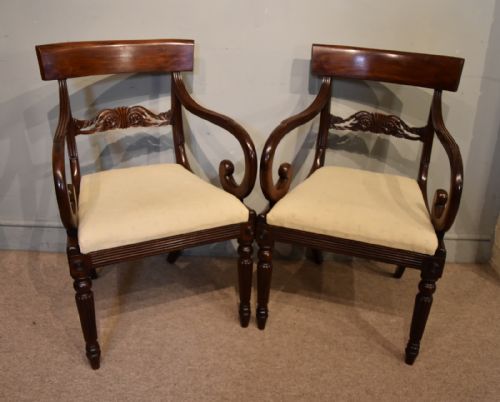
Buyers encounter numerous Georgian, Regency, and Victorian iterations alongside later revival styles. Sets frequently pair a wind-out or pillar dining table with bar back, balloon back, or sabre leg chairs.
How they were made
Cabinet makers utilised dense mahogany timber, sometimes specified as Cuban mahogany, supplemented by structural secondary woods. Joinery relied on traditional techniques to support extending mechanisms and substantial table leaves.
Upholstered elements integrated fabric, leather, velvet, and textile coverings secured over padding. Brass inlays, castors, and detailed scroll carvings provided decorative contrast to the dark wood grain.
Some dining suites include children's chairs and tiny matching tables scaled down precisely for miniature hosts.
What varies in quality
Quality rests upon the uniformity of the timber selection across both the table and its accompanying chairs. Sets that retain matching grain patterns and original components demonstrate superior workshop coordination.
The sophistication of the carving, the robustness of extending mechanisms, and the integrity of the upholstery foundation dictate the standing of individual dining suites.
James Shoolbred·Ellen E. Houghton
The Mahogany Table and Chairs Glossary
- Wind-out table
- A dining table utilising an internal screw mechanism operated by a crank handle to separate the top and insert extension leaves. This system became popular during the nineteenth century for large gatherings.
- Bar back chair
- A dining chair featuring a horizontal top rail or splat shaped like a curved bar. These designs appear frequently on Regency and nineteenth century seating.
- Sabre leg
- A concave sweeping leg that curves outward and backward, common on Regency chairs. The shape mimics the cavalry sword of the period.
- Balloon back
- An upholstered dining chair back shaped in a continuous oval resembling a balloon. This form is particularly characteristic of Victorian seating.
Mahogany Table and Chairs: Frequently Asked Questions
How do I date a mahogany table and chairs?
Examine the leg styles, construction joints, and timber characteristics. Regency pieces often show sabre legs and brass inlay, while Victorian sets tend toward balloon backs and wind-out mechanisms.
Matching the chair design to the table period requires checking for uniform timber ageing and consistent secondary woods beneath the seats and table frames.
How do extending table mechanisms work?
Most antique extending tables use a central wooden runner system opened with a removable metal crank handle. Turning the handle separates the table halves to accept one or more leaves.
Well-maintained brass rack gears and aligned wooden dowels ensure the leaves lock together tightly without sagging across the centre.
Can I mix chairs with an antique table?
Matching a table with a complete set of original chairs preserves historical consistency and aesthetic balance. Mixing chairs requires careful attention to seat height, arm clearance, and timber tone.
Many period suites were built together, ensuring the table clearance accommodates the specific width and height of the accompanying dining chairs.
How should I care for mahogany surfaces?
Keep mahogany furniture away from direct sunlight and strong heat sources to prevent the timber from drying and splitting. Regular dusting with a soft, dry cloth protects the polish.
Applying quality beeswax periodically nourishes the grain and maintains the deep reddish-brown colour without building up heavy wax layers.