
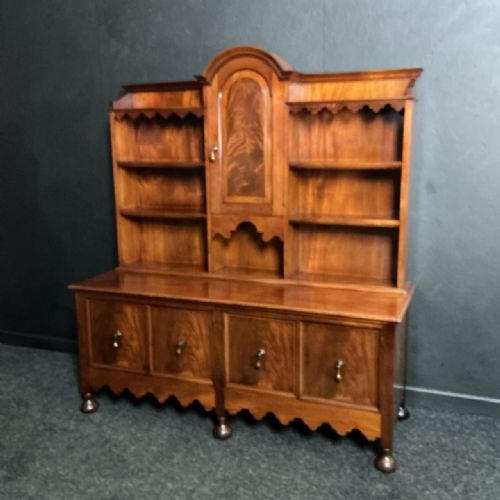
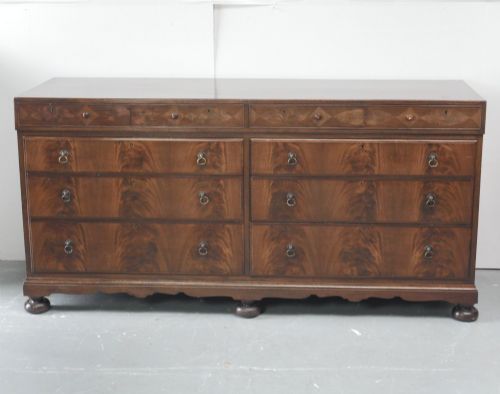
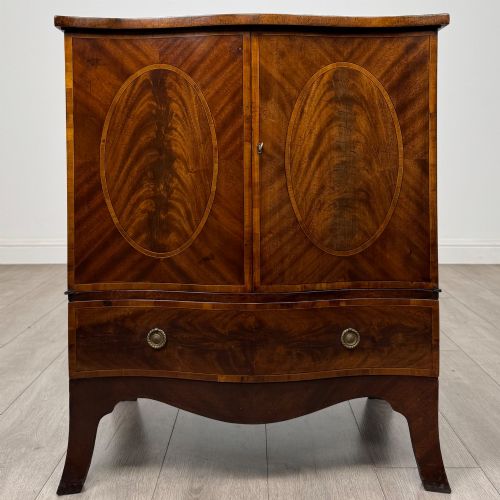
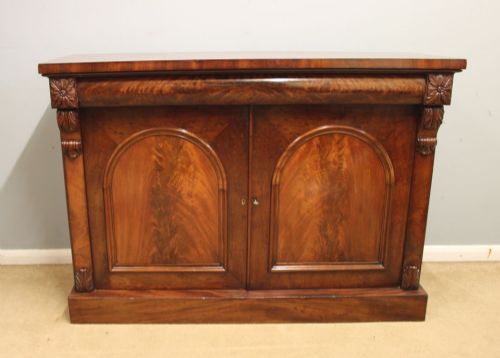
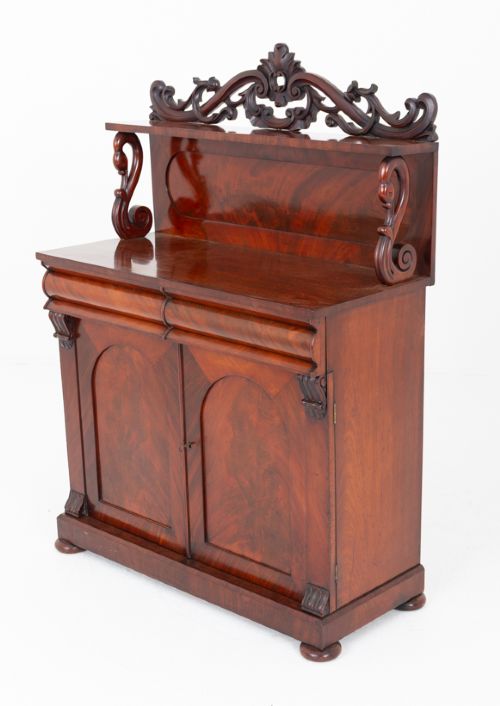
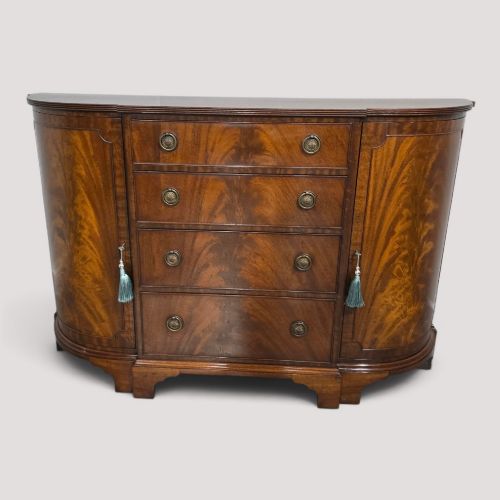
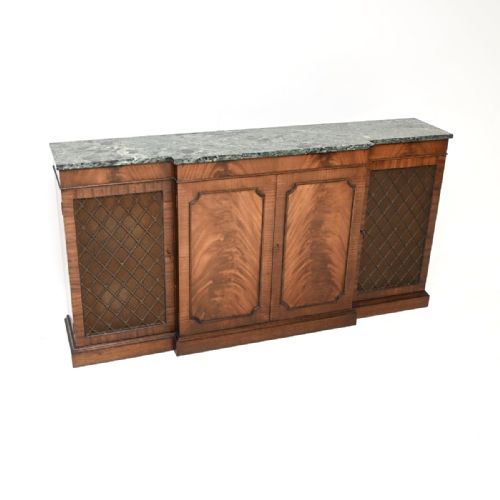
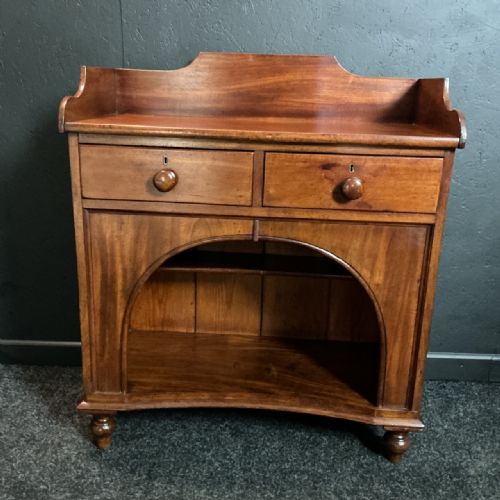
Mahogany Storage Sideboard
A mahogany storage sideboard brings deep timber tones and ample dining room utility into a home.
Mahogany Storage Sideboard
A mahogany storage sideboard offers concealed space for dining room linen, silver and bottles while anchoring a room with heavy timber presence. When searching for a mahogany storage sideboard, buyers encounter forms ranging from simple cupboards and chests of drawers to large Victorian and Edwardian sideboards.
The pieces listed span Georgian, Victorian and Edwardian periods alongside later revivals, reflecting generations of cabinet making. Most examples present as sideboards, side cabinets or cupboards designed to organise and display domestic items.
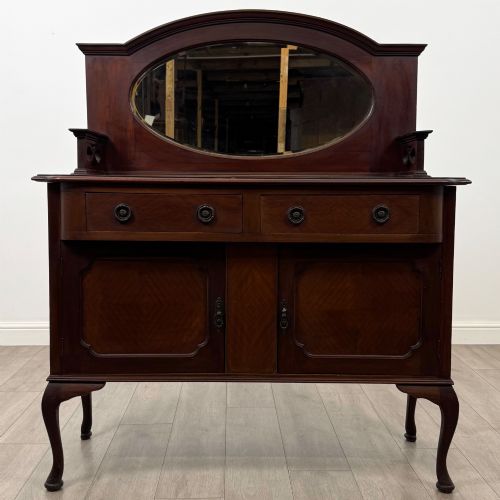
Makers and workshops of the nineteenth and twentieth centuries produced these items in varying scales, from modest bow front cupboards to grand breakfront servers. The core function remains storage, disguised behind polished doors and fitted drawers.
Materials and construction methods
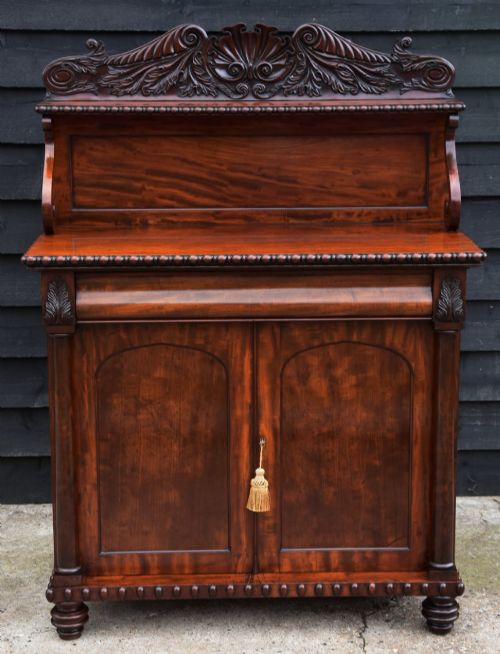
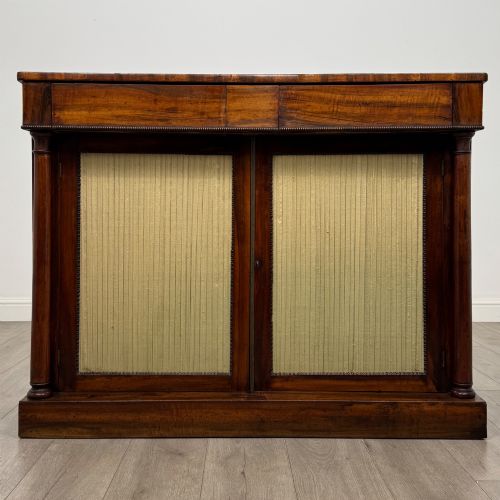
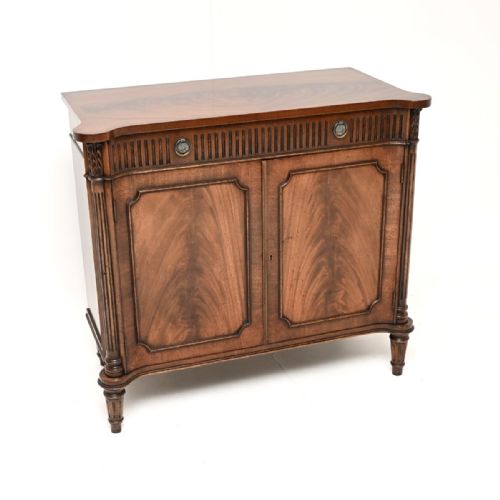
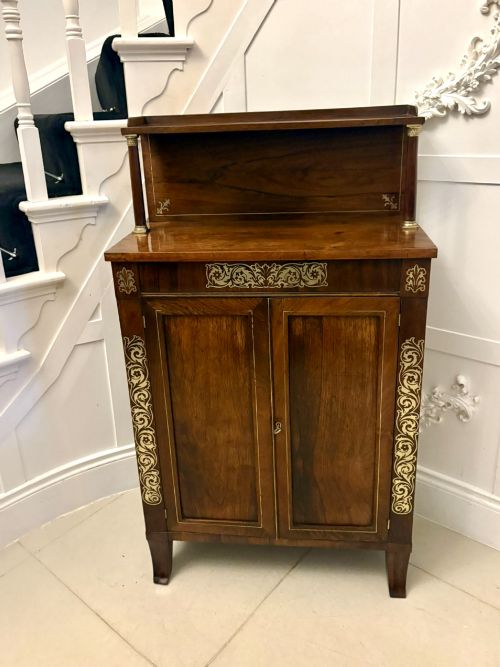
Cabinet makers utilised solid mahogany and flame mahogany veneer applied over secondary timbers such as oak, creating figured grain patterns on doors and drawer fronts. Brass fittings, including handles, escutcheons and wire grilles, provide functional contrast to the dark timber.
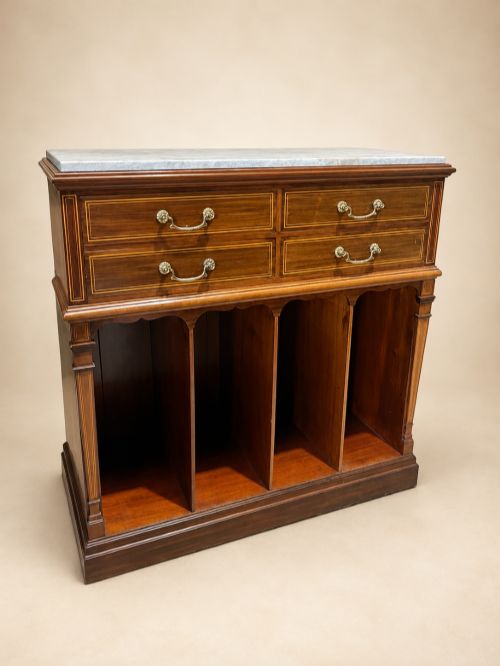
Surfaces frequently feature marble tops or glass panels, particularly on pieces originating from the Edwardian era and the later nineteenth century. Construction relies on traditional joinery techniques, uniting solid panels and curved bowed fronts with internal framing.
Listings feature mahogany storage sideboards across Edwardian, Victorian, Georgian and Regency periods, incorporating marble, brass and glass elements.
Assessing quality in mahogany storage pieces
Quality rests in the selection of the timber, particularly the match of flame mahogany veneers across a cabinet front and the weight of the solid mahogany used in the carcase. Superior pieces demonstrate crisp moulding, well-fitted drawers and original brass hardware.
Structural integrity, the smoothness of drawer action and the retention of original glass or marble tops separate standard utilitarian cupboards from masterworks of the cabinet maker's art. The subtlety of inlaid details and the proportion of the proportions define the upper tier of surviving examples.
Whytock & Reid·M. D. Miller & Sons·Heals
The Mahogany Storage Sideboard Glossary
- Bowfront
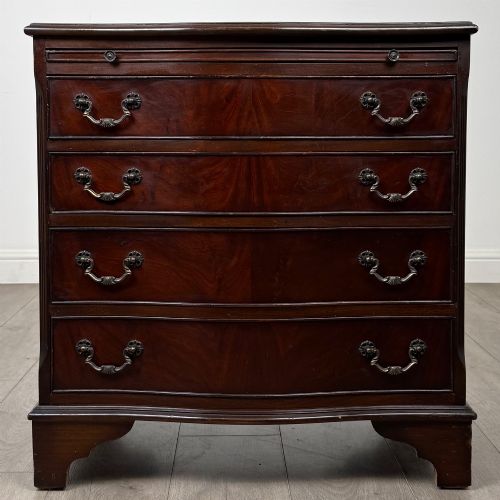
- A curved cabinet or chest front that swells outward in the centre. This shape softens the room and creates deeper internal storage.
- Chiffonier
- A low cabinet or sideboard developed in the nineteenth century, typically featuring shelves or a raised back. It serves dining rooms and drawing rooms for tableware storage.
- Flame mahogany
- A veneer cut from the branch junction of the mahogany tree, displaying a characteristic flickering flame pattern. Cabinet makers reserve this timber for prominent drawer fronts and doors.
- Breakfront
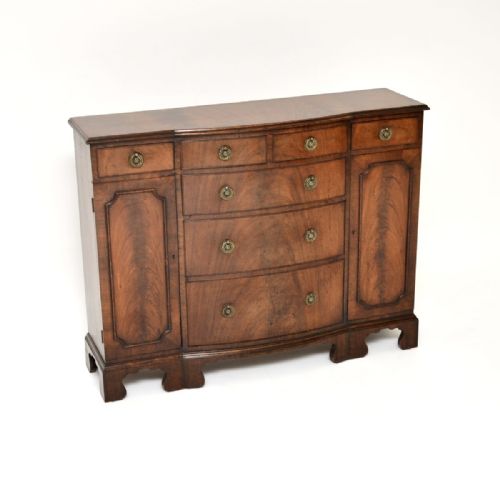
- A piece of furniture whose central section projects forward from the flanking wings. This architectural arrangement adds depth and visual rhythm to large sideboards.
- Grille
- A lattice of brass wire fitted into cabinet doors in place of wood or glass. It allows ventilation while keeping contents secure.
Mahogany Storage Sideboard: Frequently Asked Questions
How do I date a mahogany sideboard?
Dating relies on stylistic cues, construction methods and timber characteristics. Georgian pieces often show restrained lines and bracket feet, while Victorian examples lean towards heavier proportions and elaborate carving.
Secondary woods inside drawers and the type of fixings used provide further clues. Examining the backboards and drawer dovetails helps confirm the period of manufacture.
Where should I place a storage sideboard?
A dining room or large hallway suits the substantial proportions and depth of these cabinets. Ensure there is adequate clearance for doors to swing open and drawers to extend fully.
Keep the timber away from direct heat sources and strong sunlight to prevent the mahogany veneer from drying out or fading over time.
What is the difference between a chiffonier and a sideboard?
A chiffonier is typically smaller and lower, often equipped with a raised back shelf, making it suited for smaller reception rooms. Sideboards are longer and built primarily for dining room service.
Both provide enclosed storage, but sideboards frequently incorporate specialised compartments such as bottle drawers.
How do I care for antique mahogany furniture?
Maintain the finish by dusting with a soft, dry cloth and applying traditional beeswax sparingly when the timber appears dry. Avoid silicone sprays and modern liquid polishes that build up a film.
Buff the surface gently with the grain to preserve the natural warmth and depth of the polished mahogany.