


George III Bow Front Cabinet
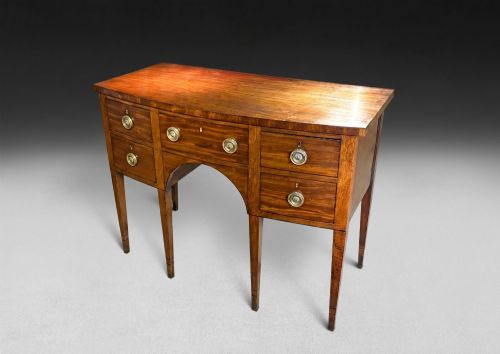
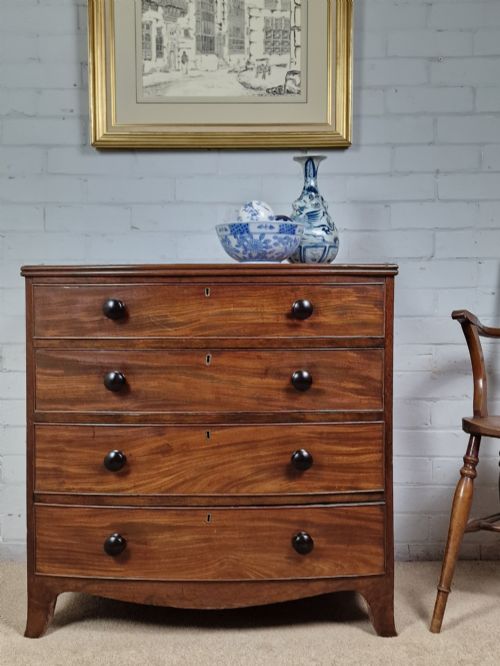
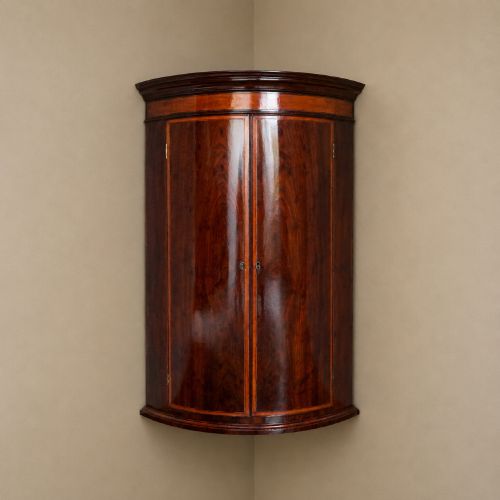
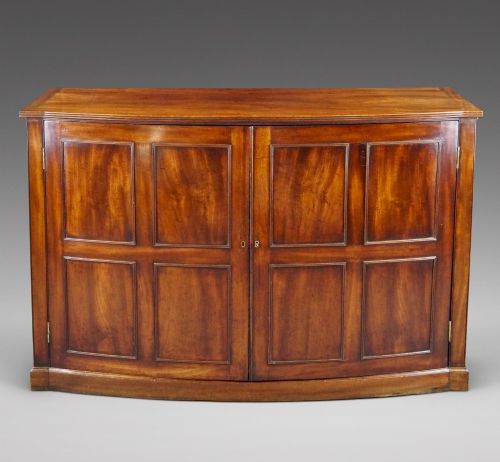
These george iii bow front cabinet examples bring curving eighteenth-century geometry into domestic spaces, prized for their ability to soften room corners while providing concealed storage.
George III Bow Front Cabinet
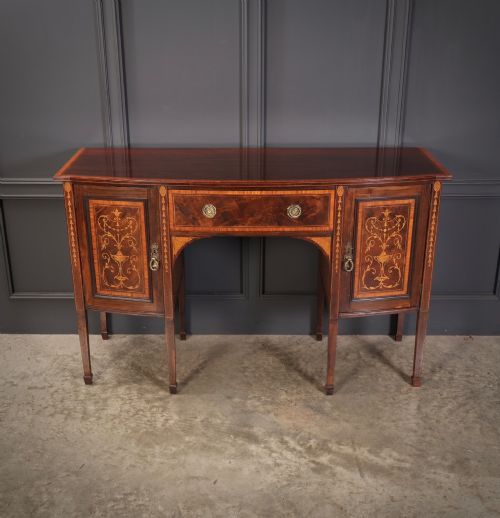
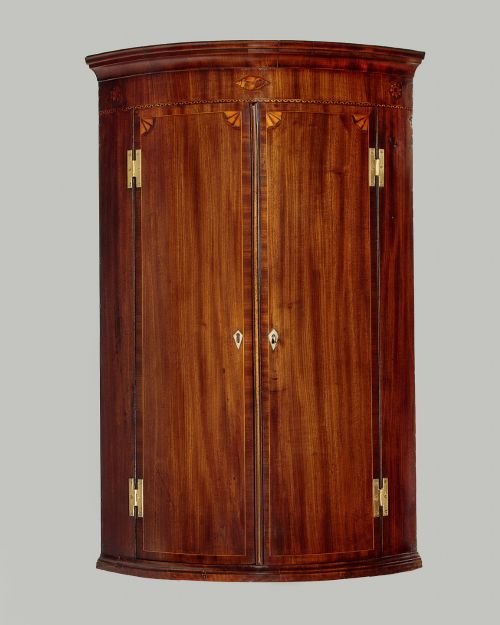
A george iii bow front cabinet encompasses a diverse range of furniture forms designed with a convex projecting front, spanning corner cupboards, sideboards, chests of drawers, and bedside commodes. The majority of pieces encountered on this page belong to the Georgian period, specifically the eighteenth century, demonstrating the era's preference for graceful curved facades.
Corner cabinets dominate the selection, appearing frequently as wall-hanging or standing units constructed to fit domestic room angles. Alongside these, buyers find larger storage items such as sideboards, linen presses, and tallboys, each sharing the characteristic rounded profile that defines the group.
While many date directly to the George III era, later interpretations from the nineteenth and twentieth centuries also appear, including Sheraton Revival pieces and items dated around nineteen hundred. These later examples adopt the eighteenth-century vocabulary of curved mahogany and inlaid details.
Materials and construction methods
Mahogany serves as the primary timber across the inventory, often selected in figured varieties such as flame mahogany and plum pudding mahogany to accentuate the curved door panels and drawer fronts. Secondary woods like oak appear in structural elements and internal carcases.
Cabinetmakers utilised decorative stringing and contrasting timbers, incorporating boxwood and satinwood inlay to frame the main mahogany surfaces. Brass hardware, including hinges and escutcheons, finishes the construction of doors and drawers.
Plum pudding timber hides tiny circular knots that mimic seasonal desserts across the cabinet doors.
Distinctions in craftsmanship
The degree of figuration in the timber establishes a clear visual hierarchy, with richly patterned flame and plum pudding mahogany commanding greater attention than plain grain boards. The precision of the inlay work, particularly fine boxwood and satinwood lines, demonstrates the skill of the original maker.
Structural integrity in the curved framework separates standard pieces from superior examples, as maintaining a stable bow front requires expert joinery. Original brasses and well-preserved internal shelving further distinguish higher-tier items from those altered over time.
The George III Bow Front Cabinet Glossary
- Bow front
- A convex curving exterior facade that projects outward from the main body of a piece of furniture. This profile softens linear room layouts and maximises internal depth.
- Flame mahogany
- A veneer cut from the fork of a mahogany tree where the branch meets the trunk. It creates a distinctive flamy or feather-like grain pattern across cabinet doors.
- Stringing
- Narrow inlaid lines of contrasting wood, such as boxwood or satinwood, set flush into the primary mahogany surface. This technique creates geometric borders around panels and drawers.
- Tallboy
- A tall chest of drawers constructed in two stacked sections, providing substantial vertical storage. Examples with bow-fronted drawers combine height with the characteristic curved profile.
George III Bow Front Cabinet: Frequently Asked Questions
Where do these cabinets fit best?
Hanging and standing corner versions mount easily into room angles, making efficient use of overlooked spaces.
Larger sideboards and chests of drawers suit principal reception rooms and bedrooms where their curved facades add architectural interest.
How do I care for mahogany surfaces?
Keep wooden pieces away from direct heat sources and strong sunlight to prevent the timber and veneers from drying out.
Apply traditional wax polish occasionally and buff gently with a soft cloth to maintain the natural lustre of the grain.
Are these pieces suitable for daily use?
Sturdy eighteenth-century construction means most items remain entirely functional for modern storage needs.
Drawers and cupboards operate reliably when treated with care, though interior depths on bow-fronted units vary near the curved edges.
How do I recognise a Georgian piece?
Examine the secondary timbers inside drawers and carcases, where oak and hand-cut joinery typically indicate eighteenth-century origin.
Look for period characteristics such as hand-cut dovetails, original brass hardware, and restrained inlay patterns rather than machine-made uniformity.