
Mahogany Storage Dresser
A mahogany storage dresser delivers deep practical capacity through timber construction framed across Georgian, Regency, Victorian, and Edwardian periods.
Mahogany Storage Dresser
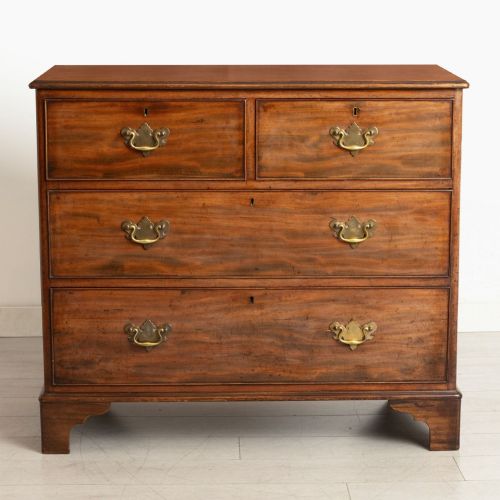
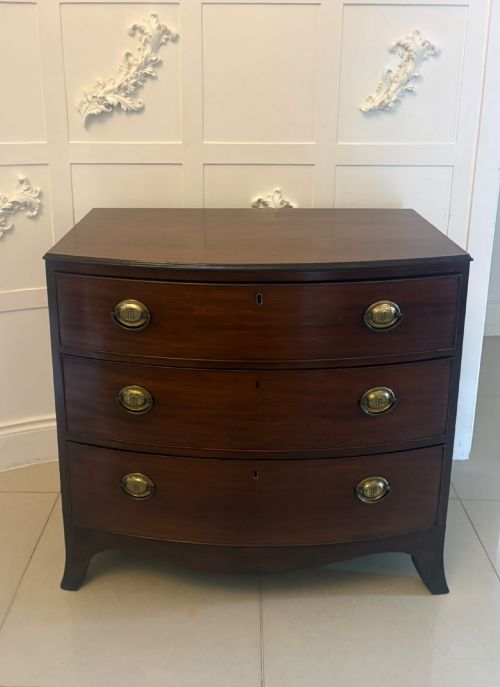
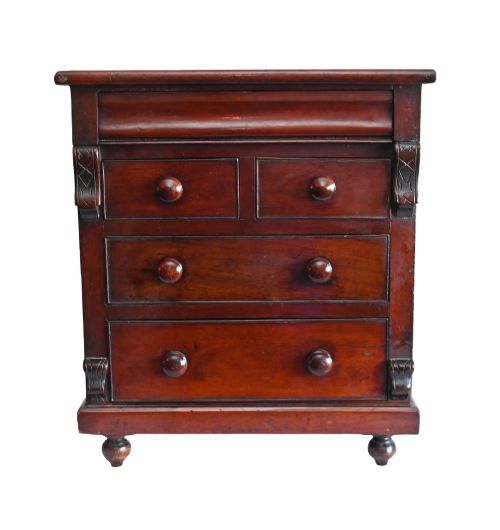
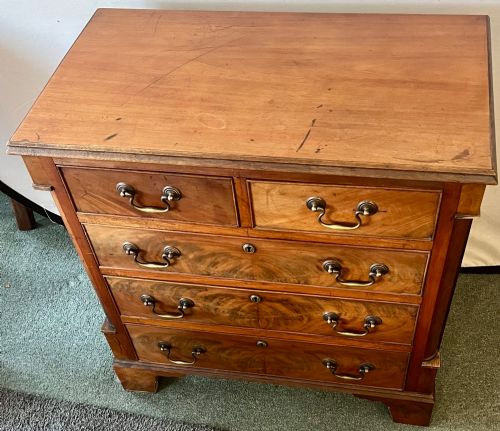
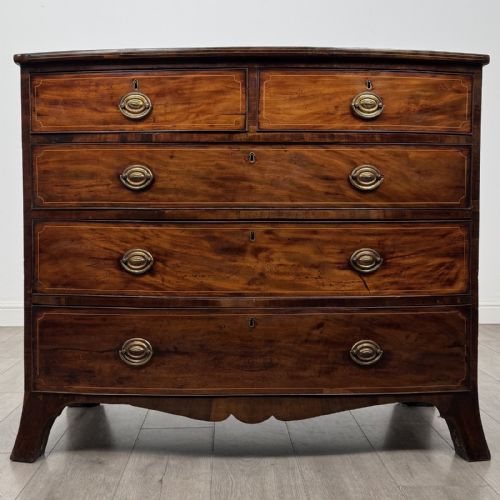
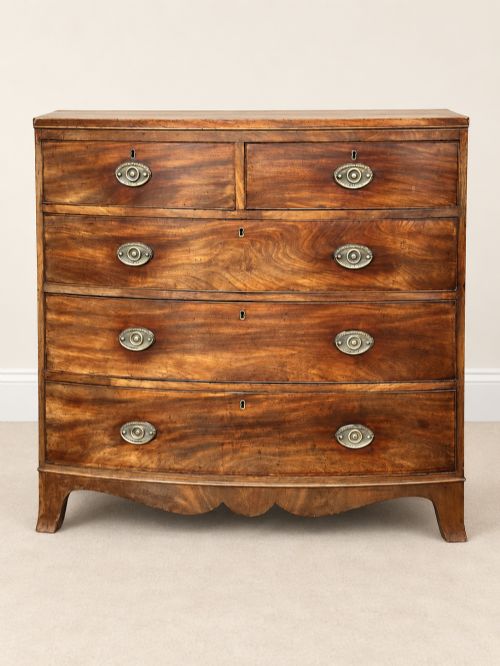
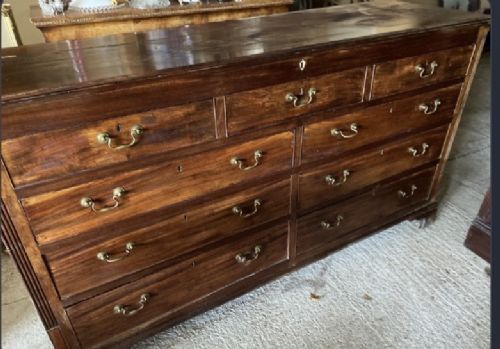
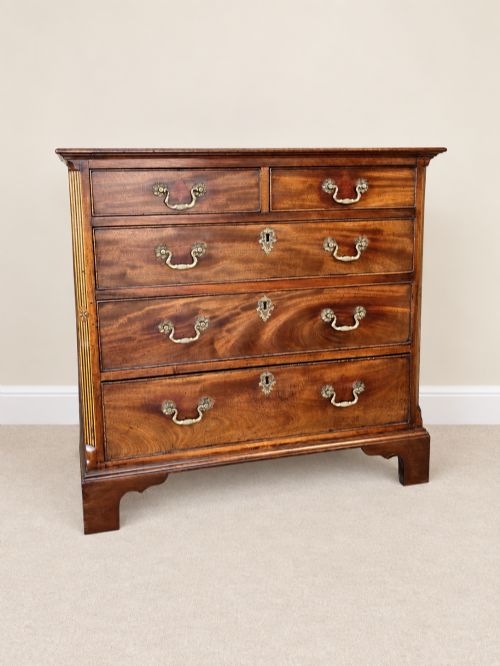
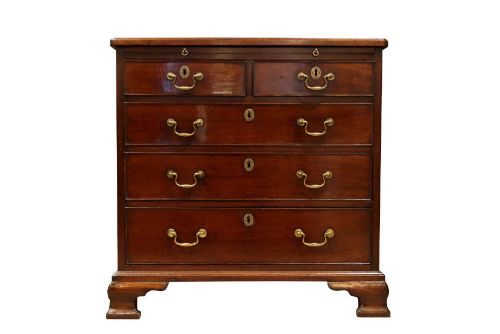
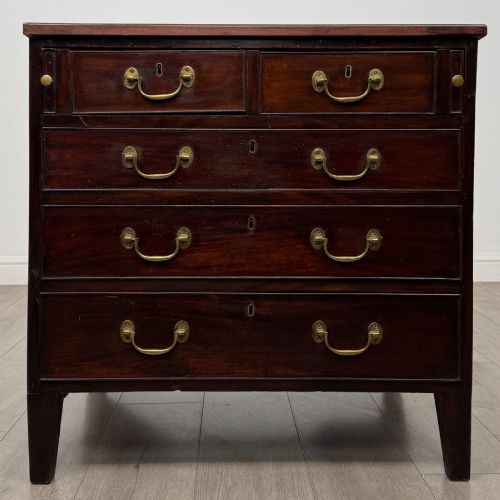
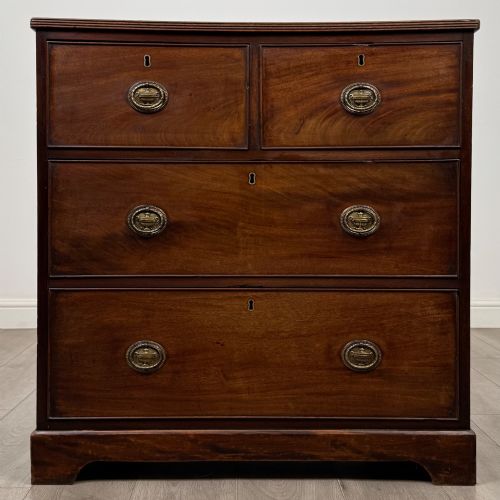
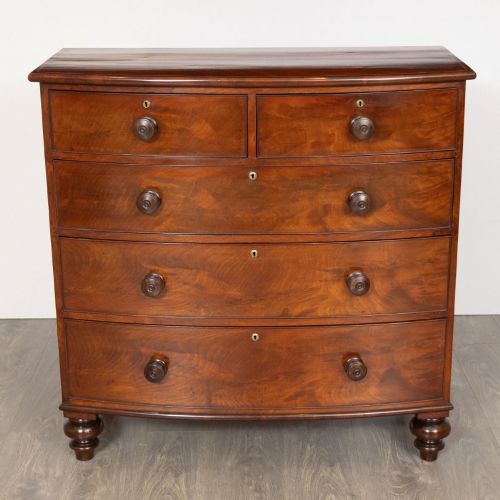
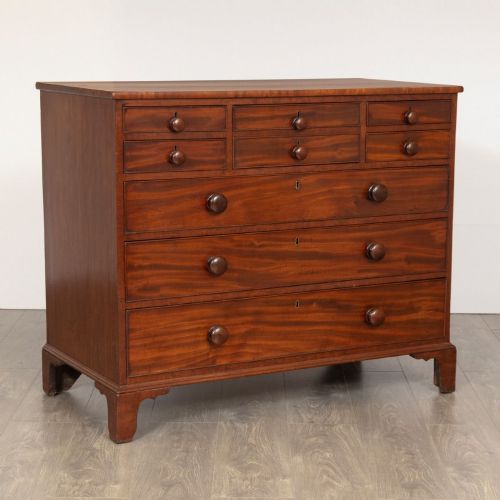
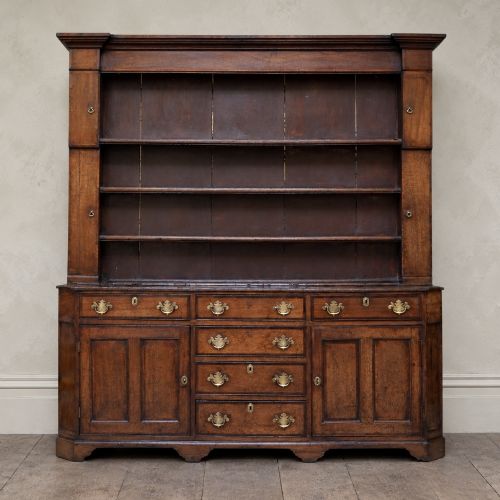
A mahogany storage dresser primarily appears as a chest of drawers or sideboard sharing solid timber construction and functional compartments. The listings demonstrate forms spanning standard rectangular chests, bow front chests, and serpentine shapes.
Buyers meet pieces originating from the George III era through the Edwardian period, alongside Regency and Victorian examples. Many incorporate specific configurations like four drawer layouts and two-over-three arrangements.
Origin details reveal regional variations, including Scotch chests alongside pieces carrying maker attributions. The overarching function remains holding textiles and household goods within sturdy wooden frames.
How they were made
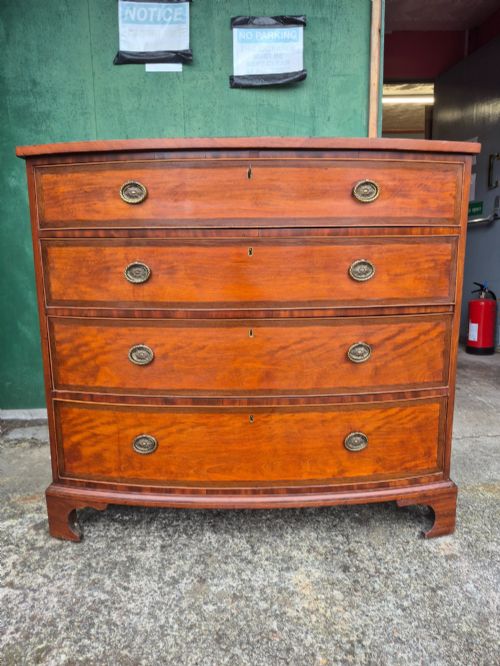
Cabinet makers utilised solid mahogany alongside flame mahogany veneer to cover structural carcases typically built from oak or general wood. Selected examples incorporate satinwood crossbanding for decorative contrast around the drawer edges.
Hardware consists of brass handles attached to drawer fronts, while internal components occasionally integrate bone or secondary timbers. Construction methods rely on traditional joinery tailored to support heavy loads of stored items.
Several chests hide secret compartments behind top mouldings, offering discreet storage for valuable documents.
What varies in quality
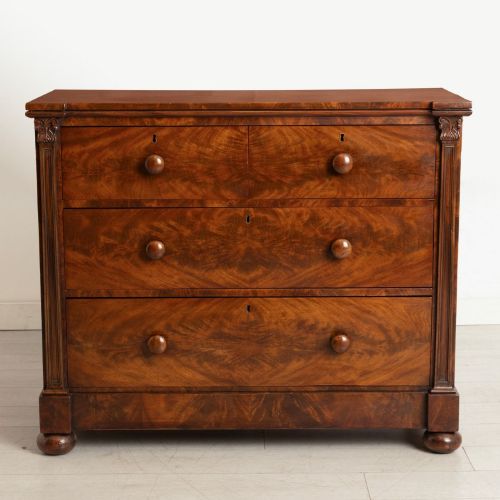
The degree of figuring in the mahogany veneer dictates the visual depth of the exterior surfaces, separating plain timber from highly patterned flame grain. Cabinet makers who selected superior logs achieved richer chatoyancy across the drawer fronts and top panels.
The precision of the serpentine or bow front shaping determines the complexity of the carpentry involved in the carcass construction. Finer execution shows in the crispness of the crossbanding and the integration of brass hardware.
Whytock And Reid·T And G Seddon·J Moorcroft
The Mahogany Storage Dresser Glossary
- Mahogany
- A durable tropical hardwood known for deep reddish brown tones that darken with age. It serves as the primary timber for the bodies and veneers seen across these listings.
- Flame mahogany veneer
- A thin slice of wood cut from fork joints to produce a fiery, rippled pattern. Cabinet makers applied this to drawer fronts for enhanced visual impact.
- Bow front
- A convex, curved frontal profile popular during the Georgian and Regency periods. This shape softens the rectilinear silhouette of standard storage furniture.
- Serpentine
- A gently undulating front edge featuring alternating convex and concave curves. It requires advanced woodworking skill to shape accurately.
- Crossbanding
- A narrow strip of veneer laid perpendicularly to the surrounding grain around the edge of a top or drawer. This technique frames the primary timber surface.
Mahogany Storage Dresser: Frequently Asked Questions
What periods do these dressers cover?
The pieces span the Georgian, Regency, Victorian, and Edwardian eras, encompassing years from the late eighteenth century through the early twentieth century.
Specific stylistic influences include George III, George IV, and Biedermoorer designs reflecting changing domestic tastes.
What is flame mahogany?
Flame mahogany is a highly figured veneer cut from specific parts of the tree where the grain twists and creates a flickering pattern. Cabinet makers reserved this material for prominent drawer fronts.
Its distinct grain captures light differently depending on the viewing angle.
How were these dressers used historically?
These pieces served primarily for domestic storage, holding garments, linens, and personal effects within deep drawers. Their robust construction suited daily use in bedrooms and formal living spaces.
Multiple drawer heights accommodated different categories of household goods.