

Mahogany Storage Dresser Chest
A mahogany storage dresser chest brings together deep timber grain and practical capacity, serving as a dependable anchor for any traditional bedroom.
Mahogany Storage Dresser Chest
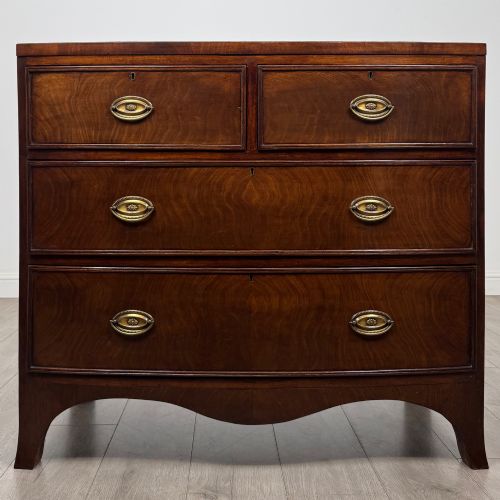
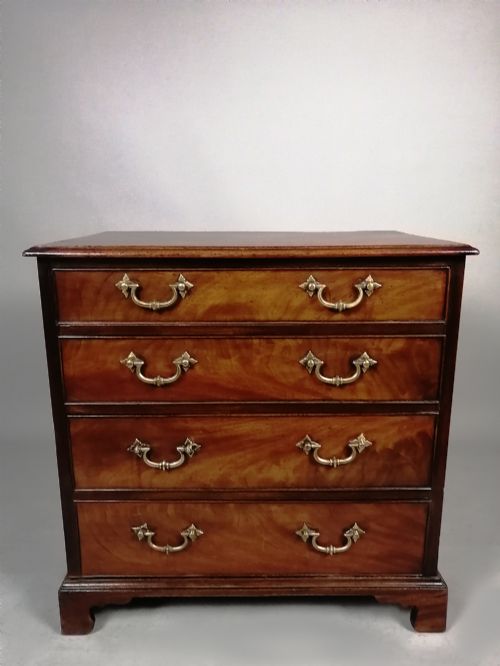
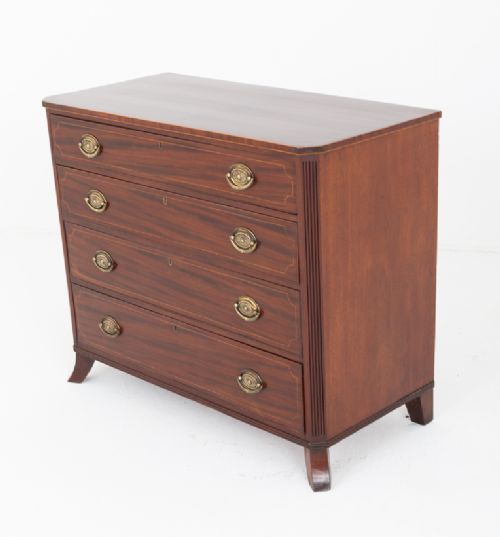
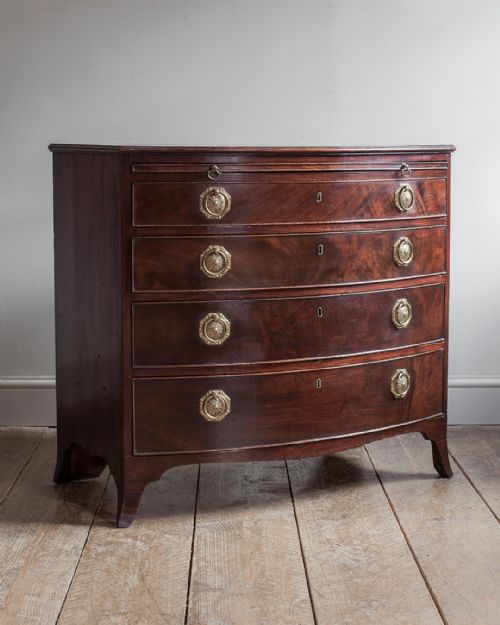
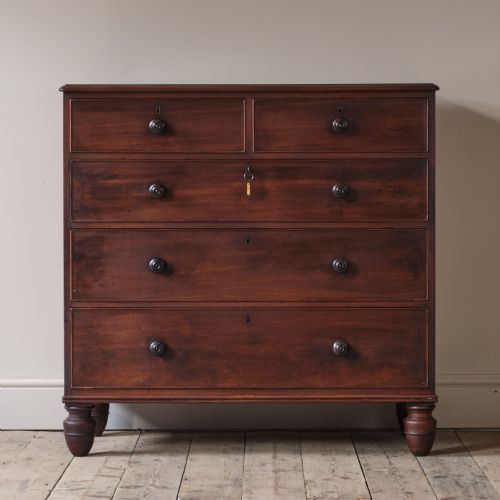
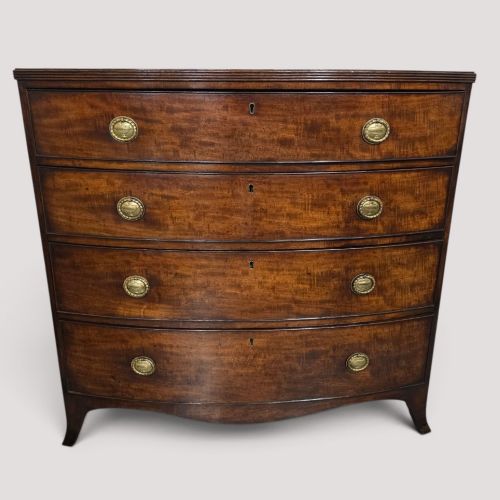
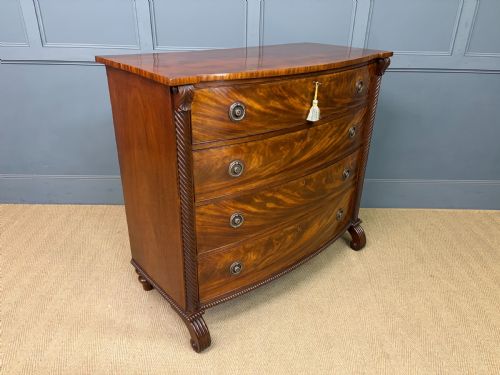
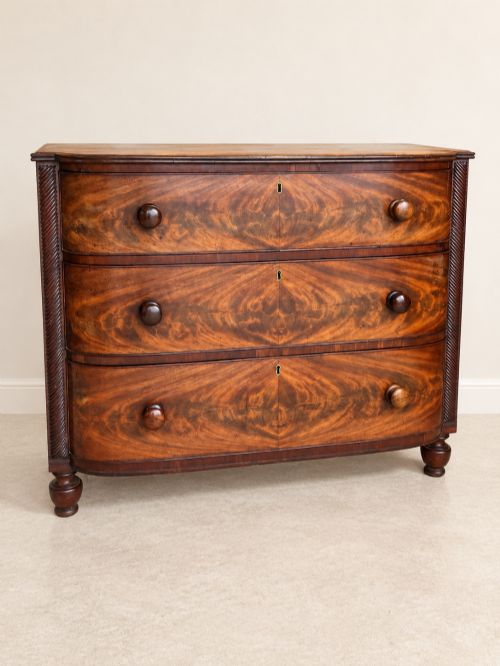
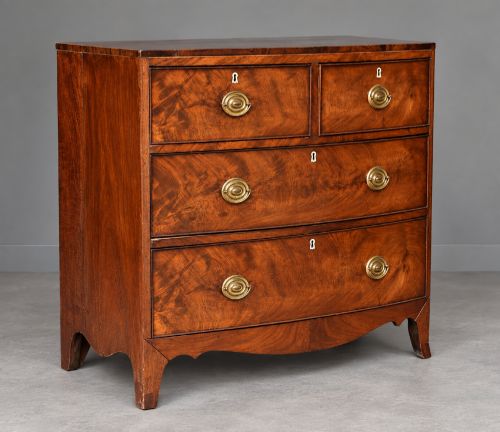
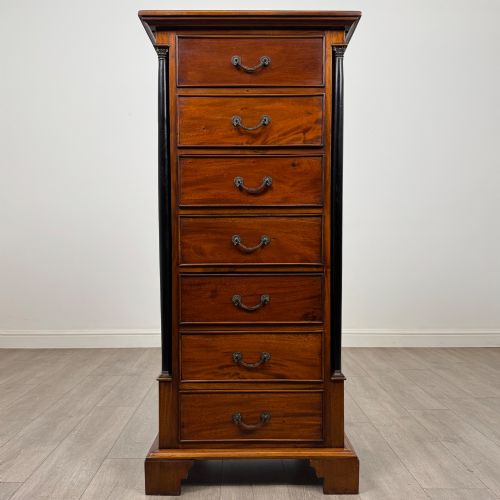
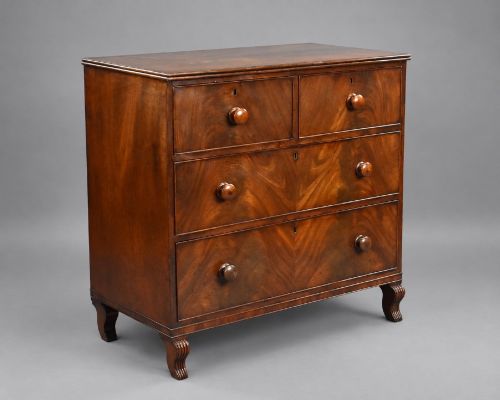
A mahogany storage dresser chest is fundamentally a case of drawers designed for utility and presence, appearing frequently across Georgian, Regency, and Victorian periods. These pieces provide deep horizontal drawers configured to hold clothing and household linens while displaying the rich reddish-brown tones of the timber.
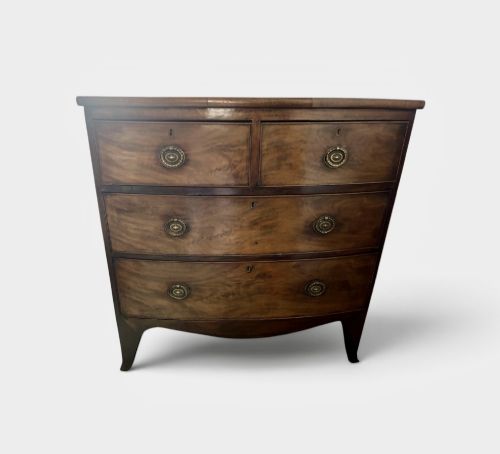
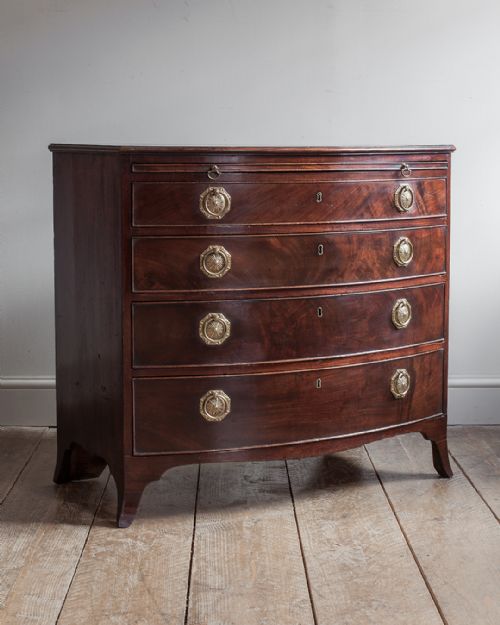
The versions most commonly met on this page take the form of bow-fronted or straight-fronted chests, often arranged in traditional drawer counts such as two short drawers over three long ones. Originating from workshops across Britain, they reflect stylistic shifts from the understated straight lines of the eighteenth century to the more flamboyant curves of the nineteenth.
Buyers encounter regional variations too, including Scottish formats and Scotch chests, alongside lighter Edwardian interpretations. Each iteration maintains the core function of generous storage wrapped in a handsome wooden exterior.
Materials and construction methods
Cabinet makers relied heavily on solid mahogany and flame mahogany veneer, chosen for their striking grain patterns and durability. Secondary timbers such as oak frequently appear inside the drawer linings and carcase backs for structural strength.
Decorative detailing often involved contrasting stringing in satinwood, crossbanded borders, and cast brass handles secured to the drawer fronts. These materials were shaped using traditional joinery techniques, ensuring the carcass remained stable and functional over centuries.
Some drawers hide secret compartments behind the top pelmet, giving past owners a private space for documents and small valuables.
Distinctions in quality and execution
Quality separates pieces through the selection of the timber veneer, where highly figured flame mahogany or carefully matched grain patterns distinguish superior examples from plain ones. The crispness of the hand-cut dovetails and the integrity of the secondary woods inside the drawers also indicate the level of craftsmanship.
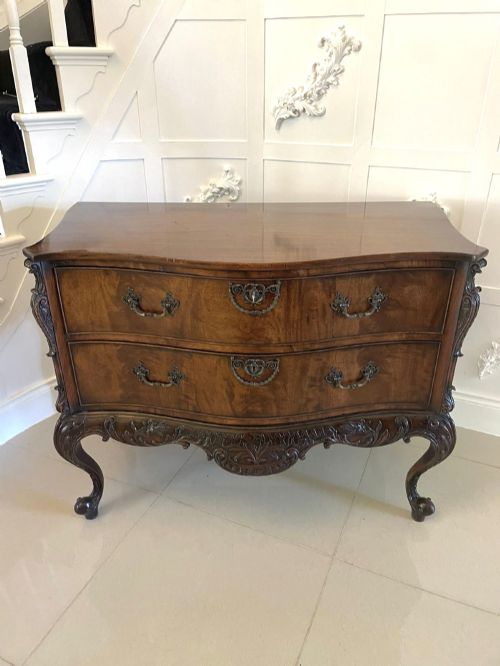
Proportion and decorative restraint dictate the upper tier of these chests, where subtle serpentine shaping or precise satinwood crossbanding enhances the piece without cluttering its form. Lesser examples rely on heavy, later additions or replaced hardware that disrupt the historical harmony of the design.
Whytock And Reid·T And G Seddon·J Moorcroft
The Mahogany Storage Dresser Chest Glossary
- Bow front
- A convex curved front profile popular in Georgian and Regency furniture design. This shape softens the room and adds visual depth to the timber grain.
- Crossbanding
- A strip of veneer applied perpendicularly to the main grain along the edges of a drawer or top. It creates a neat framing effect.
- Serpentine
- A shaped front featuring a central convex curve flanked by concave curves. This undulating line requires exceptional skill from the cabinet maker.
- Dovetail
- A traditional interlocking wood joint used to join drawer sides to drawer fronts and backs. Its strength prevents the corners from pulling apart under heavy use.
Mahogany Storage Dresser Chest: Frequently Asked Questions
How do I date a mahogany chest?
Dating relies on examining construction traits like drawer linings, handle styles, and foot forms. Earlier pieces utilise hand-cut dovetails and native secondary woods, while later Victorian and Edwardian examples show machine assistance and different timber choices.
Cabinet proportions and styling shifts, such as the transition from straight Georgian lines to ornate Victorian serpentine shapes, offer further clues to the decade of manufacture.
Where should I place it?
These chests fit well in bedrooms, hallways, or living rooms where both surface display space and deep drawer capacity are useful. Their finished wooden backs occasionally permit placement away from a wall, though most sit flush against one.
Direct sunlight should be avoided to prevent the rich mahogany polish from fading or the timber from drying out unevenly over time.
How do I care for the wood?
Maintaining the finish requires dusting with a soft, dry cloth and avoiding silicone-based polishes that build up residue. Periodic application of a quality beeswax helps nourish the grain and protects against dryness.
Keeping the piece away from direct heat sources, such as radiators, prevents the timber from warping and keeps the drawer joints moving smoothly.
What is a scotch chest?
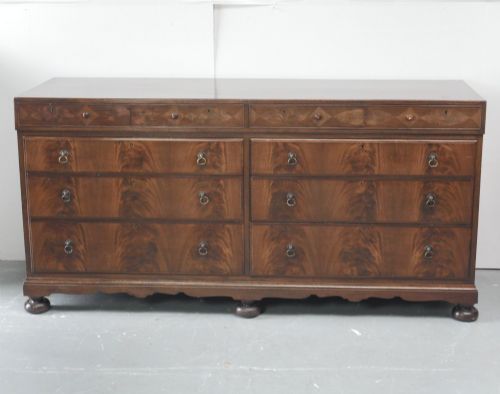
A Scotch chest is a regional variation typically characterised by a bold central cushion drawer situated above standard banks of smaller drawers. These pieces often display exceptionally striking flame mahogany veneers.
Their robust proportions and distinctive top drawer layout make them easily distinguishable from standard English models of the same period.