

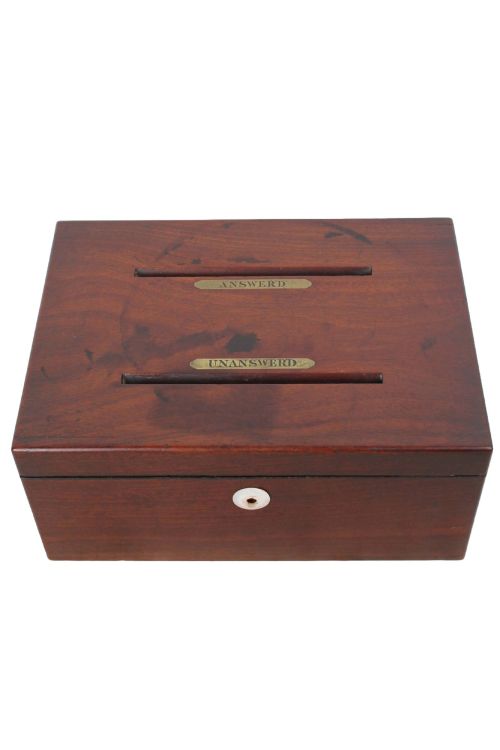
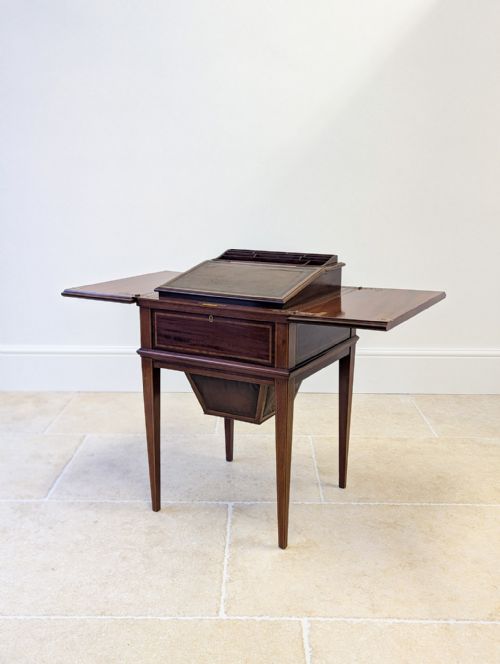
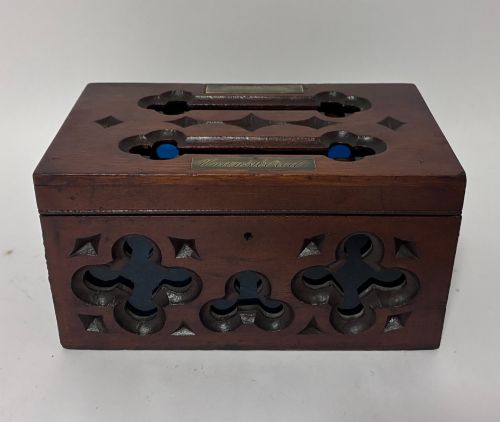
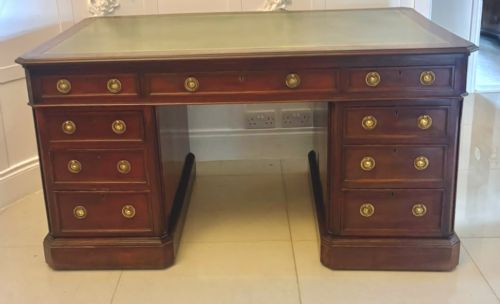


Mahogany Stationery Desk
A mahogany stationery desk organises correspondence with fitted compartments and drop-front slopes, uniting practical workspace storage with rich timber grain.
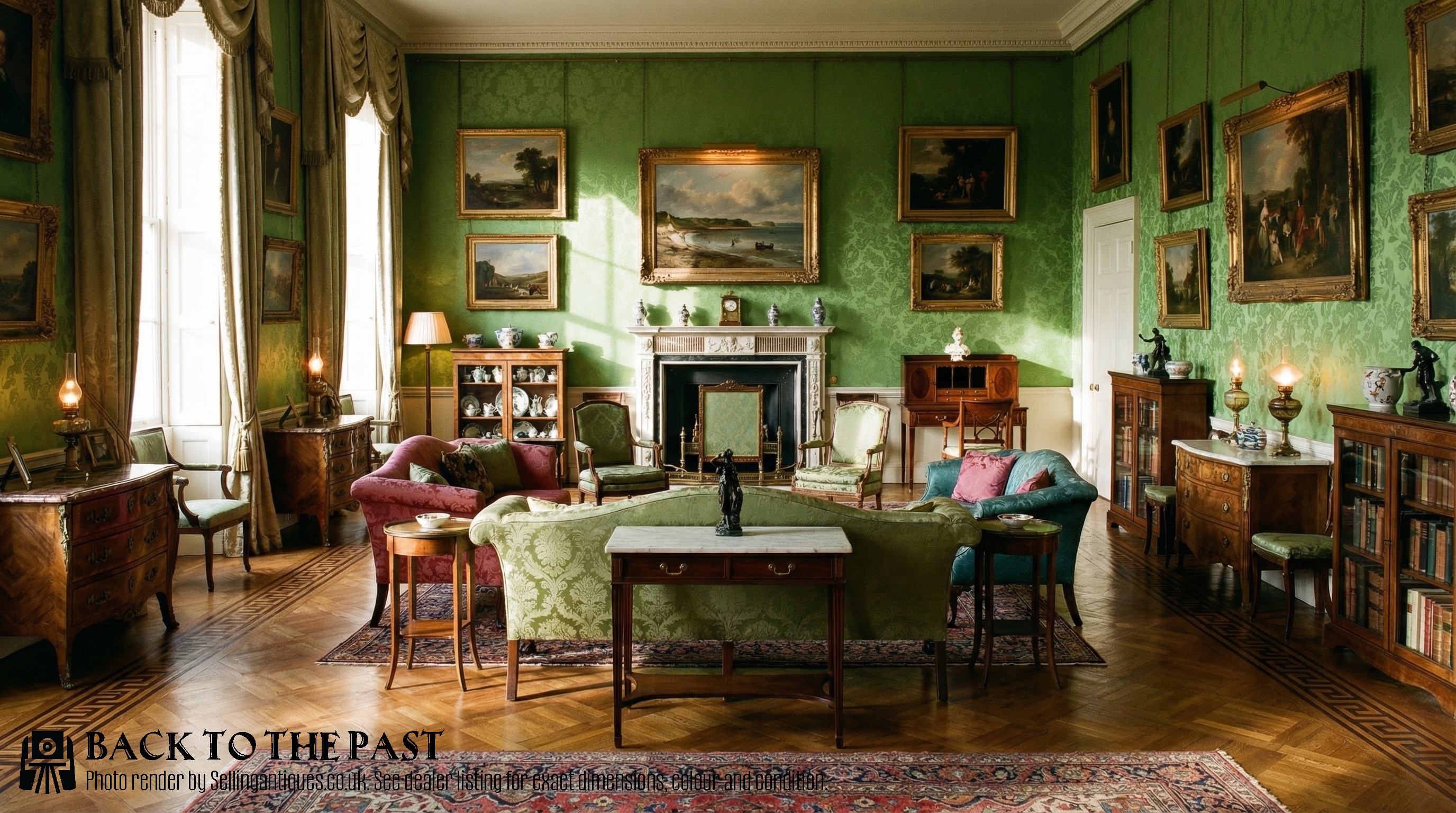
Mahogany Stationery Desk
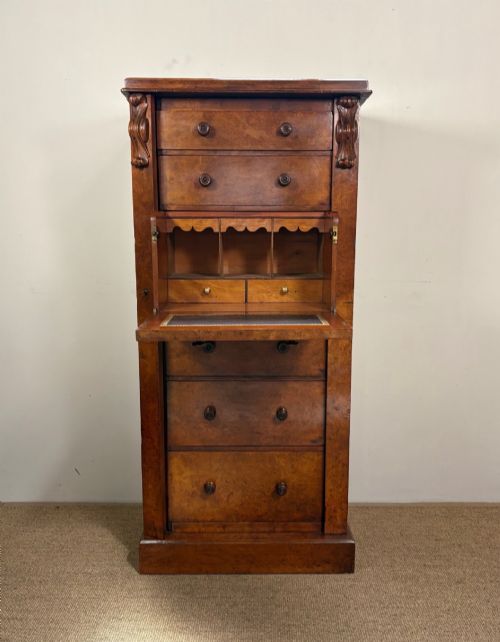
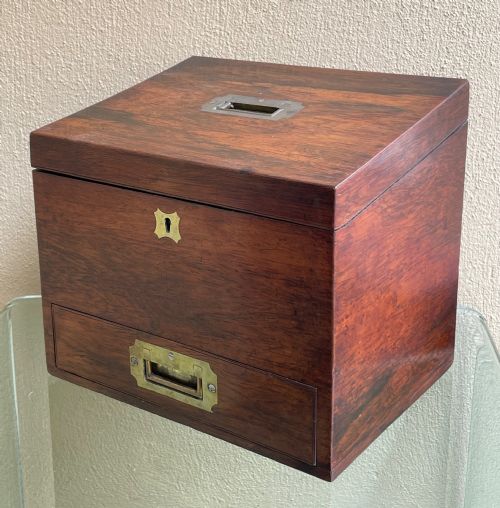
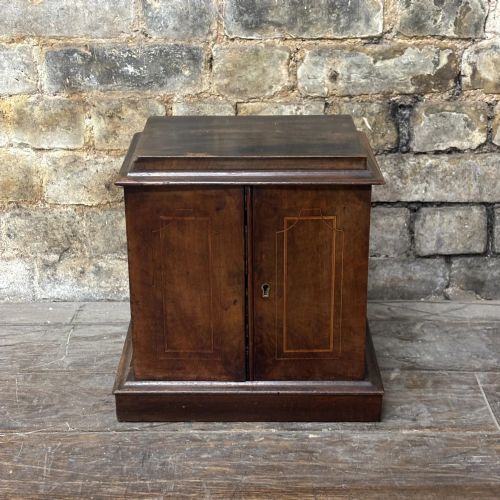
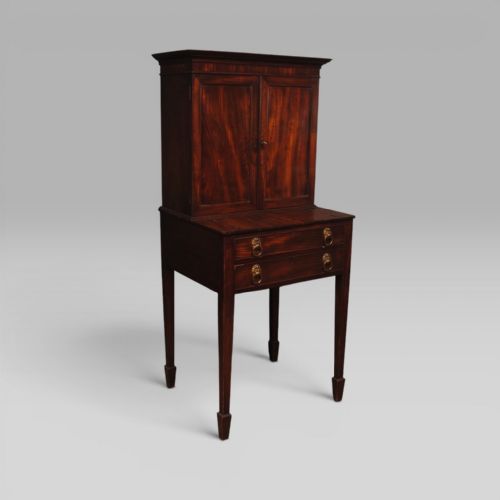
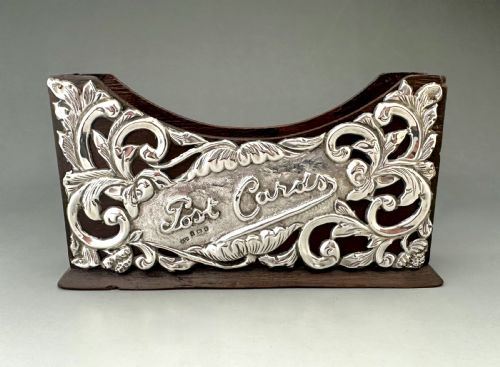
A mahogany stationery desk encompasses writing tables, bureau forms, slope boxes, and tiered correspondence cabinets designed for paperwork. Pieces span the Georgian, Regency, Victorian, and Edwardian periods, showcasing shifts from austere campaign brass bindings to delicate Sheraton Revival inlay.
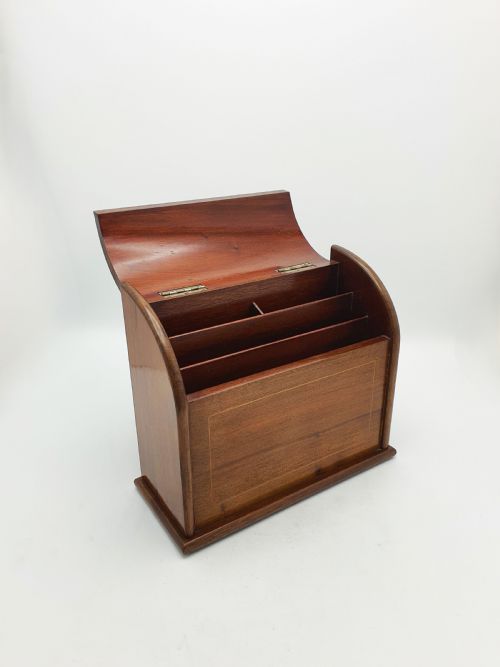
Buyers frequently encounter fold-out writing slopes, tabletop letter holders, and kneehole pedestals fitted with internal pigeonholes and small drawers. These variants reflect both domestic correspondence needs and the portable requirements of 19th-century travellers.
Materials and construction methods
Cabinet makers utilised dense timber, constructing primary structures from solid mahogany alongside figured veneers. Secondary timbers and structural linings often incorporated boxwood, satinwood, and hardwood elements.
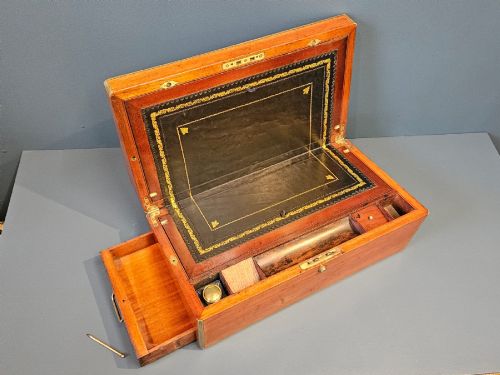
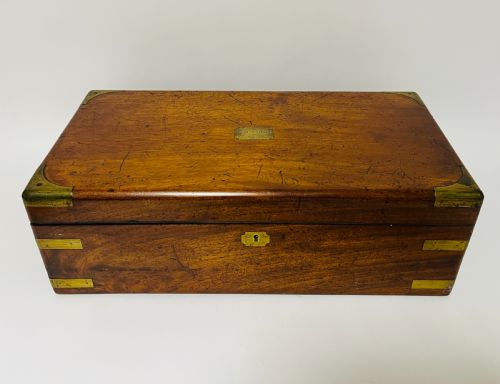
Metalwork played a structural and decorative role, featuring flush brass carrying handles, campaign corner brackets, and hinged locking mechanisms. Writing surfaces frequently integrated tooled leather inserts to provide a durable platform for ink and nib.
Secret spring-loaded drawers hide beneath pigeonholes in several slope boxes, built to secure private letters from prying eyes.
Distinguishing quality factors
The sophistication of internal joinery dictates standard, separating standard utilitarian boxes from elite cabinet work. Superior examples feature secret compartments, fine dovetailing on drawer carcasses, and well-balanced metamorphic opening actions.
The choice of decorative detail distinguishes the tier of manufacture. Finely figured timber grain, precise contrasting stringing in boxwood or satinwood, and heavy cast brass mounts indicate superior workshop production.
J.C Vickery of London·Mappin & Webb·Asprey London
The Mahogany Stationery Desk Glossary
- Writing slope
- A portable box with a hinged sloping lid that opens to reveal a slanted surface for correspondence.
- Campaign
- Describing furniture built in separable sections with recessed brass fittings for military transport.
- Pigeonhole
- A small, open compartment within a desk interior used for sorting letters and documents.
- Stationery cabinet
- An upright tabletop chest fitted with tiered slots and doors to organise correspondence.
- Inlay
- A decorative technique where contrasting woods like satinwood or boxwood are inserted into the primary timber surface.
Mahogany Stationery Desk: Frequently Asked Questions
How do I date a mahogany stationery desk?
Dating relies on architectural proportions, secondary wood choices, and construction methods. Georgian pieces lean toward restrained lines, while Victorian and Edwardian examples incorporate richer carving or lighter inlaid veneers.
Hardware offers further clues. Flush brass mounts point toward mid-century campaign designs, whereas integrated brass galleries and delicate stringing usually signal later Edwardian production.
What is the difference between a slope and a cabinet?
A writing slope is a portable box that folds down to present an angled writing surface. These pieces usually contain internal inkwells and pen trays.
A stationery cabinet remains upright on a desk or table, providing vertical slots and pigeonholes for organising correspondence without offering a built-in writing plane.
Were these desks used for travel?
Portable writing boxes and campaign desks were designed for officers and administrators on the move. They incorporated secure locks, brass corner guards, and flush carrying handles to withstand transit.
Stationery cabinets and pedestal kneehole desks remained stationary in country houses, estate offices, and urban parlours.
How should I care for the leather writing surface?
Many desks feature gold-tooled leather inserts that require gentle cleaning and periodic conditioning to prevent drying. Avoid using harsh chemical solvents near the original hide or timber polish.
Keep these pieces away from direct sunlight and dramatic humidity changes to protect both the leather top and the mahogany veneer.