



Mahogany Stacking End Tables
Mahogany stacking end tables bring together clever nesting design and rich timber, offering a practical surface set that slides away neatly.
Mahogany Stacking End Tables
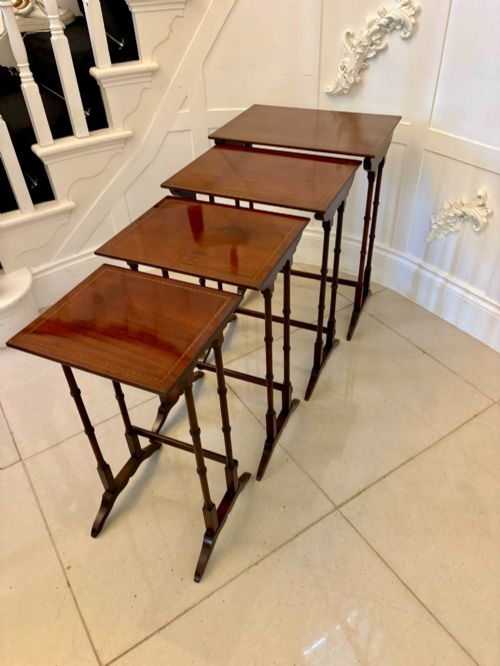
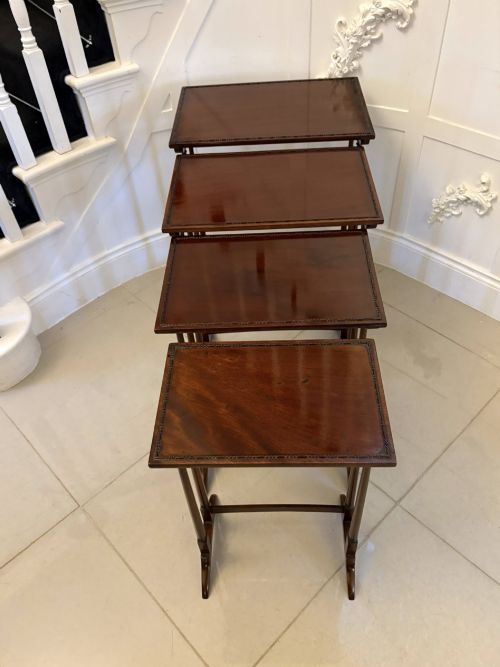
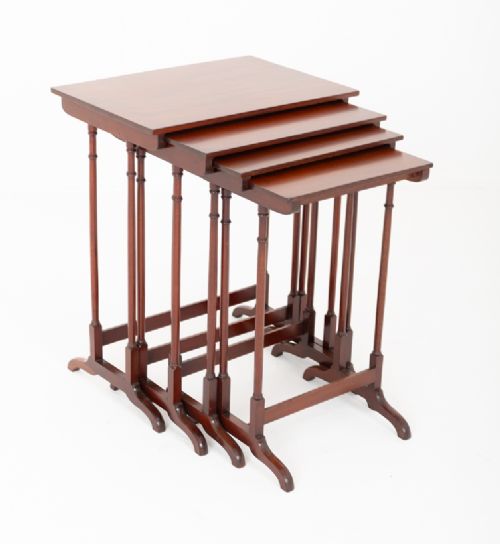
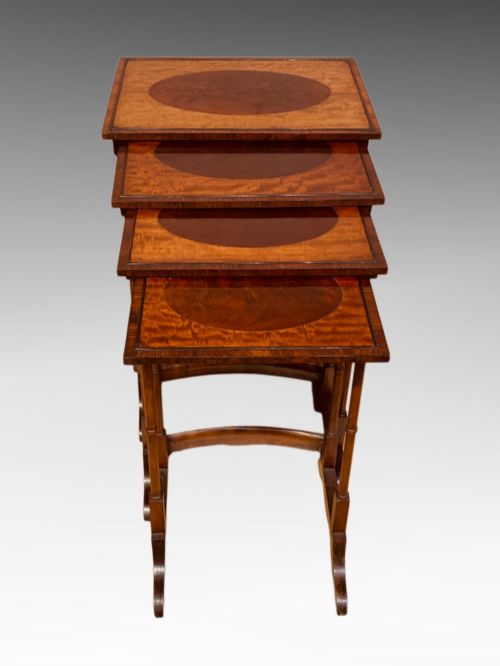
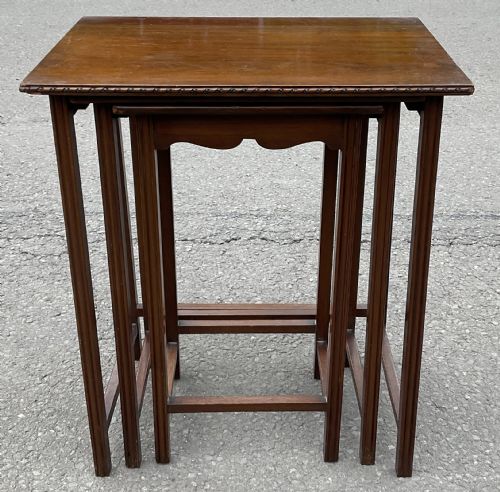
Mahogany stacking end tables are practical sets of matching tables designed to tuck neatly beneath one another when floor space is at a premium. You will most frequently encounter Edwardian and 19th Century examples on this page, often formed of four graduated tables that slide into a single footprint.
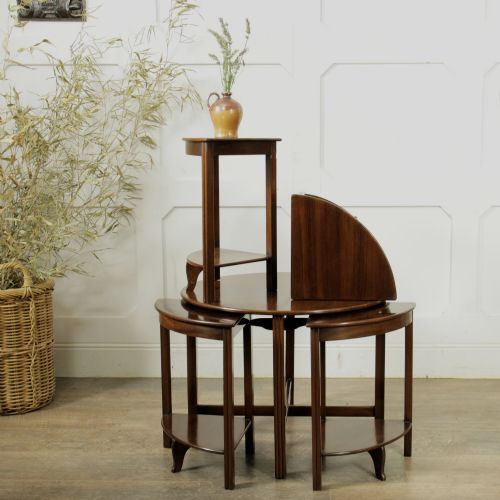
The forms range from circular five-table nests to rectangular quartetto sets and occasional side tables. Period pieces from the Victorian and Edwardian eras dominate the selection, alongside Regency Revival and Georgian Revival interpretations from the early twentieth century.
Originating as versatile space-saving furniture for drawing rooms and parlours, these tables serve today as flexible side pieces beside seating. The smaller tables pull out easily for serving tea or holding books before sliding back into their proper order.
How they were made
Cabinet makers utilised solid mahogany and mahogany veneers, often selecting the timber for its warm grain and deep tone. Workshops shaped the frames to form stable gradated structures that allow each smaller table to clear the legs of the one above it.
Many pieces incorporate delicate contrasting stringing and banding in boxwood and satinwood inlay. Selected tables feature inset leather surfaces or glass tops, combining decorative timberwork with durable functional inserts.
Some Edwardian hosts deployed five tiny tables in a circle, testing guests' dexterity with tea cups.
What varies in quality
The refinement of the timber selection and the precision of the inlay set apart the finest examples from standard pieces. Finer sets display carefully matched mahogany grains across the table tops and crisp, unbroken boxwood stringing.
Structural stability during the sliding and stacking action distinguishes superior manufacture. A well-made nest glides smoothly into position with minimal clearance and uniform gaps between the frames.
Waring and Gillow
The Mahogany Stacking End Tables Glossary
- Quartetto
- A set of four tables designed to nest together. This term frequently appears in Edwardian descriptions.
- Inlay
- A decorative technique where contrasting woods like satinwood or boxwood are embedded into the mahogany surface. This creates borders and geometric patterns.
- Nest of tables
- A group of graduated tables sized to fit one beneath another. They save space when not in use.
- Stringing
- A narrow line of contrasting inlay used to outline table tops and edges. It frames the central mahogany panel.
Mahogany Stacking End Tables: Frequently Asked Questions
What is a quartetto nest?
A quartetto nest refers specifically to a set of four tables designed to slide neatly beneath one another. The term appears often in Edwardian furniture descriptions.
These sets were popular in period drawing rooms because they provided multiple surfaces without cluttering the floor.
How do I date these tables?
Dating relies on stylistic details, timber characteristics, and construction methods seen across Victorian and Edwardian examples. Edwardian pieces often feature lighter mahogany tones and delicate boxwood inlay.
Earlier Victorian and nineteenth-century versions typically display denser timber and simpler silhouettes without revival styling.
Are these tables sturdy enough for daily use?
Period nesting tables are built to hold lamps, books, and cups when properly maintained. The interlocking design provides inherent stability when the pieces rest on a flat floor.
Care should be taken when sliding the smaller tables in and out to avoid scratching the polished mahogany legs.
What styles are common here?
Edwardian and Edwardian Revival designs make up the largest share of the listings on this page. You will also find Regency Revival and Georgian Revival pieces from the early twentieth century.
English country house aesthetics influence several of the simpler mahogany and inlaid variations.