



Mahogany Spoonback Chairs
Mahogany spoonback chairs are characteristic Victorian seating forms, offering comfortable padded backs and rich timber frames that anchor a traditional room.
Mahogany Spoonback Chairs
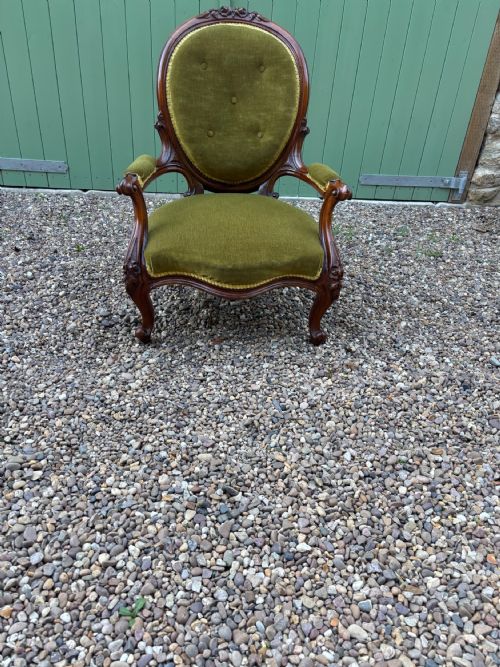
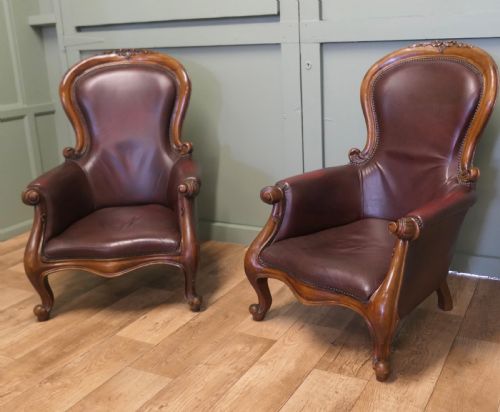
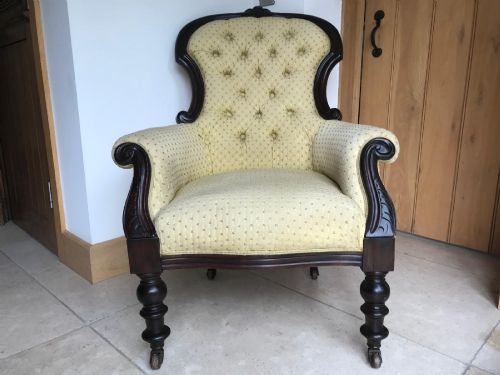
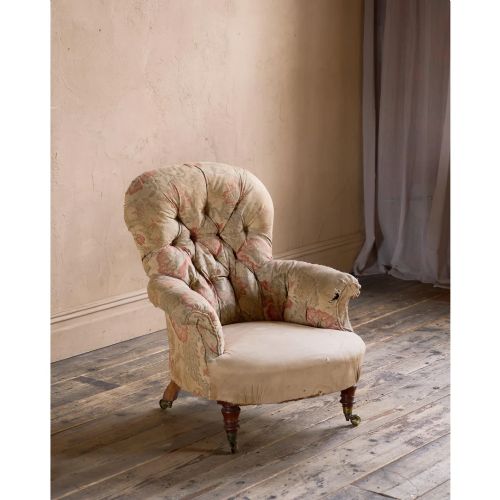
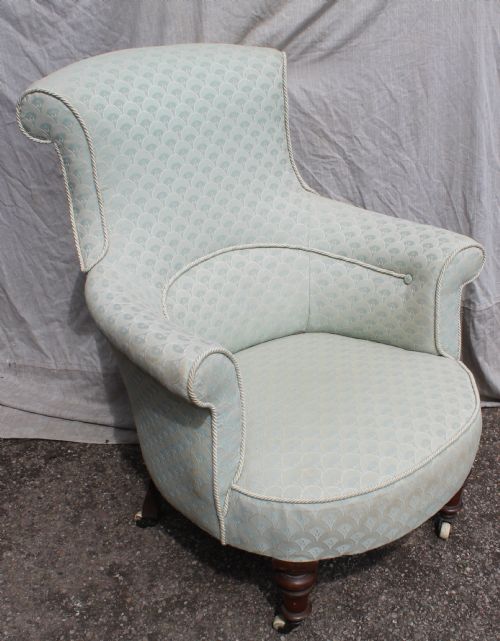
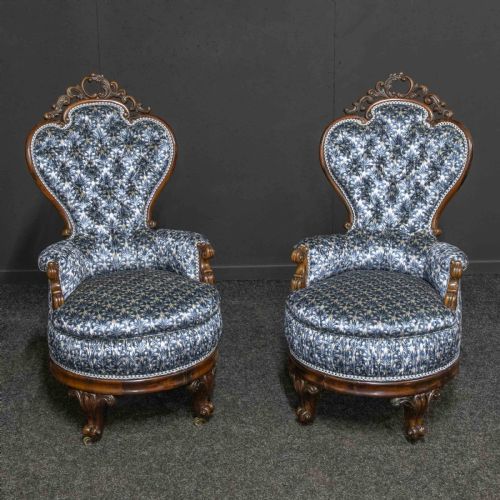
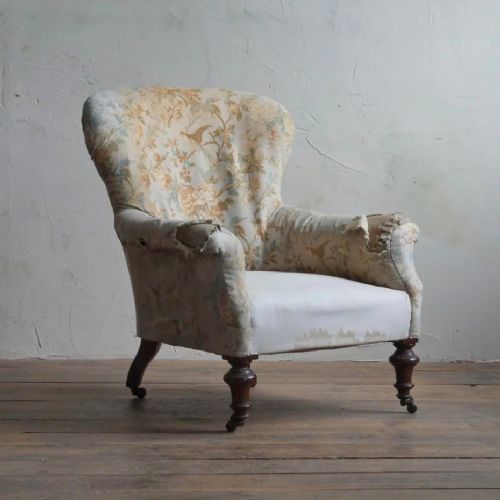
When you search for mahogany spoonback chairs, you encounter nineteenth-century seating designed for parlours, bedrooms and firesides. These Victorian pieces include armchairs, gentleman's and ladies' open armchairs, nursing chairs and full salon suites.
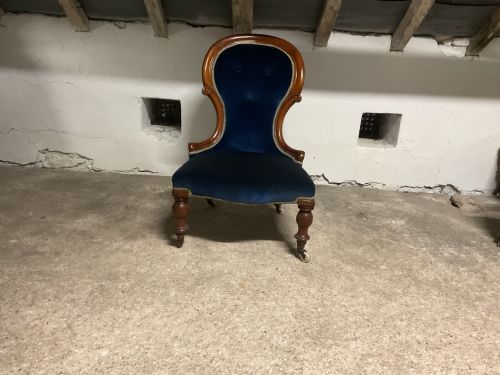
The form is defined by an oval or rounded upholstered back that curves inward like the bowl of a spoon, supported by a solid mahogany frame. You will frequently find them set upon cabriole legs or fitted with ceramic castors.
How they were made
Cabinetmakers constructed the structural frames using dense mahogany, occasionally shaping the wood with carved details. Frames were then joined and fitted with internal webbing and stuffing before being finished with top covers.
Upholstery materials varied widely to suit the intended room, utilising leather, velvet, brass studding and patterned fabrics. Hardware such as metal and ceramic castors was fitted to the base of the legs for ease of movement across carpets.
Victorian ladies required armless chairs so their voluminous crinoline skirts would not get trapped during polite parlour seating arrangements.
What varies in quality
The distinction between standard parlour seating and finer pieces rests in the depth of timber carving and the elegance of the frame proportions. Heavier, plain wood frames occupy one end of the scale, while crisp mouldings and shaped cabriole supports rise above them.
Quality also shows in the ambition of the set, ranging from single fireside chairs to matched pairs and larger six-piece salon suites. The integration of maker signatures, such as work by Holland & Sons or C. Hindley & Sons, elevates specific examples.
Holland & Sons·C. Hindley & Sons
The Mahogany Spoonback Chairs Glossary
- Spoon back
- A chair back shaped with a concave oval contour resembling a spoon, designed to fit the human spine. This ergonomic Victorian innovation provides substantial lower back support.
- Cabriole leg
- A furniture leg that curves outward and then tapers inward, typically ending in a pad or scroll foot. It is a defining feature of mid-nineteenth-century styling.
- Salon suite
- A matching set of upholstered seating designed for a formal drawing room or parlour. These groupings usually consist of a sofa alongside several armchairs and occasional chairs.
- Gentleman's chair
- A larger, wider open armchair with arms, built for male comfort during the Victorian period. They are typically paired with smaller ladies' or nursing chairs.
- Ceramic castors
- Small wheels made of porcelain or pottery fitted to the bottom of chair legs to protect carpets and allow smooth movement. They are often mounted in brass collars.
Mahogany Spoonback Chairs: Frequently Asked Questions
How do I date a mahogany spoonback chair?
Dating these chairs relies on examining the timber, leg style, and construction methods. Most examples on record date from the Victorian era, specifically between eighteen fifty and eighteen eighty.
Early pieces often feature rosewood or rich mahogany with simple scrollwork, while later Victorian versions frequently incorporate cabriole legs and ceramic castors. Maker stamps, where present, offer a more precise timeline.
Were these chairs used in bedrooms?
Yes, many smaller variations were designed specifically for domestic chambers. Bedroom and nursing chairs were built lower to the ground to assist with dressing and childcare.
These personal seating pieces retained the characteristic mahogany frame and curved back while offering a more compact footprint than the main parlour armchairs.
What is the difference between a gentleman's and a lady's chair?
Gentleman's chairs were built with wider seats and open arms to accommodate male attire and posture in the nineteenth century. They provided a commanding presence by the fireplace.
Lady's chairs were typically constructed without arms, or with very low arms, to accommodate the wide crinoline skirts worn by Victorian women. They often matched the larger gentleman's chair in a set.