
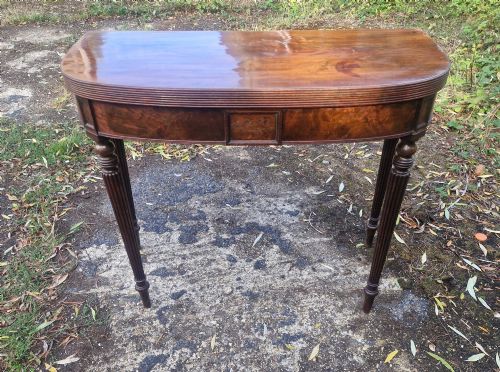
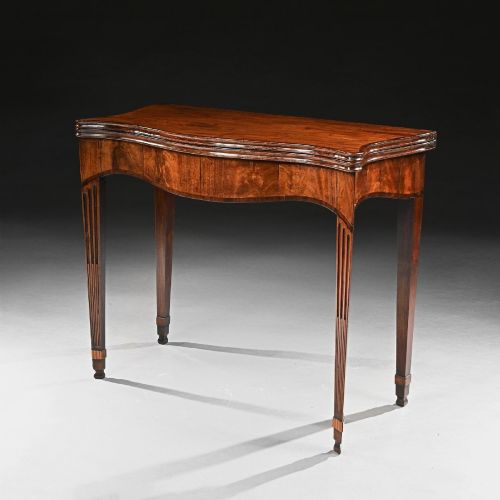
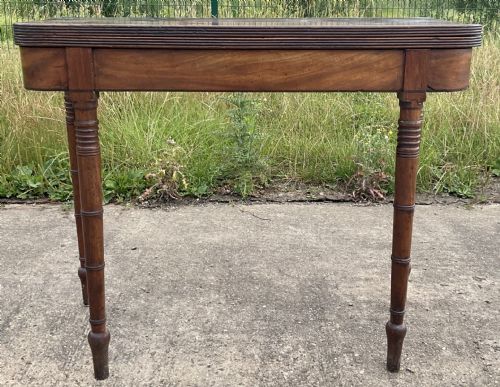
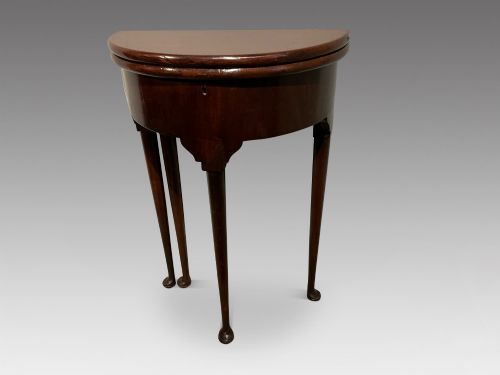


Mahogany Side Table Foldover
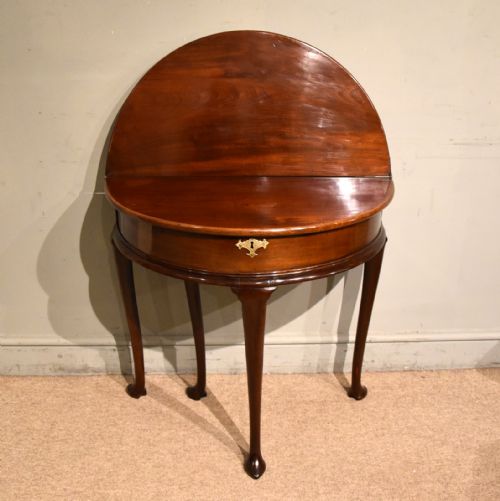
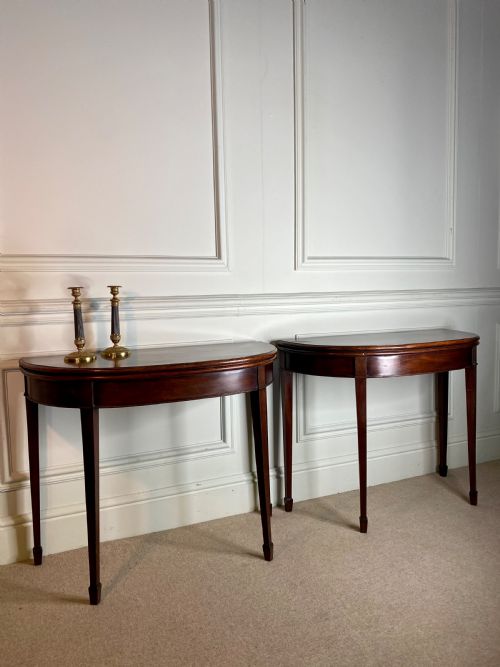
A mahogany side table foldover brings adaptable surfaces and rich timber grain to a room, shifting easily from a slim console to a serving or playing top.
Mahogany Side Table Foldover
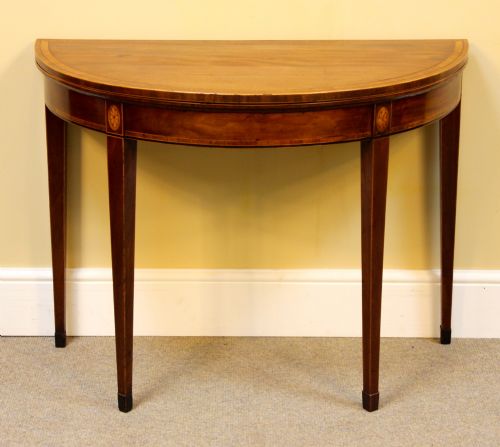
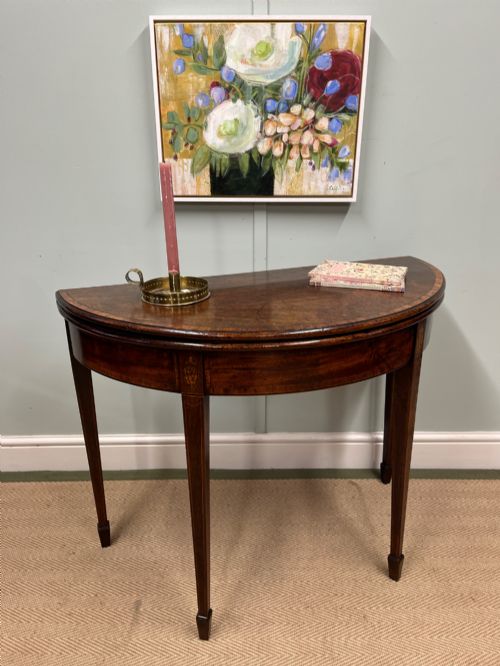
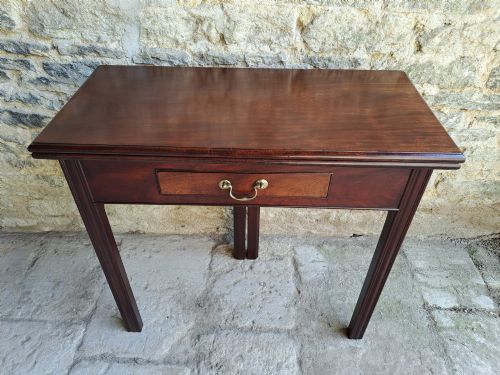
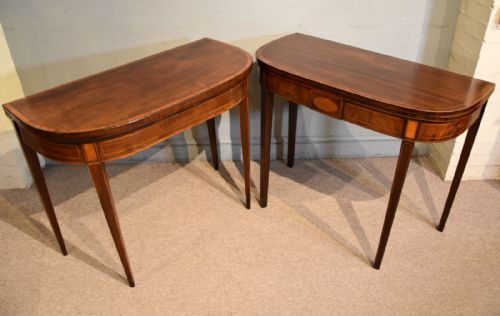
A mahogany side table foldover functions as a versatile piece designed to double its surface area when the hinged leaf swings open. Buyers encounter these primarily as tea tables, card tables, and games tables originating from the Georgian, Regency, and nineteenth-century periods.
The physical formats vary from rectangular D-shaped designs to demi-lune and serpentine shapes that fit neatly against a wall. Many examples incorporate clever structural pivots or gateleg actions to support the opened leaf safely during use.
Materials and construction
Cabinetmakers utilised solid timber alongside fine wood veneer, frequently selecting Cuban mahogany for its deep colour and pronounced grain pattern. Workshops enhanced surface details by incorporating boxwood and satinwood inlay around the borders and friezes.
Structural elements often involved brass fittings, hinges, and occasional pivoting supports such as lyre bases. Joinery relied on traditional methods to ensure stability when the heavy timber leaves shifted position.
Listings feature mahogany side table foldover pieces spanning the Georgian, Regency, Edwardian, and 1930s eras, utilising boxwood and satinwood inlay.
Distinctions in craftsmanship
The tier of a piece rests heavily on the selection of timber and the precision of the cabinetmaker's hand. Superior examples display carefully matched wood grain across the foldover top and crisp carving along the legs or aprons.
Integration of contrasting wood inlay and the crisp execution of serpentine or demilune curves elevate the visual weight of the furniture. Finer works also maintain smooth mechanical movement within the hinges and folding leaf supports.
Gillows
The Mahogany Side Table Foldover Glossary
- Foldover top
- A hinged wooden surface that doubles the table top area when opened out. It rests on a pivoting or swinging leg frame.
- Demi-lune
- A half-moon shape designed to stand flat against a wall. These tables often function as card or tea surfaces.
- Serpentine
- A curved edge profile featuring a convex centre flanked by concave sides. This line requires skilled hand shaping in solid mahogany.
- Boxwood inlay
- Contrasting pale wood strips set flush into the darker mahogany surface. It creates decorative geometric or linear borders.
- Lyre base
- A central support carved in the symmetrical shape of a classical Greek lyre instrument. It appears frequently on Regency period tables.
Mahogany Side Table Foldover: Frequently Asked Questions
What is a foldover table used for?
These tables served primarily for tea service or card games in domestic parlours. When closed, they occupied minimal space against a wall as a decorative side console.
Opening the leaf provided a stable baize-lined or polished wooden surface for evening entertainment. This dual function made them essential furniture for Georgian and Regency homes.
How do I date a mahogany table?
Dating relies on observing the combination of timber selection, leg style, and construction methods. Earlier eighteenth-century pieces often feature Cuban mahogany and distinct Chippendale or George II carved details.
Later Regency and nineteenth-century examples introduce brass mounts, lyre supports, and sharper geometric inlays. Comparing leg turning and edge profiles against known period styles confirms the era.
How do I care for mahogany surfaces?
Maintenance requires keeping the timber away from direct sunlight and sudden temperature shifts to prevent warping. Regular dusting with a soft, dry cloth preserves the natural lustre of the polish.
Avoid placing damp items or unsealed containers directly onto the historic wood finish. Periodic waxing nourishes the vintage grain without building up heavy residues.
What is the difference between a card and tea table?
Card tables traditionally feature an interior lined with green baize or felt to cushion the placement of playing pieces and cards. They often include small corner wells for coins or counters.
Tea tables present a finished mahogany surface on both the inner and outer leaf for serving beverages. Both utilise the same fundamental foldover mechanism despite their distinct interior treatments.