



Mahogany Side Table Chest
Mahogany side table chest pieces combine compact storage with timber warmth, making them essential for traditional bedroom and parlour arrangements.
Mahogany Side Table Chest
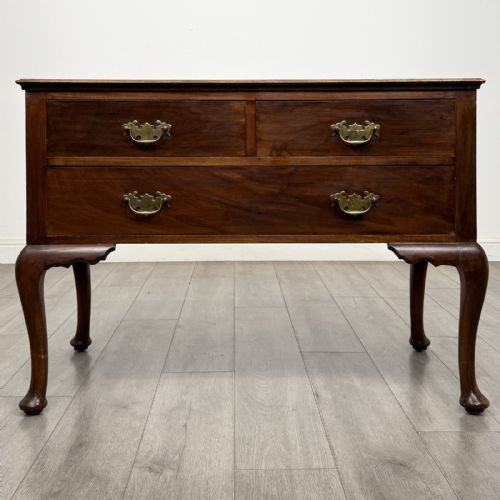
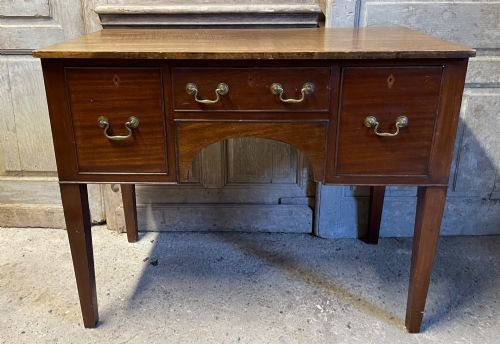
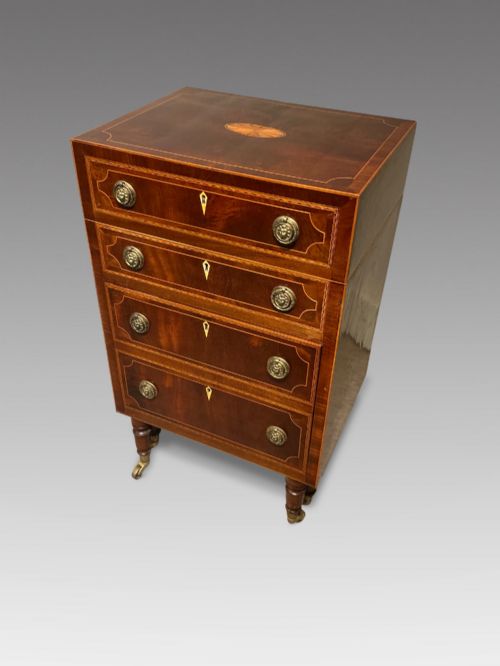
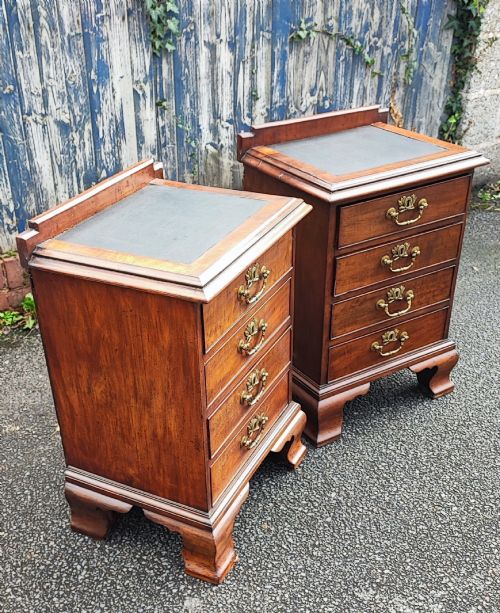
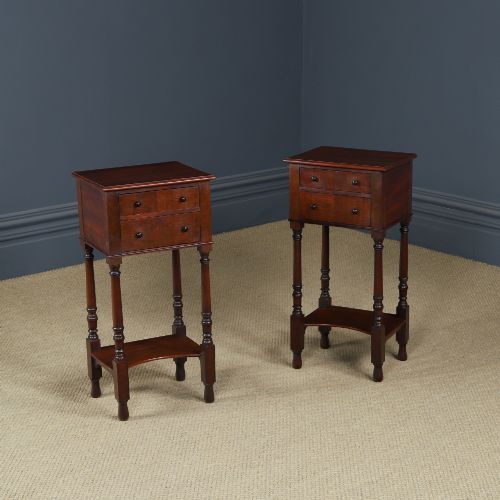
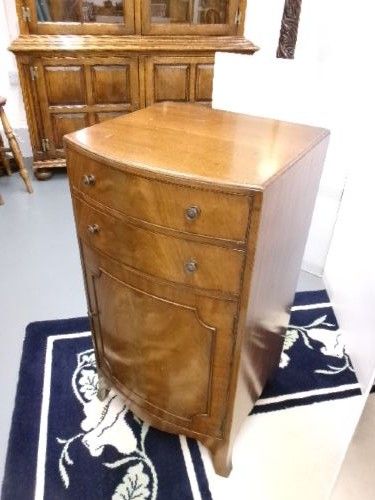
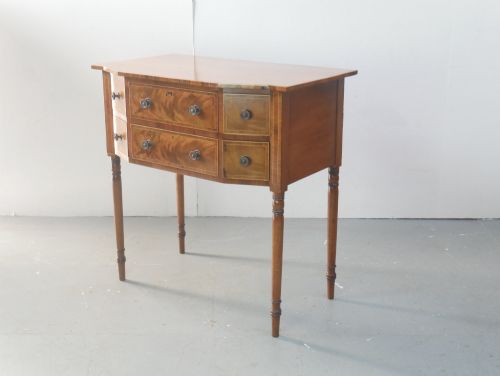
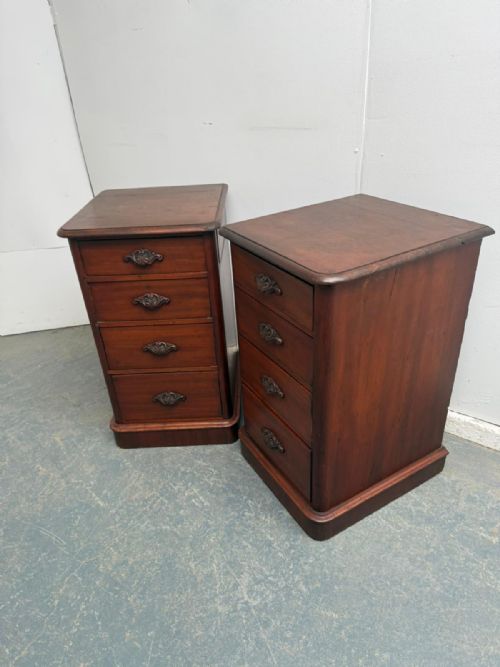
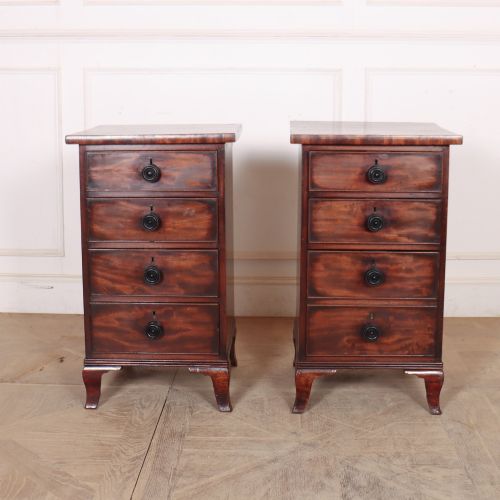
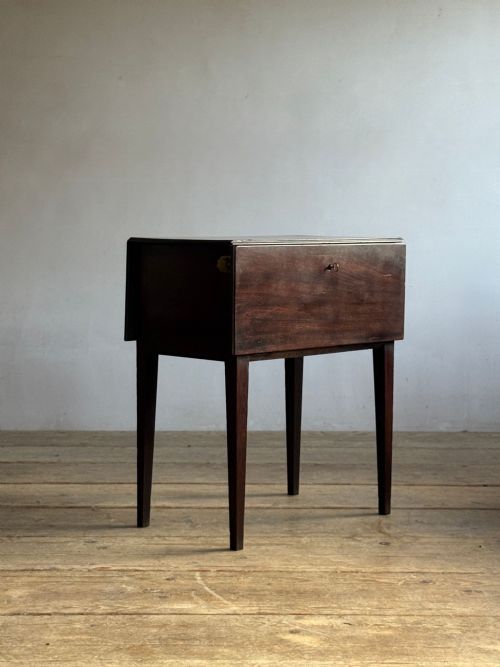
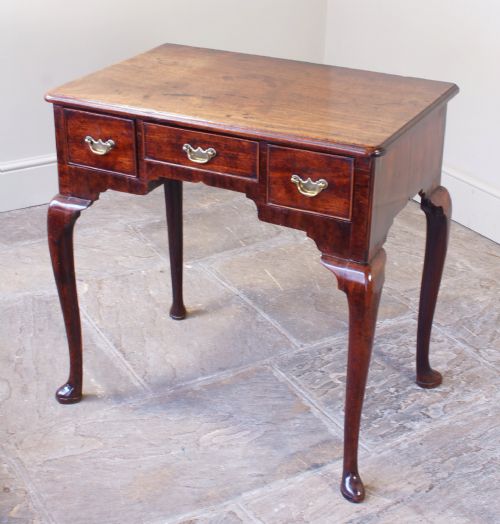
A mahogany side table chest encompasses various domestic forms designed for storage and display, appearing frequently as bedside cabinets, lowboys, and work tables. These items bridge the gap between open side tables and enclosed drawer chests, offering surface utility alongside concealed compartment space.
The selection ranges across several eras, featuring pieces originating from the eighteenth century through the Edwardian period and the early twentieth century. Georgian and Victorian examples sit alongside later revivals, displaying forms such as bow fronts, serpentine shapes, and pedestal designs.
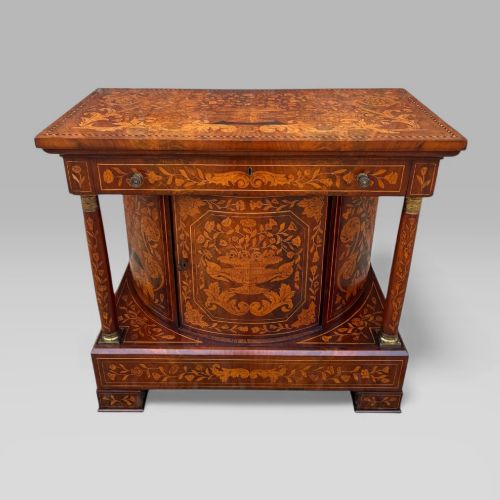
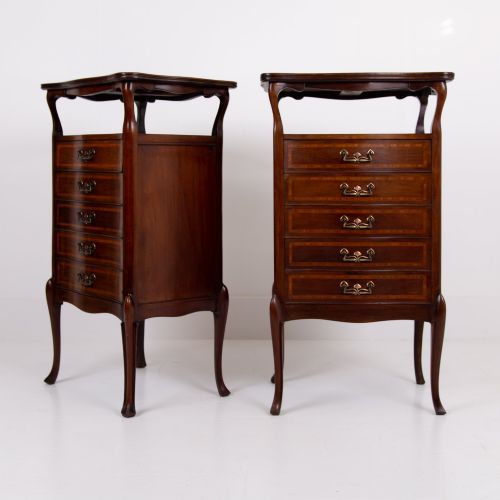
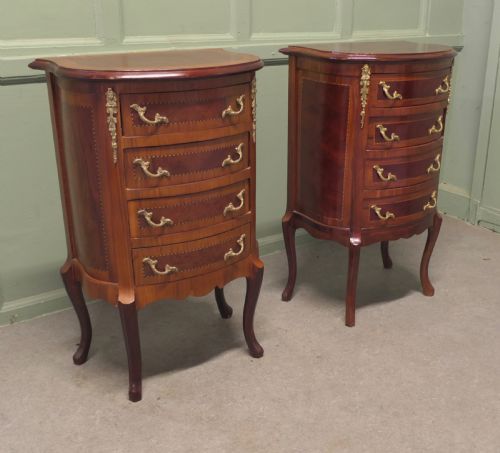
Origins span English workshops alongside continental interpretations, including French and Dutch designs that utilise marquetry or ormolu mounts. Buyers encounter diverse proportions, from tall six-drawer cabinets to low compact lamp tables.
Materials and Construction
Makers utilised solid mahogany and wood veneers over secondary timbers, frequently incorporating satinwood and fruitwood for contrasting marquetry details. Structural elements relied on tight joinery, dovetail drawer construction, and panelled backs.
Surface treatments included hand-waxed finishes that highlight the grain, alongside lacquer applications on specific oriental-influenced pieces. Brass handles, escutcheons, and occasional ormolu mounts provided functional hardware and decorative contrast.
Specialised variations incorporated marble tops or textile linings within needlework and work tables. Structural stability depended on solid timber framing, particularly on curved bow front and serpentine forms.
Mahogany Side Table Chest Retail Price Guide 2026
Typical asking prices for mahogany side table chest among the pieces listed under this phrase on Sellingantiques today, from the lower quarter to the upper quarter. They describe what is for sale here now, not the wider market.
Some nineteenth-century bedside cabinets spent their early years discreetly concealing chamber pots before evolving into refined lamp tables.
Craftsmanship and Proportion
Quality separates through the crispness of carved details, the precision of inlay work, and the integration of secondary timbers. Superior pieces display matched timber grains across drawer fronts and harmonious proportions that suit domestic spaces.
Hardware originality and internal drawer construction indicate high standards of period production. The thickness of solid mahogany components and the restraint applied to decorative mounts distinguish superior workshops from later mass-produced alternatives.
Walker & Hall·Muirhead Moffat & Co·Whytock & Reid
The Mahogany Side Table Chest Glossary
- Lowboy
- A small dressing table or side table featuring one or more rows of drawers, commonly supported on slender cabriole or straight legs. These eighteenth-century forms served various domestic utility functions.
- Cellarette
- A lockable cabinet or chest designed to hold bottles of wine and spirits, often lined and positioned beneath a side table or within a dining room. They emerged in various timber forms during the Georgian era.
- Marquetry
- Decorative veneer patterns formed by fitting together thin pieces of wood, shell, or ivory to create pictorial or geometric designs. This technique appears prominently on Dutch and continental case furniture.
- Ormolu
- Gilded bronze ornamentation applied to furniture, popular in French Empire and continental designs. It provides a metallic contrast against dark mahogany surfaces.
- Commode
- A low piece of furniture containing drawers or cupboards, originating in France and later adopted by English cabinet makers. Georgian iterations often feature serpentine or bow-front profiles.
Mahogany Side Table Chest: Frequently Asked Questions
What is a mahogany side table chest used for?
These items serve primarily as bedside storage, lamp tables, or compact drawer units within living spaces and bedrooms. Their enclosed compartments keep personal items tidy while the upper surface holds lighting or decorative objects.
Historically, specific variations accommodated specialised domestic tasks, including needlework storage, wine cooling, and sheet music organisation. Their modest footprints allow them to fit into tight architectural spaces where larger case furniture fails.
How do I date an antique mahogany cabinet?
Dating relies on examining construction methods, timber selection, and hardware styles. Eighteenth-century examples typically feature hand-cut dovetails and solid timber secondary woods, whereas later nineteenth and twentieth-century pieces incorporate machine-sawn elements and different veneer thicknesses.
Stylistic cues also provide clear chronological markers, shifting from the clean lines of the Georgian period to the ornate mounts of the French Empire or the lighter, inlaid Edwardian aesthetic.
Are these pieces suitable for modern bedrooms?
Their compact dimensions make them highly adaptable for contemporary interiors requiring character and practical bedside storage. The warm tones of mahogany integrate easily with both traditional and minimalist modern decor.
Drawers and cupboards provide concealed space to hide modern electronics, charging cables, and reading materials, maintaining a clean surface appearance.
What distinguishes a lowboy from a bedside chest?
A lowboy is traditionally an eighteenth-century table featuring one or more rows of drawers raised on relatively tall legs, designed originally for dressing or general side storage. Bedside chests are generally more vertical, boxy cabinets built specifically to sit flush beside a bed.
While both offer drawer storage, lowboys display more open leg room underneath, whereas bedside chests enclose the space closer to the floor with cupboards or stacked drawers.