
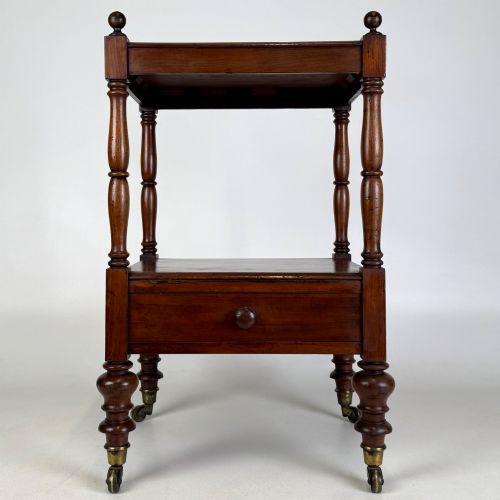
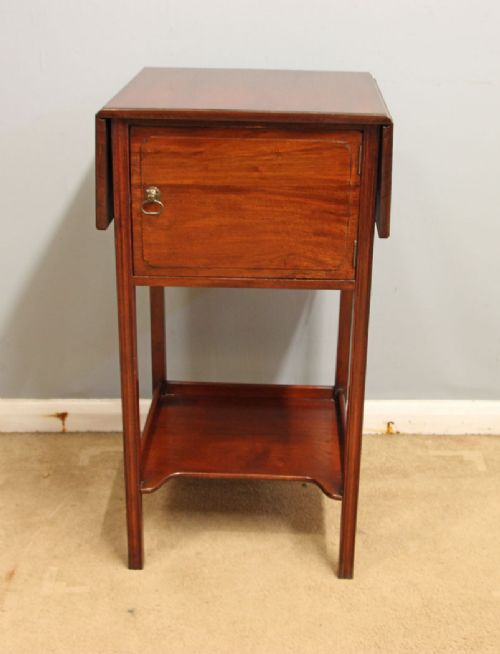
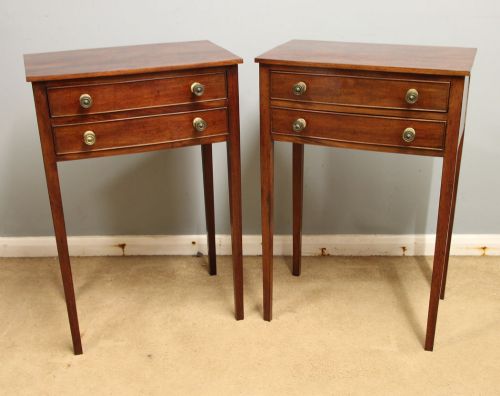
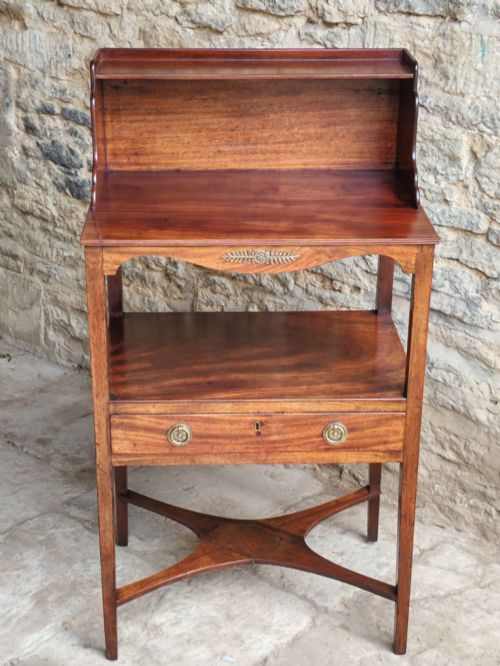
Mahogany Side Table Cabinet
A mahogany side table cabinet brings compact storage and rich timber grain to a room, spanning Georgian, Victorian and Edwardian periods.
Mahogany Side Table Cabinet
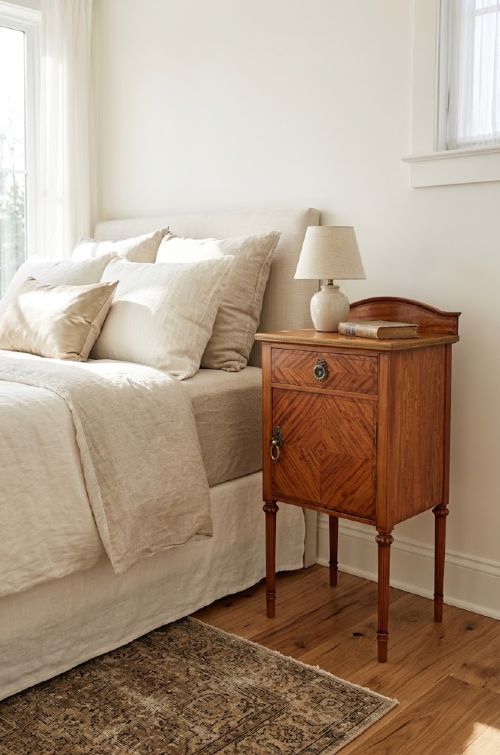
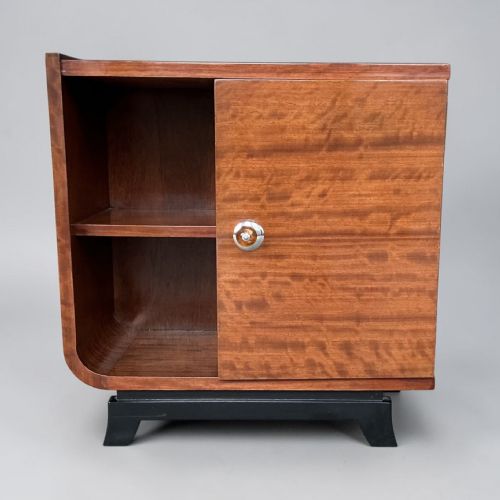
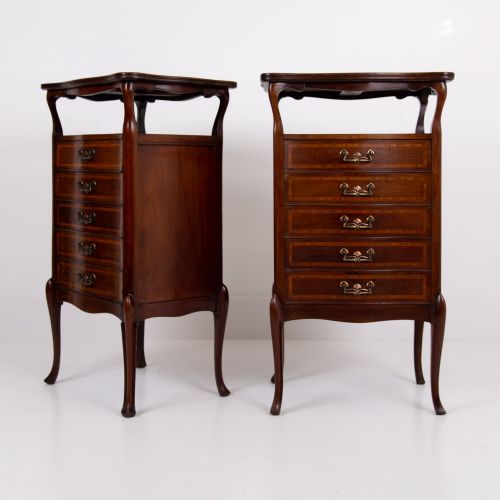
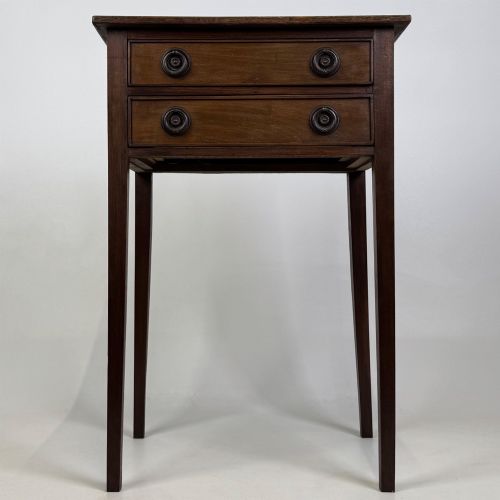
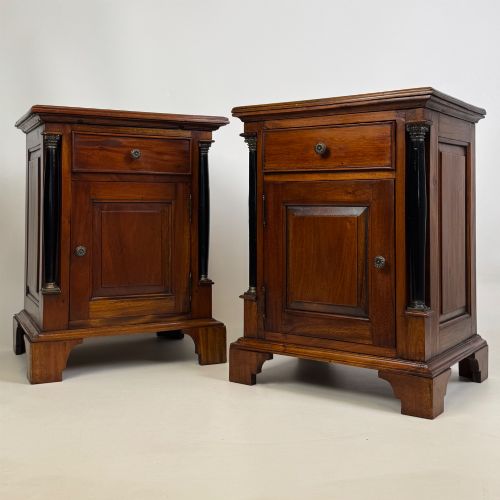
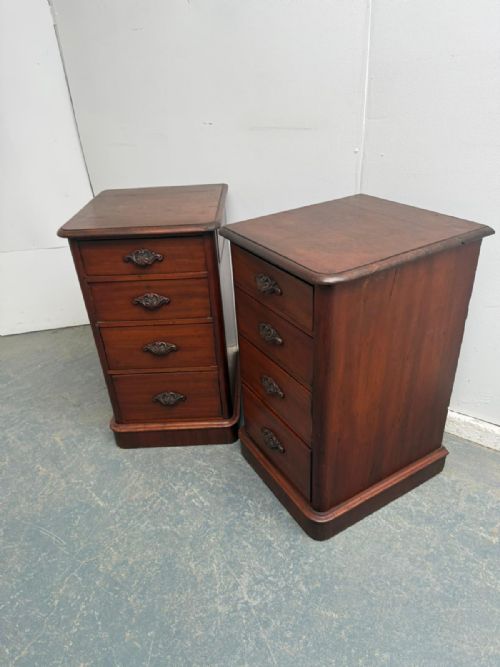
A mahogany side table cabinet serves multiple functions across different domestic spaces, appearing primarily as bedside nightstands, small cupboards, pot cupboards, and lamp tables. The search phrase covers a broad architectural crossover where open table surfaces meet enclosed storage compartments, drawers, or tambour fronts.
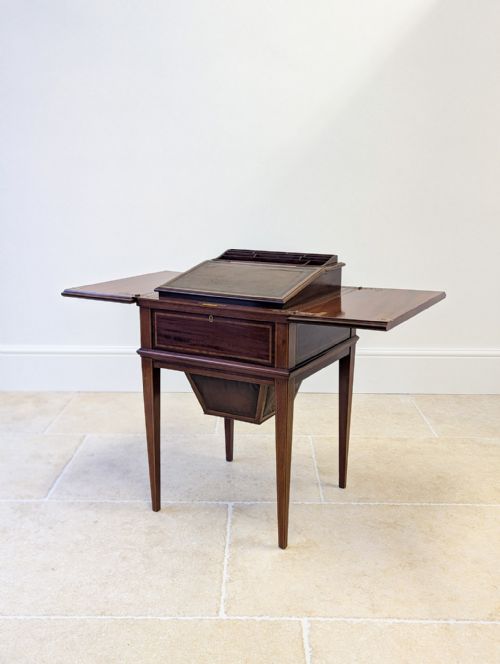
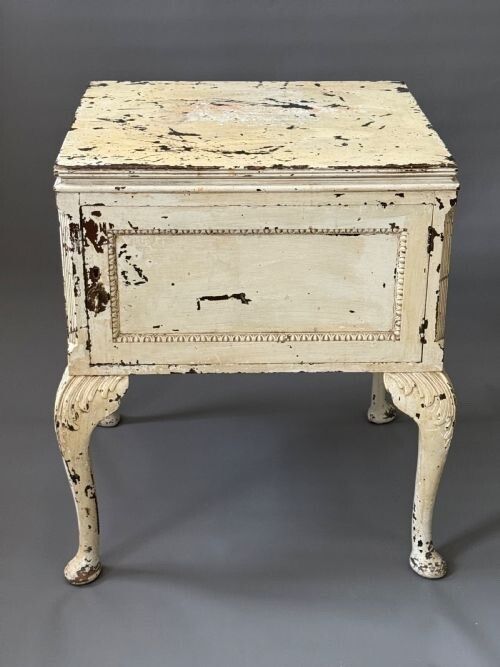
Makers and workshops of the eighteenth and nineteenth centuries adapted these tables for utilitarian bedroom and drawing room use, resulting in diverse configurations such as tray tops, washstands, and compact commodes. Each iteration balances functional enclosed space with the warm, deep hues characteristic of period mahogany.
Materials and construction
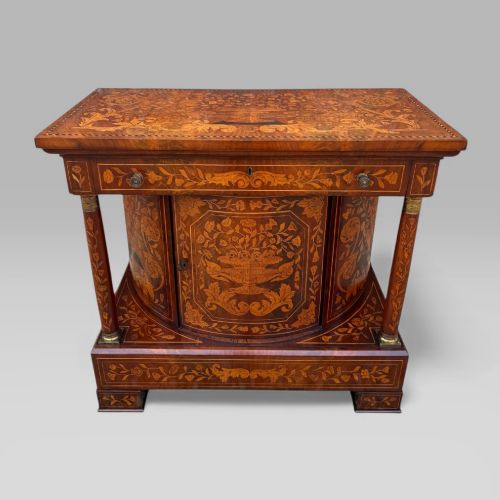
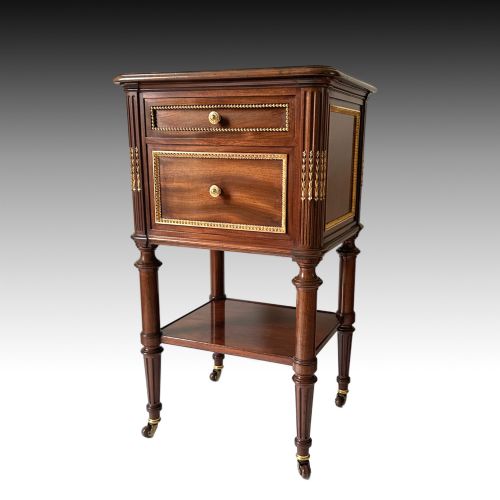
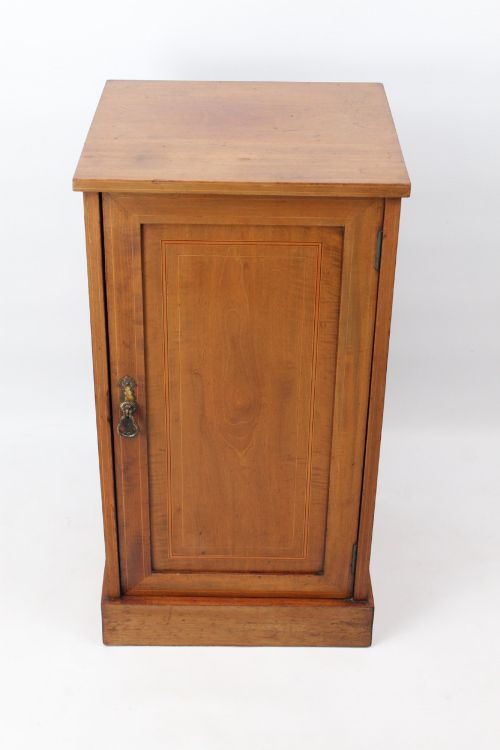
Cabinet makers utilised solid mahogany and flame mahogany veneers over secondary timbers, often applying satinwood crossbanding and marquetry to enhance the visual depth of the surfaces. Structural integrity relied on traditional joinery techniques, dovetailed drawer construction, and panelled cabinet doors.
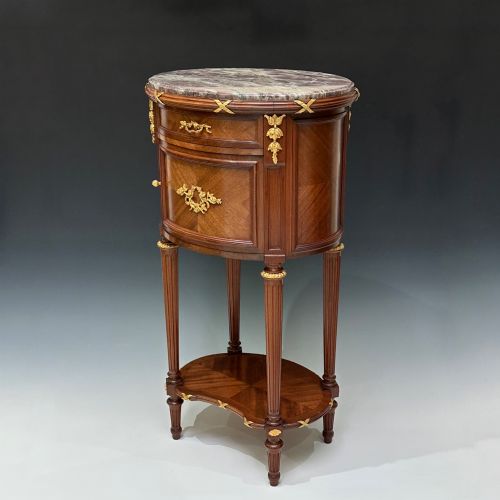
Metal mounts in brass and ormolu appear frequently on continental pieces, providing functional hinges, handles, and decorative gallery rails. Marble tops and glass inserts also feature on specific Victorian and Edwardian variants, adding durable working surfaces to the timber frames.
Form variations range from bedside pot cupboards and washstands to French Empire display and writing tables.
Assessing craftsmanship
Quality in a mahogany side table cabinet rests in the selection of the timber grain, the precision of the inlay work, and the original integrity of the hardware. Finer examples display carefully matched flame veneers and subtle stringing that requires exceptional woodworking skill.
Structural refinement distinguishes superior pieces, visible in smooth-running dovetailed drawers, well-fitted cupboard doors, and robust leg joinery. Retaining original brass fittings and undisturbed surface patination elevates a piece far above later restorations or heavily altered examples.
François Linke·Gillows·Howard And Sons·Maple And Co
The Mahogany Side Table Cabinet Glossary
- Pot cupboard
- A small enclosed bedside cabinet historically designed to house a chamber pot. These practical items often feature a single door above a lower shelf or enclosed base.
- Tray top
- A raised rim carved directly into or applied around the upper edge of a table or cabinet. This feature prevented small items from rolling off the surface during daily use.
- Tambour front
- A flexible sliding shutter formed from narrow vertical strips of timber glued to a canvas backing. It runs in concealed tracks to secure the front opening of a cabinet.
- Crossbanding
- A decorative border technique where thin strips of veneer are laid perpendicular to the grain of the main surface. This frames the top or drawer fronts with a contrasting timber stripe.
- Marquetry
- The art of forming decorative patterns using fitted pieces of various coloured woods and veneers. Artisans applied this pictorial technique across console tables and cabinet doors.
Mahogany Side Table Cabinet: Frequently Asked Questions
What is a mahogany side table cabinet?
A mahogany side table cabinet is a versatile antique furniture piece combining a flat upper surface with enclosed cupboard space, drawers, or shelving underneath. These items were built in various regional British and continental workshops for domestic utility.
They function today as bedside nightstands, lamp tables, or small storage units in living spaces. The dense grain and rich colour of the mahogany give these practical items strong decorative presence.
How do I date a mahogany cabinet?
Dating relies on examining construction methods, timber choice, and prevailing stylistic details such as Edwardian inlay or Georgian proportions. Hand-cut dovetails and vernacular hardware provide physical clues to the decade of manufacture.
Comparing the secondary timbers inside drawers and the ageing of the surface varnish further clarifies the period. Historical stylistic revivals mean that Georgian styles often appear executed with later Edwardian or Victorian manufacturing techniques.
Where were these cabinets used?
Original domestic placement centred primarily on bedrooms as nightstands, dressing tables, washstands, or pot cupboards. Their compact dimensions also suited hallways and drawing rooms as lamp tables or occasional display surfaces.
Contemporary interiors utilise them in identical roles beside low seating or beds. Their enclosed storage offers practical concealment for modern accessories while retaining antique character.
How do I care for antique mahogany?
Maintaining antique mahogany involves keeping pieces away from direct heat sources and strong sunlight that can dry or fade the timber. Regular dusting with a soft, dry cloth preserves the finish without abrasive buildup.
Occasional applications of appropriate wax feed the wood and maintain its natural lustre. Avoiding moisture and synthetic polishes protects the historic patinated surface from chemical damage.