



Mahogany Shop Showcase
A mahogany shop showcase brings commercial heritage into a domestic interior, offering generous glass panels to present collections with absolute clarity.
Mahogany Shop Showcase
A mahogany shop showcase is a purposeful retail fixture designed originally to display mercantile goods securely while drawing the eye of the customer. These pieces originate from commercial settings, spanning the Victorian and Edwardian eras through to the 1930s, encompassing freestanding cabinets, countertop vitrines, and long serving counters.
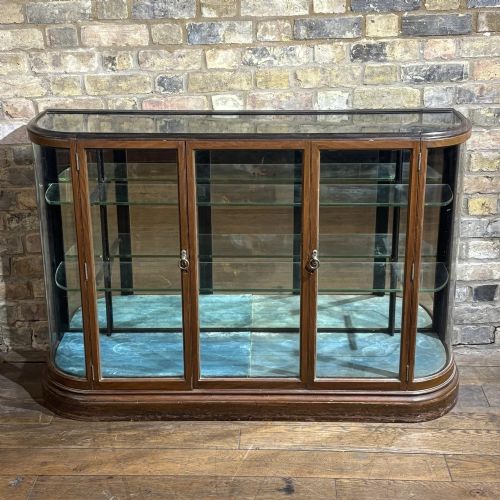
Buyers seeking this phrase most frequently encounter Edwardian and 1920s examples constructed from solid mahogany with extensive glazing. Forms vary widely from bow-fronted floor cabinets and pentagonal counters to small tabletop cases and wall-hanging units.
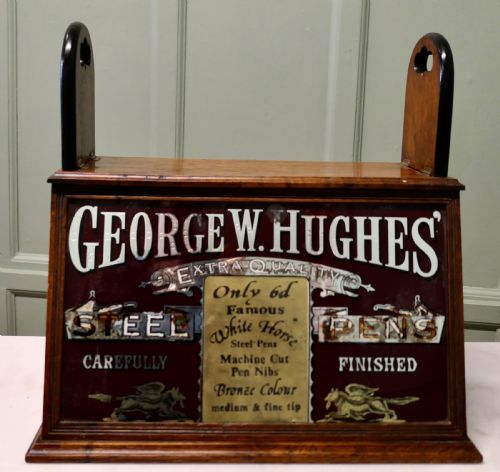
Many survivors carry the historical weight of prominent commercial enterprises, bearing hand sign-written advertising or maker badges from notable shopfitters. Their adaptation into homes allows collectors to exhibit smaller objects, ceramics, or ephemera behind protective glass doors.
How they were made
Makers utilised solid mahogany and selected hardwoods to build robust frames capable of withstanding heavy daily use in busy shops. Large panes of clear glass were set into doors and sides to maximise visibility, frequently supported by adjustable internal glass shelving.
Interior elements often incorporated mirrored backs to reflect light through the displayed wares, alongside velvet or fabric linings on bases. Brass hardware, including hinges, locks, and handles, provided secure closures for valuable merchandise.
Specialised commercial joinery ensured tight joints to keep dust from entering the display area, while shopfitters applied hand-painted signage directly onto the timber or glass surfaces for brand promotion.
Mahogany Shop Showcase Retail Price Guide 2026
Typical asking prices for mahogany shop showcase among the pieces listed under this phrase on Sellingantiques today, from the lower quarter to the upper quarter. They describe what is for sale here now, not the wider market.
Some cabinets still whisper tales of sweet shops and tea rooms through original chocolate and cocoa advertising.
What varies in quality
The distinction between standard commercial joinery and superior cabinet-making rests in the refinement of the timber and the complexity of the silhouette. Pieces built by premier shopfitting firms demonstrate sophisticated structural engineering, particularly in curved bow ends and stable pedestal bases.
The proportion of glass to timber alters the visual weight of the case, with finer examples offering unhindered viewing angles and seamless door alignments. Original period hardware, intact mirrored panels, and authentic sign-written commercial branding elevate the integrity of the piece.
F. Sage and Company·E. Pollard and Company
The Mahogany Shop Showcase Glossary
- Vitrine
- A glass-fronted display cabinet or case designed for exhibiting fine objects or curiosities. These fixtures rely on transparent panels on multiple sides to illuminate the interior.
- Shopfitting
- The trade and craft of manufacturing and installing commercial furniture and interior fixtures for retail premises. Specialised firms constructed these sturdy display units to withstand heavy public interaction.
- Bow front
- A convex, outwardly curved front facade common on select display cabinets and counters. This curved configuration softens the room's geometry and broadens the viewing angle into the case.
- Countertop display
- A smaller scale cabinet designed to sit directly upon a serving counter to capture customer attention at the point of sale. These portable cases usually feature hinged rear doors for staff access.
- Sign-written
- Hand-painted lettering applied directly to wood or glass surfaces for commercial advertising or branding. This historical technique often names period confectioners or tea merchants.
Mahogany Shop Showcase: Frequently Asked Questions
How were these shop cases originally used?
Merchants placed these glazed fixtures on counters or shop floors to protect delicate goods such as chocolate, apothecary items, and luxury accessories while maintaining clear visibility for customers.
Staff accessed the interior through rear doors to handle transactions, keeping valuable merchandise secure from casual handling.
How do I style a shop showcase at home?
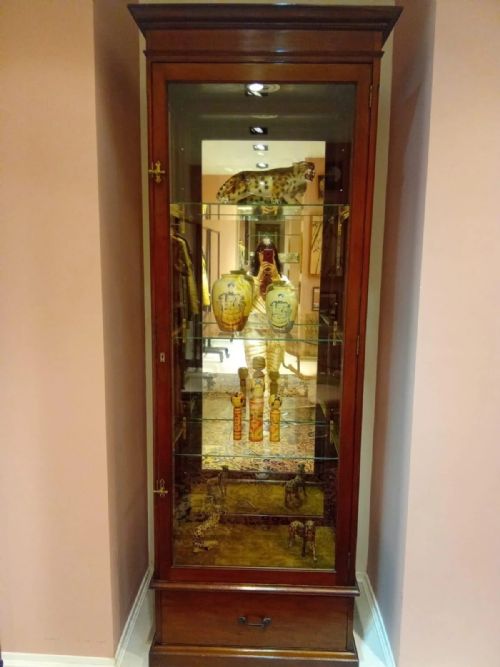
These cabinets provide an ideal dust-free environment for exhibiting collections of ceramics, glassware, books, or small sculptures in living spaces or dining rooms.
The internal mirrors and glass shelves help distribute natural light across your displayed objects from multiple angles.
How can I tell Edwardian cases from Victorian ones?
Victorian examples often display heavier timber frames and darker finishes, frequently associated with traditional apothecary or drapery shop interiors.
Edwardian and 1920s pieces tend to feature lighter mahogany tones, cleaner geometric lines, and sometimes early Art Deco influences on the legs or hardware.
What is sign-written advertising on these cabinets?
Many commercial cases bear original hand-painted lettering on the wood or glass detailing historical brands like confectionery or cocoa makers.
This period advertising adds significant historical character and confirms the authentic commercial origins of the furniture.