
Mahogany Shield Back
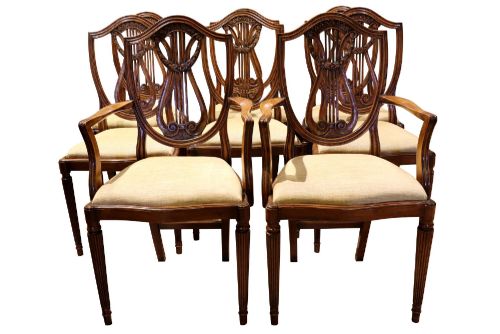
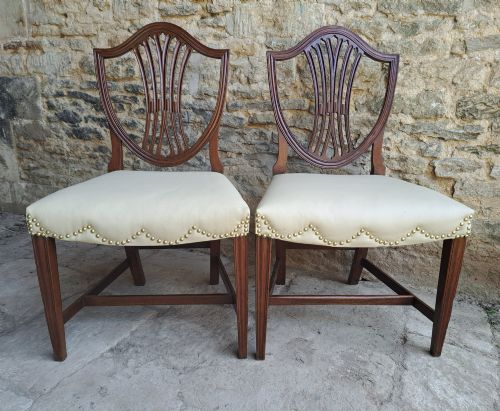
A mahogany shield back brings neoclassical proportion and carved splats to a dining room or hall.
Mahogany Shield Back
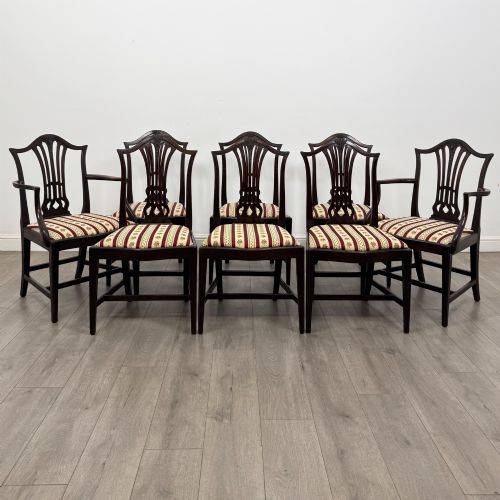
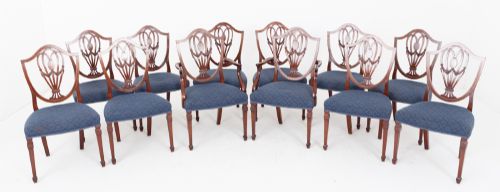
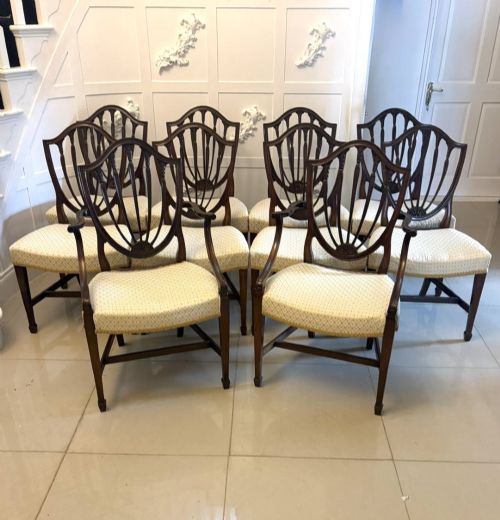
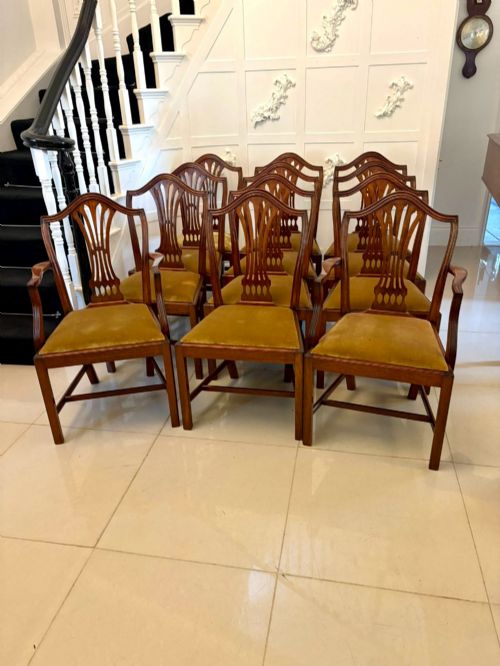
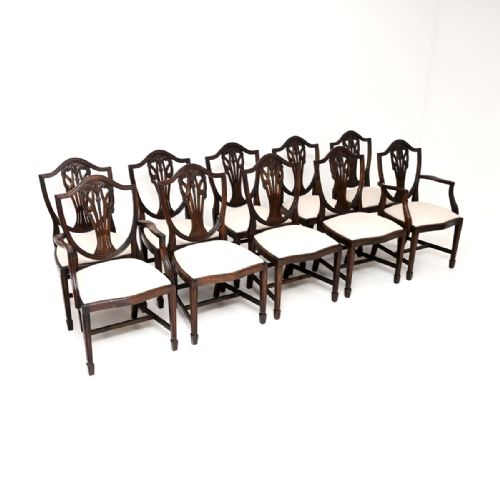
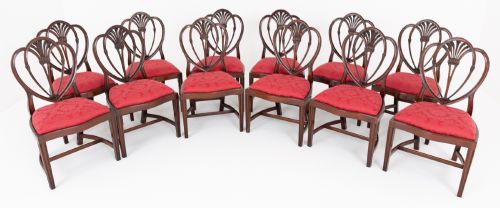
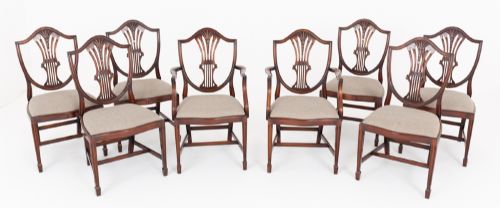
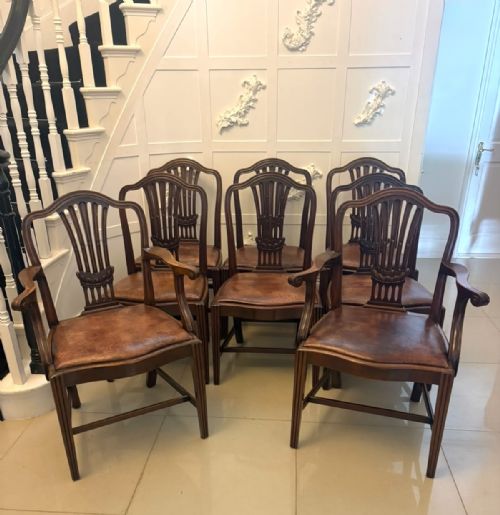
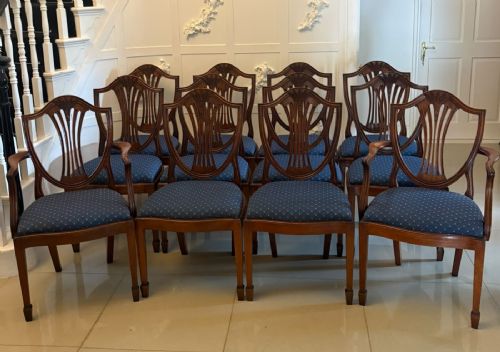
A mahogany shield back most commonly appears as a dining chair, often found in large sets spanning six to twelve pieces, alongside matching carvers with open arms. These pieces range from authentic 18th-century Georgian originals to 19th-century Victorian interpretations and later 20th-century revivals.
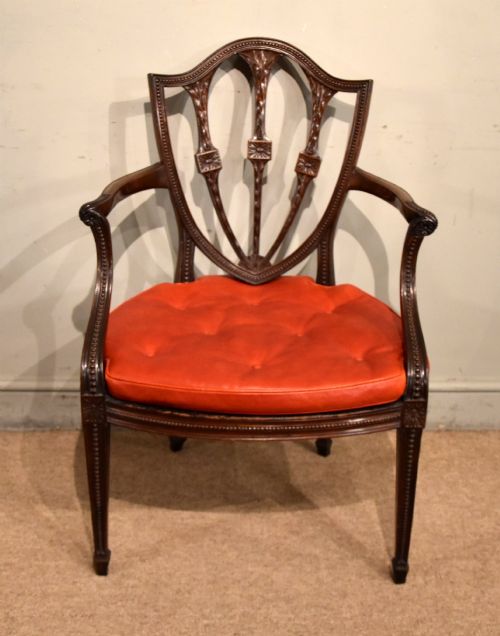
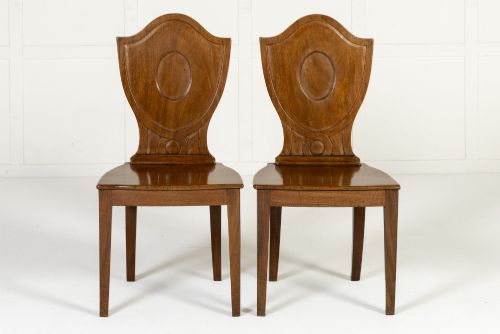
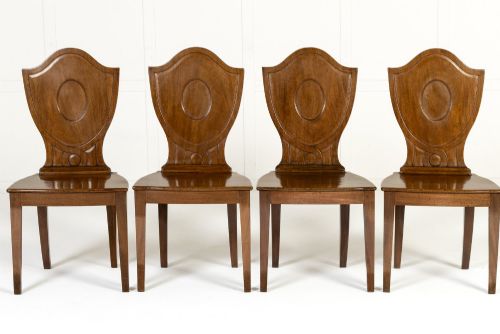
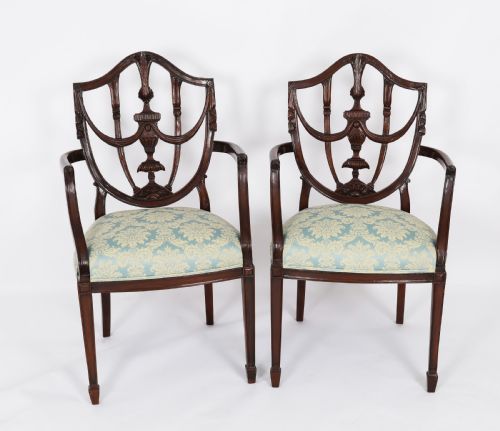
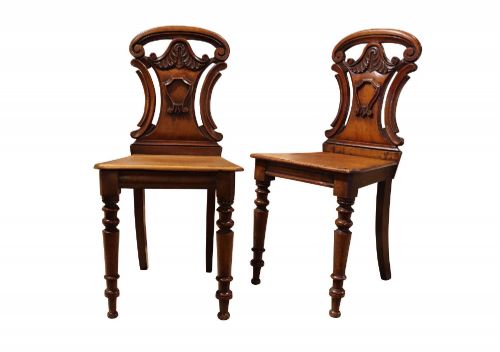
Beyond dining sets, the form extends to hall chairs and armchairs, constructed to serve domestic spaces with distinct architectural backs. The silhouette relies on an enclosed, curved frame resembling a heraldic shield, frequently enclosing carved splats, wheat sheaves, or vertical drapery.
Makers across the Georgian, Victorian, and Edwardian eras adapted these designs, meaning buyers will encounter both period antiques and later revival pieces. The enduring popularity of the form ensures a steady presence of matched sets and pairs on the market.
How They Were Made
Cabinet makers relied primarily on solid mahogany for the structural frames, taking advantage of the timber's grain strength to execute slender carved splats and curved top rails. Joinery techniques such as mortise and tenon joints secured the uprights to the seat rails, ensuring rigidity across frequent use.
Upholstered drop-in seats utilised webbing and stuffing covered in fabric, leather, or velvet, while simpler hall variants featured solid timber seats shaped for the user. Surface finishing typically involved hand-applied polish that highlighted the natural figure of the wood.
Listings feature dining chairs, hall chairs, armchairs, and table mirrors spanning the 18th, 19th, and 20th centuries.
What Varies in Quality
The refinement of the carving on the shield splat dictates the visual distinction of the piece, separating standard production from master craftsmanship. Crisp detailing in motifs like wheat ears or drapery indicates skilled hand work.
The integrity of the timber selection and timber matching across a full set influences overall cohesion and visual weight. Uniformity in the grain pattern across multiple chairs shows careful selection by the original maker.
Maple and Co
The Mahogany Shield Back Glossary
- Shield back
- A chair back designed with an outline resembling a heraldic shield, tapering towards the seat. This form became a defining neoclassical trademark of late 18th-century seating design.
- Carver
- An armchair designed s.
- Splat
- The central vertical slat of wood connecting the seat to the top rail of a chair back. In these pieces, the splat is pierced and carved within the shield outline.
- Drop-in seat
- A removable seat frame upholstered separately and dropped into a ledge rebated into the chair rails. This construction allowed for straightforward reupholstery without dismantling the frame.
- Reign
- A stylistic period categorised by the ruling monarch, such as George III or William IV. These designations help date the construction era of English furniture.
Mahogany Shield Back: Frequently Asked Questions
How do I spot a reproduction?
Examine the timber colour, tool marks, and overall wear patterns across the frame. Later revivals from the 20th century often display machine-cut uniformity compared to earlier hand-shaped work.
Check the construction methods used in the seat rails and joints. Machine screws or modern adhesives point towards later manufacturing periods.
Were these used in dining rooms?
These pieces served primarily as formal dining chairs around large mahogany tables. Sets often included a mix of single dining chairs and matching carvers for the hosts.
Smaller rooms also accommodated pairs or single examples as decorative accent seating. Hall chairs fulfilled a similar functional role in entrance spaces.
How do I care for leather seats?
Apply specialised leather balms periodically to maintain flexibility and prevent the material from drying out. Keep upholstered pieces away from direct sunlight and heat sources.
Avoid harsh chemical cleaners when dusting the timber frames. Gentle wiping with a soft, dry cloth preserves the polished surface.
What is a carver chair?
A carver is an armchair designed to match a set of single dining chairs, traditionally positioned at the head of the table. They feature open arms integrated into the uprights.
Cabinet makers produced these alongside standard chairs to complete large dining sets. They share the same shield back geometry as the armless versions.