
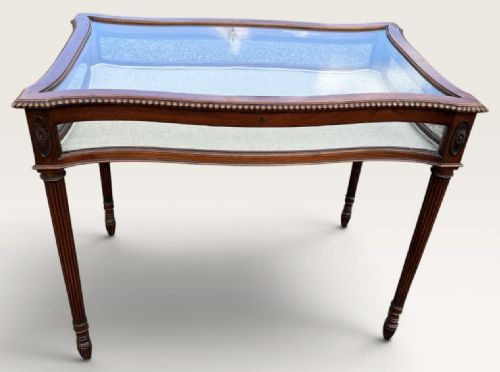
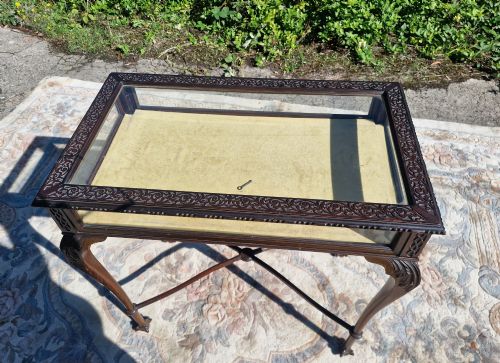
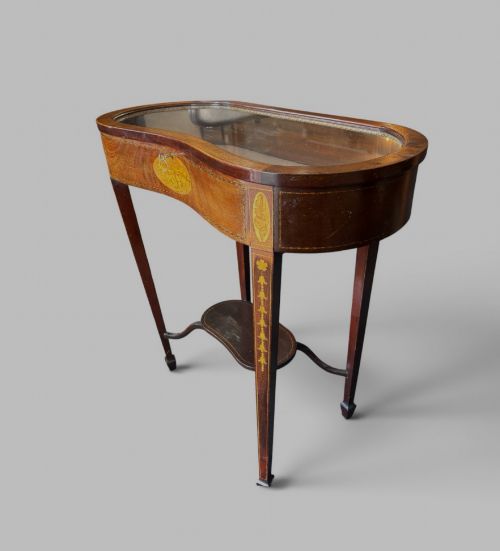


Mahogany Shadow Box Table
A mahogany shadow box table is a glazed display piece designed to protect and exhibit small treasures.
Mahogany Shadow Box Table
A mahogany shadow box table provides a glazed platform to house and exhibit small personal treasures and collectibles. Buyers seeking a mahogany shadow box table will frequently encounter Edwardian and nineteenth-century display tables, bijouterie tables, and cabinets designed for this purpose.
The selection ranges from serpentine-shaped pieces and kidney-shaped examples to refined display cabinets. Many of these forms originate from the Edwardian era, alongside nineteenth-century French and George III examples.
These tables merge the utility of a display surface with the secure enclosure of a cabinet, allowing visitors to inspect delicate items from above. They function effectively as focal points in drawing rooms and studies alike.
How they were made
Makers utilised solid mahogany and timber frames to construct the foundational structure of each display table. Glass panels form the viewing lid or sides, enclosing the compartment securely.
Decoration often involved satinwood, boxwood, and brass inlay set directly into the mahogany surface. Ormolu mounts appear on specific French-influenced pieces to accentuate the glazed frames.
Interiors are frequently lined with fabric or velvet to cushion the objects placed inside. Marquetry and carving techniques further adorn the exterior woodwork of Edwardian and Victorian versions.
Early glass tops were strong enough to endure countless leaning elbows while guests admired the trinkets below.
What varies in quality
The refinement of the timber and the precision of the joinery set the finest tables apart from simpler workshop output. High quality is evident in the crispness of the mahogany carving and the integration of delicate stringing.
Metal mounts and internal linings contribute significantly to the overall execution. Finely cast ormolu and hand-fitted brass details distinguish exceptional French and English pieces from standard production.
The complexity of the silhouette, such as serpentine or kidney shapes, demands greater carpentry skill than straight-sided variants. This architectural sophistication elevates the status of the piece.
The Mahogany Shadow Box Table Glossary
- Bijouterie table
- A glazed display table specifically built to showcase small valuable objects, medals, or jewellery. These tables typically feature hinged or lift-off glass tops.
- Ormolu
- Gilded bronze mounts applied to furniture for decorative effect. This technique was frequently utilised on nineteenth-century French pieces.
- Marquetry
- The art of applying pieces of veneer to a structure to form decorative patterns. Makers used contrasting woods like satinwood and boxwood within mahogany fields.
- Serpentine
- A curved line of furniture frontals or table edges that curves inward centrally and outward at the ends. This shape requires advanced woodworking expertise.
- Vitrine
- A glass-fronted cabinet or display case used for exhibiting fine objects. Versions on this page often double as bijouterie tables.
Mahogany Shadow Box Table: Frequently Asked Questions
What is a bijouterie table?
A bijouterie table is a specialised display furniture piece featuring a glazed top and sides to exhibit small collectibles.
These tables were historically placed in drawing rooms so guests could inspect intimate possessions without handling them.
How do I use a display table?
Display tables serve to exhibit delicate items such as pocket watches, medals, ceramics, and small silverware.
The glass enclosure protects the contents from dust while maintaining full visibility within a living space.
Where were these tables placed?
These tables typically stood in formal reception rooms, parlours, or private dressing rooms during the Victorian and Edwardian periods.
They functioned both as decorative centrepieces and as conversation starters for visiting guests.
How do I identify an Edwardian table?
Edwardian examples frequently incorporate satinwood inlay, delicate stringing, and light mahogany frames.
They often display revival styles referencing earlier George III or French decorative motifs.
What is the difference between French and English styles?
French models frequently incorporate ormolu mounts and elaborate curves reflecting Louis styles.
English pieces tend to rely on understated inlay and clean architectural lines.