



Mahogany Server Brass Gallery
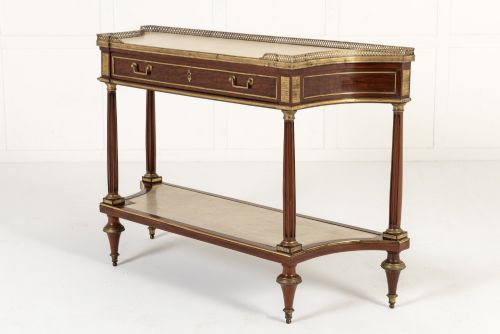
These mahogany server brass gallery pieces combine rich timber surfaces with metal rails to hold glassware securely in place during service.
Mahogany Server Brass Gallery
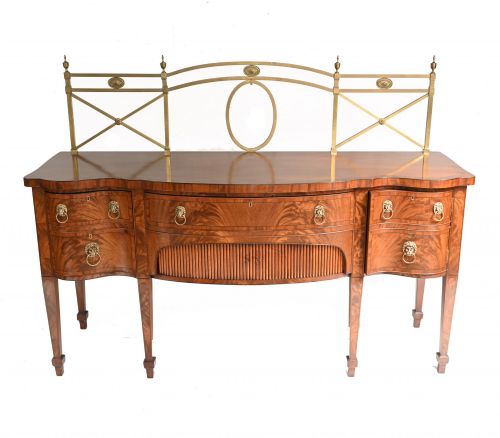
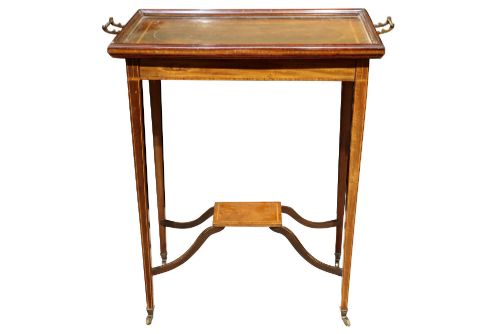
A mahogany server brass gallery brings together deep reddish-brown timber frameworks and polished metal uprights designed to stop decanters from sliding off during use. These items appear across Georgian, Regency, and Edwardian periods, taking forms such as serving tables, sideboards, and occasional tables.
The most common examples on this page are Georgian and Regency serving tables or sideboards fitted with raised brass rails at the back and sides. Buyers also encounter Edwardian revivals and occasional pieces that maintain the same functional arrangement of timber and metalwork.
Materials and construction methods
Constructed primarily from solid mahogany and flame mahogany veneer, these pieces frequently incorporate decorative stringing and banding in satinwood and boxwood. Timber surfaces are planed, joined, and polished to highlight the natural grain patterns of the wood.
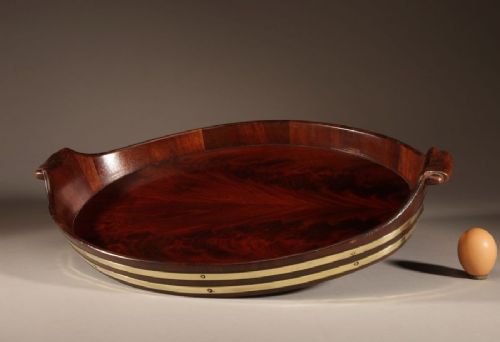
Brass galleries are cast or turned and secured to the upper surfaces using traditional screw fixings or fitted sockets. Secondary elements sometimes include glass inserts or coopered construction techniques seen in specific serving trays and tables.
Mahogany Server Brass Gallery Retail Price Guide 2026
Typical asking prices for mahogany server brass gallery among the pieces listed under this phrase on Sellingantiques today, from the lower quarter to the upper quarter. They describe what is for sale here now, not the wider market.
A coopered tray keeps your afternoon tea from staging a dramatic escape.
Distinguishing quality across examples
The standard of a piece rests heavily on the selection of timber veneers and the crispness of any inlaid boxwood and satinwood details. Highly figured flame mahogany and precise hand-cut stringing denote superior workshop standards.
Metalwork quality separates standard production from finer examples, visible in the weight, casting clarity, and secure fit of the brass gallery. Proportion, restrained carving, and original structural integrity determine the overall standing of each item.
Mack Williams And Gibton·Howard And Sons·H Mower And Stephenson
The Mahogany Server Brass Gallery Glossary
- Brass gallery
- A low metal rail or fence fitted to the top edge of a sideboard or serving table to keep items from sliding off. These fixtures are typically removable or securely pinned into the timber surface.
- Flame mahogany
- A highly figured veneer cut from the fork of the mahogany tree where branches join the trunk. It creates a distinctive rippled pattern resembling flickering flames.
- Stringing
- A thin inlay of contrasting wood, such as boxwood or satinwood, set into channels cut into the primary mahogany surface. This technique outlines drawers, borders, and tabletops.
- Coopered
- A method of construction using curved staves joined edge-to-edge and bound together, traditionally used for buckets and specific round serving trays.
- Pedestal sideboard
- A form featuring distinct flanking cabinet pedestals joined by a central serving table or recessed recess. This layout became prominent during the Georgian and Regency periods.
Mahogany Server Brass Gallery: Frequently Asked Questions
How do I care for mahogany?
Mahogany surfaces respond best to regular dusting with a soft, dry cloth to prevent the accumulation of abrasive particles. Maintaining stable room humidity protects the timber and prevents the underlying structure or veneer from shifting.
Avoid placing these items in direct sunlight or near heat sources, which can dry out the polished finish. Periodic applications of appropriate furniture wax help preserve the sheen of the wood.
How do I distinguish Georgian from Edwardian pieces?
Georgian examples rely on heavier proportions, solid timber construction, and architectural details characteristic of eighteenth and early nineteenth-century cabinetmaking. The focus rests on structural integrity and classic forms such as pedestal sideboards and serving tables.
Edwardian pieces often reflect revival styles incorporating lighter inlays, satinwood banding, and more decorative interpretations of earlier designs. Examining the interior construction and secondary woods helps clarify the specific period of manufacture.
How were these servers used?
These tables served as auxiliary surfaces in dining rooms during large meals, holding extra plates, silverware, and serving dishes. They relieved pressure on the main dining table by keeping food and drink within easy reach of attendants.
In domestic settings, they also functioned as display areas for silver and glassware. The addition of the brass gallery made them particularly suited for managing bottles and decanters safely.