



Mahogany Reclining Chair
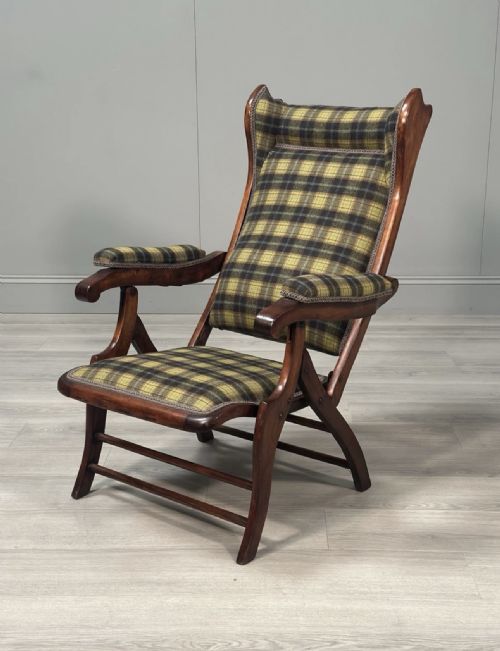
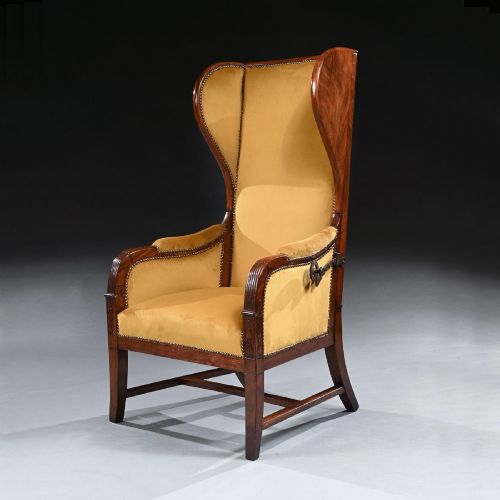
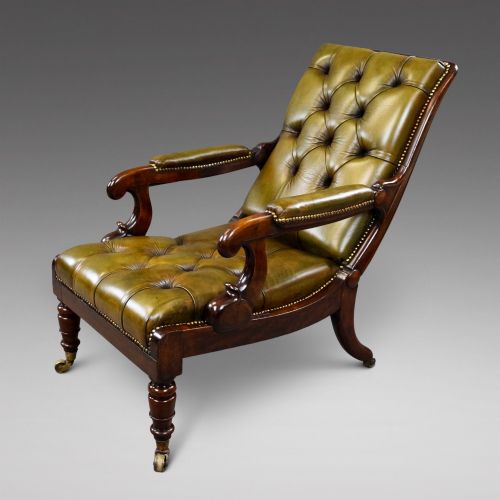
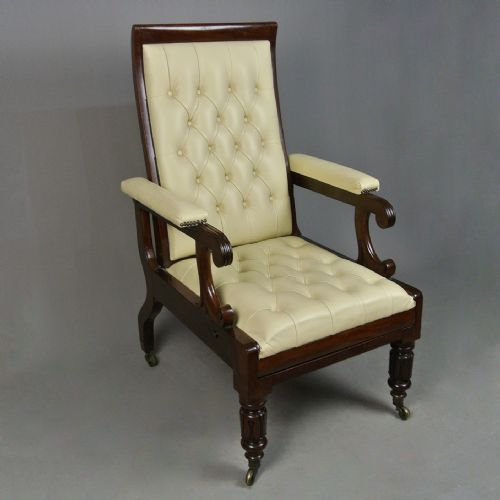
A mahogany reclining chair combines rich tropical timber with ingenious nineteenth-century mechanisms to offer exceptional comfort.
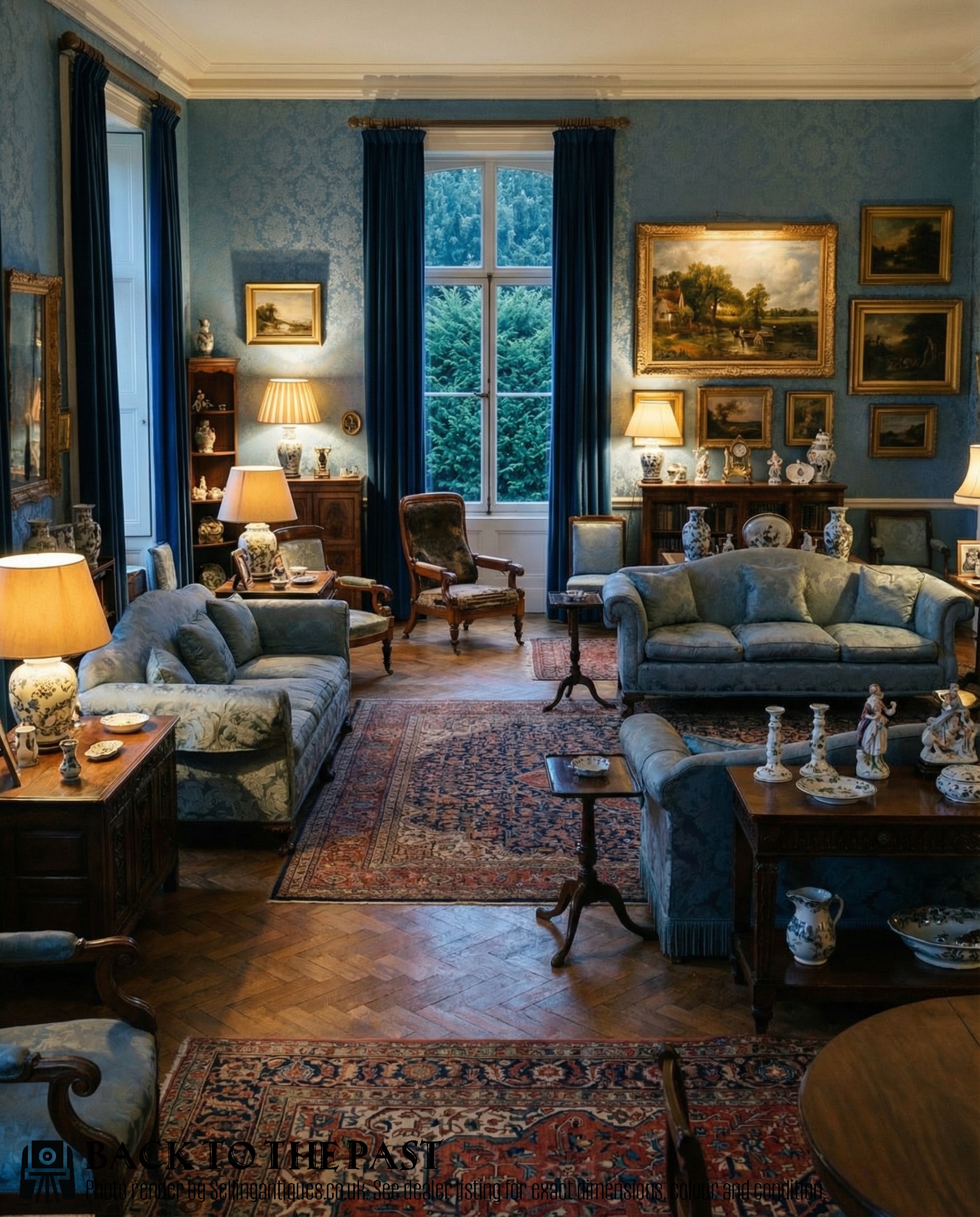
Mahogany Reclining Chair
The selection ranges from sturdy colonial plantation chairs and patent reading seats to elegant French Empire wingbacks and mechanical metamorphic armchairs. These pieces reflect the evolving domestic comfort of the nineteenth century, utilising clever mechanical hinges and pull-out footrests.

How they were made
Joiners and cabinet makers utilised solid mahogany and hardwood frames, often reinforced with internal iron mechanisms to support the adjustable backrests and extending foot sections. Brass castors, hinges and patent mechanisms allowed smooth movement for these heavy timber frames.
Upholstery traditionally involved supportive hessian webbing and horsehair stuffing, finished with buttoned leather, velvet, fabric or rich oxblood hide. Skilled hands shaped the carved armrests, X-frames and reeded legs characteristic of the period.
Mahogany Reclining Chair Retail Price Guide 2026
Typical asking prices for mahogany reclining chair among the pieces listed under this phrase on Sellingantiques today, from the lower quarter to the upper quarter. They describe what is for sale here now, not the wider market.
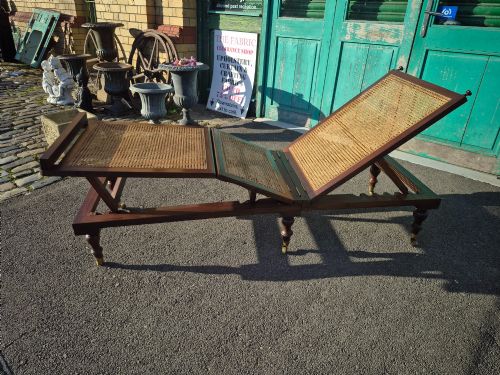
Victorian inventors fitted invalid chairs with wicker panels so invalids could take the sea air without losing their reading slope.
What varies in quality
The distinction between standard seating and top-tier examples lies in the sophistication of the mechanical patent and the crispness of the timber carving. Original brass fittings, stamped maker details and robust, unaltered mahogany frames separate exceptional pieces from lesser versions.
Finishing touches such as finely detailed button leather upholstery, well-preserved frame patination and smooth-operating adjustable ratchets indicate superior workshop production from makers like Gillows or Daws.
Howard And Sons·Robert Daws·Minter·J Foot And Son·John Ward·Gillows·Philip Webb·Morris And Co·J Shoolbred
The Mahogany Reclining Chair Glossary
- Mahogany
- A durable, reddish-brown tropical hardwood prized by nineteenth-century cabinet makers for its stability and rich grain. It takes a fine polish and forms the primary structure of these seats.
- Metamorphic
- A descriptive term for furniture that transforms from one form to another, such as an armchair converting into a daybed or incorporating a pull-out footstool. This clever engineering defines many mechanical library chairs.
- Campaign chair
- Portable folding furniture designed for officers on military campaigns, featuring collapsible wooden frames and brass mounts. These pieces were built for easy dismantling and transport.
- Chaise longue
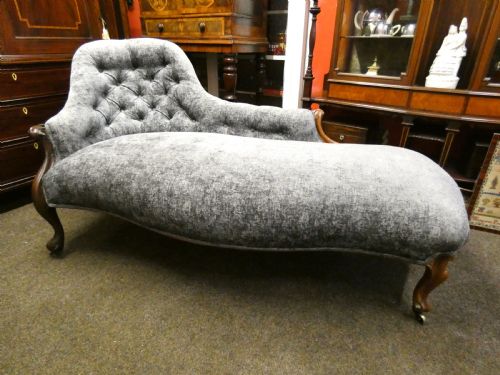
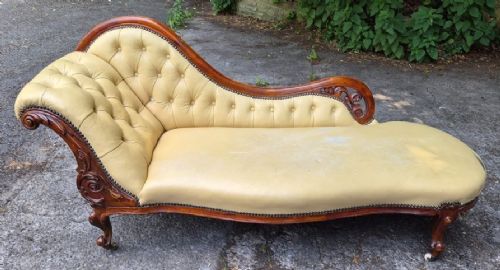
- An upholstered sofa in the form of a chair with a long seat for reclining. Victorian and Regency examples often feature a single scrolled armrest and an adjustable back.
- Ratchet mechanism
- A notched metal rack and pawl system concealed within the arms or back of the chair to hold the reclining backrest at various fixed angles.
Mahogany Reclining Chair: Frequently Asked Questions
How do I operate the reclining mechanism?
Most nineteenth-century adjustable chairs rely on a side-lever or a rack-and-pinion system hidden within the wooden arms. Lifting or tilting the backrest engages the internal brass catches to secure your preferred angle.
Take care to support the weight of the backrest manually while adjusting the mechanism to protect the antique iron and brass components from sudden strain.
Were these chairs used in libraries?
Library armchairs were standard fixtures in grand nineteenth-century homes, designed for long hours of reading and study. Many featured built-in writing slopes or matching footstools for maximum scholarly comfort.
Their sturdy mahogany frames and ergonomic reclining backs provided the necessary support for private studies and gentlemen's retreats.
What is a campaign reclining chair?
Campaign furniture was built for military officers on active service overseas, requiring lightweight construction and folding frames. Mahogany reclining versions brought domestic luxury to field tents and colonial outposts.
These pieces feature brass corners and collapsible X-frames designed to pack down compactly without sacrificing structural strength.
How do I distinguish Regency from Victorian examples?
Regency pieces, dating from the early nineteenth century, typically feature cleaner classical lines, sabre legs, brass inlay and rich dark mahogany. Victorian examples tend to be heavier, with more elaborate carving, button leather and complex mechanical adjustments.
Examining the turning style, upholstery method and structural joinery helps narrow down the exact decade of manufacture.