
Mahogany Reading Desk
These mahogany reading desk options span centuries of refined timber craft, offering dedicated surfaces and seating designed for comfortable study.
Mahogany Reading Desk
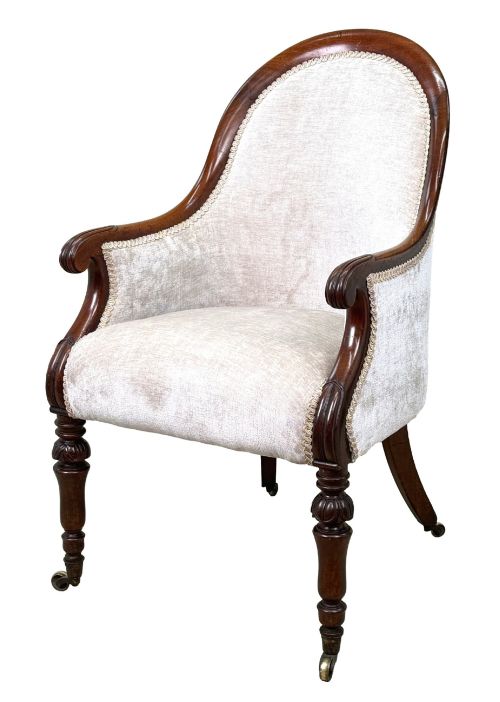
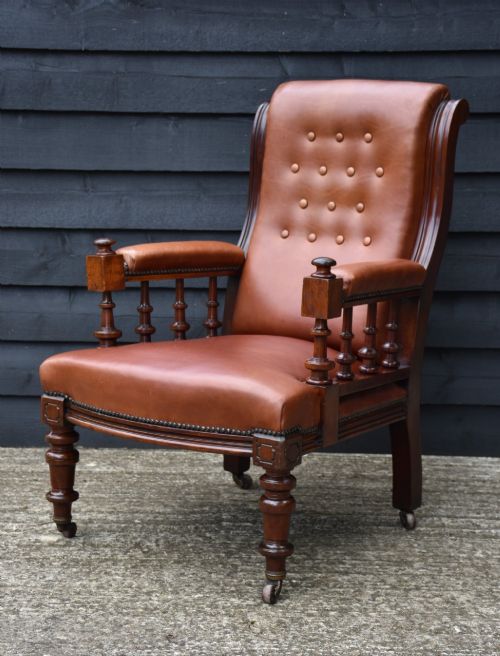
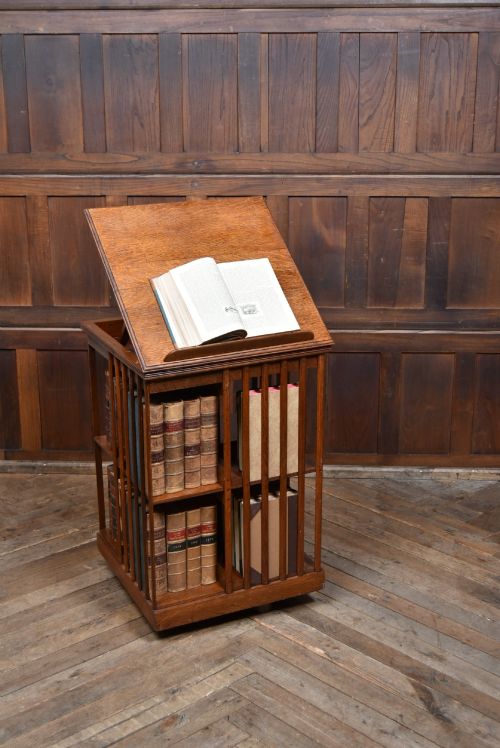
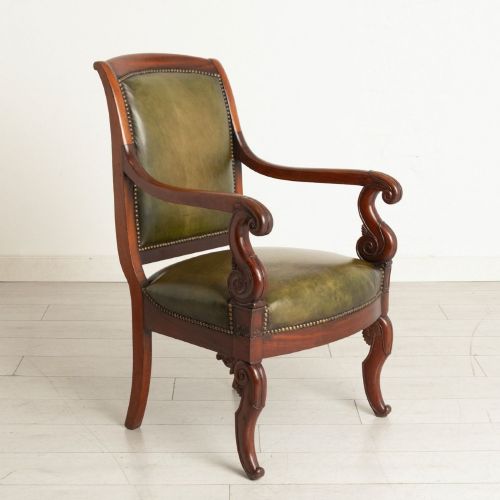
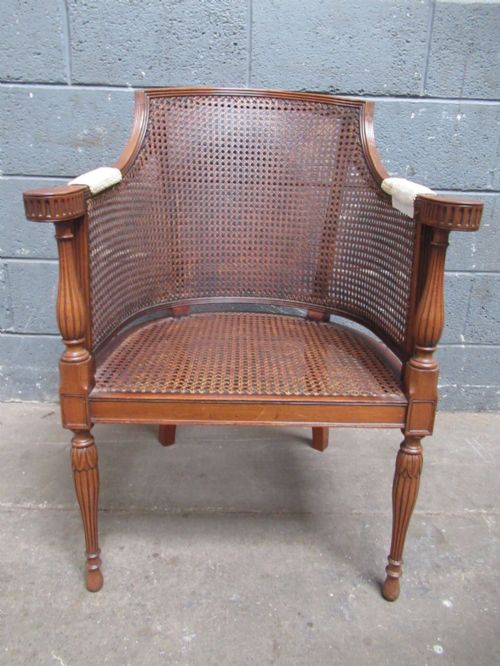
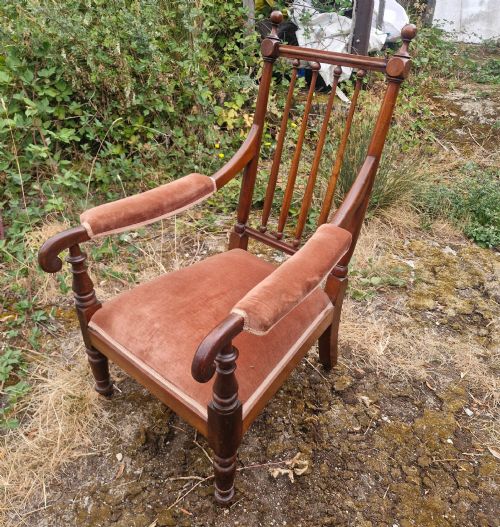
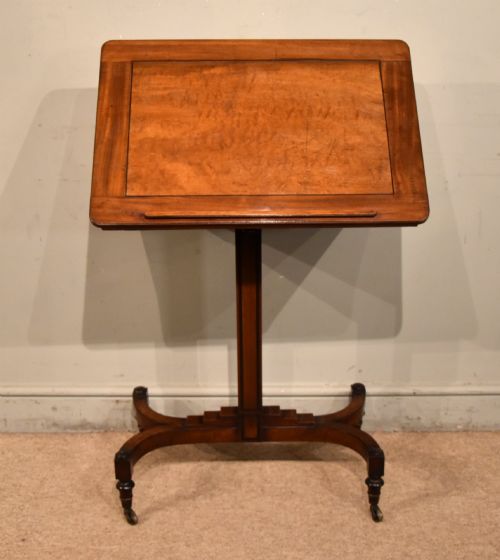
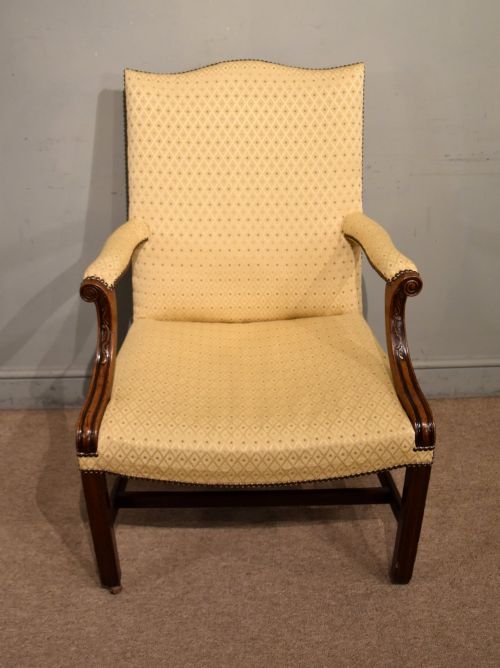
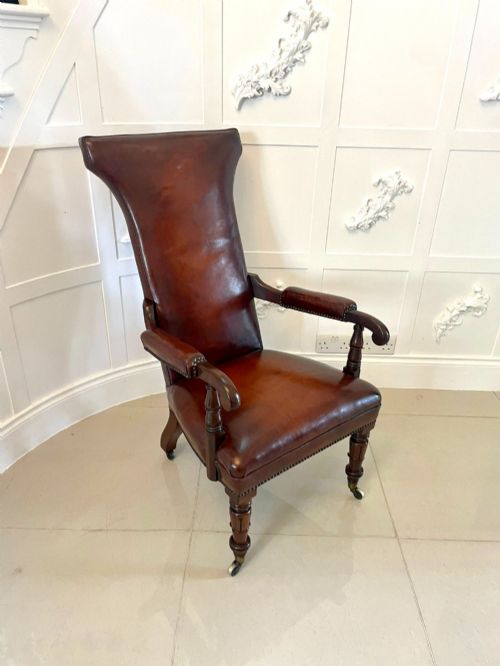
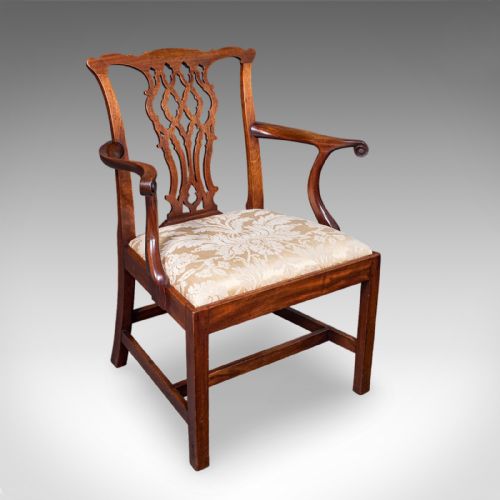
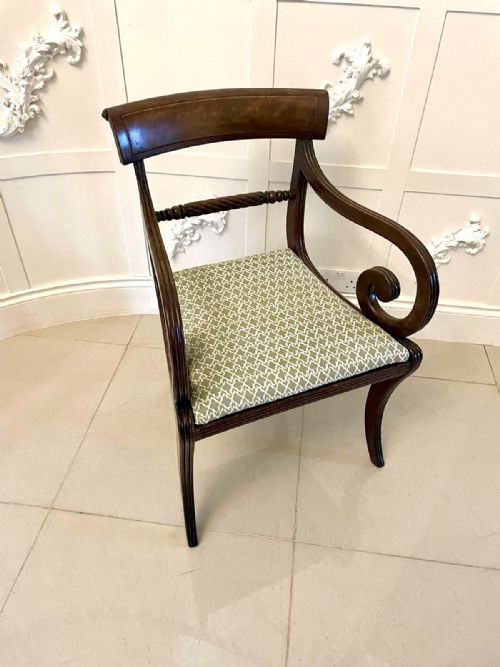
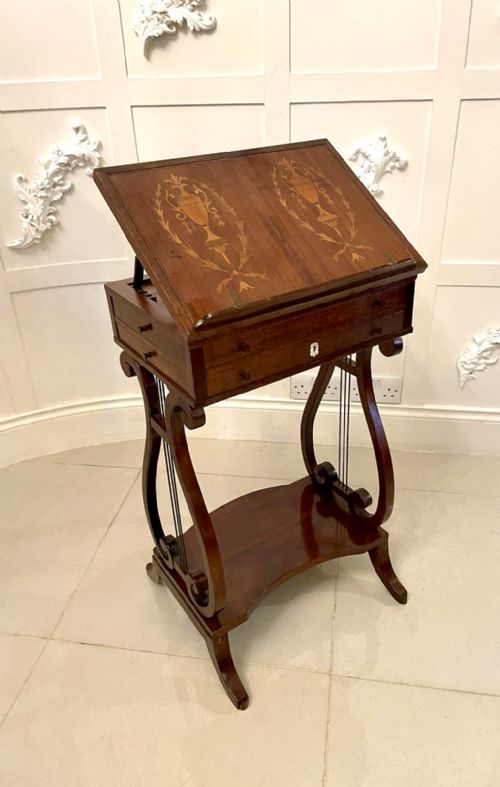
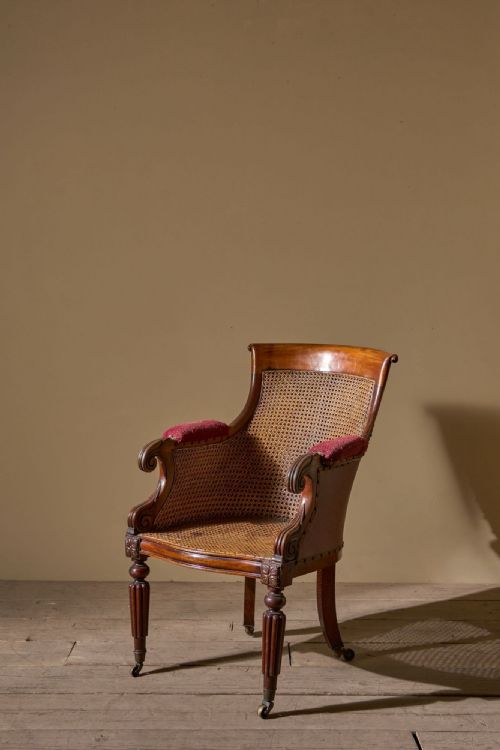
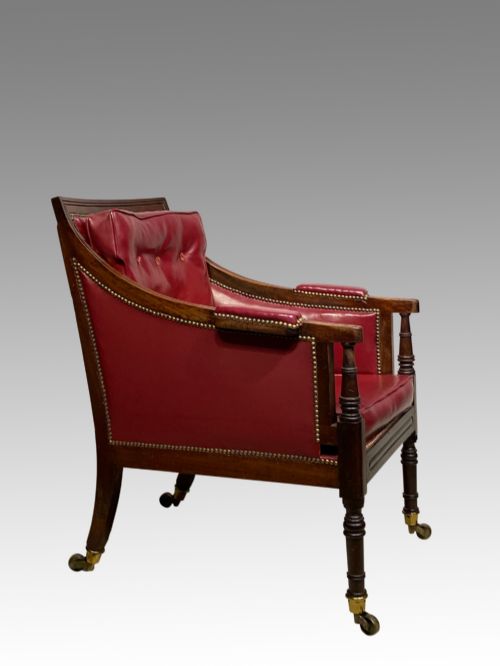
A mahogany reading desk takes many physical shapes across the centuries, appearing as adjustable reading tables, standing book rests, and specialised library seating with integrated book supports. The examples seen here range from Georgian library armchairs and Regency music stands to Edwardian revolving bookcases and adjustable reading tables.
Buyers meet forms designed for specific domestic tasks, such as horse-shoe back library chairs, table-top easements, and two-tier side tables intended to hold volumes close at hand. These pieces originate across the Georgian, Regency, Victorian, and Edwardian eras, reflecting changing domestic habits in British studies and libraries.
Materials and Construction
Makers utilised solid mahogany and veneers combined with secondary timbers, shaping structural frames with mortise and tenon joints to support heavy volumes. Surfaces often incorporate brass hardware, adjustable ratchets, and spindle backs that allow movement in reading stands and tables.
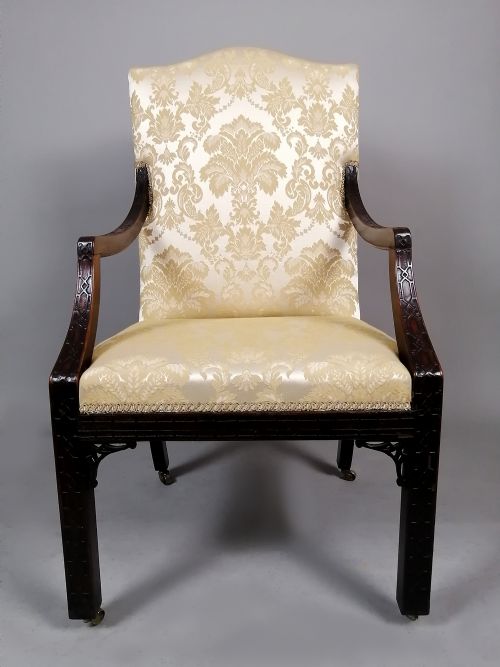
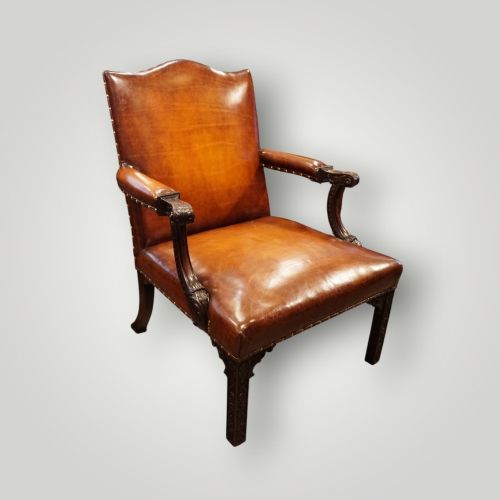
Upholstery forms a major component of the seating forms, employing leather, fabric, velvet, and cane inserts secured over webbing or drop-in frames. Decorative elements include blind carving in Chinese Chippendale styles, marquetry inlay, and reeded turnings on table legs and arm supports.
Spider web back desk chairs let you ponder quadratic equations while pretending you are trapped in a very polite arachnid's parlour.
Craft and Proportion
Quality rests in the crispness of the timber carving, the choice of well-figured mahogany grain, and the integrity of moving mechanical parts like reading stand ratchets. Superior examples maintain balanced proportions and retain original brass fittings rather than replacement elements.
The standard of upholstery work and leather hand-dyeing distinguishes finer library chairs from simpler country house or utilitarian seating. Attention to detail in secondary woods and joinery marks the difference between workshop production and standard commercial output.
The Mahogany Reading Desk Glossary
- Gainsborough armchair
- A wide, upholstered seat with an open wooden frame and padded arms, popular in the Georgian period for library use. These chairs provide comfortable seating for reading at a desk.
- Bergère
- An enclosed armchair with a cane or upholstered back and sides, commonly found in Regency designs. The frame is typically constructed from polished mahogany.
- Ratchet
- A mechanical adjustment mechanism fitted to reading stands and table-tops to alter the viewing angle of books. This metal component allows users to raise or lower the writing surface.
- Reeded
- A decorative moulding consisting of parallel convex rounded strips resembling inverted fluting. This technique appears frequently on the legs of Regency and Victorian library chairs.
Mahogany Reading Desk: Frequently Asked Questions
What is a mahogany reading desk?
A mahogany reading desk encompasses adjustable stands, table-top book rests, and specialised library chairs designed to hold texts at comfortable angles for study.
These pieces utilise dense mahogany timber and often include brass ratchets or leather inserts to aid readers in libraries and studies.
How do I date a mahogany reading piece?
Dating relies on observing stylistic markers such as Chinese Chippendale blind carving, Regency reeding, or Edwardian inlaid satinwood details. Construction methods and secondary timbers also provide clear clues to the Georgian, Victorian, or Edwardian origin of the object.
Hardware components like brass castors and adjustable book rests further help narrow the decade of manufacture.
Where were these pieces used?
Original locations included gentlemen's libraries, morning rooms, and private studies where books played a central role in daily domestic life.
Today, they function well in modern studies, sitting rooms, or hallways as practical surfaces and reading seats.
How do I care for mahogany and leather?
Mahogany surfaces require gentle dusting and occasional waxing to preserve the natural grain and deep colour of the timber without building up heavy residues.
Leather upholstery benefits from specialised conditioning to keep the hide supple and prevent cracking over time.