



Mahogany Psyche Mirror
A mahogany psyche mirror is a large floor-standing swing glass used for full-length dressing, prized for rich timber grain and commanding scale.
What these mirrors are
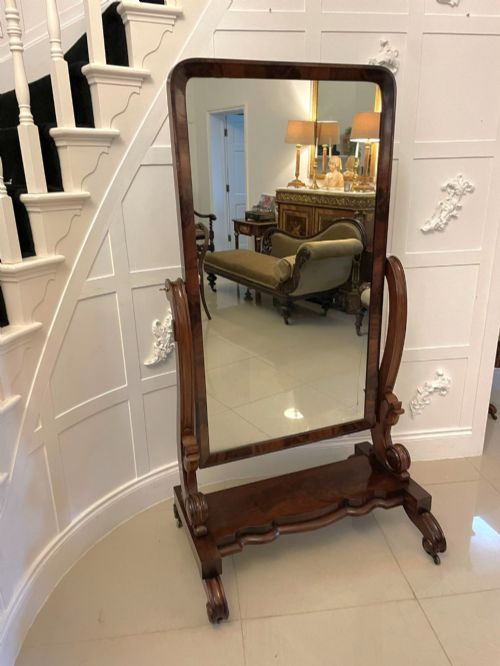
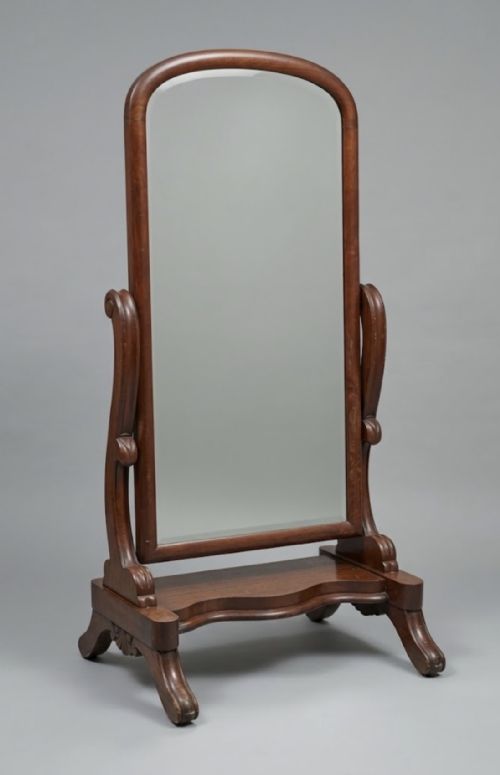
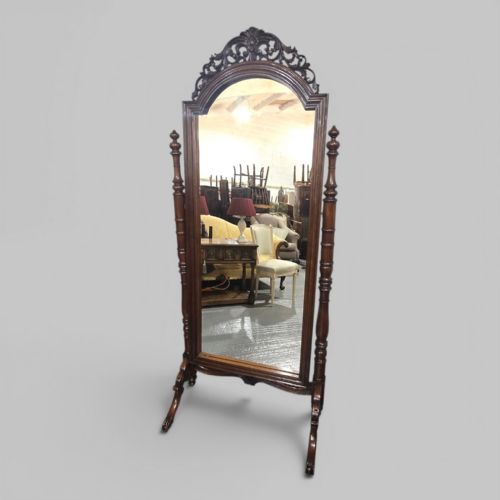
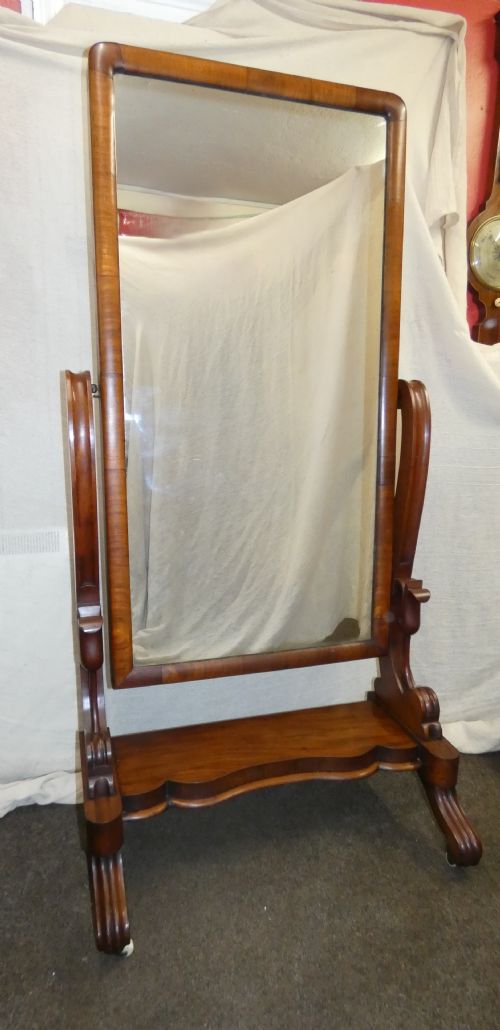
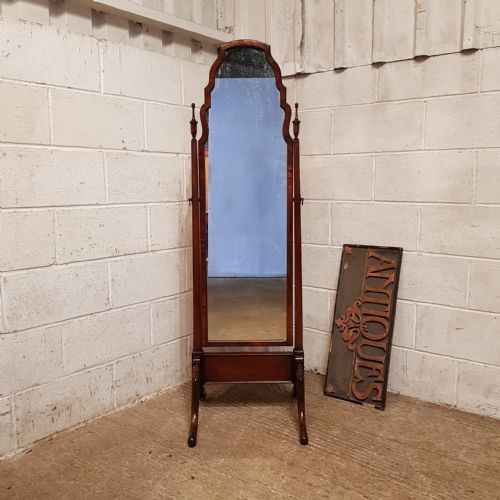
When you search for a mahogany psyche mirror, you are looking at substantial floor-standing cheval mirrors designed for full-length viewing in bedrooms and dressing rooms. These pieces provide an adjustable glass held within a sturdy standing frame, allowing the user to tilt the reflection to various angles.
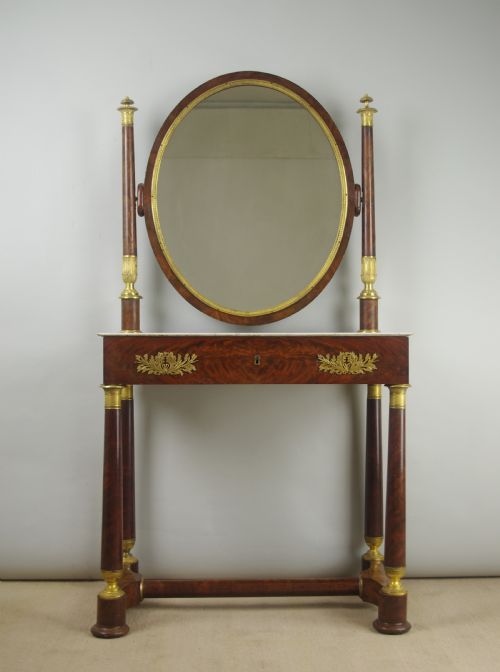
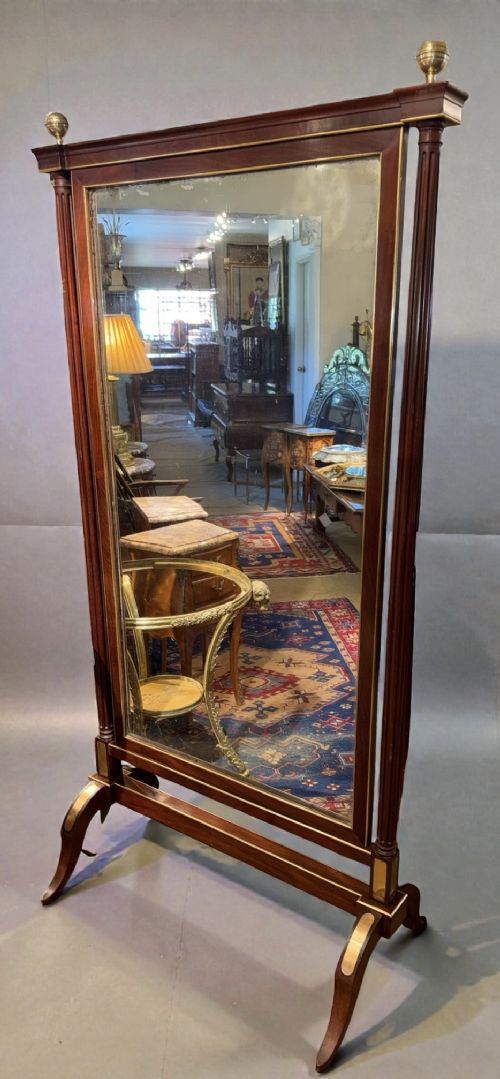
On this page, you are most likely to meet Victorian and 19th-century examples, alongside Regency, William IV, Edwardian, and French Empire styles. The forms range from large cheval-based floor-standing mirrors to classical robing mirrors framed in solid timbers.
How they were made
The construction relies heavily on mahogany timber, chosen for its deep colour and durability in large standing frames. Glass plates form the reflective surface, supported by pivoting hardware.
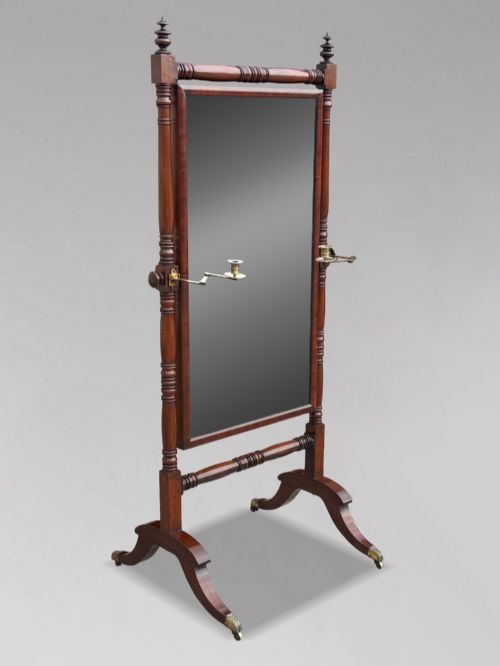
Brass fittings and mounts appear across the pieces to secure the swing mechanism and provide structural accents. French Empire examples incorporate ormolu mounts to decorate the timber framework.
Retail Price Guide 2026
Typical UK retail prices for mahogany psyche mirror, calculated from the Sellingantiques database of over a million retail prices indexed since 2003. This retail price guide relies exclusively on Sellingantiques data; no external sources or auction records are used, so the figures do not describe the wider market.
The selection spans the 19th century, Victorian, Regency, William IV, and Edwardian periods, utilising mahogany, glass, and brass.
What varies in quality
The distinction between standard pieces and the top of the range lies in the richness of the mahogany timber and the complexity of the frame design. Finer examples display superior joinery and more substantial proportions.
Metalwork also dictates quality, where chased brass fittings or ormolu mounts elevate the piece above plain timber frames. The clarity and original state of the glass further separate basic utilitarian mirrors from grander decorative objects.
The Mahogany Psyche Mirror Glossary
- Psyche mirror
- A large floor-standing dressing mirror with an adjustable swing glass. These pieces are also known as robing mirrors.
- Cheval mirror
- A freestanding full-length mirror supported by a frame with four legs or a heavy base. The glass hangs on pivots.
- Ormolu
- Gilded bronze mounts applied to furniture frames for decoration. This technique is typical of French Empire pieces.
- Regency
- A style period dating from the early 19th century. Furniture from this era often shows classical lines and restrained ornamentation.
Frequently Asked Questions
Where should I place a psyche mirror?
These large floor-standing mirrors suit bedrooms and dressing rooms where full-length reflection is useful. Their scale requires adequate floor space to stand securely away from heavy traffic areas.
Positioning them near natural light helps illuminate the reflection while highlighting the rich mahogany grain of the frame.
How do I adjust the swing glass?
The glass hangs on pivots set into the upright supports of the frame. Tightening or loosening the side hardware controls the tension of the swing.
Careful adjustment prevents the heavy glass from slipping while allowing smooth tilting to the desired angle.
What is the difference between a cheval and a psyche mirror?
The terms are often used interchangeably to describe large floor-standing dressing mirrors. A cheval mirror refers specifically to the frame structure supported by four legs.
A psyche mirror specifically denotes a large robing mirror designed for full-length viewing, frequently featuring elaborate timber framing.
How do I identify a Regency mirror?
Regency pieces date from the early 19th century and typically display classical architectural influences. Look for clean structural lines and polished mahogany surfaces.
Brass pivot mounts and understated proportions often characterise pieces from this specific period.