





Mahogany Pedestal Work Table
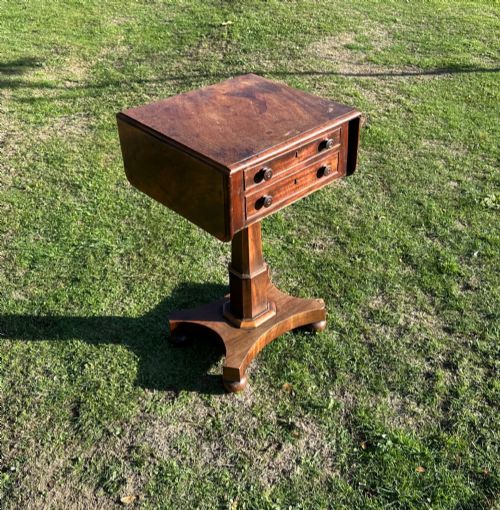
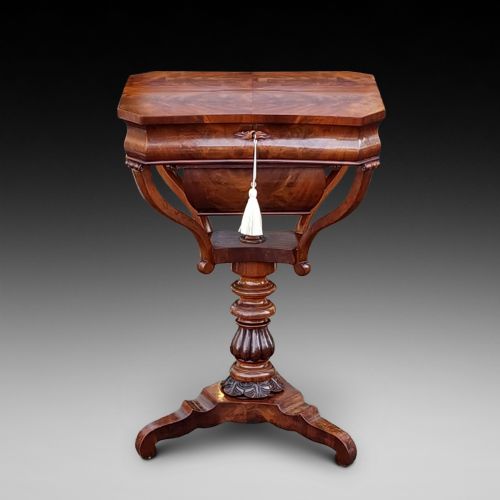
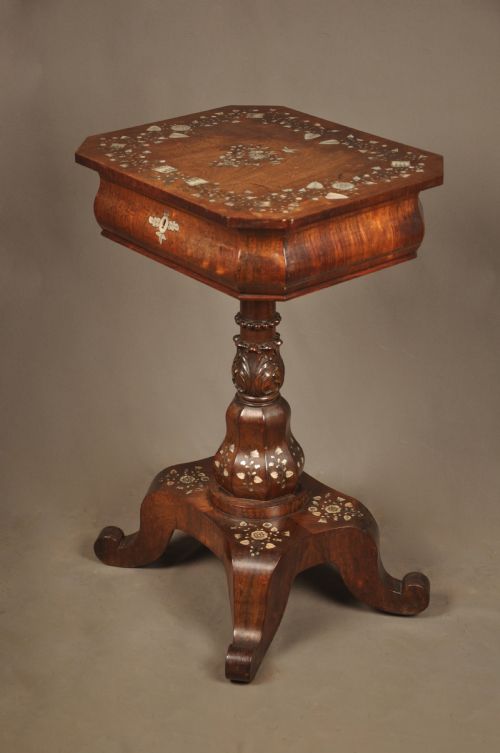
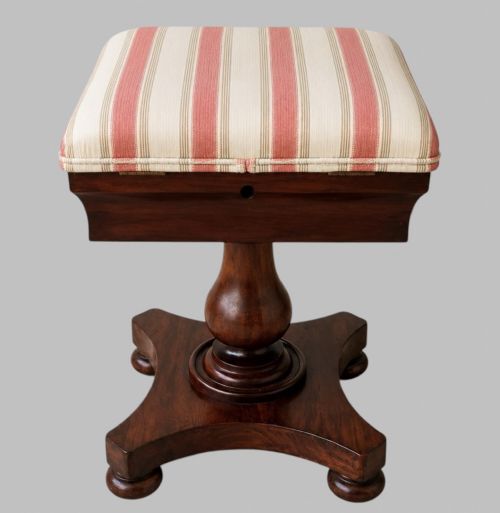
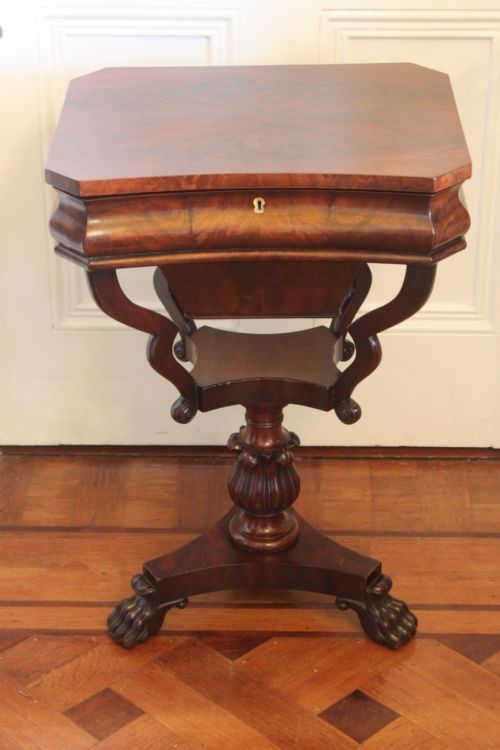
A mahogany pedestal work table combines neat proportions with concealed utility, offering a sturdy central column supporting a compartmented top designed for sewing and needlework.
Mahogany Pedestal Work Table
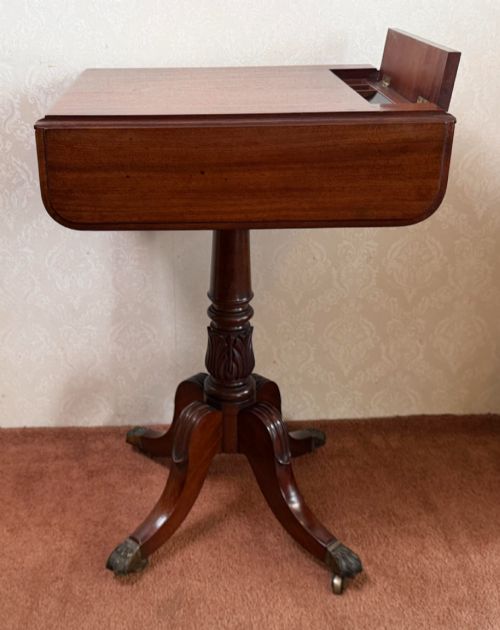
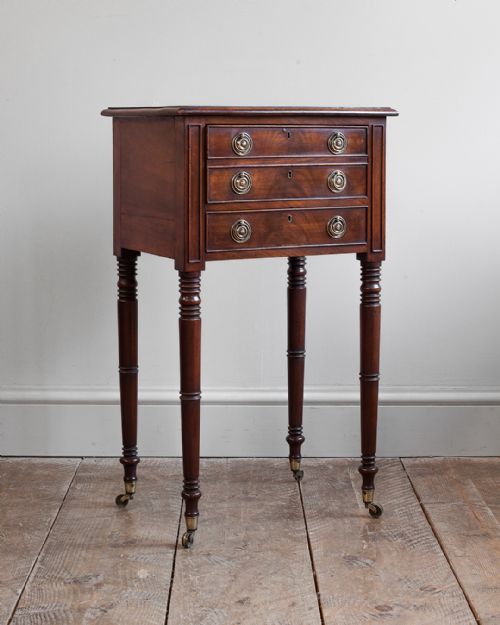
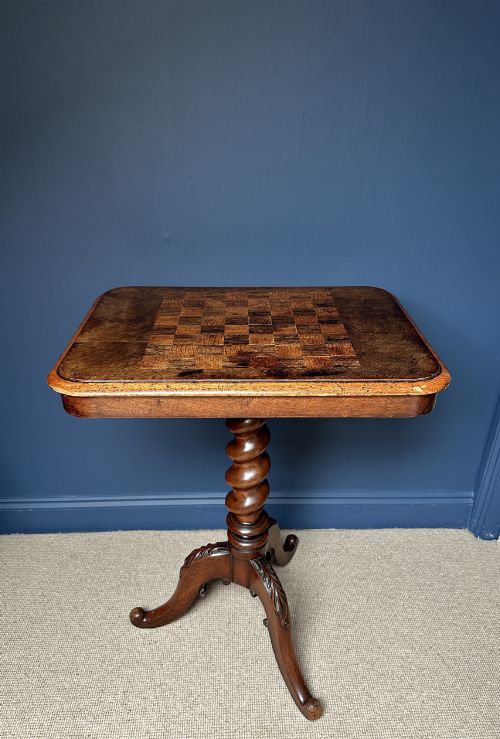
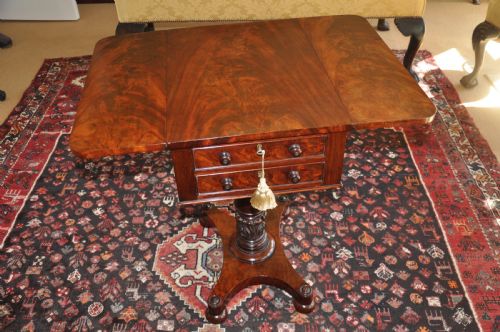
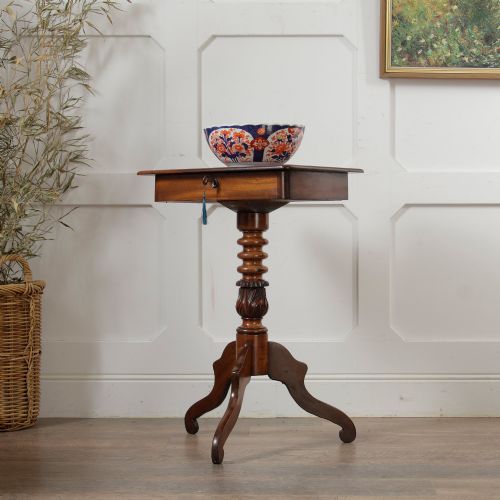
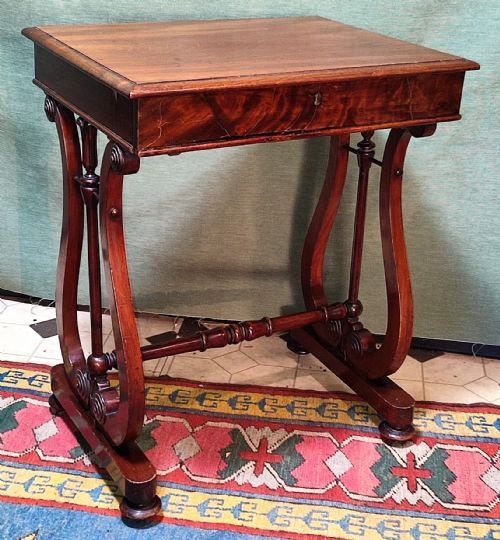
When you search for a mahogany pedestal work table, you encounter compact furnishings created to hold sewing equipment, writing materials or small games during the Georgian, Regency, William IV and Victorian eras. These examples stand on a central pedestal base, often featuring a fitted interior box or drop leaves alongside a drawer.
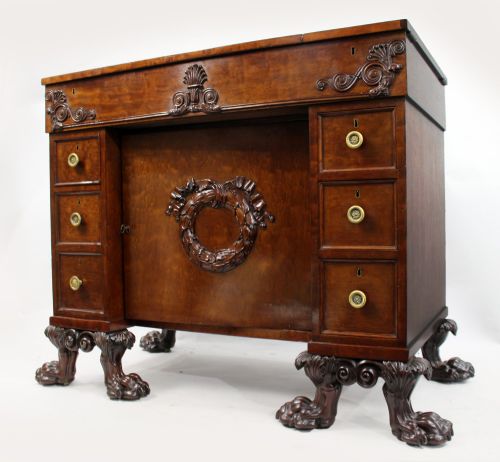
The pieces on this page span the late eighteenth century through to the nineteenth century, with William IV and Regency interpretations appearing frequently alongside Victorian variants. Alongside dedicated work tables, the selection includes related side tables, lamp stands, pembroke tables and chess tables sharing similar pedestal forms.
How they were made
Cabinet makers utilised solid timber and figured veneers, selecting flame mahogany and curl grain mahogany for visual depth on tops and drawer fronts. Secondary embellishments incorporate contrasting linear details in ebony, boxwood and bone stringing.
Structural stability relies upon a central wooden pedestal rising from a platform or tripod base, frequently finished with brass castors. Interiors often contain compartments lined for sewing, while drop leaves are supported by hinged wooden brackets.
Mahogany Pedestal Work Table Retail Price Guide 2026
Typical asking prices for mahogany pedestal work table among the pieces listed under this phrase on Sellingantiques today, from the lower quarter to the upper quarter. They describe what is for sale here now, not the wider market.
Several examples preserve their original woolwork tops, offering a tangible record of nineteenth-century needlecraft left behind by past makers.
What varies in quality
The degree of refinement rests upon the selection of timber figures, where richly patterned flame mahogany elevates a piece above plain stock. Precision in the joinery of the internal sewing compartments and the crispness of turned or carved pedestal columns further distinguish finer workshops.
Proportion and structural integrity define the upper tier, ensuring the central column bears the weight of drop leaves or loaded drawers without wobble. The retention of original brass castors and fitted interior trays adds considerable merit to an example.
The Mahogany Pedestal Work Table Glossary
- Pedestal
- A single central support column rising from a base to hold the table top.
- Flame mahogany
- A veneer cut from timber fork joints that creates a swirling, flame-like pattern.
- Pembroke table
- A drop-leaf table with hinged flaps on opposing sides.
- Strung
- Inlaid with thin contrasting lines of wood or bone for decorative border emphasis.
- Drop leaf
- A hinged table leaf that lowers when not in extended use.
Mahogany Pedestal Work Table: Frequently Asked Questions
What was a work table used for?
These tables served domestic spaces as functional chests for holding sewing equipment, woolwork, threads and small personal items.
The fitted interior compartments kept needles and cottons organised while the top surface provided a stable area for handwork or reading.
How do I tell Regency from Victorian pieces?
Regency and William IV examples typically display classical restraint, crisp mouldings and architectural pedestal bases inspired by ancient designs.
Victorian variations often introduce heavier turning, bobbin details or broader proportions while retaining the core functional layout of drawers and compartments.
Can I use a work table as a bedside table?
Their compact footprints, enclosed storage drawers and surface areas make them suitable for modern bedside placement.
The interior compartments also accommodate small personal accessories within a bedroom setting.
What woods are typical for these tables?
Mahogany forms the primary structure, ranging from plain boards to highly figured flame veneers and curl grain selections.
Accents of ebony, boxwood and bone frequently appear as stringing or inlay around drawer edges and tops.