


Mahogany Occasional Side Chairs
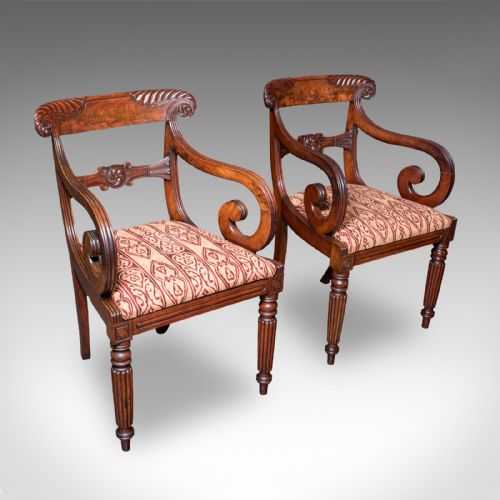
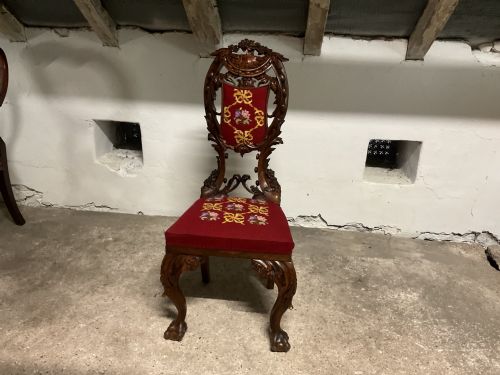
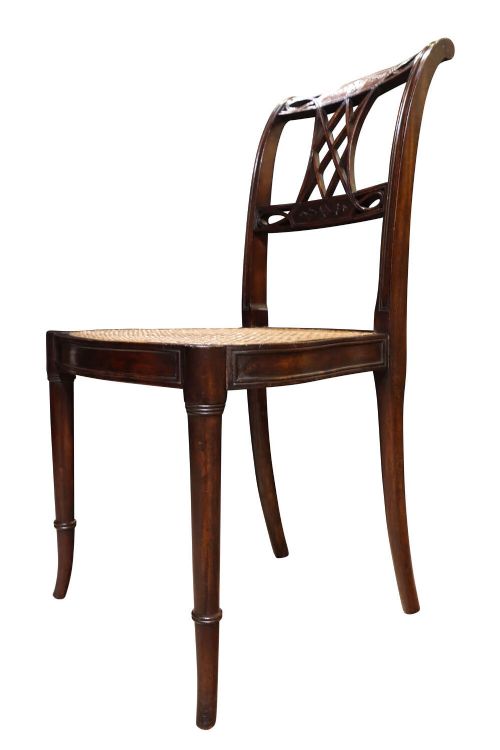
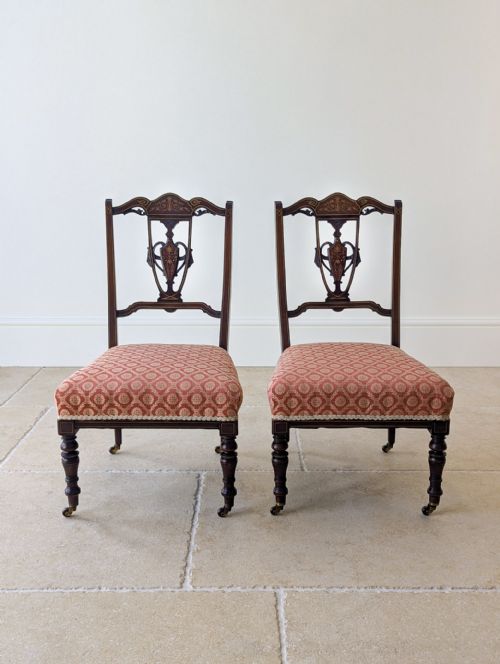
These mahogany occasional side chairs offer portable seating rooted in periods spanning the eighteenth to the early twentieth century.
Mahogany Occasional Side Chairs
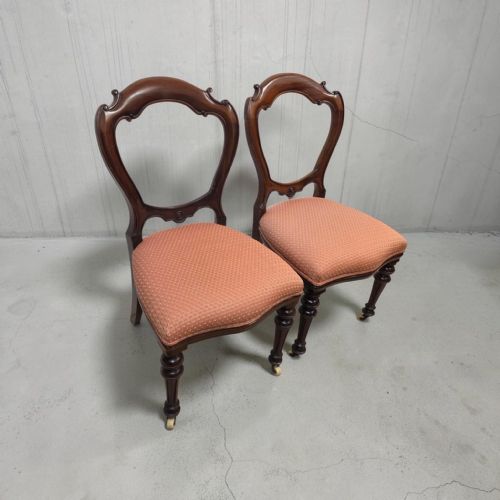
Mahogany occasional side chairs bring versatile seating into domestic spaces across multiple historic periods. Buyers searching for mahogany occasional side chairs frequently encounter Victorian and Edwardian examples adapted for bedrooms, halls, and reception rooms.
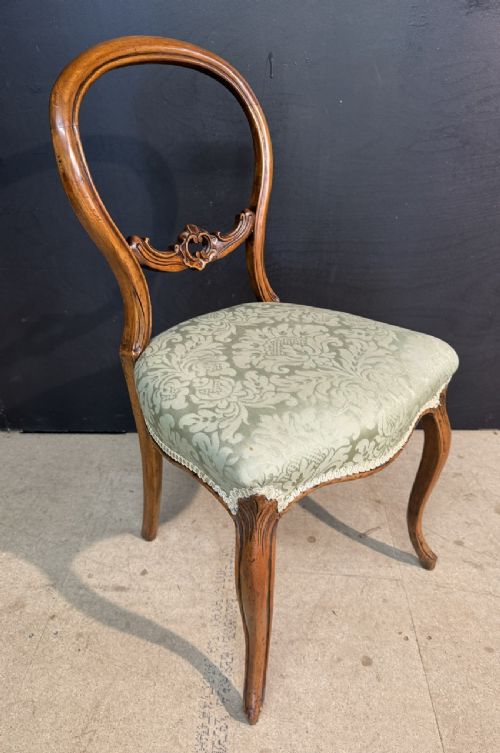
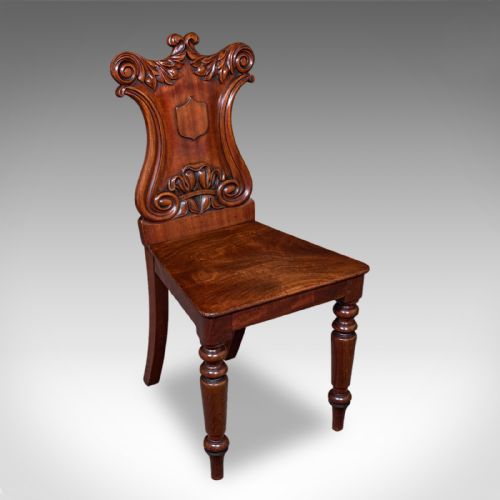
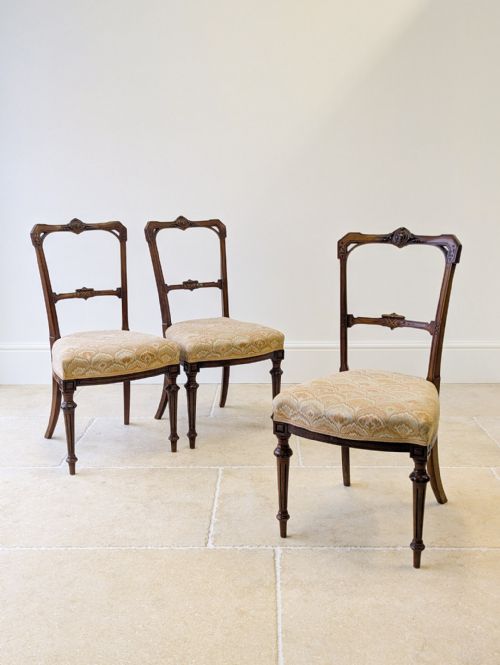
The selection ranges from simple Georgian and Regency side chairs to elaborately carved Victorian balloon-back designs and inlaid Edwardian salon chairs. These pieces functioned as flexible seating that moved easily between rooms as household needs required.
How they were made
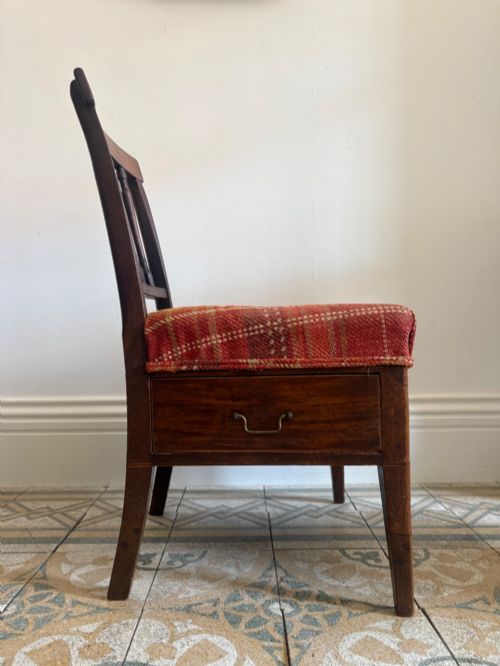
Cabinetmakers constructed these chairs using dense timbers like mahogany and Cuban mahogany, often embellishing the frames with satinwood and wood inlay. Structural integrity relied on traditional joinery supplemented by turned front legs and carved details.
Upholstery materials such as fabric, velvet, and cane seats provided comfort and visual texture. Brass elements occasionally appeared in castors or decorative hardware on mid-nineteenth-century examples.
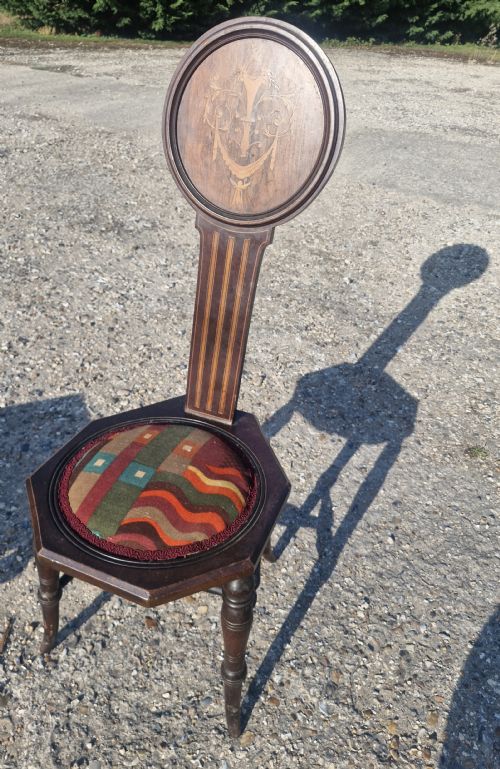
A specialised gossip chair allows sitters to straddle the seat sideways for confidential chats.
What varies in quality
The degree of hand-carving and the crispness of string inlay distinguish standard output from finer workshops. Timber selection also plays a role, with dense Cuban mahogany yielding sharper detail than softer secondary woods.
Structural stability and the retention of original timber surfaces determine the lasting integrity of each chair. Examples retaining period upholstery fabrics or authentic cane work demonstrate superior preservation.
The Mahogany Occasional Side Chairs Glossary
- Balloon-back
- A chair back shaped in a continuous curve resembling a rounded balloon, popular during the Victorian period. This profile provided ergonomic support while showcasing the grain of the mahogany.
- String inlay
- Thin strips of contrasting wood embedded flush into the mahogany surface to form linear patterns. Edwardian makers frequently utilised this technique on salon and bedroom chairs.
- Corner chair
- A square-seat chair designed to fit diagonally into the corner of a room, often featuring a rounded back rail supported by turned columns. These pieces maximised seating options in compact spaces.
- Cane seat
- A seating surface woven from peeled rattan cane, offering a lightweight and flexible alternative to solid wood or upholstered pads. This technique appears widely on Edwardian bedroom chairs.
Mahogany Occasional Side Chairs: Frequently Asked Questions
Where were occasional chairs placed?
These chairs served as flexible seating that moved between bedrooms, halls, and reception rooms as household needs shifted.
Their lightweight construction allowed domestic staff or residents to reposition them easily for social gatherings or quiet tasks.
How do I date a mahogany chair?
Stylistic markers such as balloon backs, cabriole legs, and string inlay correspond to specific eras like the Victorian or Edwardian periods.
Examining the underlying timber, such as Cuban mahogany, and construction methods helps narrow the manufacturing window.
What is the difference between a side chair and an elbow chair?
Side chairs lack arms and were designed to sit against a wall or around a table when not in use.
Elbow chairs include arms for added comfort, making them suitable for occasional lounging in morning rooms or bedrooms.
How do I care for antique mahogany furniture?
Keep wooden surfaces away from direct sunlight and steady heat sources to prevent the timber from drying out.
Apply gentle wax polishes sparingly and clean upholstered or cane sections according to their specific material requirements.