
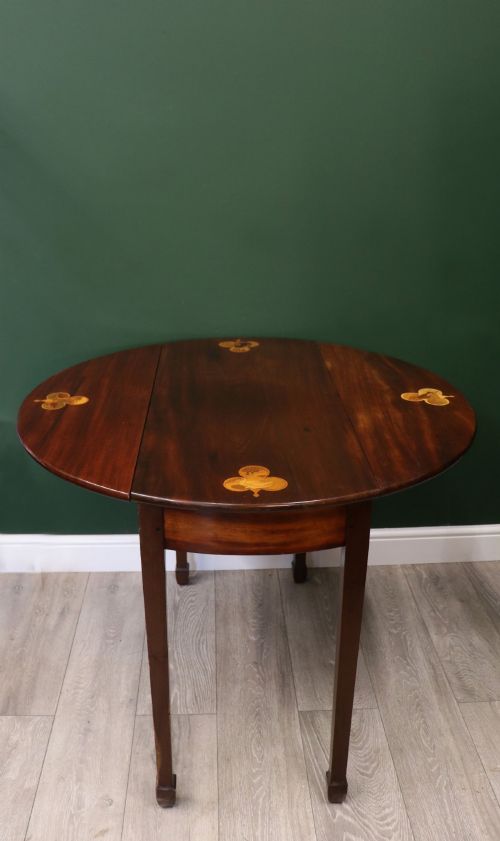


Mahogany Occasional Dining Table
A mahogany occasional dining table brings flexible surfaces to a room, shifting easily from compact drop-leaf forms to central pedestals.
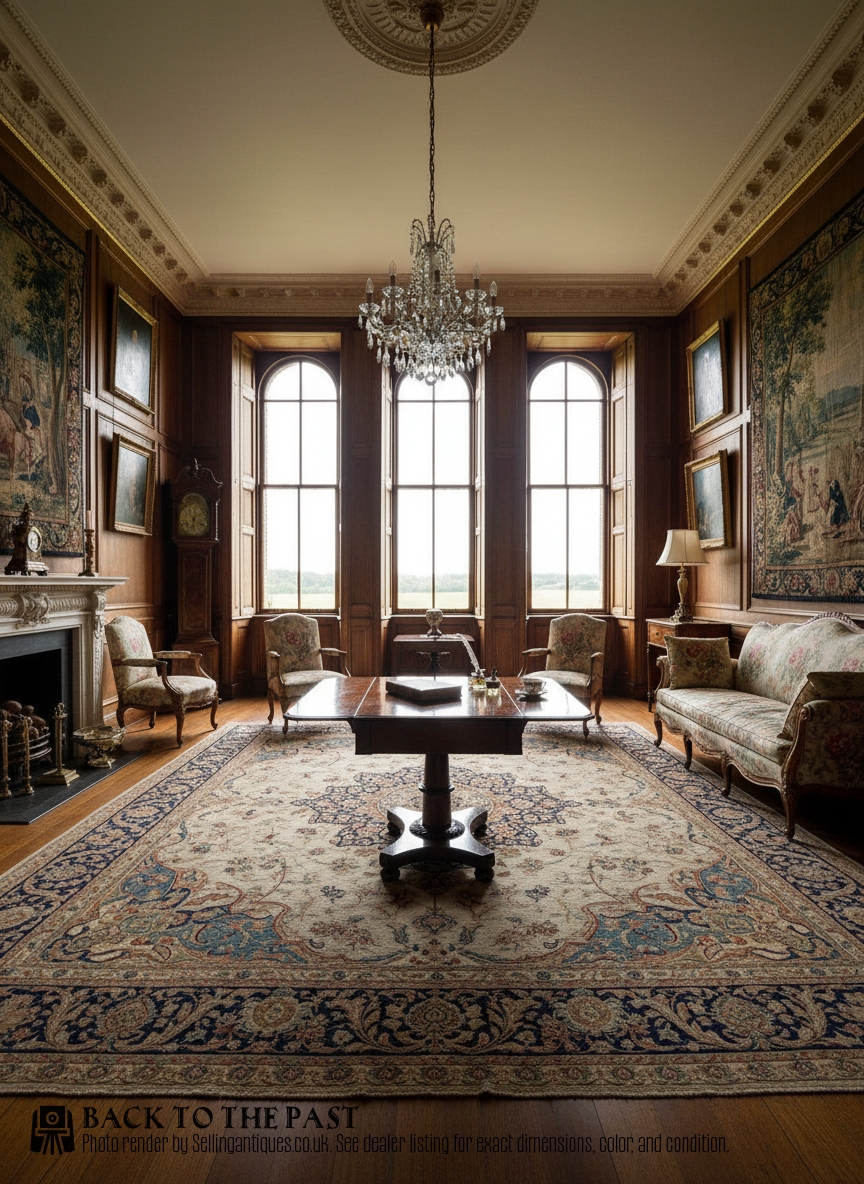
Mahogany Occasional Dining Table
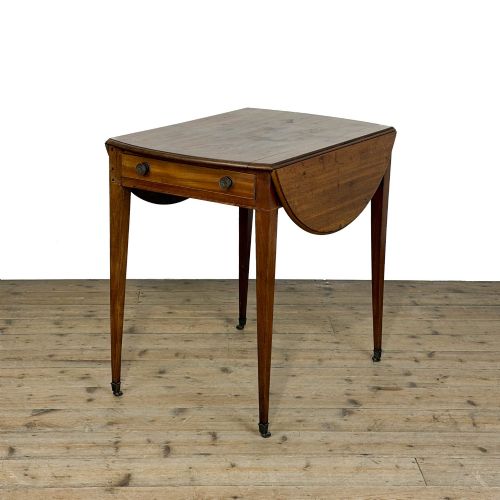
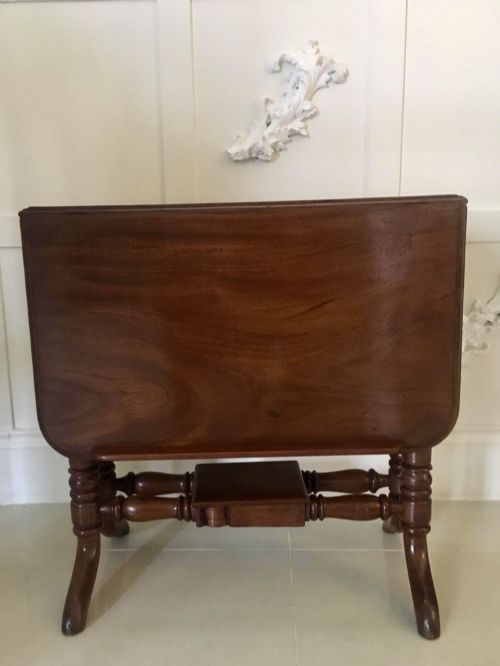
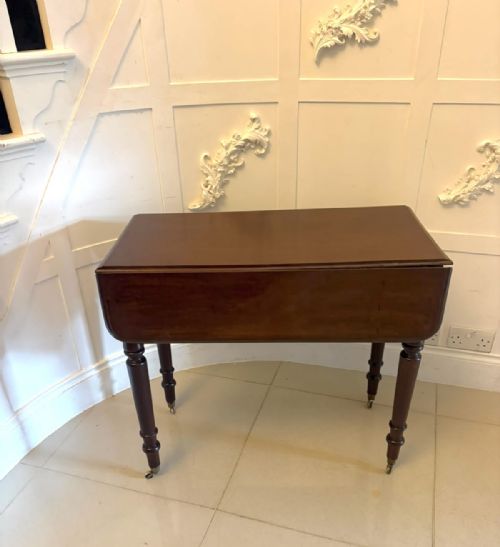
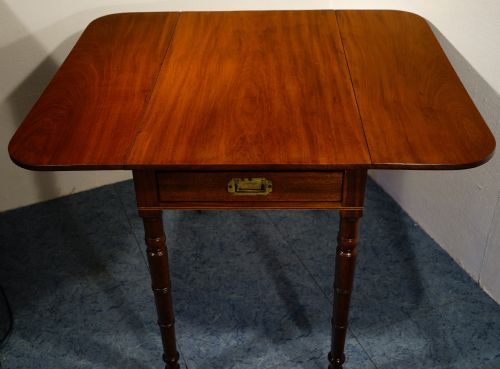
A mahogany occasional dining table bridges the gap between everyday compact furniture and expandable dining surfaces, appearing frequently as Pembroke, Sutherland, and gateleg designs. These adaptable pieces trace back through the Georgian, Regency, Victorian, and Edwardian eras, spanning the eighteenth and nineteenth centuries into the early twentieth century.
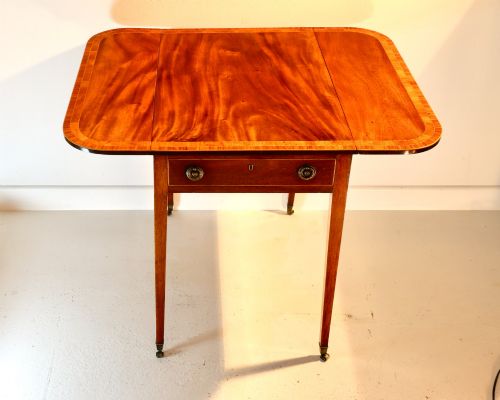
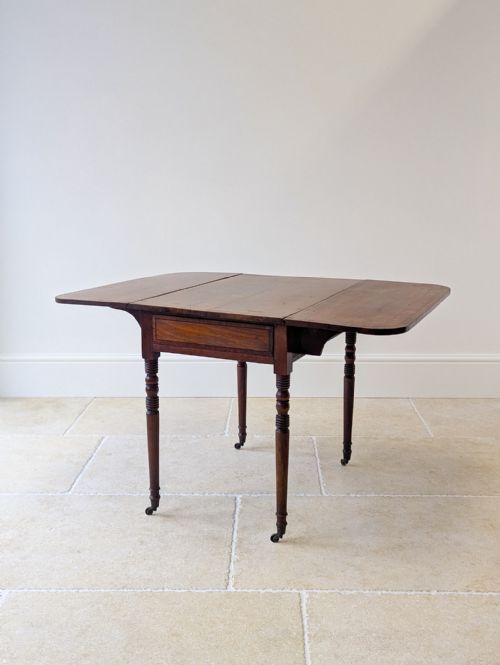
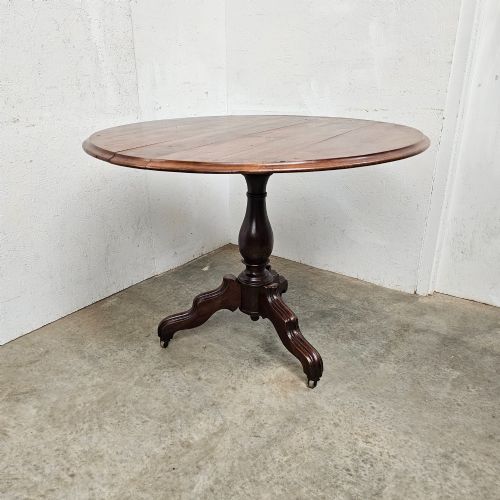
The Pembroke table dominates the selection, offering folding flaps supported by hinged rule joints and swing brackets. Alongside these, buyers encounter round tripod pedestal pieces, narrow Sutherland tables with slender gatelegs, and multi-tiered dumb waiters designed to serve food during meals.
Origins cluster around British country houses and town residences, where flexible furniture suited changing social routines. Pieces range from small oval breakfast tables to larger drop-leaf examples capable of seating four people comfortably when fully opened.
Distinctions in Quality
Quality rests in the choice of timber and the precision of the joinery, particularly where rule joints meet folding leaves without sagging. Superior examples display carefully matched grain across table tops and drawer fronts, maintaining visual continuity when the leaves drop.
Refined pieces show restraint in decoration, using subtle boxwood stringing or satinwood banding rather than heavy carving. The stability of the underframe, whether supported by slender spider legs, a turned pedestal, or swing gatelegs, dictates how securely the table holds weight during meals.
Some Regency examples include clever deception designs that hid utilitarian functions beneath polite mahogany surfaces.
The Mahogany Occasional Dining Table Glossary
- Pembroke table
- A small table with two hinged drop leaves on opposing sides, often equipped with a single drawer and swing brackets to support the flaps.
- Sutherland table
- A narrow drop-leaf table featuring exceptionally slender gatelegs that fold almost flat when the leaves are lowered against the central frame.
- Rule joint
- A moulded knuckle joint connecting a drop leaf to the fixed table top, designed to leave no visible gap whether the leaf is raised or lowered.
- Gateleg table
- A table with hinged legs that swing outward like a gate to support folding leaves on either side of a central fixed section.
- Tripod table
- A freestanding small table supported by a central pillar resting on three spreading feet, frequently utilised for tilt-top mechanisms.
Mahogany Occasional Dining Table: Frequently Asked Questions
How many people can sit at a Pembroke table?
Most Pembroke and drop-leaf tables seat between two and four people when both flaps are raised. The extending leaves provide enough knee room for a casual meal while remaining compact when folded down.
Larger gateleg and Sutherland versions offer wider spans, though leg placement beneath the drop leaves can sometimes limit seating arrangements.
Can these tables be used for everyday dining?
Georgian, Regency, and Victorian drop-leaf tables served as versatile dining surfaces in smaller rooms or bedrooms. Raising the leaves creates a stable eating area, while lowering them restores floor space.
Care should be taken to use protective mats beneath hot dishes and liquids to preserve polished mahogany and inlaid surfaces.
How do tilt-top occasional tables function?
Tilt-top tables utilise a catch mechanism beneath the circular top that allows the surface to pivot into a vertical position. This enabled the furniture to be stored flat against a wall when not in use.
In daily living, the mechanism locks the top securely horizontal for use as a breakfast or centre table.